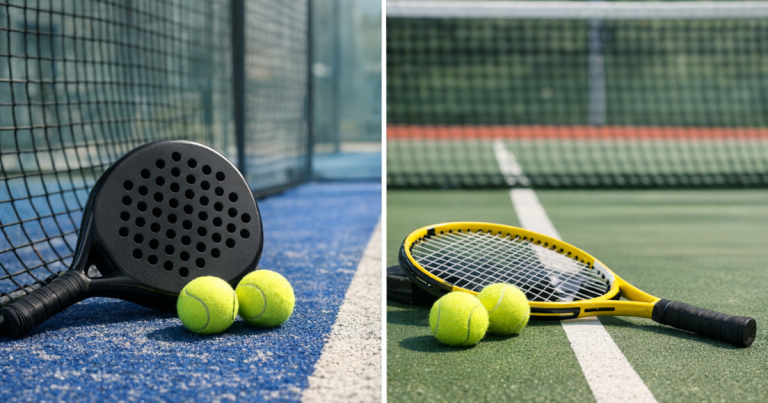
Learning the basic padel rules for beginners makes your first few games feel much smoother. You do not need to know every tournament regulation before stepping on court, but it helps to understand the essentials: how to serve, when the walls count, and what is considered a fault. Once those bits click, the game starts to flow much more naturally.
Padel is relaxed in some areas and quite specific in others. The ball can rebound off the glass, doubles positioning matters, and the serve is underarm rather than overhead. This guide focuses on the practical version of the rules: the things you need when you are on court, racket in hand, trying to keep the rally going.
The short version before you start
A padel point starts with an underarm serve from behind the service line. The serve has to bounce in the correct opposite service box before it can touch the glass. During a rally, the ball usually needs to bounce on your opponent’s side before it reaches their walls. You are also allowed to use your own glass walls to return the ball, as long as your shot then crosses the net legally.
The scoring system is the same as tennis in most beginner games: 15, 30, 40 and game, with sets usually played to six games. If scoring still feels a bit unclear, the separate guide to how scoring works in padel for complete beginners is a useful next read once the court rules make sense.
How serving works in padel
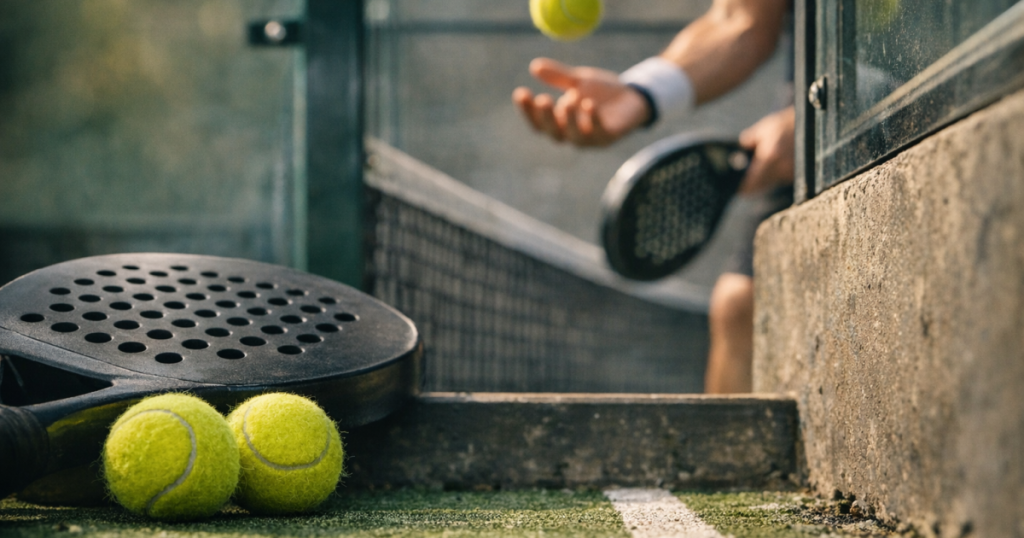
The serve is one of the clearest differences between padel and tennis. In padel, you serve underarm after bouncing the ball. You must hit the ball at or below waist height, and both feet need to stay behind the service line until contact. The serve is played diagonally into the service box on the opposite side of the net.
At the start of each game, the server begins on the right-hand side of the court. After every point, the server switches sides: right, left, right, left. In doubles, one player serves for the whole game, then service moves to the other pair for the next game.
A legal serve follows this sequence:
- The server stands behind the service line, between the center line and the side wall.
- The ball is bounced once on the ground before being hit.
- The ball is struck underarm, at or below waist height.
- The ball travels diagonally over the net.
- The ball lands inside the correct service box before touching any wall.
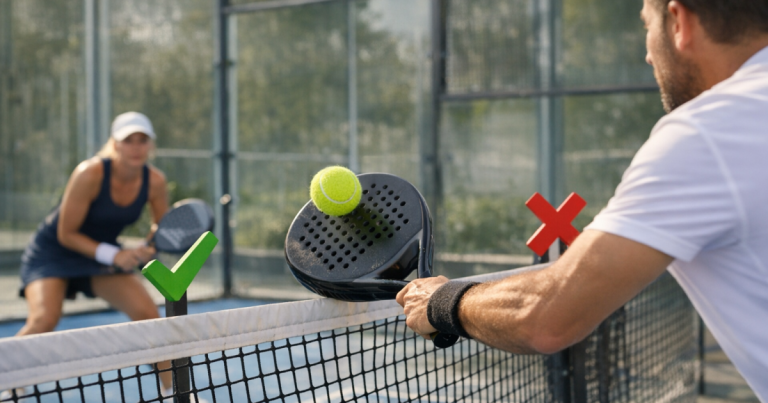
If the serve clips the net and still lands in the correct service box, it is usually a let and is replayed. If it hits the net and lands out, lands in the wrong box, or hits the side fence after bouncing, it is a fault. As in tennis, you normally get a second serve. Two serving faults in a row lose the point.
The serve and the side fence
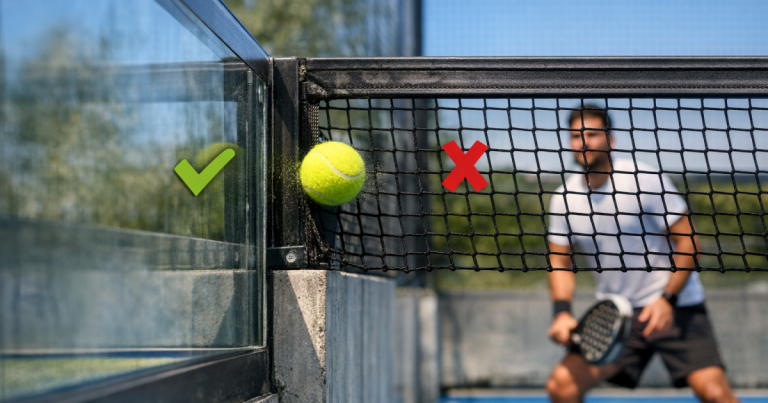
One detail catches out plenty of new players: on the serve, the ball can hit the glass after bouncing in the service box, but it must not hit the metal side fence. If your serve lands correctly and then rebounds off the glass, that is fine. If it lands correctly and then touches the side fence, it is a fault.
This matters because many beginners aim too sharply toward the side wall. A safer beginner serve goes deeper into the box with controlled pace, giving you time to move forward and get into a solid position with your partner.
When the walls are in play
The walls are often what make padel feel strange at first. The main idea is simple: the ball has to land on the court before it can use the opponent’s wall. If you hit the ball straight into your opponent’s back glass without it bouncing first, you lose the point. If your shot bounces on their side and then hits the glass, the rally continues.
You can use your own walls too. For example, if the ball comes in deep and bounces past you, you can let it hit your back glass, wait for the rebound, and then play it back over the net. That is not just allowed; it is a big part of padel. New players often rush to hit everything early, but learning to use the back glass gives you more time and control.
The side glass works in much the same way. If the ball bounces on your side and then hits the side or back glass, you can still return it before it bounces a second time. What you cannot do is let it bounce twice on your side. Once that second bounce happens, the point is over.
Glass wall versus metal fence
During a rally, the glass and metal mesh behave differently, but both can be part of play after the ball has bounced. A ball that bounces on the court and then hits the glass is live. A ball that bounces and then hits the mesh can also be live in normal rally play, although the rebound can be awkward. On the serve, though, the side mesh rule is stricter, as covered above.
If you are unsure during a friendly game, start with the bounce. Did the ball land in the court before touching the wall or fence? If so, it is often still playable. Did it hit a wall, fence, ceiling, light, or anything outside the court before bouncing? Then it is usually out.
Common faults beginners should recognise
Most beginner disagreements come from the same small set of situations. Knowing these makes the game easier to manage and helps everyone relax into the match.
- Two bounces: if the ball bounces twice on your side before you return it, you lose the point.
- <strong