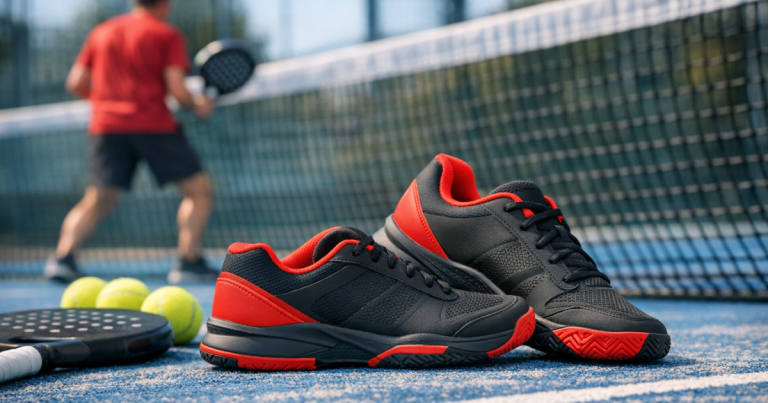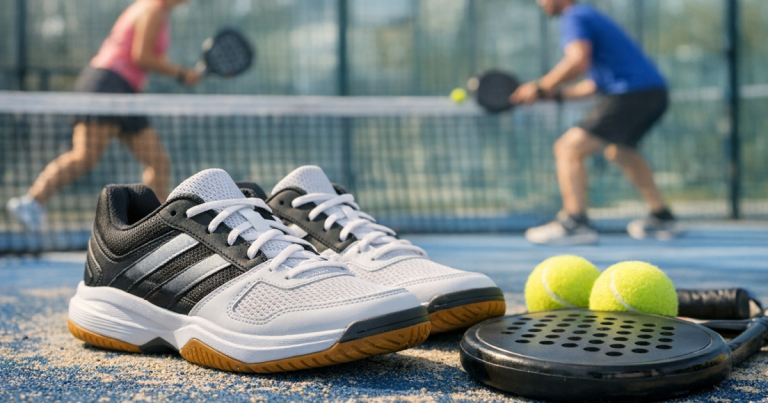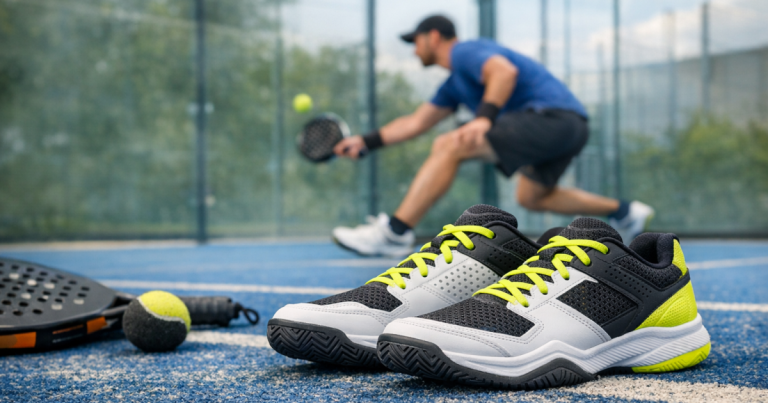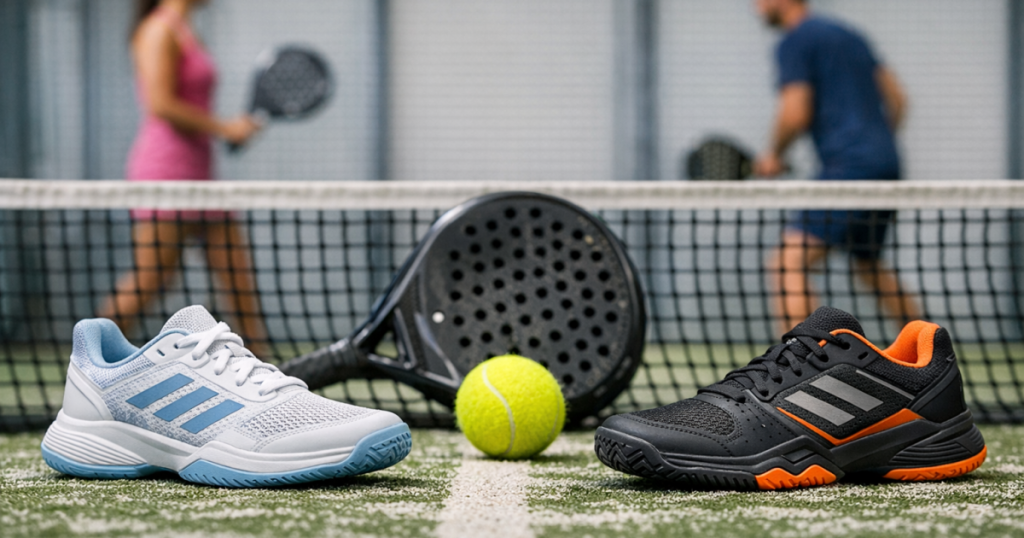
Club nights are a different test from a quiet lesson. You might play several short sets, rotate partners, cool down between games and then jump straight back into fast points. That is why Adidas Courtquick vs Barricade is not just a style choice; it is really about how much support, structure and easy movement you want under your feet.
The short answer: choose Courtquick if you want a lighter, more flexible-feeling court shoe for social play and quick changes of direction. Choose Barricade if you prefer a more planted, supportive feel for repeated stops, lunges and longer evenings on court.
What to know first
- Adidas Courtquick Padel Shoes are likely to appeal to players who want easy movement, less bulky uppers and a quick feel during casual club rotations.
- Adidas Barricade Padel Shoes make more sense if you value stability, containment and a more secure platform when points get scrappy.
- For padel, do not judge either shoe only by looks. The sole pattern, lateral support and fit matter more than colour or brand loyalty.
- Make sure you are looking at a padel or suitable court version, not a fashion trainer or a running shoe with the same brand name.
- If you are still unsure about soles, grip and safe court movement, the wider padel shoe soles and court safety guide is a useful next read.
How club nights change the shoe decision
A club night is rarely one neat match at one steady intensity. You may play against a careful lob-heavy pair, then face two players who hit hard and pull you into the corners. You may also spend time waiting between games, which means your feet can cool down before the next burst of movement.
That makes comfort important, but not in the same way as a walking shoe. A padel shoe has to feel comfortable while helping you brake sideways, recover from the glass, push into a volley and turn without your foot sliding around inside the shoe.
For beginners and early-stage players, the biggest issue is often over-movement. You take extra steps, arrive late, then brake sharply. A shoe that feels fine for ten minutes can start to feel loose, hot or unstable after two hours of social games. That is where the Courtquick and Barricade styles separate.
Where Courtquick tends to make sense
The Courtquick line is the one to start with if your priority is a nimble, less restrictive feel. For a newer player who is still learning split steps, recovery positions and side-to-side footwork, that can be reassuring. You do not want the shoe to feel like it is fighting every small adjustment.
It is also a sensible direction if your club nights are mainly social: mixed levels, shorter games, plenty of chatting between rotations and no huge urge to chase every ball into the back corner. In that setting, many players appreciate a shoe that feels easy from the first session.
The trade-off is that a lighter, more flexible-feeling shoe may not give the same locked-in sensation as a more structured option. If your foot moves over the edge of the sole during hard lateral stops, or you often feel your heel lifting inside the shoe, you may want more containment than this type of shoe provides.
Good signs Courtquick is enough for you
- You are playing once or twice a week rather than several intense sessions.
- You prefer a shoe that feels mobile rather than stiff.
- Your points are more about positioning and controlled rallies than explosive chasing.
- You rarely feel your ankle or foot rolling over the side of your current shoes.
- You want a club-night shoe that feels comfortable during warm-ups, games and waiting periods.
Where Barricade earns its place
Barricade is the direction to consider if you want the shoe to feel more solid under pressure. The Barricade name is closely associated with court stability, so it tends to suit players who brake hard, push wide and want the upper to hold the foot in place during repeated lateral movements.
That can be useful at club nights because tired footwork is messy footwork. Late in the evening, you may lunge for low volleys, twist towards the back glass or recover from a desperate corner dig. A more supportive shoe can feel calmer in those moments.
The possible downside is feel. Some players find more structured court shoes less instantly relaxed, particularly if they are used to soft running trainers. That does not make them wrong for padel, but it does mean you should try them properly rather than assuming the most supportive option is automatically the most comfortable one.
If you like the idea of a stable shoe but want another reference point, the Wilson Bela Tour padel shoes review covers a different supportive option from a beginner-friendly angle.
Good signs Barricade is the safer bet
- You play long club nights with several matches or rotations.
- You are a heavier mover who plants hard before changing direction.
- You come from tennis, squash or badminton and already move aggressively.
- Your current shoes feel sloppy when you chase balls into the corners.
- You would rather accept a more substantial feel for extra confidence when stopping and pushing off.
The checks to make before choosing
Use the same practical checks for both shoes. The model name matters, but the actual fit on your feet matters more.
1. Check the outsole for padel courts
Padel is usually played on artificial turf with sand, although court surfaces can vary. Look for a sole pattern that is suitable for padel or clay-style court movement, and check the retailer’s product listing carefully. Avoid smooth casual soles and running-shoe soles with tall, soft tread blocks, as they are not designed for the same sideways braking.
2. Test side-to-side lockdown
Lace the shoe properly, then make small lateral shuffles on a clean indoor floor. Your foot should not slide across the footbed. A little natural toe movement is fine, but your heel should stay seated and your midfoot should feel held.
3. Leave sensible toe space
Club nights involve sudden stops. If your toes are already touching the front when standing still, they may hit the end of the shoe when you brake. Aim for secure, not cramped. If you are between sizes, try both rather than guessing from your normal trainer size.
4. Wear your usual padel socks
Thicker sports socks can change the fit enough to matter. If you usually wear cushioned socks for evening games, try shoes with those socks. This is especially important if one model feels snug around the forefoot or high across the instep.
5. Think about the whole evening, not the first five minutes
A shoe can feel great during a quick try-on and still feel wrong after two hours of stop-start padel. If possible, walk, shuffle and practise short split steps at home before wearing them on court, while keeping them clean in case you need to return them under the retailer’s policy.
Club-night scenarios: which way to lean?
If you are a new player joining social games for the first time, Courtquick is likely to feel approachable. It should suit the player who wants to move naturally, avoid a bulky feel and build confidence without overthinking the shoe.
If you are already playing competitive club boxes, staying for multiple rotations or noticing that your feet tire before your racket skills do, Barricade is the stronger candidate. The extra sense of structure can be valuable when your movement gets less tidy.
If your club has gritty outdoor courts, pay closer attention to sole durability and grip. If you mostly play indoors on well-maintained courts, comfort and lockdown may become the deciding points. Either way, wipe excess sand and dirt off after play and let the shoes air dry before packing them away.
For evenings when you go straight from work to padel, small habits help your shoes last and keep your kit cleaner. The guide to keeping a shoe bag inside your padel bag explains a simple way to separate court shoes from clothes, towels and accessories.
Adidas Courtquick vs Barricade: the practical call
Choose Courtquick if your club nights are social, your movement is still developing and you want a shoe that feels quick and uncomplicated. It is the more natural direction for players who dislike a heavy or highly structured feel.
Choose Barricade if your club nights are longer, faster or more physical. It is the better direction for players who want more support during hard braking, wide lunges and repeated changes of direction.
The main mistake is buying either shoe as if it were just a normal trainer. Padel footwear has a job to do: grip without sticking, support sideways movement and stay comfortable through a stop-start evening. Get those basics right and either model can make club nights feel more controlled.
Things readers ask
Can I wear running shoes for padel club nights?
It is not ideal. Running shoes are built mainly for forward movement, while padel needs repeated sideways stops and turns. A proper court shoe is a safer, more stable choice.
Is Barricade too serious for beginners?
No, but it may feel more structured than some beginners need. If you move hard, play long sessions or want extra containment, it can still make sense early on.
Will Courtquick be supportive enough for doubles?
For many social doubles players, yes. If your foot slides inside the shoe or you feel unstable when braking, move towards a more supportive option.
Should I size up for padel shoes?
Do not size up automatically. Try your normal size and the nearest half size if available, wearing your usual sports socks. Prioritise heel hold, midfoot security and toe clearance.
How often should I replace club-night padel shoes?
Replace them when grip fades, the upper no longer holds your foot securely, or cushioning feels flat. The timing depends on court surface, bodyweight, movement style and how often you play.
Main lessons
For most beginner and improving players, the decision comes down to feel versus support. Courtquick is the easier-going choice for relaxed club play and quick movement. Barricade is the more planted choice for players who stop hard, play longer and want extra confidence underfoot.
Try both with the socks you actually wear, check the sole is suitable for padel, and think about how you move late in a club night, not just how the shoes feel when fresh.
Quick Buying Links
Adidas Courtquick
That is why Adidas Courtquick vs Barricade is not just a style choice; it is really about how much support, structure and easy movement you want under your feet.The short answer: choose Courtquick if you want a lighter, more flexible-feeling court shoe for social play and quick changes of direction.
Barricade Padel Shoes for Club Nights
Worth considering if its strengths better match your needs.