When a few players are taking turns with the same racket, padel overgrips do more than change the feel. They help keep the handle usable, reduce that awkward sweaty-grip handover, and make a club session feel a bit more considerate for everyone involved.
The best choice for sharing is not necessarily the fanciest or most expensive option. You want a grip that is easy to fit, comfortable for different hand sizes, reasonably absorbent, and simple to replace as soon as it starts to feel slick or dirty.
The short answer
For shared club rackets, choose a plain, absorbent or lightly tacky overgrip that you are happy to replace often. Avoid anything too specialised unless the same person uses the racket every time. A shared racket needs a grip that works for beginners, occasional players and regulars without making the handle feel unusually thick or sticky.
If you are organising a friendly session, bring a small pack of spare grips, a pair of scissors, and a small bag to take used grips home. That simple setup is usually more useful than trying to find the perfect one-grip-for-everyone solution.
What matters most when rackets are shared
1. Hygiene comes before feel
Grip preference is personal, but hygiene is not. If one racket is being used by several people across an evening, the overgrip should be treated as a consumable item. Once it feels damp, smells unpleasant, starts peeling, or looks visibly grubby, replace it.
This is especially relevant at indoor clubs, where games can be fast and courts may be booked back-to-back. A clean overgrip makes sharing less awkward and shows good club etiquette, much like turning up on time and rotating fairly.
2. Choose a neutral feel
Some players love a very tacky grip. Others prefer a drier, more cloth-like feel. For a racket that several people will use, the safest middle ground is usually a grip that offers moderate tack and decent sweat handling without feeling gummy.
Very thin grips can feel precise, but beginners may find the handle less forgiving. Very padded grips can feel comfortable, but they can also make the handle feel too bulky for players with smaller hands. For club sharing, neutral is your friend.
3. Make replacement easy
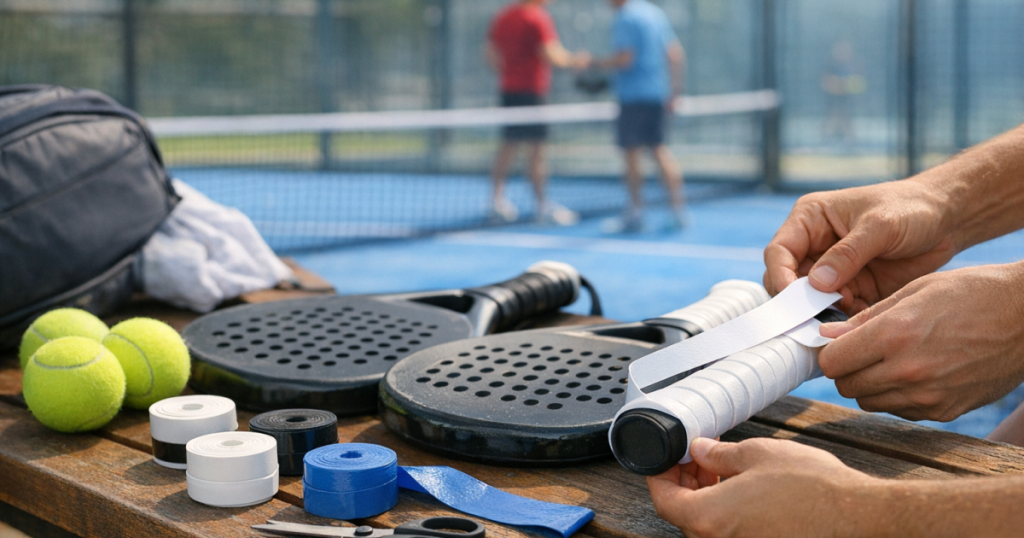
A shared racket should be easy to refresh quickly between sessions. Look for overgrips that come with finishing tape and are straightforward to wrap. You do not need to be perfect at fitting them, but you should avoid lumps, big overlaps, or loose ends that move during points.
If you have never fitted one before, practise at home rather than rushing five minutes before court time. Start at the base of the handle, overlap slightly as you wrap upwards, and secure the end neatly. If the grip feels ridged or uneven, take it off and try again.
Good overgrip styles for club sharing
There are three sensible routes for shared rackets. None is automatically right for every club, but each solves a slightly different problem.
- Absorbent overgrips: Better for players with sweaty hands or warm indoor courts. They tend to feel drier in the hand, though they may need replacing more often if heavily used.
- Tacky overgrips: Useful when players want a secure feel and do not want the racket twisting in the hand. The trade-off is that some people find very tacky grips uncomfortable or too sticky.
- Basic multipack overgrips: Ideal for clubs, families or groups where the priority is regular replacement rather than a premium feel. Check the pack quantity and whether finishing tape is included before buying.
For storing spares, keep them sealed and away from damp towels or wet clothing. The tips in keeping spare overgrips dry in your padel bag are especially useful if you carry a few replacements to every session.
Recognisable examples that make sense
You do not need a rare or highly specialised grip for this job. The following are well-known racket-sport overgrips that many players will recognise. Before buying, check the pack size, colour, stated feel, and whether the grip is listed for padel, tennis or general racket use.
- Wilson Pro Overgrip: a familiar option for players who like a classic tacky feel. It is widely recognised, which can make it a low-risk starting point for shared rackets.
- Head Prime Tour Overgrip: worth considering if you want a mainstream grip from a major racket brand and prefer a clean, club-friendly feel.
- Babolat Pro Tour Overgrip: another common choice from a padel and racket-sport brand, suitable to compare if you are trying a few different feels.
- Tourna Grip Original: known for a drier style of feel, which may suit players who struggle with sweaty hands.
White or light-coloured grips can be useful because they show dirt quickly, which sounds like a negative but can be helpful for shared equipment. If it looks tired, replace it. Dark colours may look cleaner for longer, but they can also hide when a grip is past its best.
How to set up shared rackets before a session
Step 1: Check the existing grip
Before players arrive, look at the handle rather than assuming it is fine. If the overgrip is shiny, fraying, lifting at the edges, or has lost its surface texture, replace it. A grip can look acceptable at a glance but feel slippery once a rally starts.
Step 2: Fit a fresh overgrip neatly
Wrap with even tension. Do not pull so hard that the grip stretches oddly, and do not leave it loose. Keep the overlap consistent so the handle feels smooth from bottom to top. Finish with tape so there is no loose flap catching on a player’s hand.
Step 3: Keep a spare in the bag
If the racket is likely to be used by more than two people, have at least one spare ready. A fresh grip takes only a few minutes to fit once you know what you are doing, and it can save the session if the first one gets soaked early.
Step 4: Rotate rackets considerately
If several beginners are sharing, try not to give the same damp racket to the next player without checking the handle. Wipe the grip with a clean towel if needed, but do not treat that as a substitute for replacing it when it is clearly worn.
For brand-new players, small etiquette habits like this make the whole session feel less intimidating. If you are helping someone along to their first game, the advice in what to expect at your first padel session is a useful companion read.
What to avoid
- Do not share a racket with a loose grip: It can distract the player and make the racket feel less secure during basic shots.
- Do not keep using a soaked overgrip: It is uncomfortable and poor etiquette when the racket is being passed around.
- Do not make the handle too bulky: Adding layer after layer may feel cushioned, but it can make the racket awkward for newer players.
- Do not assume anti-slip means suitable for everyone: Some grips feel too sticky for players who prefer to adjust their hold between shots.
- Do not leave old grips in the club bin if there is no suitable waste point: Keep a small bag for used grips and dispose of them properly after the session.
Small extras that help
Overgrips solve part of the problem, but not all of it. A small towel, a change of wristbands, and spare finishing tape can make shared rackets much easier to manage. Wristbands are particularly helpful because they stop sweat running down onto the hand and handle during longer games.
If sweaty hands are the main issue in your group, the Wilson padel wristbands review explains why such a small accessory can make a noticeable difference on court.
Common questions
How often should you replace an overgrip on a shared padel racket?
Replace it whenever it feels slippery, looks dirty, smells unpleasant, or starts lifting at the edges. For busy club sessions, that may be much more often than on a personal racket.
Are tennis overgrips okay for padel rackets?
Many players use racket-sport overgrips across tennis and padel, but always check the length, width and fitting instructions. If it wraps neatly and feels secure on the padel handle, it should be suitable for normal club use.
Is a tacky or dry overgrip better for beginners?
A moderate tacky grip is often the easiest starting point because it helps the racket feel secure. If players’ hands get very sweaty, a drier absorbent grip may work better.
Should each player have their own overgrip?
For regular players, yes, having your own racket or at least your own freshly wrapped grip is more comfortable. For occasional tasters, a clean shared grip is usually enough.
Can you put a new overgrip over an old one?
You can, but it is not ideal if the old one is dirty, damp or already loose. For shared rackets, remove the worn overgrip first so the handle stays cleaner and the new wrap sits properly.
The big picture
The best overgrip for sharing padel rackets is the one your group will actually replace before it becomes unpleasant. Prioritise a clean feel, easy fitting and sensible storage over chasing a specialist texture. A few spare grips in the bag can make beginner sessions smoother, more hygienic and more welcoming.
If you run casual games, lend rackets to friends, or help newer players settle into club play, treat overgrips as part of the session setup. Fresh balls, clear rotation and a clean handle all send the same message: everyone is there to enjoy the game.