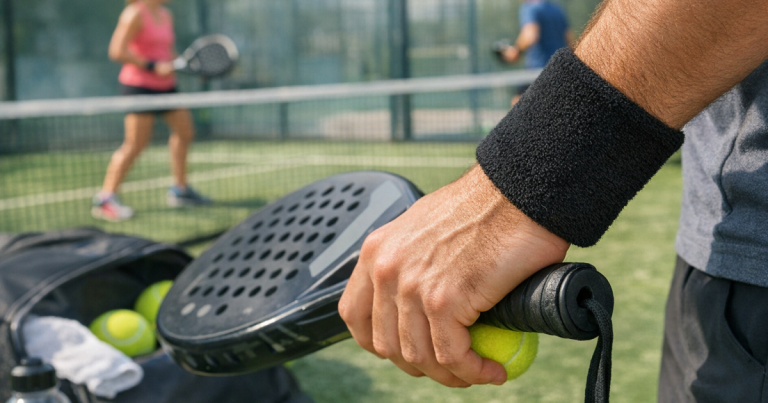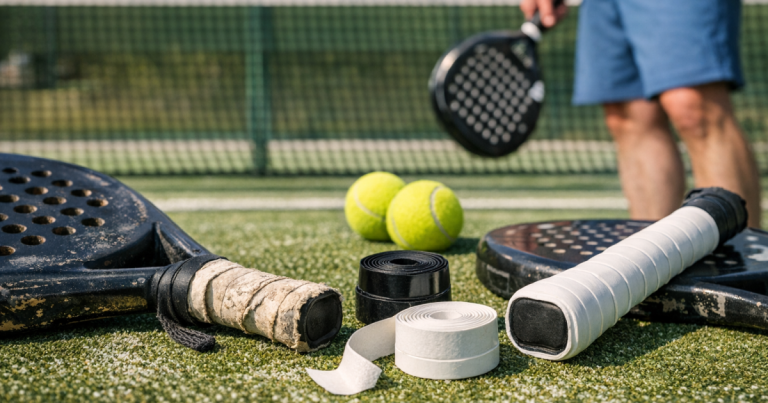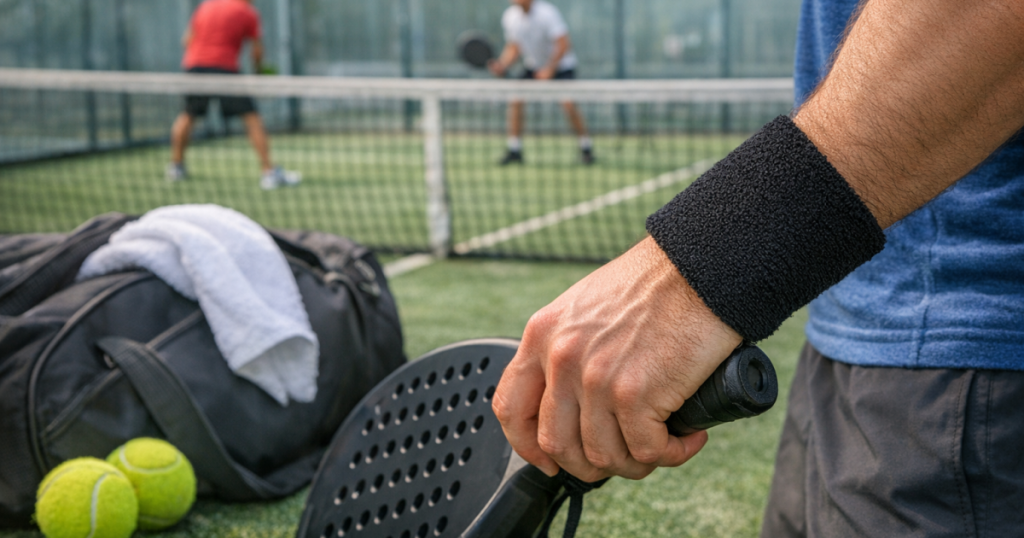
Small accessories can make the difference between feeling settled on court and constantly fussing with your grip. This Head Padel Wristband review is for beginners wondering whether a simple sweat band deserves space in the kit bag or is just extra clutter.
Product overview
Quick verdict: the Head Padel Wristband is a sensible, low-fuss padel accessory if your hands get sweaty, you play longer social sessions, or you dislike pausing between points to find a towel. It will not transform your technique, but it can remove one small distraction that often bothers newer players.
The idea is simple. A wristband sits on your wrist to help manage sweat before it reaches your hand, while also giving you a quick way to wipe your forehead or palm between points. For padel, where rallies can be stop-start and grips can quickly feel slippery indoors, that is more useful than it first sounds.
Head is a well-known racket-sport brand, so the appeal here is not novelty. It is the reassurance of buying a recognisable accessory from a company already established in tennis and padel equipment. For a beginner, that matters because you probably do not want to overthink every small item in your first kit. A wristband should be comfortable, washable, easy to pack, and unobtrusive during play.
The main caution is that wristbands vary by retailer listing, pack format, colour and size. Before buying, check whether the listing is for one wristband or a pair, what material blend is stated, and whether the dimensions suit how much coverage you want. A short wristband may feel lighter; a taller cuff usually gives more wipe area but can feel warmer.
Key specs
- Product name: Head Padel Wristband.
- Brand: Head.
- Product type: padel wristband for racket-sport use.
- Main purpose: sweat management around the wrist and a quick wipe surface between points.
- Best use case: social padel, coaching drills, club nights and warmer indoor sessions.
- Pack format: verify the retailer listing, as wristbands can be sold individually or in pairs.
- Material and care: check the product label or retailer description before purchase, then follow the wash instructions rather than assuming all wristbands can be treated the same.
- Fit check: it should feel secure without leaving deep pressure marks or distracting you during swings.
Pros and cons
Pros
- Useful for sweaty hands: it helps reduce sweat running from the forearm towards the racket hand, which can make grip changes feel less rushed.
- Simple beginner upgrade: there is no setup, sizing complexity or technique adjustment beyond wearing it comfortably.
- Easy to keep in a padel bag: it takes very little space and is handy for coaching sessions where you hit lots of balls in a short time.
- Recognisable brand: Head is familiar in racket sports, which makes it an easy choice if you prefer sticking with established names.
- Works alongside other grip habits: it complements overgrips, towel breaks and sensible warm-up routines rather than replacing them.
Cons
- Not essential for every player: if your hands stay dry and you already use a towel comfortably, it may not change much.
- Fit can be personal: some players dislike anything tight around the wrist, especially during volleys and overheads.
- Needs regular washing: sweat accessories quickly become unpleasant if they are left damp in a bag after a match.
- Listing details need checking: colour, cuff height, material blend and whether it comes as a pair are details you should confirm before ordering.
- It will not fix a poor grip: if the racket twists because the grip is worn, too smooth or badly fitted, a wristband only solves part of the problem.
Performance in real use
The Head Padel Wristband makes most sense once you are playing enough points for sweat to become noticeable. During a short first taster session, you may barely think about it. During a 90-minute club game, a coaching drill block, or a busy indoor evening, it starts to feel more useful because you are not reaching for a towel after every rally.
Sweat control: this is the main reason to buy it. A wristband gives sweat somewhere to go before it reaches your fingers. For beginners, that can reduce the urge to over-squeeze the racket handle, which often makes shots tense. It is not a substitute for using a fresh overgrip when needed, but it can help your hand feel more predictable.
Comfort: comfort depends on your wrist size and tolerance for cuff pressure. The right feel is snug rather than tight. You should be able to move freely through bandejas, volleys, lobs and serves without noticing the band. If you are between preferring minimal kit and wanting maximum absorbency, check the cuff height carefully before buying.
Grip confidence: one of the underrated benefits is mental. Newer players often lose confidence when the racket starts to slip, even slightly. A wristband can reduce that distraction, letting you focus on court position, shot choice and recovery after the ball hits the glass. It will not add spin or power, but it can help you feel less rushed.
Indoor and outdoor use: in GB, a lot of beginners experience both indoor centres and outdoor courts. Indoors can feel warm and still, while outdoor sessions bring wind, colder starts and sudden changes in effort. If you are deciding where to play first, the differences are worth understanding; our guide to indoor versus outdoor padel explains the practical trade-offs.
During drills: wristbands are particularly helpful when a coach is feeding repeated volleys, smashes or transition balls. You do not always have time to walk to the side of the court, so a quick wipe between feeds is convenient. For longer drill sessions, it also pairs well with bringing a towel and enough water.
Care and durability: sweat accessories need better habits than many players give them. Do not leave the wristband damp at the bottom of a bag all week. Let it dry after play, wash it regularly, and follow the care label. If it loses elasticity, feels rough, or stops absorbing well, replace it. The product is not complicated, so durability is mostly about fabric quality and how you treat it between sessions.
Value: the value case is strongest if you already know sweat affects your game. If you only play once a month and rarely feel your grip slipping, it is a nice-to-have. If you are moving into weekly club play, coaching blocks or matchplay ladders, it becomes a more sensible addition because the cost is usually low compared with rackets, shoes and bags. Always compare current UK retailer prices and check delivery terms before deciding.
Who it’s best for / who should skip it
The Head Padel Wristband is best for beginners and early-stage players who want a tidy, affordable way to manage sweat during social games. It is also a good fit if you play indoors, train in busy drill groups, or find yourself wiping your hands on your shirt between points.
It also suits players who prefer simple, familiar gear. You do not need to understand racket balance, carbon faces or shoe outsole patterns to decide whether a wristband helps. Put it on, play a normal session, and you will know quickly whether it earns a place in your bag.
Skip it if you dislike wrist pressure, rarely sweat during play, or already have a routine that works. You should also prioritise other upgrades if your main problem is footwork, warm-up quality or a worn racket grip. A wristband can support comfort, but it should not distract from the basics that actually improve your padel.
For example, if you often start slowly or feel stiff in your first few games, spend time on a better pre-match routine before buying more accessories. This social padel warm-up guide is a more important next step than any small kit purchase.
Alternatives
If you like the idea but want to compare before choosing, keep the alternatives simple. You do not need a specialist padel-only option; many tennis wristbands work because the movement and sweat-control needs are similar. What matters is comfort, absorbency, cuff height and whether the pack format suits you.
- Nike Swoosh Wristbands: a mainstream racket-sport option worth comparing if you prefer Nike accessories. Check the stated size and whether the listing is a single item or a pair.
- Adidas Tennis Wristband: another recognisable choice if you want a simple court wristband. Verify the material blend, colour and cuff height before buying.
If your bigger question is whether clothing or accessories should come first, our comparison of a Nike padel shirt and Adidas padel shorts gives a useful clothing-focused angle. For many beginners, breathable clothing, suitable shoes and a fresh overgrip will matter more than matching small accessories.
Helpful questions
Do you need a wristband for padel?
No, it is optional. It becomes useful if sweat reaches your hand, your racket grip feels slippery, or you want a quick wipe option without walking to your towel after every point.
Should you wear it on your racket hand?
Most players wear it on the racket-side wrist to help stop sweat running towards the hand. You can also wear one on each wrist if that feels more comfortable and the pack includes two.
Can a tennis wristband work for padel?
Yes. Padel and tennis wristbands are used in very similar ways. Focus on comfort, absorbency, fit and washability rather than the label alone.
Will it improve my grip?
It can help your hand stay drier, which may make the grip feel more secure. It will not repair a worn overgrip or fix a handle that is the wrong thickness for your hand.
How many wristbands should a beginner own?
One or two is enough for most beginners. If you play several times a week, having spares helps because you can wash one while keeping another ready in your bag.
Verdict + score
The Head Padel Wristband is a small but worthwhile accessory for beginners who struggle with sweat, slippery hands or constant towel breaks. It is not a must-buy for every new player, and you should check pack format, size and material details before ordering, but it does its job without adding complexity. For regular social padel and coaching sessions, it earns 8.1/10.
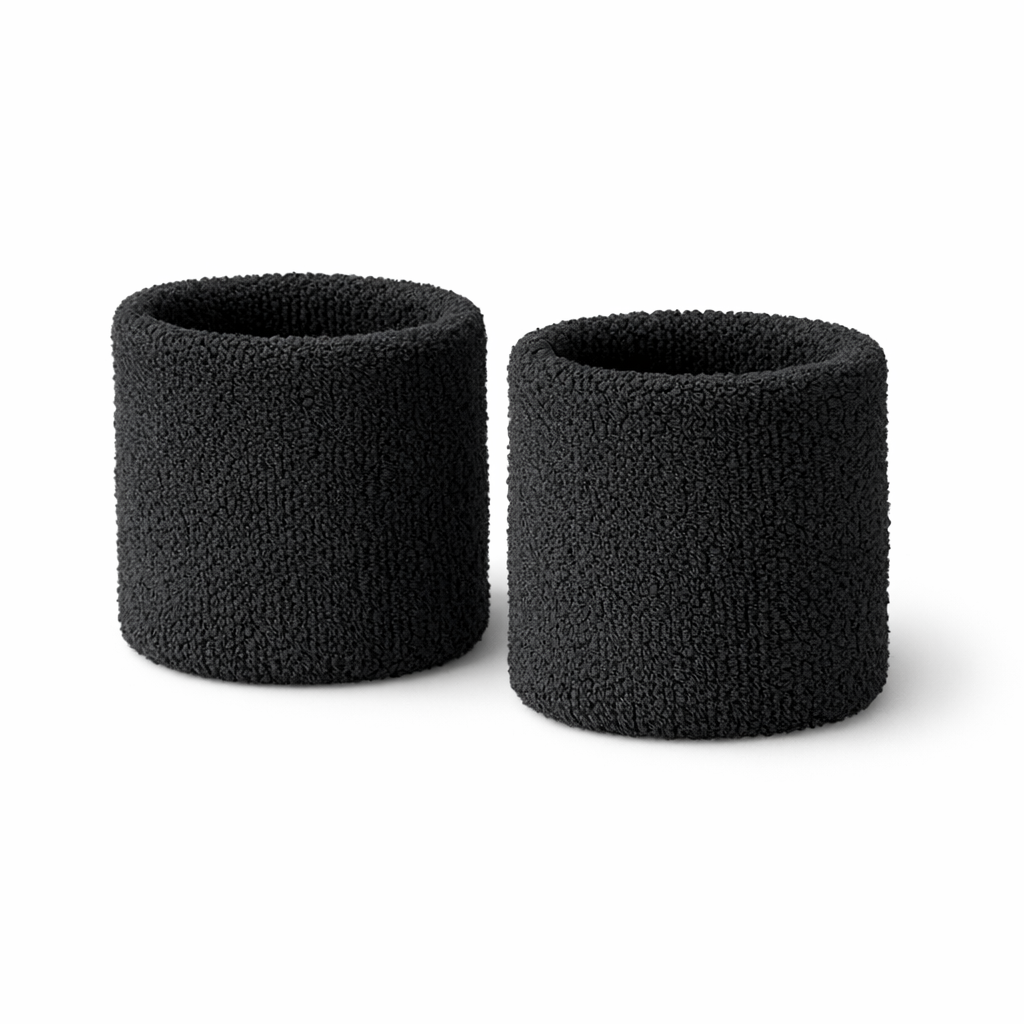
Head Padel Wristband
For regular social padel and coaching sessions, it earns 8.