Getting better at padel between club nights can feel a bit messy: one week your serve improves, the next week your positioning falls apart. For this The Padel School review, the useful question is simple: can an online coaching resource help new club players practise with more purpose, without replacing the value of real court time?
Quick verdict: The Padel School is worth considering if you are already playing regularly and want clearer ideas for what to work on next. It is less useful if you only watch lessons passively, rarely practise, or need direct feedback on technique from a coach standing beside you.
If you do try it, make it active from day one: choose one topic, take it to your next hit, and judge it by whether it improves your decision-making on court rather than how much content you consume.
Product overview
The Padel School is a padel coaching and education brand built around online learning content for players who want to understand the game better. For a new club player, its appeal is not just that it explains shots; it can also help connect the dots between technique, positioning, tactics and common match situations.
That matters because early-stage padel improvement is rarely about one magic shot. Most beginners need to learn when to slow the ball down, when to move forward, how to defend the glass, how to serve legally and how to stay connected with a partner. A structured coaching resource can make those themes feel less random.
The important caveat is that online coaching is still a supplement. It cannot see your grip, timing, footwork or contact point in real time. If you are developing a recurring fault or struggling with confidence, a face-to-face coach or a small group session can correct things much faster.
Key specs
- Reviewed product: The Padel School
- Type: Online padel coaching and learning resource
- Main audience: Beginners, improvers and club players who want structured padel advice
- Best use: Turning club play into focused practice rather than random games
- Equipment needed: Your usual racket, padel balls and access to a court for drills and repetition
- UK relevance: Useful for players building confidence before regular club nights, leagues or group coaching
- Cost and access: Check the official The Padel School website for current formats, pricing, membership terms and cancellation details before signing up
Pros and cons
Pros
- Clearer structure than jumping between random padel clips before a match.
- Helpful for understanding why a shot or position matters, not just how it looks.
- Good fit for new club players who want to arrive at sessions with one or two things to practise.
- Can make coaching terms such as bandeja, vibora, chiquita and transition play feel less intimidating.
- Works well as homework between lessons, club nights or friendly matches.
Cons
- No online lesson can give instant correction on your own technique during a rally.
- It can become overwhelming if you watch too much and practise too little.
- Players who only play occasionally may struggle to turn the ideas into muscle memory.
- You still need court time, a partner or group, and patience to see meaningful improvement.
- Current access options, prices and included content should be verified before paying.
Performance in real use
The Padel School is strongest when you use it as a weekly improvement plan. Instead of watching five unrelated lessons, pick one theme for your next session: a safer serve, better net positioning, more patient defending, or a simpler lob. That is where online coaching becomes practical rather than just interesting.
For new club players, the biggest benefit is language. Once you understand what a coach or stronger partner means by “recover your position”, “take the net” or “use the glass”, club play becomes less chaotic. You start noticing patterns earlier and making calmer choices.
The serving content is particularly relevant for beginners because serve faults are common at social sessions. Before you drill serve technique, it is worth checking the basic padel serve rules on position, bounce, height and faults so you are practising something match-legal rather than just comfortable.
Where it performs less well is personalised correction. If you keep slicing the ball into the side glass, standing too close to the net, or mistiming volleys, you may understand the explanation but still repeat the same habit. That is not a failure of the resource; it is the normal limit of online learning. Video can show the model. A coach or experienced player can spot your version of the mistake.
It also rewards players who are honest about their level. New club players often chase advanced attacking shots too early, especially after seeing polished demonstrations. The better approach is to prioritise reliable foundations: serve consistency, first volley placement, simple lobs, defending after the glass, and moving with your partner. If The Padel School helps you choose those basics over flashy winners, it earns its place.
For value, the key question is usage. If you watch one lesson, practise it twice, and feel more organised in club play, that is useful. If you subscribe, browse occasionally and never take notes or drill the advice, the value drops quickly. Before committing, check what content is included, how often it is updated, whether there is any community or feedback element, and whether the access model suits how often you actually play.
Who it’s best for / who should skip it
The Padel School is best for new club players who are past their first taster session and now want to become more consistent. If you are playing once or twice a week, joining club nights, or starting to enter friendly ladders, it can give your practice some direction.
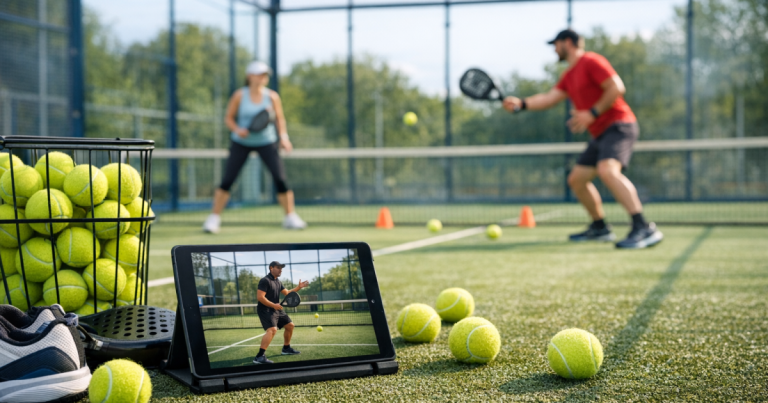
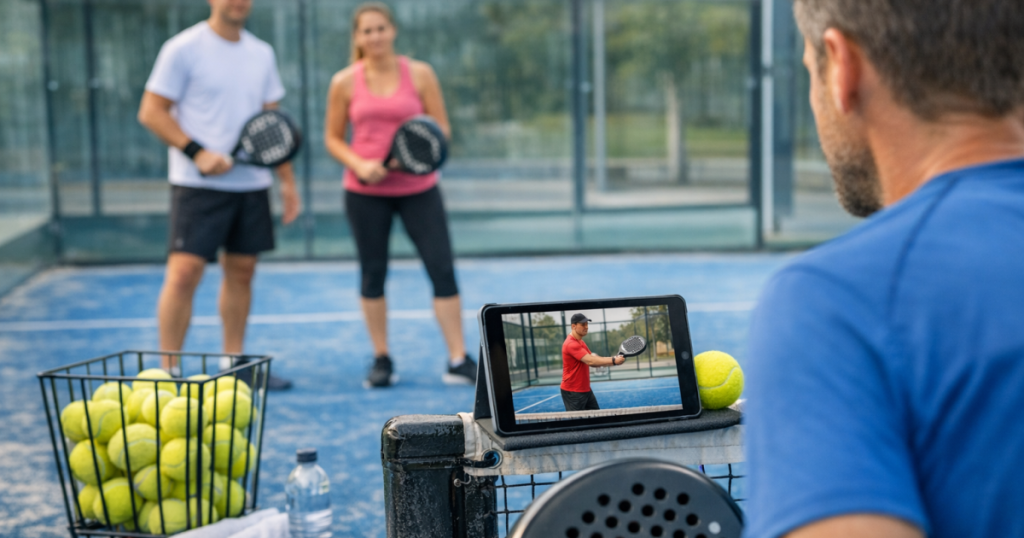
It is also a good fit if you like learning visually. Some players improve faster when they can watch a movement, pause it, revisit it, and then try it on court. That style suits padel well because many mistakes come from positioning and timing rather than raw power.
You should skip it, or at least delay paying for it, if you are still deciding whether padel is for you. At that stage, the better investment is simply getting on court, borrowing kit where possible, and learning the rhythm of doubles play. If you are preparing for your first social session, our guide to what to wear to your first padel club night may be a more immediate next step.
You may also be better served by in-person coaching if you have a stubborn technical issue, feel nervous in rallies, or want someone to build drills around your exact level. Online content is excellent for understanding; live coaching is better for diagnosis.
Alternatives
The most obvious alternative is local group coaching. In the UK, many clubs and operators run beginner and improver sessions where a coach can see your technique, adjust your movement, and pair you with players at a similar level. That is usually the quickest route if you want feedback rather than self-guided learning.
Another alternative is free padel coaching content from established YouTube channels and coaches. This can be useful if your budget is tight, but it is easier to drift between topics without a plan. If you go down the free route, build your own structure: one skill per week, one drill per session, and one match habit to test.
For many new club players, the strongest setup is not either-or. Use online lessons to understand the idea, group coaching to correct the movement, and club matches to make the habit stick under pressure.
Questions people ask
Is The Padel School enough without in-person coaching?
It can help a lot with understanding tactics and technique, but it is not a full replacement for a coach watching you play. Use it alongside court time if you want the best results.
How should a beginner use it each week?
Pick one topic, write down one simple cue, and practise it during your next session. Avoid trying to change your serve, volleys, lobs and defence all at once.
Will it help before joining club nights?
Yes, if you focus on basics such as positioning, serving, defending and partner movement. Do not worry about advanced attacking shots before you are comfortable in rallies.
Should I pay straight away?
Check the current access options, included content and cancellation terms first. It makes most sense if you already play often enough to practise what you watch.
Verdict + score
The Padel School is a strong learning tool for new club players who want structure, clearer explanations and better practice habits between sessions. It is not a shortcut, and it will not replace the sharp eye of an in-person coach, but it can make your next few months of padel feel far less random. If you are playing regularly and are ready to practise with intent, it is worth a serious look. Score: 8.1/10.
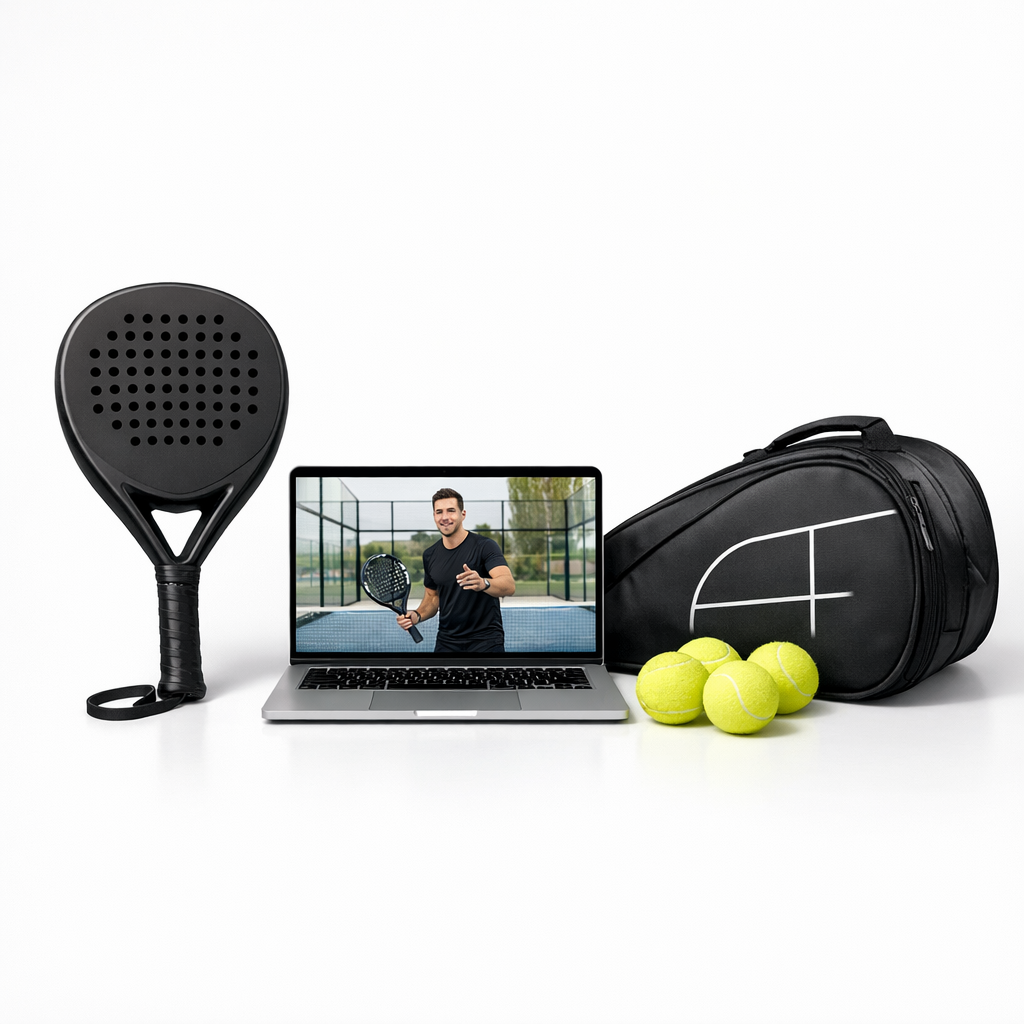
The Padel School
Truste
You might also like: Bullpadel Hack 02 2022 Padel Racket vs Wilson Blade Padel Racket.