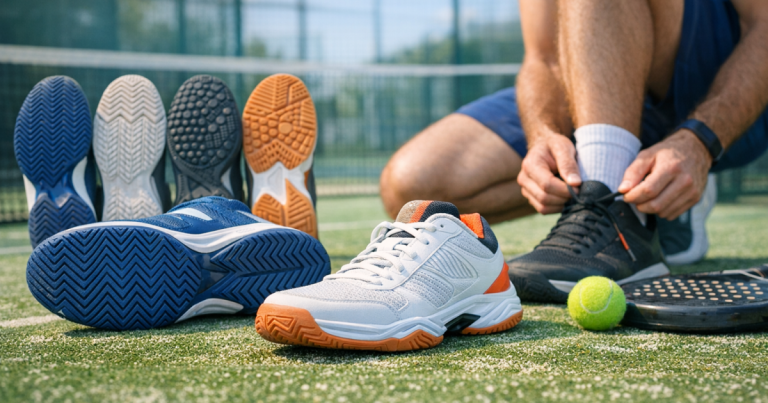
Your shoes affect more than comfort: they change how confidently you stop, turn, split-step and recover after using the glass. A good padel shoes guide should help you understand grip, support and court surface without making you feel you need a pro-level setup for your first club session. For most beginners in the UK, the right choice is a stable court shoe with controlled traction, a secure heel, and enough cushioning for repeated short movements on sanded artificial turf.
The short version
Padel shoes should give you grip without locking your feet to the court, support when you move sideways, and comfort over a full booking rather than just a quick try-on. Running trainers are usually poor for padel because they are built for forward motion, not repeated lateral braking, lunging and twisting.
- Grip: choose a sole that suits artificial turf and lets you pivot rather than stick abruptly.
- Support: look for a secure heel, stable midfoot and side-to-side confidence.
- Cushioning: enough comfort for quick stops and starts, but not so soft that the shoe feels unstable.
- Fit: snug around the heel and midfoot, with enough toe room for stopping movements.
- Court surface: check the surface at your usual club before assuming one outsole suits every court.
If you are still assembling the rest of your kit, the first-session gear checklist is a useful companion because it keeps the focus on what you actually need for early club play.
Why padel shoes are different from normal trainers
Padel is played in short bursts. You split-step, shuffle, brake, rotate, push off, then recover to the middle. A shoe that feels fine for walking to the court can feel vague once you start defending corners or moving into a volley.
Running shoes tend to have taller, softer cushioning and tread designed for straight-line movement. That can make them feel comfortable at first, but less secure when your weight shifts sideways. Gym trainers can be flatter, but they may not have the right outsole for an artificial-turf padel court. Tennis clay shoes sometimes work well on sanded surfaces, but they are not automatically perfect for every padel court.
A dedicated padel or suitable court shoe aims to balance three things: traction, lateral support and controlled flexibility. You want to move confidently, not feel glued to the floor. That difference matters most once rallies get quicker and you begin using the walls instead of only hitting from the baseline.
Grip: enough traction, not too much
Beginner players often think maximum grip is always best. In padel, too much grip can be awkward because you need to pivot and make small adjustments. If the sole catches hard while your body keeps turning, your movement feels clumsy and your timing suffers.
On many UK club courts, you will see artificial turf with visible sand or textured turf designed to manage speed and slide. The amount of sand, court age and maintenance all affect how shoes behave. A shoe that feels controlled on one club court can feel slippy or grabby somewhere else.
Common outsole patterns
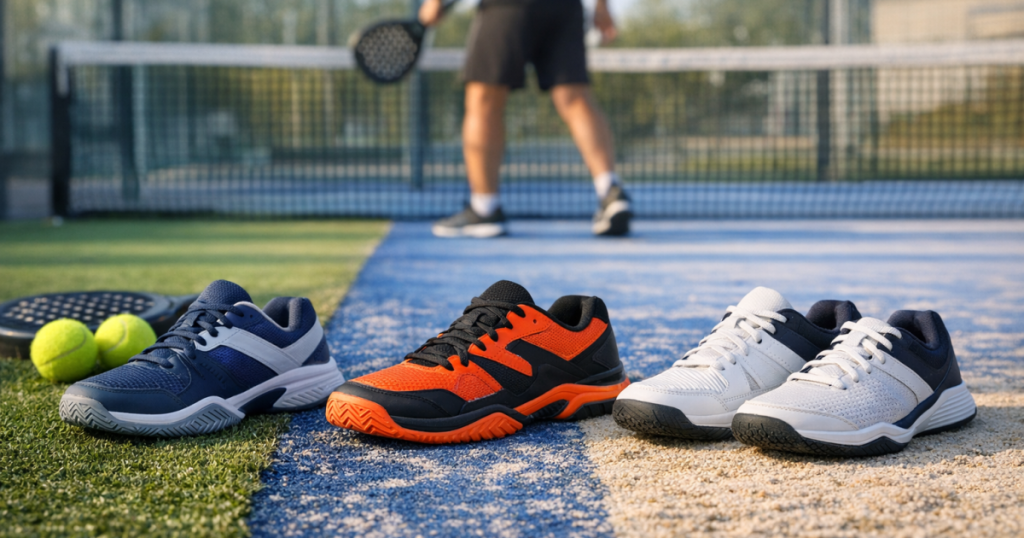
- Herringbone or clay-style soles: often used for grip on sanded artificial turf because the pattern helps with controlled movement and release.
- Mixed or hybrid soles: designed to work across more than one court type, useful if you play at different clubs.
- All-court soles: can be fine on some surfaces, but check that they do not feel too slick on sanded turf.
The key test is practical: can you stop, turn and push off without sliding unexpectedly or feeling your foot stuck? During a warm-up, try small side steps, gentle pivots and controlled braking before the match pace rises.
Support: what beginners should actually notice
Support is not just about a shoe feeling stiff. A supportive padel shoe should help your foot stay centred when you move sideways. The heel should not lift noticeably, the upper should not let your foot spill over the edge, and the sole should not feel wobbly when you change direction.
If you are new to padel, you may not yet know how much support you need. That is normal. Start by noticing where your current trainers feel weak. Do your feet slide inside the shoe? Do you hesitate when pushing off? Do you feel unstable when reaching wide for a volley? Those clues tell you more than a product description.
Some players prefer a lighter, more flexible shoe because it feels quick. Others feel safer in a more structured shoe. There is no single correct answer, but early-stage players usually benefit from stability over extreme lightness. You are still learning footwork, and a shoe that feels planted can help you relax into better movement.
For a real-world starter example, our Wilson Rush Pro 3.0 review looks at how one court shoe behaves for early club sessions rather than treating it like a professional performance test.
Match the shoe to the court surface
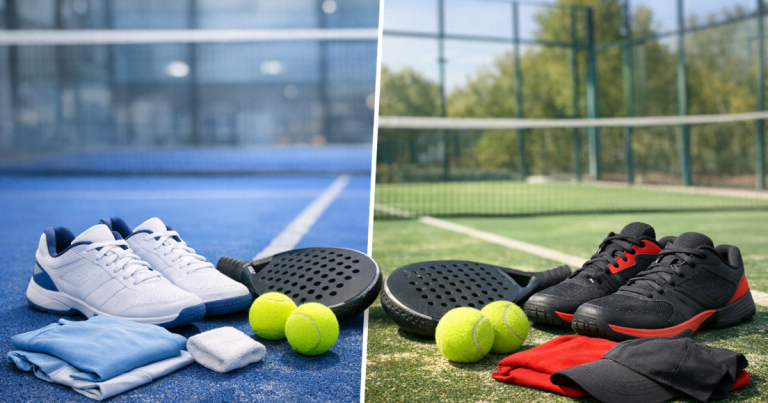
Padel courts can look similar from the gate but feel quite different underfoot. In the UK, many beginner sessions take place on artificial turf courts, commonly outdoors or in covered venues. Some surfaces feel sandy and slightly loose; others feel more compact and quicker.
Before buying or switching shoes, check the surface where you play most often. If you play Americano nights, coaching sessions and casual games all at the same club, your main court surface matters more than theoretical versatility. If you rotate between venues, a hybrid sole may be more forgiving.
Surface clues to look for
- Lots of visible sand: you may want a sole pattern that gives grip while still allowing small slides and pivots.
- Very grippy turf: avoid shoes that feel like they catch aggressively during turns.
- Worn or patchy areas: be cautious during warm-up because grip may change from one part of the court to another.
- Indoor or covered courts: check whether the surface plays faster or cleaner than outdoor courts at the same venue.
If you are trying new clubs, the LTA Padel Court Finder review can help you think about finding suitable UK club sessions and checking venue details before you book.
Fit and comfort checks before committing
A padel shoe should feel secure straight away, but not painfully tight. Try shoes with the socks you expect to wear on court. Lace them properly, stand up, then mimic the movements you will actually use: side steps, split-steps, short lunges and small pivots.
- Heel hold: your heel should stay down when you push forward and sideways.
- Toe space: leave enough room that your toes do not jam hard into the front when you stop.
- Midfoot lockdown: the shoe should hold your foot without needing the laces pulled uncomfortably tight.
- Width: if your foot bulges over the side platform, the shoe may feel unstable during lateral moves.
- Bend point: the shoe should flex naturally around the forefoot, not collapse through the middle.
Do not judge comfort only while standing still. Padel involves repeated low, quick movements. A shoe that feels plush in the shop can feel too soft once you start changing direction. Equally, a very firm shoe may feel secure but tiring if it does not suit your feet.
Examples of sensible court-shoe directions
You do not need to chase the most expensive shoe in the shop. It is more useful to understand the type of shoe you are trying to find. For many beginners, an entry-level or mid-range padel shoe from a recognised court-sport brand is enough, provided the grip pattern and fit suit the courts you use.
Named examples can help you recognise the category, but always check current sizing, outsole version and suitability for your surface before buying. The Asics Gel-Padel Pro 3 is an example of a padel-specific shoe range that many beginners will come across when browsing. The Head Motion Pro Padel is another recognisable padel shoe line, aimed at court movement rather than general training. If you are looking at higher-end padel footwear, the Bullpadel Vertex Vibram 24V is a named example you may see, but that does not mean it is automatically the right level for a new player.
The practical lesson is simple: use product names as reference points, not shortcuts. Your feet, your club surface and your movement confidence matter more than the badge on the side.
Beginner mistakes that make shoes feel worse
Most shoe problems are not dramatic; they show up as small hesitations. You feel slow recovering to the middle, nervous pushing off near the glass, or unsure when approaching the net. Sometimes the cause is technique, but footwear can make those issues more obvious.
- Using running shoes for regular play: comfortable cushioning does not replace lateral support.
- Buying for looks only: a clean white trainer may not have the sole or structure you need.
- Ignoring the court surface: a shoe that suits one venue may not suit another.
- Choosing too much grip: feeling stuck can be just as unhelpful as sliding.
- Keeping worn shoes too long: once the sole pattern is flattened or the upper feels loose, movement confidence drops.
When should you replace padel shoes?
There is no exact number of sessions that works for everyone. A player doing one gentle coaching session a week will wear shoes differently from someone playing several competitive club matches. Instead of counting weeks, look for signs.
Replace or rotate your shoes when the outsole has lost its useful pattern, the heel no longer feels secure, the upper has stretched so your foot moves inside, or the cushioning feels uneven. Also pay attention to how you feel after playing. If your feet or lower legs feel unusually tired after sessions that used to feel fine, worn footwear may be one factor.
Outdoor UK conditions can also shorten shoe life. Damp walkways, gritty paths and wearing court shoes off court can wear down the sole faster. Keep them for playing where possible, loosen the laces when taking them off, and let them dry naturally after wet or humid sessions.
FAQ
Can I play padel in tennis shoes?
Yes, some tennis shoes can work well, especially clay or suitable all-court models on sanded artificial turf. Check grip, lateral support and how easily you can pivot on your usual court.
Are running trainers bad for a first padel session?
For a one-off taster, they may be acceptable if the club allows them and the court is dry, but they are not ideal for regular play because they lack side-to-side support.
Should padel shoes feel tight?
They should feel secure, not tight. Your heel and midfoot should be held firmly, while your toes need enough space for braking and short lunges.
Do I need different shoes for indoor and outdoor padel?
Not always. The surface matters more than whether the court is indoors or outdoors. Check whether the courts are sandy, compact, worn or especially grippy.
How can I tell if a shoe has too much grip?
If your foot catches during pivots or you feel awkward turning after shots, the sole may be gripping too aggressively for that surface or your movement style.
Main lessons
The right padel shoes do not need to be flashy. They need to help you move with confidence, stop under control and enjoy longer rallies without worrying about your footing. Start with your court surface, then check grip, support and fit in that order.
If you are still early in your padel journey, keep the decision sensible: choose a court shoe that suits regular club play, avoid running trainers once you start playing often, and replace shoes when they stop giving you reliable movement. Good footwear will not fix every shot, but it can make learning the game feel much steadier.