A grip that feels slightly wrong can make every beginner shot harder: volleys twist, serves feel rushed, and your forehand can tighten before you have even settled into a rally. This padel grip guide explains the simple parts you can control: handle size, overgrips, sweat management and comfort. Most new players do not need a complicated setup. They need a handle that lets the racket sit securely in the hand without forcing a squeeze.
In brief
- Most padel rackets come with a fairly standard handle, so beginners usually adjust feel by adding or changing overgrips.
- A grip that is too small can twist in your hand; a grip that is too large can make wrist movement and quick reactions feel restricted.
- Start with one overgrip, play a session or two, then adjust rather than building up several layers straight away.
- Sweaty hands, outdoor damp and worn overgrips are different problems, so they need different fixes.
- Comfort matters more than copying another player’s setup, because hand size, pressure and playing style vary.
Why grip comfort matters so much in padel
Padel is full of short reactions: blocking at the net, defending off the glass, shaping a lob and softening a chiquita. If you are squeezing the racket too tightly because the handle feels insecure, those movements become tense. Beginners often blame the racket face, the ball or their technique when the handle is quietly causing the problem.
The aim is not to make the racket feel glued to your hand. You still need to change grip pressure during a point. A relaxed hold helps you cushion defensive shots and accelerate when you have time. The right setup simply gives enough security that you are not panicking about the racket moving.
There is also a confidence benefit. When the handle feels predictable, you can focus on court position and shot choice rather than constantly re-gripping between balls. That is especially helpful in early club matches, where the speed of the game can feel quicker than a lesson or taster session.
Grip size in padel is usually adjusted, not selected
Tennis players are used to choosing a grip size before buying a racket. Padel is different. Many padel rackets are sold with a standard handle size, and players customise the handle with overgrips. That makes the first setup less intimidating, but it also means you need to pay attention to how the handle feels once you have played with it.
A handle may be too small if the racket turns on off-centre hits, if you feel the need to crush the handle, or if your fingers seem to wrap too far around the grip. A handle may be too large if your wrist feels blocked, if fast changes at the net feel clumsy, or if you struggle to relax your fingers between shots.
For most adult beginners, one overgrip over the factory grip is a sensible starting point. Some players prefer two, particularly if they have larger hands or like a fuller handle. More than that can work, but it changes the balance and feel of the racket, so it is worth adding layers slowly and testing on court rather than deciding at home.
For younger players, the racket itself matters as well as the grip. A handle that feels manageable on a junior racket can feel awkward on a full adult frame. If you are helping a child or teenager get started, read the guidance on adult vs junior padel rackets before trying to solve everything with extra grip layers.
Overgrips, base grips and what each one does
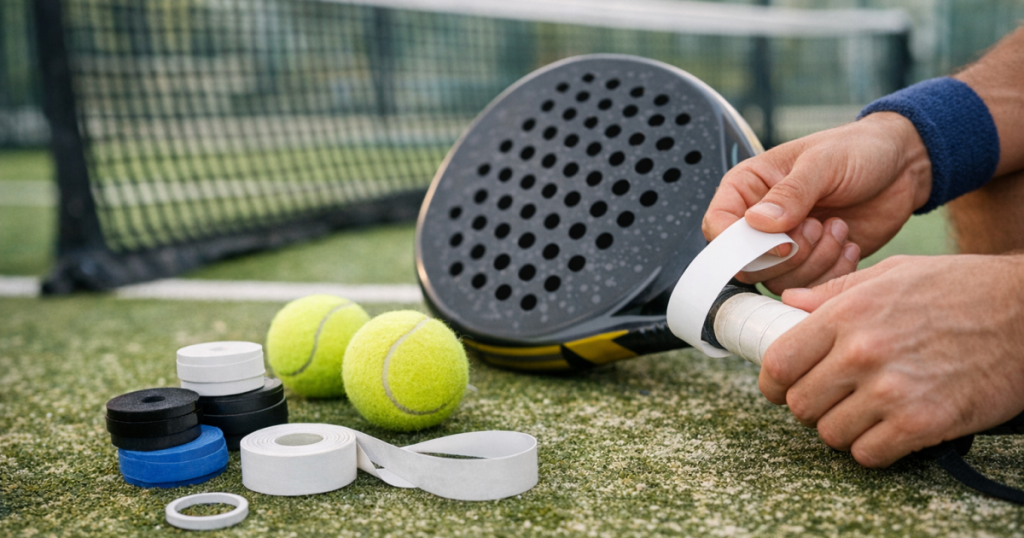
The grip already fitted to the racket is usually the base grip. It provides the main cushioning and shape over the handle. An overgrip is the thinner layer you wrap on top. It is the part most players replace regularly because it takes the sweat, friction and day-to-day wear.
Beginners sometimes remove the original base grip too early. That is rarely necessary unless it is damaged, uncomfortable or has been fitted poorly. In most cases, leave the base grip in place and experiment with overgrips first. It is cheaper, quicker and easier to reverse.
Overgrips tend to fall into a few broad feel categories:
- Tacky overgrips: designed to feel slightly sticky in the hand. They can help if the racket moves during normal shots, but some players dislike the clingy feel.
- Absorbent overgrips: useful for players with sweaty hands, especially indoors where rallies can feel warm and intense.
- Perforated overgrips: made with small holes in the surface. Some players like the drier feel, though the exact feel varies by brand.
- Cushioned-feel overgrips: helpful if the handle feels harsh, but adding too much thickness can reduce touch on softer shots.
Common examples players may recognise include Head Prime Tour Overgrip, Wilson Pro Overgrip and Tourna Grip. They are not the only options, and the right choice is mainly about how your hand feels after real rallies rather than what looks neat in the packet.
If you want a beginner-focused look at one padel-specific grip option, the site’s Bullpadel padel grips review explains the sort of comfort and practicality questions worth asking before replacing your current wrap.
How to tell whether your grip setup is working
The best test is not how the grip feels for five seconds in your living room. It is how it behaves during a normal game: warm-up, longer rallies, mistakes, sweaty points and quick exchanges at the net.
After your next session, ask yourself these questions:
- Did the racket twist when you hit slightly away from the sweet spot?
- Did you keep adjusting your hand between every point?
- Did your fingers feel cramped or over-stretched?
- Could you relax your hand when blocking volleys or defending?
- Did the grip feel slippery only once you started sweating?
If the racket twists from the start, the handle may be too small or the surface may be too worn. If it feels fine early on but slippery later, sweat management is probably the bigger issue. If the racket feels secure but your hand is stiff, you may have added too much thickness or you may be gripping too tightly under pressure.
Beginners often try to solve every mistake by changing equipment. Keep the changes small. Replace a worn overgrip, add one layer if the handle feels narrow, or switch surface feel if sweat is the issue. Then play a full session before making another change.
Sweat, damp courts and grip control
Grip comfort changes with conditions. Indoor courts can get warm, while outdoor UK padel can involve cool air, drizzle, damp glass and balls that feel heavier. Your hands may also sweat more during matches than during relaxed practice because you are holding tension in the points.
If sweat is the problem, a fresh absorbent overgrip is only one part of the answer. Wristbands can stop sweat running down the arm onto the handle, which is a simple fix many new players overlook. For more detail, see the guide on using wristbands to keep your padel grip dry.
It also helps to carry a small towel in your bag and dry your hand between changeovers or after long games. Do not wait until the grip is completely slick. Once you start tightening your hand to compensate, your touch shots usually suffer.
Outdoor damp is slightly different from sweat. A grip that has picked up moisture from rain, wet fencing or a damp bag may feel cold and lifeless rather than sweaty. In that case, changing to a dry overgrip before the session can be more effective than trying to rescue the old one mid-game.
Common beginner mistakes with grips
Adding too many overgrips at once
A thicker handle can feel reassuring at first, but it can also make the racket feel slower in fast exchanges. Add one overgrip, play, then decide. Building up three layers before you have tested one properly can hide the feel of the racket and make small adjustments harder.
Keeping an overgrip long after it is worn
An old overgrip can become shiny, flattened or patchy. When that happens, you may grip harder without realising. Replacing it before it becomes unpleasant is not fussy; it is basic maintenance for consistent feel.
Wrapping without enough care
A poorly wrapped overgrip can create ridges, gaps or loose edges. Start at the bottom of the handle, overlap evenly and finish neatly at the top with finishing tape. The goal is not perfection, but the surface should feel smooth enough that your hand is not distracted by bumps.
Copying an advanced player’s setup
Some experienced players have very particular preferences: multiple layers, unusual overlaps or a specific tackiness. That does not mean the same setup will help you. Beginners usually improve faster with a simple, repeatable setup that supports relaxed technique.
A simple testing routine for your next session
If you are unsure where to start, use one fresh overgrip over the existing base grip. Warm up normally, then pay attention during three situations: blocking a volley, defending a ball after the glass and hitting a controlled forehand from the back of the court.
During those shots, notice whether the racket turns, whether you are squeezing too hard and whether your hand feels free enough to adjust the face angle. Do not judge only on winners and errors. A grip setup can be right even if your timing is still developing.
After the session, make one note: too thin, too thick, too slippery, too sticky or comfortable. That sounds basic, but it stops you making random changes. If the handle felt too thin, add one layer next time. If it felt too thick, remove the extra layer or choose a thinner-feeling overgrip. If it felt slippery, try a fresher or more absorbent option and manage sweat better.
Helpful questions
How often should a beginner change an overgrip?
Change it when it feels smooth, slippery, dirty or distracting. Some players replace one after a few sessions; others get longer from it. Frequency depends on sweat, court conditions and how often you play.
Should I remove the original grip before adding an overgrip?
Usually, no. Most beginners should leave the original base grip in place and add an overgrip on top. Remove the base grip only if it is damaged or you are deliberately changing the whole handle feel.
Is one overgrip enough for padel?
For many adults, yes. One overgrip is the easiest starting point because it improves surface feel without making the handle bulky. Add another only if the racket still feels too narrow.
Can a better grip fix poor technique?
It can make the racket feel more secure, but it will not replace footwork, preparation or shot selection. Treat grip setup as support for learning, not a shortcut around practice.
Why does my grip feel fine in practice but slippery in matches?
Match tension often makes players sweat more and squeeze harder. Use a fresh overgrip, dry your hands between games and practise relaxing your fingers during easier balls.
Final thoughts
Grip setup is one of the easiest beginner gear changes to get right because it is low-cost, reversible and immediately noticeable. Start simple: keep the base grip, add one suitable overgrip, manage sweat and make one adjustment at a time. When the handle feels calm in your hand, the rest of your game has a better chance to settle too.