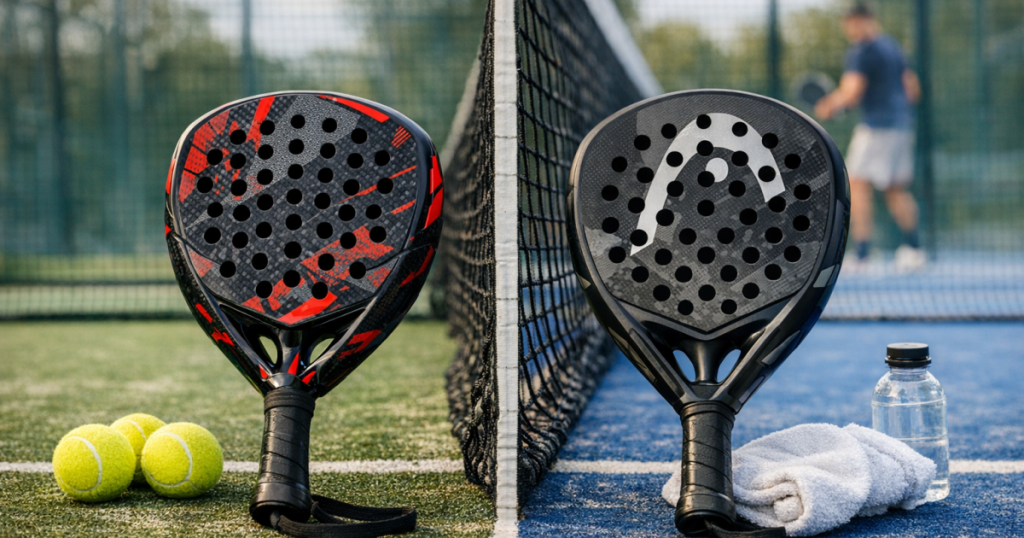
Choosing between two well-known padel rackets can be awkward when both sound capable on paper. The Viper Carbon vs Head Alpha Elite decision is really about how much help you want from the racket: firmer attacking response from the Babolat, or a more forgiving all-round feel from the Head.
For many early club players, the better buy is not the one with the most aggressive reputation. It is the one that helps you repeat shots under pressure, defend the glass, keep the ball in play, and still grow into a stronger game over the next few months.
What to know first
The Babolat Viper Carbon is the more demanding option in this pairing. It suits players who already strike the ball cleanly, like a direct response, and want the racket to reward positive attacking shots. If you are still learning to control pace, it can feel less forgiving on off-centre contact.
The Head Graphene 360+ Alpha Elite is the friendlier option for most developing players. It is typically the easier racket to live with during mixed club games, lessons, and Americano-style evenings where you face different speeds and playing styles every set.
That does not make the Head automatically better. If you have a tennis or squash background, enjoy taking balls early, and already feel comfortable finishing points, the Babolat may suit your ambition. If your priority is fewer errors, easier defence, and a smoother route into regular club play, the Head is likely to make more sense.
Side-by-side comparison
- Babolat Viper Carbon: better for confident attackers who want a firmer, more responsive hit and do not mind working harder for control.
- Head Graphene 360+ Alpha Elite: better for improving players who want a softer, more forgiving racket that helps with consistency.
- Power: the Babolat has the edge if your technique is already solid; the Head gives more usable pace for players still building timing.
- Control: the Head is easier to manage when defending, lobbing, and resetting points; the Babolat rewards cleaner contact but punishes rushed swings.
- Learning curve: the Head is the simpler choice for most beginners moving into club play; the Babolat is more of a commitment.
- Best playing mood: the Babolat encourages assertive shots; the Head encourages patience, placement, and percentage padel.
Feel and forgiveness on real club nights
A comparison like this should start with feel, because that is what you notice from the first warm-up. A firmer carbon-style racket can make the ball leave the face quickly. That can feel brilliant when you catch a volley perfectly, but less helpful when you are late, stretched, or taking a ball off the back glass.
The Babolat is the more exciting racket when you are on time. It gives a crisp response and encourages you to hit through the ball. Players who like a decisive contact may find it satisfying, particularly at the net. The trade-off is that it asks more of your preparation. If your feet stop moving or your swing gets tense, errors can appear quickly.
The Head is more forgiving in ordinary beginner-to-intermediate situations. That matters because padel is full of awkward balls: half-volleys near your feet, lobs that push you back, side-wall rebounds you read late, and defensive blocks where you are just trying to survive the rally. A more forgiving feel can turn those moments from lost points into neutral balls.
If you are not yet sure whether you prefer a firmer or softer response, it is worth reading a separate explanation of soft versus hard padel rackets before spending serious money. That difference affects comfort, timing, control, and how quickly you can adapt during matches.
Power: headline power versus usable power
Power can be misleading in padel racket comparisons. A more powerful racket only helps if you can control the contact point, racket face, and follow-through. Otherwise, the extra response becomes long balls, rushed volleys, and bandejas that sit up for your opponents.
The Babolat is the more natural attacking choice. If you already generate good racket speed, it can help you finish overheads, punch volleys, and apply pressure from the net. It suits a player who wants to take initiative and does not need the racket to smooth out every imperfect contact.
The Head is less about maximum punch and more about accessible pace. For many club players, that is more useful. You can still play assertively, but you are less likely to feel that every attacking shot needs perfect timing. In mixed-ability games, that can be the difference between staying calm and overhitting because the racket feels too lively.
If you are coming from tennis, the Babolat may feel tempting because it rewards confident swings. If you are newer to racket sports, the Head is usually a safer way to build attacking shots without losing control of the rally.
Control, defence, and the shots beginners actually play
Beginners often overestimate how many winners they will hit and underestimate how many defensive balls they need to manage. In club padel, especially in the UK where many players are still learning the sport together, consistency is valuable. A racket that helps you block, lob, and reset is often worth more than one that only shines when you are attacking.
The Head has the advantage here for most early-stage players. It feels more suitable for controlled lobs, softer blocks, and guided volleys. When you are pinned in the corner or forced to play off the glass, a forgiving racket gives you more margin.
The Babolat can still offer excellent control in the right hands, but it is a more precise type of control. You need to present the racket face cleanly and commit to the shot. If your timing varies during a match, it may feel less relaxed than the Head.
Think about your last few games. If most of your lost points came from overhitting, mistiming rebounds, or dumping defensive balls into the net, the Head is the more logical pick. If most of your frustration came from not being able to finish points when you had the chance, the Babolat deserves a closer look.
Comfort and confidence over a full session
Comfort is not just about how a racket feels for five minutes in a shop or during a quick demo. It is about how it feels in the second hour of a match night, when your legs are tired and you are reacting rather than setting up perfectly.
A firmer racket like the Babolat can feel sharp and responsive, but it may also feel less forgiving if you grip too tightly or hit late. That does not mean it is unsuitable, only that it expects more from your technique. Players who already have clean preparation may enjoy that direct feedback.
The Head is likely to inspire more confidence for players still learning court positioning. When a racket feels manageable, you are more willing to play the sensible shot rather than panic-swinging. That can help your whole game develop, because you start choosing better targets instead of just reacting to the ball.
Also remember that racket comfort is not separate from your shoes, movement, and grip. Poor footwear can make any racket feel harder to use because you arrive late to the ball. If you are still playing in general trainers, a proper padel shoes guide may improve your game more than changing racket.
Who should choose the Babolat Viper Carbon?
The Babolat makes most sense for a player who is no longer just trying to keep the ball in court. You should already feel reasonably happy at the net, able to hit a controlled overhead, and willing to accept a smaller margin for error in exchange for a more explosive response.
- Choose it if you like attacking padel and want a firmer contact.
- Choose it if you have a strong racket-sport background and adapt quickly to timing changes.
- Choose it if you play regularly enough to grow into a more demanding frame.
- Avoid it as your first serious racket if you are still struggling with the glass, lobs, and basic consistency.
This is not a racket to buy purely because you want to play like an advanced player. It is a better fit when your technique is already moving in that direction. If you buy it too early, you may spend more time fighting the racket than learning the game.
Who should choose the Head Graphene 360+ Alpha Elite?
The Head is the more sensible option for the typical beginner-to-club player who wants a quality racket without making the game harder than it needs to be. It gives you room to improve while still helping with the messy parts of padel: blocks, lobs, transitions, and defensive recovery.
- Choose it if consistency is your main goal.
- Choose it if you play social matches, group sessions, or club nights with varied partners.
- Choose it if you want a racket that feels approachable from the first session.
- Think twice if you already hit very hard and want the firmest possible attacking response.
For many readers, this is the easier racket to recommend because it matches the realities of early padel. You will probably play more defensive shots than winners, and you will improve faster if your racket gives you a little help when your timing is not perfect.
Common buying mistakes with this comparison
The first mistake is buying the more aggressive racket because it sounds more advanced. A demanding racket can be enjoyable, but only if it matches your current level. If it exposes every technical flaw, your progress may slow down.
The second mistake is judging only by a few big hits. During a test, almost any racket can feel good when you catch a smash or volley cleanly. Pay more attention to your average ball: your second serve return, your defensive lob, your low volley, and your backhand from the corner.
The third mistake is ignoring condition. If you are buying second-hand, check the frame, face, grip, signs of heavy impact, and whether the racket feels balanced in your hand. Do not assume that a premium racket is a bargain just because the asking price is lower in £ than a new model.
The fourth mistake is forgetting the rest of your setup. A tired overgrip can make a good racket feel unstable, while poor shoes can make you late to every ball. Before changing racket, make sure the simple parts of your kit are not causing the problem.
Other rackets worth using as reference points
If you are still unsure, it can help to compare both rackets with other recognisable models rather than deciding in isolation. For example, an attacking racket such as the Bullpadel Hack line can help you understand how much power and firmness you really want, while softer all-round rackets can show whether comfort matters more to your game.
For a more attack-focused comparison involving another high-profile racket family, the Bullpadel Hack 02 2022 versus HEAD Graphene 360+ Alpha Pro comparison is a useful next read. It gives extra context on what happens when a racket leans more towards performance and less towards easy forgiveness.
You do not need to test every racket on the market. You just need to understand your own pattern: do you lose points because you lack punch, or because you lack control? That answer will usually narrow the choice quickly.
Common questions
Is the Babolat Viper Carbon too difficult for a beginner?
For a complete beginner, it is likely to be more racket than needed. It can suit a fast-improving player with previous racket-sport experience, but most new players will find an easier all-round racket more helpful.
Is the Head Graphene 360+ Alpha Elite only for beginners?
No. It is friendly enough for newer players, but it can still work for regular club players who value control, comfort, and consistency over maximum attacking response.
Which racket is better for doubles club nights?
The Head is the safer choice for mixed doubles club nights because it is easier to manage across defence, lobs, volleys, and slower tactical rallies. The Babolat suits the more aggressive player within that setting.
Should I buy the cheaper one if both are available?
Price matters, but do not let a small difference decide it. Fit matters more. A racket that suits your level will save more frustration than a slightly cheaper racket that makes routine shots harder.
Can an overgrip change how these rackets feel?
Yes. A fresh overgrip can improve hold, confidence, and control, especially in sweaty sessions. It will not turn one racket into the other, but it can make either option feel more secure.
The sensible pick for early club play
If you are a developing padel player choosing between these two, the Head Graphene 360+ Alpha Elite is the safer recommendation. It gives you more forgiveness, helps with defensive situations, and better matches the way most beginners and early club players actually win points: by keeping the ball alive, placing it well, and making fewer rushed mistakes.
The Babolat Viper Carbon is the better choice if you already have reliable technique and want a racket that feels sharper when you attack. It is not the wrong choice, but it is a less forgiving one. Buy it because your game is ready for that response, not because you hope the racket will create an attacking game for you.
For most readers, the practical decision is simple: choose the Head if you want confidence and consistency now; choose the Babolat if you are already comfortable in club rallies and want a firmer platform for more aggressive padel.
Quick Buying Links
Babolat Padel Racket Viper Carbon
A strong contender depending on your priorities.
Head Graphene 360+ Alpha Elite Padel Racket
Worth considering if its strengths better match your needs.