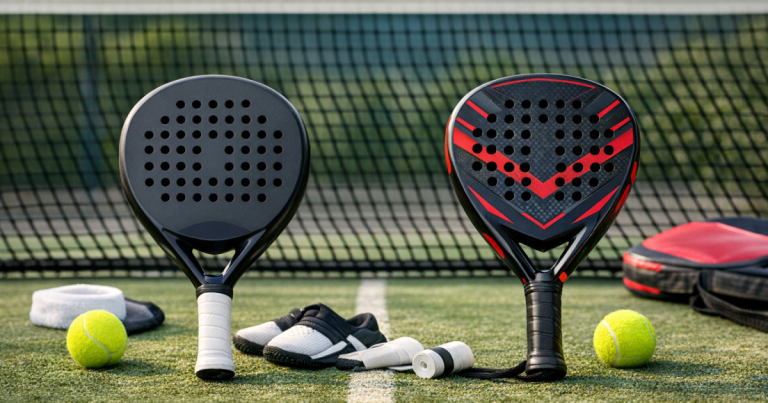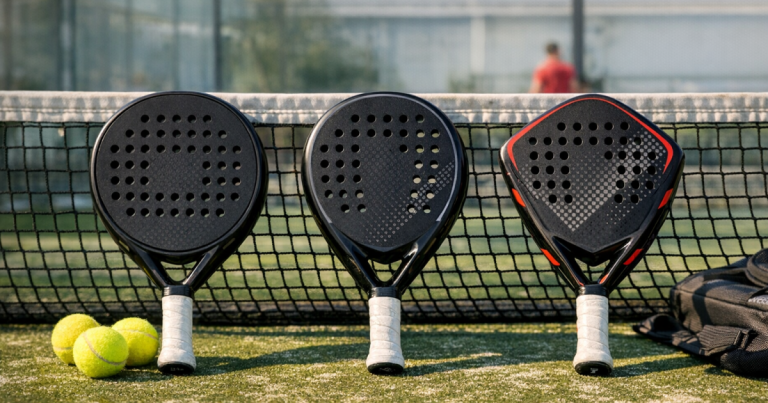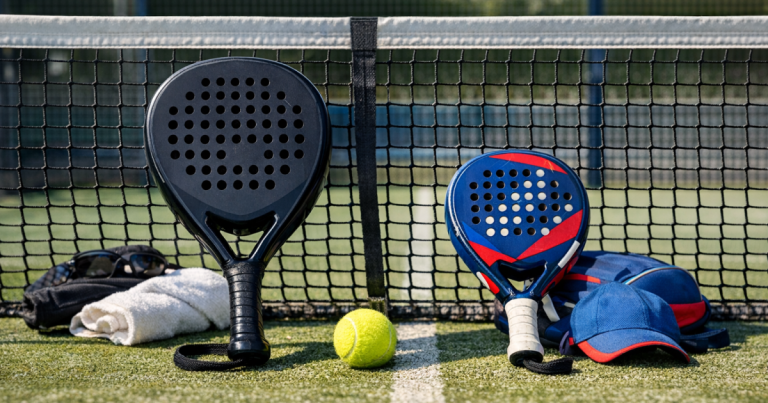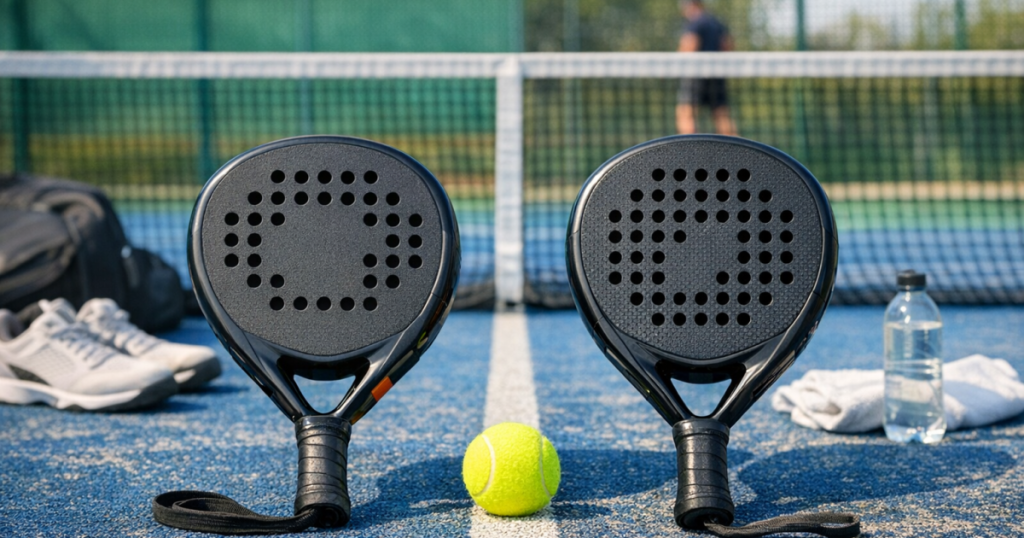
Choosing between soft vs hard padel rackets is really a question of comfort, control and how cleanly you strike the ball. For most beginners and early-stage club players, a slightly softer racket is usually easier to live with because it feels more forgiving on off-centre shots and does not demand perfect timing. A firmer racket can feel sharper and more powerful, but it normally rewards players who already hit consistently and can generate their own clean contact.
The short answer
If you are new to padel, returning after a break, or still building confidence with volleys, lobs and glass rebounds, start with a softer or medium-feel racket. It will usually help you keep rallies going, reduce harsh feedback through the arm, and make defensive shots feel less punishing.
If you already play regular club matches, strike the ball cleanly, and want a more direct response when attacking, a harder-feeling racket may make sense. It can give you a crisper sensation on volleys and overheads, but it will not automatically fix timing, technique or positioning.
The safest middle ground for many improving players is a medium-feel racket with a balanced shape and a manageable weight. That gives you room to improve without making every mistimed shot feel like a mistake.
What “soft” and “hard” actually mean
When players talk about a soft or hard padel racket, they are usually describing how the racket feels at impact. This comes mainly from the core foam, the face material, the shape, the sweet spot and the overall balance. Two rackets can use similar wording in their marketing and still feel quite different on court, so treat the label as a clue rather than a guarantee.
A softer racket tends to compress more when the ball hits the face. That can create a cushioned feeling and help the ball leave the racket with less effort at slower swing speeds. It can be particularly useful when blocking fast shots, guiding returns or defending from the back of the court.
A harder racket tends to feel more rigid and direct. You may notice a cleaner, firmer response when you hit the centre of the racket well. The trade-off is that mishits can feel less forgiving, and slower swings may not get as much easy depth.
This is why soft vs hard padel rackets is not simply about power. Soft rackets can help you access easy rebound at lower speeds, while hard rackets can reward faster, cleaner swings. The right choice depends on how you actually play, not how you imagine you might play on your best day.
How racket feel changes real club shots
Returns and defensive blocks
For newer players, the return of serve and the first few defensive shots often matter more than big winners. A softer racket can make these shots calmer because you can absorb pace and guide the ball back without swinging too much. This is useful in busy club sessions where you are facing different opponents and do not always get predictable ball speed.
Volleys at the net
At the net, a firm racket can feel precise if your contact point is tidy. You get a clear sensation through the hand and can punch volleys with confidence. A softer racket may feel less sharp on aggressive volleys, but it can be kinder when your preparation is late or the ball comes at an awkward height.
Lobs and controlled lifts
Lobs are a huge part of beginner and intermediate padel. A softer racket can make it easier to lift the ball with a shorter, smoother swing. A hard racket can still lob well, but it asks for better touch. If your lobs currently fly long or drop short, the issue may be technique rather than racket firmness, but a more forgiving feel can help you practise without becoming tense.
Smashes and overheads
Harder rackets often appeal to players who want more authority overhead. That can be useful, but only if you already read the ball early, move well and strike cleanly. For many early-stage players, a softer or medium racket leads to better results because the priority is keeping the ball in play and choosing the right overhead, not swinging harder.
Beginner, improver or regular player?
Your playing level is not the only factor, but it is a useful starting point.
- First few sessions: favour a softer, forgiving racket. You are still learning court positioning, wall rebounds and basic timing.
- Early club player: a soft-to-medium feel is often the sweet spot. It gives comfort without feeling too vague as your shots improve.
- Regular improver: a medium or firmer racket can work if you are consistent and want a more direct response.
- Aggressive advanced player: harder rackets can suit a faster swing and more attacking style, but they are less forgiving when contact is off-centre.
It is also worth separating feel from marketing categories. Men’s, women’s and junior labels do not automatically tell you whether a racket is soft or hard, and they should not be the only basis for your choice. If you are unsure how those categories are used, the guide to men’s, women’s and junior padel rackets explains the differences in a beginner-friendly way.
Comfort matters more than ego
A common mistake is choosing a racket because it sounds advanced. A hard, head-heavy racket can feel exciting for five minutes in a shop or during a short warm-up, but it may become tiring during a full match. If you start gripping harder, steering the ball, or avoiding certain shots, the racket is not helping your padel.
Comfort does not mean choosing the softest possible racket. Very soft rackets can feel bouncy to some players, especially on faster shots. The aim is to find a feel that lets you swing naturally, defend without panic, and play several games without your timing falling apart.
For beginners, that usually means prioritising a generous sweet spot, manageable balance and predictable response. Firmness is only one part of the picture.
Simple checks before you commit
If you can test a racket before buying, use normal padel shots rather than trying to hit spectacular winners. A short trial during a club session can tell you more than a long list of product terms.
- Try controlled returns: can you block the serve back without the ball flying or dying?
- Hit ten lobs: do you feel relaxed lifting the ball, or do you have to force it?
- Volley under pressure: does the racket stay stable when you are late, or does it twist and feel harsh?
- Check your grip tension: if you immediately squeeze harder, the feel may be too demanding.
- Play beyond the warm-up: a racket that feels exciting for five shots might not feel right after 45 minutes.
If you are trying to keep your spending sensible, avoid jumping straight into the most advanced-feeling model just because it is heavily promoted. It is usually smarter to match the racket to your current game and upgrade later when your needs are clearer. The same principle applies across starter equipment, and it is covered in more detail in how to start playing padel without wasting money.
Where harder rackets can make sense
Hard rackets are not “bad for beginners” in a blanket sense, and soft rackets are not automatically basic. A firmer racket can be a good fit if you already play other racket sports, have a confident swing, or prefer a very connected feel at impact.
They can also suit players who spend plenty of time at the net and value a crisp response on volleys and controlled smashes. The key is honesty: if your biggest problem is inconsistent contact, a hard racket may amplify that problem. If your contact is reliable and you want more feedback, it may support your development.
For an example of how firmer, more advanced rackets are discussed in real terms, the site’s detailed power-racket comparison is useful background, even if you are not ready for that type of racket yet.
Main points
- Most beginners are better served by a soft or medium-feel padel racket.
- Harder rackets can feel more precise, but they usually demand cleaner timing.
- Soft does not always mean weak, and hard does not always mean powerful.
- Racket feel should be judged through normal shots: returns, volleys, lobs and defence.
- A comfortable medium-feel racket is often the best long-term choice for early club play.
The best racket feel is the one that helps you play relaxed, repeatable padel. If a racket makes you tense, late or cautious, it is probably not the right match yet, even if it is technically impressive.
Things readers ask
Are soft padel rackets only for beginners?
No. Plenty of experienced players like softer rackets because they value comfort, touch and easy defence. The better question is whether the racket supports your style and timing.
Do hard padel rackets give more power?
They can reward powerful, clean swings, but they do not create easy power for everyone. If your technique is still developing, a softer or medium racket may help you produce better depth more consistently.
Can a soft racket help with arm comfort?
A softer feel can reduce harsh impact sensations for some players, but comfort also depends on weight, balance, grip size, technique and how often you play. Do not ignore persistent pain.
Should I choose soft vs hard padel rackets based on my tennis background?
Your tennis experience can help, but it should not decide everything. Padel involves more blocking, glass play and compact swings, so test how the racket behaves in padel situations.
Is a medium-feel racket the safest choice?
For many early-stage club players, yes. A medium feel gives a useful blend of comfort, control and feedback without pushing you too far towards either extreme.