Walking onto a padel court for your first proper club game is much easier when padel rules and scoring feel familiar. You do not need to memorise a rulebook before you play, but you do need to know who serves, where the ball is allowed to bounce, how games are counted, and what to do when something odd happens. Most beginner confusion comes from tennis-like scoring mixed with walls, glass and local social formats, so a calm, shared understanding keeps the game friendly and moving.
In brief
- Padel is usually played as doubles, with two players on each side.
- Scoring normally follows tennis: 15, 30, 40, game, with deuce and advantage unless the club is using golden point.
- The serve is underarm, hit after a bounce, and must land in the diagonally opposite service box.
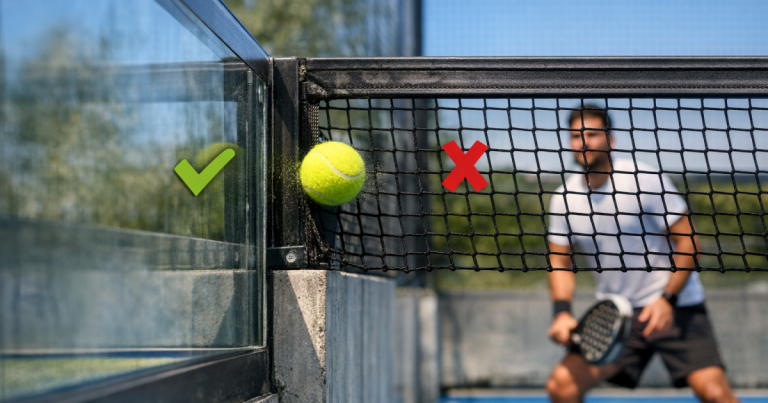
- The ball may hit the glass after bouncing, but it is out if it hits a wall, fence or glass before landing in the opponent’s court.
- Social sessions may use shorter formats, so check the format before the first game starts.
The basic shape of a padel match
Most club padel is played as doubles. One pair starts on one side of the net, the other pair starts opposite, and the aim is to win points by making the ball bounce twice on the other side, forcing an error, or hitting a legal winner.
A standard match is commonly played as the best of three sets. A set is usually won by the first pair to reach six games with a two-game lead. If the set reaches 6-6, many clubs use a tie-break. In a normal tie-break, the first pair to seven points wins, but they must lead by two.
That said, many UK club nights use time-limited formats. You might play one set, a short set to four games, a match tie-break to ten points, or a rotating social format where everyone changes partners. If you are still finding your feet, it helps to read how to start playing padel as a complete newcomer before turning up to a busy session.
How points are counted
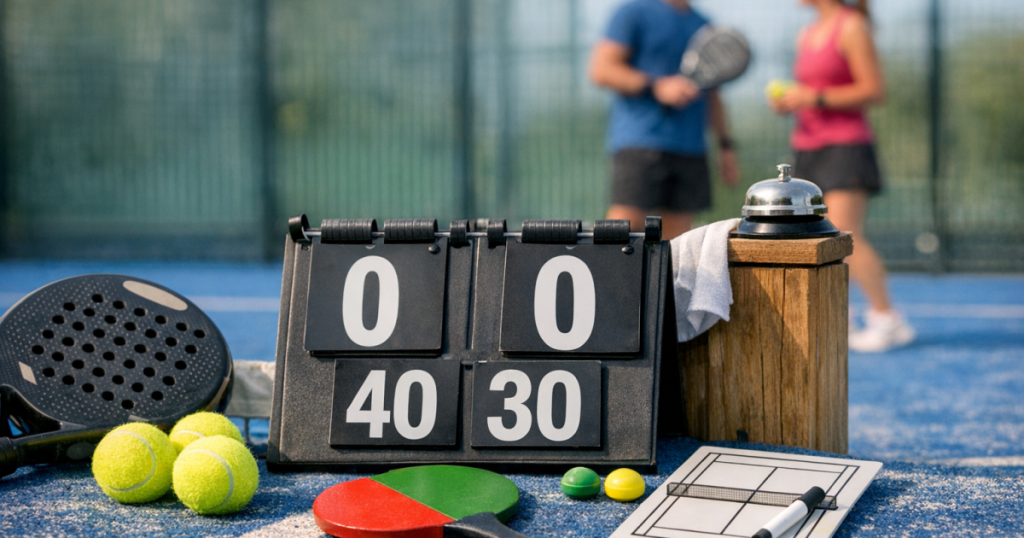
Padel uses the same point names as tennis in most matches:
- No points is called love.
- One point is 15.
- Two points is 30.
- Three points is 40.
- The next point wins the game, unless both pairs reach 40.
When both pairs reach 40, the score is deuce. In traditional scoring, a pair must then win two points in a row. The first point after deuce gives advantage. If the pair with advantage wins the next point, they win the game. If they lose it, the score returns to deuce.
Some clubs use golden point instead. At deuce, the next point wins the game outright. The receiving pair usually chooses which player receives the serve. Golden point is popular for coaching groups, social evenings and busy sessions because it keeps matches shorter and avoids one game taking ages.
Serving without overthinking it
The serve is often where new players feel most exposed, but the basics are simple once you see the pattern.
- The server stands behind the service line.
- The ball is bounced before it is hit.
- The serve is hit underarm, at or below waist height.
- The ball must travel diagonally over the net into the opposite service box.
- The server gets two attempts, just as in tennis.
The first point of each game is served from the right-hand side of the court. The next point is served from the left, and the server keeps alternating sides until the game ends.
If the serve clips the net and still lands correctly in the diagonal service box, it is usually a let and the serve is replayed. If the serve lands in the correct box and then hits the glass, it is normally fine. If it lands in the box and then hits the metal fence, it is normally a fault. This is one of the early details worth asking about at your club, because players sometimes misremember it from other racket sports.
Service order in doubles
At the start of a set, one pair chooses who serves the first service game. In that pair’s next service game, the other partner serves. The same happens for the other pair. Over a set, the service order cycles through all four players.
Receiving is also structured. In standard doubles, each pair decides who receives on the right side and who receives on the left side at the start of the set. Those receiving sides normally stay the same for that set. In relaxed club play, people may be less formal, but it is still worth agreeing before the first serve so nobody is surprised at 40-40.
What the walls change
The walls are what make padel feel different from tennis. Once the ball has bounced on your side, it can hit the glass and still be playable. You can let it come off the back glass, step into position, and hit it back over the net. This is not a panic moment; it is part of the game.
The key distinction is whether the ball has bounced first. If your opponent’s shot lands in your court and then hits the glass, the rally continues. If it hits the glass, fence or wall before landing in your court, it is out.
You can also use your own glass to return the ball, as long as the ball then goes over the net and lands legally on the other side. New players often treat every glass contact as chaos, but the rule is more generous than it first appears: one bounce is allowed, the walls can help you, and the ball only becomes dead when it bounces twice, goes out, or a fault occurs.
Common faults new club players should know
You do not need to call every tiny detail like a tournament umpire, but you should know the main faults so rallies end fairly.
- Double bounce: the ball bounces twice on your side before you return it.
- Direct wall or fence: the ball hits the opponent’s wall, glass or fence before landing in their court.
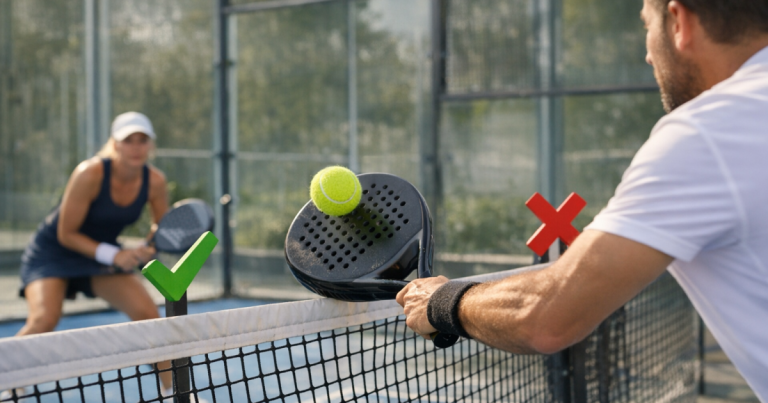
- Net touch: you, your racket or your clothing touches the net during the point.
- Wrong serve box: the serve does not land in the diagonal service box.
- Serve fence fault: the serve lands in and then hits the metal fence rather than the glass.
- Obstruction: something external interrupts the point, such as another ball rolling onto court.
For a deeper look at awkward moments, including net touches and double bounces, keep this guide to padel faults handy. It is useful when a rally ends in that classic beginner question: “Was that still in?”
Lets, replays and friendly calls
A let means the point, serve or moment is replayed rather than awarded to either pair. The most common let is a serve that clips the net and still lands legally in the correct service box.
In club play, lets also happen when something outside the rally affects play. If a loose ball rolls onto court, stop immediately and replay the point. If players on the next court shout or move behind the glass, that is usually not a let unless it clearly interrupts the rally. Use common sense, but do not use minor distractions as a way to escape a losing position.
Line calls are usually made by the pair whose side the ball lands on. If the ball is too close to call with confidence, the friendly club standard is to give the benefit of the doubt. Good etiquette matters because you will often play the same people again next week.
Different scoring formats you may meet at club nights
Not every session runs like a formal match. Many beginner-friendly clubs adapt the format so more people get games and nobody sits out for too long.
- Timed games: pairs play for a set period, then rotate.
- Short sets: first to four games, often with a tie-break or golden point.
- Match tie-breaks: first to ten points, usually win by two.
- Americano: players rotate partners and opponents, collecting points across several short rounds.
- King of the court: winners move up a court or stay on, depending on the local setup.
These formats are not “less proper”; they are practical ways to make social padel work. If you are nervous about joining alone, an Americano can be a good entry point because the rotation does the introductions for you. Here is how to enter a padel Americano without knowing anyone.
Where new players usually get confused
Thinking the glass is always out
The ball is only out if it hits the glass before bouncing in the court. If it bounces first, play on.
Forgetting the second serve
A missed first serve is not the end of the point. You get a second serve. Use it sensibly rather than trying to hit a winner.
Calling the score from the wrong side
The server’s score is called first. If you are serving and your pair has 30 while the other pair has 15, call “30-15”.
Changing receiving sides mid-set
In standard play, receiving sides are set for the set. Social sessions can be looser, but agree the arrangement before the game starts.
Stopping too early
Beginners sometimes stop when the ball hits the back glass, assuming the rally is over. Wait for the second bounce or a clear fault before switching off.
How strict should beginners be?
There are two healthy views here. One says beginners should keep play moving, avoid arguments and replay close calls where needed. The other says learning the rules early prevents bad habits and makes later league or tournament play much smoother.
The best answer sits between the two. Be relaxed about tone, but clear about the basics. Call the score before each serve. Agree whether you are using advantage or golden point. Stop immediately if a stray ball enters the court. Do not claim points you are unsure about. If someone explains a rule calmly, treat it as part of learning rather than criticism.
Padel is social by design, especially at beginner club level. The rules are there to make rallies fair, not to give people reasons to win arguments.
Questions people ask
Do you have to serve underarm in padel?
Yes. The serve is hit underarm after a bounce, and contact should be at or below waist height. It is about placement and consistency, not power.
Is padel scoring exactly the same as tennis?
It is very similar, with 15, 30, 40 and games. The main variation is that many padel clubs use golden point at deuce to keep games moving.
Can the ball hit the glass and still be in?
Yes, if it has bounced in the court first. If it hits the glass or fence before bouncing on the opponent’s side, it is out.
Who calls the score in a club game?
The server should call the score before each point, with the server’s score first. This avoids most mix-ups before they happen.
What should you do if nobody agrees on a call?
For social club play, replaying the point is usually the fairest option. In organised matches, follow the competition or club rules.
Key takeaways
Padel rules and scoring become much less intimidating once you separate the game into a few simple parts: tennis-style scoring, underarm diagonal serving, one bounce before the walls matter, and clear communication between all four players.
Before a club game starts, agree the format, confirm whether deuce uses advantage or golden point, and make sure everyone knows the service order. During the match, call the score clearly, play on when the ball comes off the glass legally, and keep close calls friendly. That is enough to make your first regular club games feel organised, fair and enjoyable.