Most beginner disputes in padel come from three moments: someone brushes the net, a ball looks like it bounced twice, or play is interrupted by something around the court. Getting padel faults explained clearly makes club games calmer, quicker, and fairer, especially when no coach or referee is watching.
The short version
A fault usually means a player or pair loses the point because something illegal happened while the ball was in play. The most common examples are touching the net before the point is over, failing to hit the ball before its second floor bounce, hitting the ball into a fixed obstruction, or being affected by outside interference that requires the point to be replayed.
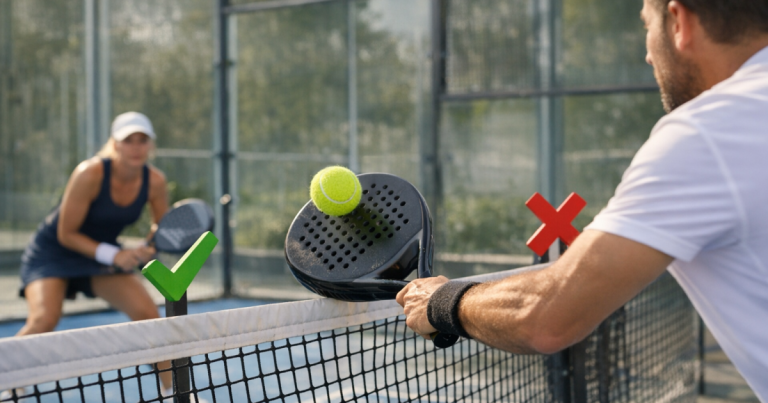
- Touching the net, net post, net cable, or opponent’s side while the ball is still live is normally a lost point.
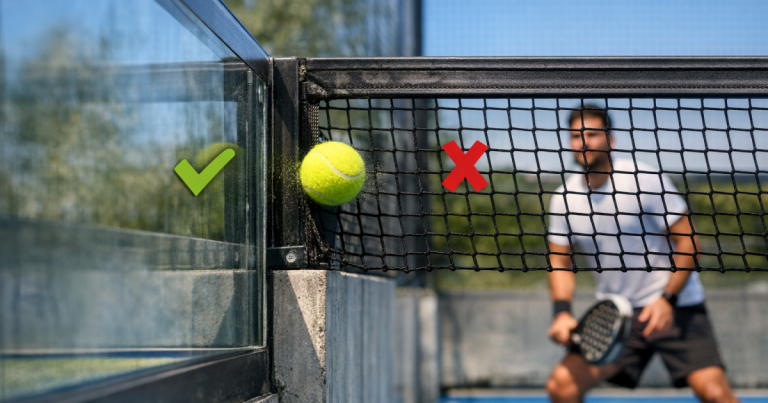
- The ball may touch the net during a rally. That is fine if it crosses and lands in play.
- A double bounce means the ball has bounced twice on the floor on the same side before being returned.
- Glass and walls do not count as floor bounces, but the first contact must normally be the floor on the opponent’s side.
- Outside interference is usually a let, while your own mistake or contact is usually a fault.
If you are still new to match play, it is worth pairing this with the broader guide to padel rules UK clubs actually follow, because social games and box leagues can handle borderline calls slightly differently.
What counts as a net touch?
In padel, the net is not just a decoration between the teams. While the ball is in play, players must avoid touching it with any part of the body, racket, clothing, or anything they are carrying. If your shirt, hand, racket frame, or follow-through clips the net before the point has ended, the point goes to the other pair.
This can feel harsh at first because many net touches happen after a good volley or a desperate reach. The key question is not whether the shot was good. It is whether the point was already over when the contact happened.
Net touch examples you will see at club level
- You hit a winning volley, but your racket follow-through taps the net before the ball has bounced twice or gone out. That is your fault.
- You stretch for a low ball, make contact cleanly, then stumble into the net while the opponents still have a possible play. That is your fault.
- You touch the net after the ball has clearly hit the back glass on the full, gone out, or the point has otherwise finished. That is not normally a fault because the ball is no longer live.
- The ball clips the top of the net during a rally, drops into the opponent’s court, and stays in play. That is legal.
Serves are a special case. If a serve touches the net and then lands legally in the correct service box, it is usually replayed as a let. If it clips the net and lands outside the correct box, it is a fault. Clubs may explain this quickly before organised beginner sessions, but it is one of those rules that is easier to remember once you have seen it a few times.
Double bounces: floor first, not glass first
A double bounce happens when the ball bounces twice on the floor on your side before you return it. Once the second floor bounce happens, the point is over. It does not matter whether you manage to poke the ball back afterwards; the shot came too late.
The confusion comes from the walls. In padel, the ball can bounce once on the floor, hit the glass or side wall, and still be playable. That wall contact is not a second bounce. For example, if a lob lands deep, hits the back glass, and comes forward, you can still play it as long as it has only bounced once on the floor.
The opposite is also important. If your opponent’s shot hits the glass, fence, or wall on your side before it touches the floor, that shot is out. You do not need to play it. Beginners often swing at these balls because they are used to squash-style rallies, but padel needs the ball to land in the court first unless it has already crossed the net and bounced legally.
Quick double-bounce checks
- One floor bounce, then glass, then your shot: usually legal.
- One floor bounce, glass, second floor bounce, then your shot: too late.
- Direct to your back glass before touching your floor: opponent’s fault.
- Ball skids low after one bounce and you are not sure whether it touched down again: call what you honestly saw, not what you hoped happened.
For friendly games, the player closest to the ball often has the best view of a double bounce. In competitive club play, it is good etiquette to call a double bounce against yourself if you know it happened. That trust keeps games moving and saves plenty of awkward conversations.
Obstructions: what interrupts the point?
Obstructions are less common than net touches and double bounces, but they create more confusion because courts vary. Indoor venues may have roof structures, curtains, lights, or nearby walls. Outdoor courts may have balls rolling in from another court, open gates, or players walking close to the enclosure.
A useful way to think about obstruction calls is to split them into three groups: your own contact, fixed court features, and outside interference.
Your own contact usually loses the point
If the ball hits you, your partner, your clothing, or your racket when it is not a legal hit, your pair normally loses the point. This includes a smash that accidentally clips your partner, or a defensive shot that hits your body instead of the racket. The same idea applies if your shot hits something on your side before crossing legally.
Fixed court features are usually treated as part of the environment
If the ball hits a ceiling, light fitting, roof beam, or other fixed object above or around the court, the usual result is that the player who hit it loses the point. Some venues have house rules for unusual courts, especially where an indoor structure sits close to the playing area. If a club tells you a local rule before the match, follow that for the session.
Doorways and out-of-court play can be trickier. Some courts are set up for authorised outside play, while many beginner sessions simply keep the game inside the enclosure. If nobody has agreed otherwise, assume the normal enclosed-court version is being used.
Outside interference often means a let
A let is a replay of the point. It is used when something outside the players’ control interrupts play in a way that affects the rally. A ball rolling onto court from another game is the classic example. A person walking into the playing area or a sudden court issue may also stop the point.
The important distinction is fairness. If the interruption genuinely affected play, stop and replay. If the ball was already unplayable, clearly out, or the point had effectively ended, a let is harder to justify.
Common calls in real club rallies
Here are some situations you are likely to meet in beginner and improver games.
- Your volley hits the net tape and drops over. Legal in a rally, as long as it lands in the opponent’s court.
- Your serve clips the net and lands in the correct service box. Usually a let, so serve again.
- Your serve clips the net and lands in the wrong service box. Service fault.
- You hit a low volley winner but your racket brushes the net during the same motion. Fault against you if the ball was still live.
- The ball bounces, hits your back glass, and you return it before it bounces again. Legal.
- The ball bounces, hits the back glass, drops to the floor again, and then you hit it. Double bounce, point lost.
- A ball from the next court rolls in as your opponent is about to smash. Stop immediately and replay the point.
- Your lob touches an indoor roof beam. Usually your fault unless the venue has a specific house rule.
Once you have padel faults explained in this practical way, most close calls become less about knowing obscure wording and more about asking the right question: was the ball live, did it bounce twice on the floor, and did something outside the rally affect play?
How to handle close calls without spoiling the game
Most beginner padel in the UK is self-officiated, so tone matters. A correct call delivered badly can still make the match feel tense. A doubtful call handled generously keeps everyone relaxed and more likely to play together again.
- Call your own faults quickly, especially double bounces and net touches.
- If you are not sure, say what you saw rather than making a dramatic claim.
- For social games, replaying a genuinely unclear point is often the simplest solution, even if it is not always the strict competitive answer.
- Agree any local court quirks before starting, such as roof obstructions or whether out-of-court retrieval is allowed.
- If one player is newer, explain the call briefly and move on. Long debates rarely help.
Structured coaching can help because a coach will spot these moments in live drills and explain the call straight away. If you are unsure whether to learn in a group or one-to-one, the comparison of group lessons and private coaching is a useful next step.
Things readers ask
Can my racket cross over the net after I hit the ball?
Your follow-through can naturally move forward, but you must not touch the net or interfere with your opponents. Reaching across to play a ball is only allowed in rare situations, such as when spin brings the ball back after it has already bounced on your side.
Does the side glass count as a bounce?
No. A bounce means contact with the floor. If the ball bounces once on the floor, then hits the glass, it is still playable until it bounces on the floor again.
What if we disagree about a double bounce?
In a friendly match, replaying the point is often the fairest option if nobody is certain. In organised play, follow the club or competition format and call honestly on your own side.
Is every interruption a let?
No. A let is for genuine outside interference that affects the point. If the point was already over, or the problem was caused by a player’s own shot or movement, it is usually not a let.
Can I stop the rally because I thought the ball was out?
You can call the ball out if you clearly saw it, but stopping play on a guess creates problems. If you are unsure, keep playing unless there is a safety issue such as another ball on court.
What stands out
The three easiest questions are: did a player touch the net while the ball was live, did the ball bounce twice on the floor, and did an outside obstruction genuinely affect the rally? If you can answer those, you can settle most beginner padel faults confidently.
As you play more club matches, these calls start to feel natural. For smoother games beyond the rules, it also helps to find regular partners who share the same approach to honest calls and relaxed communication. The guide to finding a padel partner at your local club is a good place to build from here.