Turning up in the wrong kit will not ruin your first game, but it can make padel feel harder than it needs to. The simple answer to what to wear for padel is comfortable sports clothing, court-appropriate shoes, and light layers you can remove once you warm up. You do not need a full padel outfit to start; you just need clothing that lets you move, bend, twist and sweat without distraction.
In brief
- Wear a breathable sports top that does not cling heavily when damp.
- Choose shorts, a skirt, leggings or tracksuit bottoms that let you lunge and rotate freely.
- Use proper court shoes rather than fashion trainers or worn-out running shoes.
- Bring a light layer for warm-ups, breaks and colder UK evenings.
- Keep small accessories simple: socks, wristbands, cap or visor, and spare grips if you use your own racket.
If you are heading to your first session and want the wider picture beyond clothing, it is worth reading what to expect at your first padel session so the whole experience feels less unfamiliar.
Start with movement, not fashion
Padel clothing should help you react quickly. You will take lots of short steps, turn for balls off the glass, reach low for volleys and sometimes move backwards before pushing forwards again. Clothing that feels fine in the gym can become annoying on court if it rides up, restricts your shoulders or gets heavy with sweat.
A good test is to do a few simple movements before you leave home: side steps, a small lunge, a practice overhead movement and a squat to pick up a ball. If something pulls, slips or needs constant adjusting, it will probably bother you during a game.
Tops: light, breathable and easy to move in
For most beginners, a standard sports T-shirt or tennis-style top is enough. Look for something light, soft and quick to dry. Cotton can be comfortable at first, but it often holds sweat, especially during indoor sessions or summer club nights. Technical sports fabrics usually feel better once the rally length increases.
The fit matters more than the label. A very baggy top can flap around and feel awkward during volleys, while a very tight top may restrict rotation. Aim for a fit that lets your shoulders move freely when serving, volleying and playing overhead shots. A simple sports tee such as the Adidas Club 3-Stripes Tee is the kind of straightforward option many beginners already understand from tennis, gym or five-a-side kit.
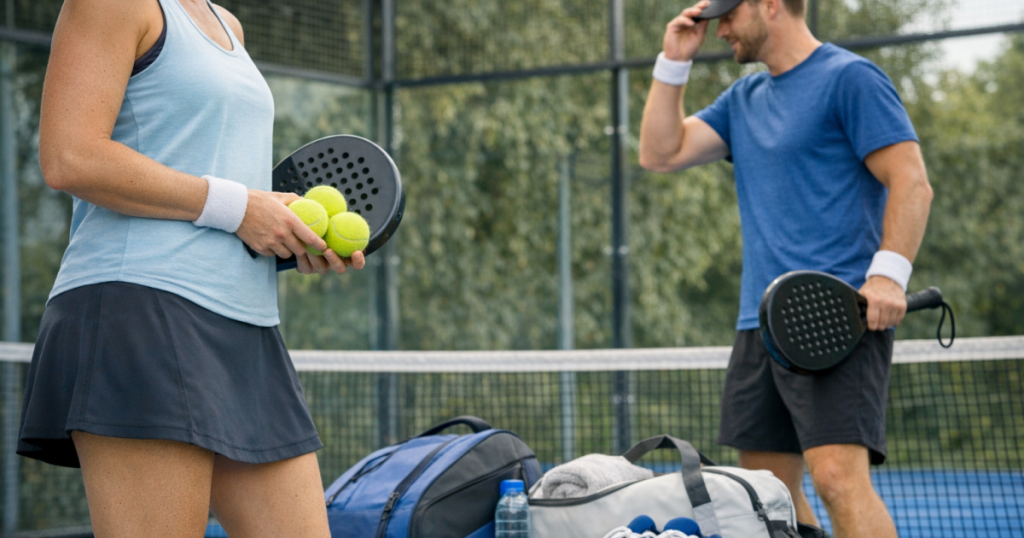
For women, tennis tops, gym tops and supportive sports bras can all work well. The key is comfort during quick changes of direction. If you normally prefer a vest, check that it stays comfortable during overhead movements and does not rub around the shoulders.
Shorts, skirts, leggings and tracksuit bottoms
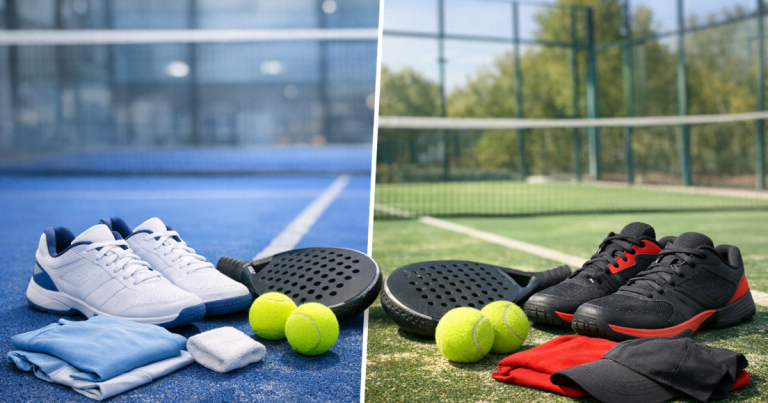
Your lower half needs to handle side-to-side movement. Shorts are common because they keep you cool and allow easy footwork, but they are not compulsory. Skirts, skorts, leggings and lightweight tracksuit bottoms can all work if they allow free movement.
For men, standard tennis or gym shorts are usually fine. Avoid heavy casual shorts, denim, cargo shorts or anything with bulky pockets. Padel balls can be stored in a pocket between points, so a secure pocket is useful, but it should not swing around or feel loaded.
For women, skorts and leggings are both popular. A skort gives the feel of tennis clothing with built-in coverage, while leggings can be warmer and more secure in cooler weather. If wearing leggings, choose a pair that stays in place during lunges rather than needing adjustment after every point.
On cold outdoor courts, lightweight tracksuit bottoms can be fine for warm-ups or relaxed games, but many players remove them once rallies get more intense. The goal is to stay warm without feeling slow or restricted.
Shoes are the one item to take seriously
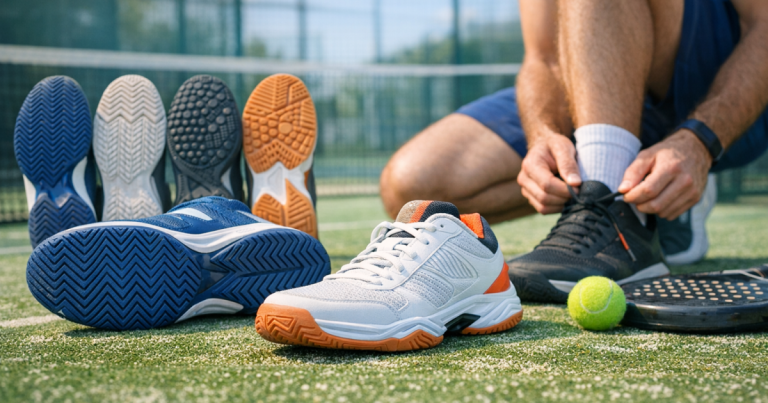
Clothing can be improvised at first, but shoes deserve more care. Padel involves quick stops, small jumps, pivots and diagonal movements. Fashion trainers and very soft running shoes are not ideal because they are not designed for court movement. They can feel unstable when you push sideways.
Padel shoes or tennis shoes with suitable grip are the safest starting point for most club courts. Many UK venues use artificial turf with sand, so the sole pattern and support matter. You do not need the most expensive pair, but you do want a shoe that feels stable when you move laterally and stop suddenly.
If you are thinking about your first proper upgrade, our ASICS Gel-Game 9 Padel Shoes review explains the sort of shoe qualities beginners should pay attention to, including comfort, support and suitability for regular club play.
Socks: boring until they are wrong
Socks rarely get much attention, but they can make a big difference during longer sessions. Thin everyday socks can bunch, slip or leave your feet sore. Sports socks with a snug fit are usually better because they stay in place during sharp movements.
If you get blisters easily, try wearing slightly thicker sports socks or testing a different sock-shoe combination before match night. Do not assume the shoe is always the problem; sometimes the sock is the weak link.
Layers for UK weather and indoor courts
Padel in the UK can mean a warm indoor court, a breezy outdoor evening or a chilly start followed by a sweaty second set. Layers solve that problem better than one heavy top.
- Before play: wear a hoodie, sweatshirt or lightweight jacket while you warm up.
- During play: switch to a breathable top once your heart rate rises.
- Between games: put a layer back on if you are waiting or rotating with other players.
- After play: change out of damp clothing if you have a journey home, especially in colder weather.
For outdoor courts, a cap or visor can help with low sun, and a light waterproof layer may be useful before or after play. Avoid wearing anything waterproof while playing hard unless it still lets you move and breathe comfortably.
Small accessories that actually help
You do not need many extras, but a few small items can make a session more comfortable. A wristband can stop sweat running down onto your hand, which is useful if you struggle with grip. If that sounds familiar, the Wilson Padel Wristbands review covers why such a small item can be surprisingly helpful.
- Wristbands: useful for sweat management and keeping your racket hand drier.
- Cap or visor: helpful on outdoor courts when the sun is low.
- Hair ties or headbands: keep hair out of your eyes during quick reactions.
- Spare top: worthwhile for longer sessions, social tournaments or travelling home.
- Small towel: useful during warm indoor games or busy club nights.
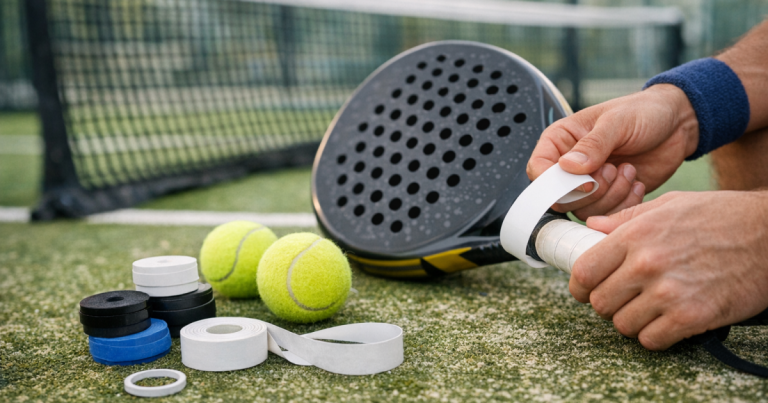
If you use your own racket and carry spare overgrips, keep them protected from moisture in your bag. Damp grips are unpleasant and wear badly, so it is worth knowing how to keep spare overgrips dry in your padel bag.
What not to wear on a padel court
Most clubs are relaxed, but some clothing choices make the game harder or risk damaging the court. Avoid jeans, heavy casual trousers, open shoes, sandals, boots and anything with hard studs. Football boots are not suitable for padel courts.
Also avoid jewellery or accessories that swing around, catch on clothing or distract you during quick movements. A watch or fitness tracker is usually fine if it sits securely, but bulky bracelets or long necklaces are better left off court.
Dark soles that mark the court may be an issue at some venues, so check club guidance if you are unsure. Many clubs publish shoe rules clearly, and reception staff are usually used to beginner questions.
How your clothing changes as you play more
Your first few sessions are about comfort and confidence. Once you start playing weekly, you may notice more specific preferences. Some players want lighter tops because they sweat more. Others want better shorts pockets for spare balls. Some prioritise shoes because their feet feel tired after long matches.
That progression is normal. Do not feel you have to buy everything at once. Start with a sensible outfit, pay attention to what distracts you, then upgrade the items that genuinely affect your comfort. For most beginners, shoes come first, then a couple of reliable tops, then small accessories such as wristbands or better socks.
Questions people ask
Can I wear normal gym clothes for padel?
Yes, normal gym clothes are fine for beginner padel as long as they let you move freely. The main exception is footwear: choose proper court shoes rather than soft running shoes or fashion trainers.
Do I need padel-specific clothing?
No. Padel-specific clothing can be nice, but tennis, gym and general sports clothing usually works well. Fit, comfort and movement matter more than the word padel on the label.
Are leggings OK for padel?
Yes, leggings are a good option, especially in cooler weather. Choose a pair that stays secure during lunges, side steps and quick turns.
What should I wear for an indoor padel court?
Indoor courts can get warm quickly, so wear a breathable top and shorts, skort or leggings. Bring a light layer for before and after play rather than wearing something heavy throughout.
Can I play padel in running shoes?
You can often get through a first casual session in trainers, but running shoes are not designed for sideways court movement. If you plan to play regularly, court shoes are a much better choice.
Why it matters
The right padel clothing is not about looking like a professional player. It is about removing small distractions so you can focus on the ball, your positioning and enjoying the game. Start with breathable sports clothing, stable court shoes and a couple of simple accessories. From there, let your own sessions tell you what is worth changing.
A sensible padel clothing guide should leave you feeling prepared, not pressured. If your kit keeps you comfortable, lets you move freely and suits the court conditions, it is doing its job.