A padel bag can go from tidy to grim surprisingly quickly: dusty shoes, damp towels, loose balls and snack wrappers all end up in the same few compartments. Padel bag cleaning is mostly about using gentle methods, keeping water under control and letting the bag dry properly before you pack it again.
The aim is not to make the bag look brand new after every match. It is to remove grit, sweat and odour without damaging the fabric, zip teeth, lining, logo prints or water-resistant coatings.
What to know first
- Empty every pocket before you start, including small side pockets and hidden valuables sections.
- Use a soft brush, cloth, mild soap and lukewarm water rather than harsh cleaners.
- Avoid soaking the bag unless the care label clearly says it is washable that way.
- Dry it fully in fresh air, away from direct heat, radiators and tumble dryers.
- Clean small marks early so they do not become set-in stains.
If you have a newer bag with thermal-style racket compartments, coated panels or structured padding, be extra gentle. These features are useful for club match nights and regular travel, but they are not designed to be scrubbed like a canvas gym sack.
Step 1: Empty the bag properly
Start by taking everything out: rackets, shoes, balls, grips, towels, bottles, snacks, keys and any spare clothing. Open every zip and shake the bag upside down over a bin or outside. You will usually find sand-like court dust, ball fluff, tiny grip offcuts and the odd forgotten receipt.
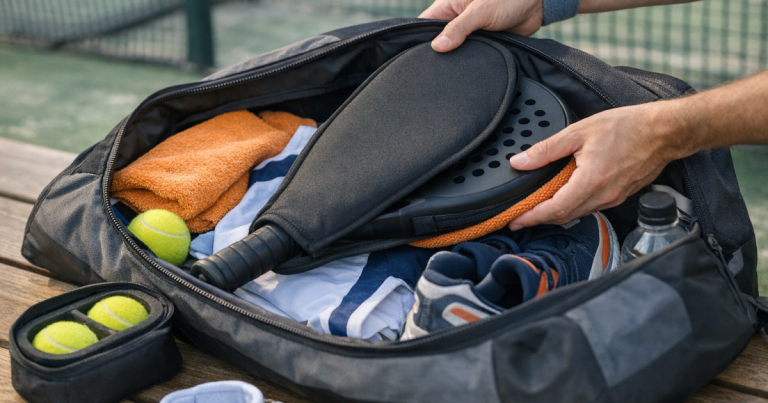
Remove detachable dividers or loose shoe bags if your bag has them. If you use a dedicated padel bag with several compartments, this is also a good time to check how you are packing it. Rackets, shoes and damp clothing should not all be pressed into one section after every session.
For beginners still deciding what kind of storage suits regular club play, our Head padel bag review for beginner club players explains how compartment layout affects everyday use.
Step 2: Brush out dust before adding water
Do not reach for water straight away. Dry dirt is easier to remove while it is still dry. Use a soft clothes brush, clean shoe brush or dry microfibre cloth to loosen dust from the base, corners and seams.
Pay attention to these areas:
- The bottom of the shoe compartment, where grit collects quickly.
- Zip tracks, especially if the zip has started feeling rough.
- Inside corners where loose ball fluff and crumbs gather.
- Outer panels that rub against court fencing, car boots or changing-room floors.
If the bag has a hard or semi-rigid base, wipe it with a barely damp cloth after brushing. For soft fabric bases, use less water and more patience. Oversaturating the base can make it slow to dry and may encourage musty smells.
Step 3: Spot-clean marks with mild soap
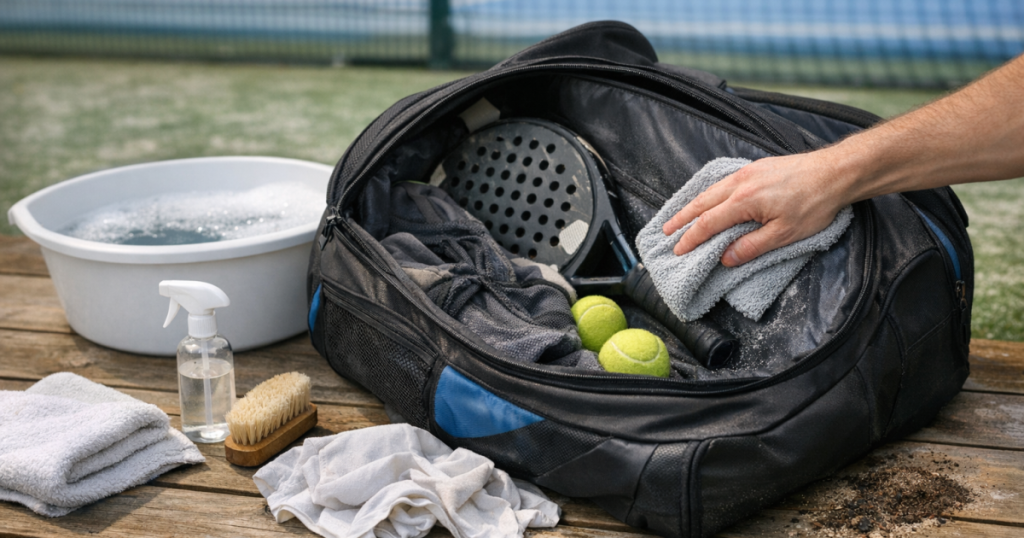
Mix a small amount of mild liquid soap or gentle laundry detergent with lukewarm water. Dip a cloth into the mixture, wring it out well, then dab the marked area. The cloth should be damp, not dripping.
Work from the outside of the mark towards the centre. This helps avoid spreading dirt across a wider area. For muddy splashes, let the mud dry first, brush away the loose dirt, then spot-clean what remains. For sweat marks around handles or straps, use gentle repeated passes rather than heavy scrubbing.
Avoid bleach, strong stain removers, solvent cleaners and abrasive pads. They can fade fabric, lift printed branding, weaken stitching or strip protective coatings. Even if a cleaner works well on trainers or household surfaces, it may be too harsh for a sports bag.
Step 4: Wipe the lining without soaking it
The inside of a padel bag usually needs more attention than the outside. Sweat, damp towels and used clothing leave smells behind, and ball tubes or water bottles can leave sticky rings if they leak.
Use a clean damp cloth with the same mild soap mixture, then wipe each compartment. Keep the cloth especially well wrung out around padded racket sections. Too much water can sit inside seams and foam layers, taking longer to dry than you expect.
After wiping with soapy water, go over the same areas with a second cloth dampened with plain water. This removes soap residue, which can attract more dirt later. Leave all pockets open while the bag dries.
Step 5: Clean zips and handles carefully
Zips often fail because grit builds up in the teeth or the slider is forced when the bag is overpacked. Use a dry soft brush to clear dust from zip tracks. Then wipe the surrounding fabric with a damp cloth.
Do not pour water along the zip or use oil-based products on the teeth. Oil can stain fabric and collect more grit. If a zip feels stiff after cleaning, check whether fabric is catching inside the track or whether the compartment is packed too tightly.
Handles and shoulder straps collect sweat and sunscreen, especially in summer or after indoor sessions where the court feels warm. Wipe them gently and let them dry fully before carrying the bag again. If your bag has padded straps, avoid twisting them hard to remove water.
Step 6: Deal with odours, not just visible dirt
A bag can look clean but still smell stale. The most common cause is packing damp shoes, towels or clothing and leaving the bag closed in the car, hallway or changing room.
After wiping the lining, let the bag air out with every compartment open. You can place it near a window or in a dry, shaded spot with good airflow. Avoid direct heat, because it can warp panels, affect adhesives or make synthetic materials brittle over time.
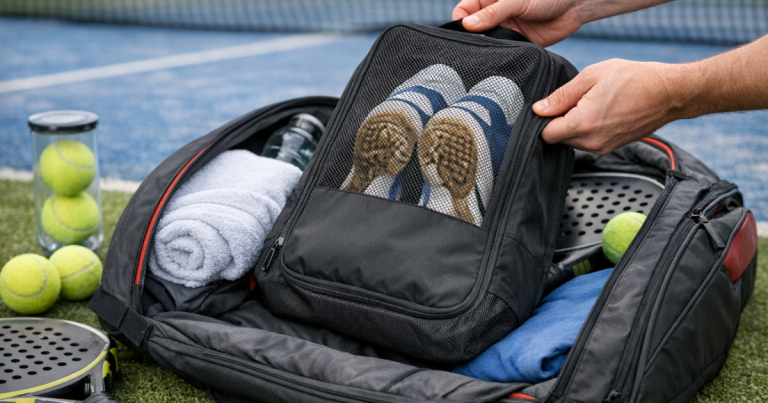
For light odour, place a small open container of bicarbonate of soda near the bag overnight, not loose inside the compartments. You can also use a washable shoe pouch to keep footwear separate in future. If the smell is coming mainly from shoes rather than the bag, clean the shoes separately before putting them back.
This is where good packing habits matter. If you regularly play on dusty or slippery indoor courts, keeping footwear separate helps protect the rest of your kit. Our guide to choosing padel shoes for slippery indoor courts also explains why sole condition and court surface go together.
Step 7: Dry it the right way
Drying is the part many players rush. A slightly damp bag that is zipped shut can develop musty odours quickly, especially if it is stored in a cupboard or car boot.
Stand the bag open in a well-ventilated area. Pull pockets open, lift flaps and separate sections so air can move through them. If the bag has a shoe compartment, prop it open until the deepest part feels completely dry.
Avoid these drying shortcuts:
- Tumble drying, unless the care label clearly permits it.
- Placing the bag on a radiator or heater.
- Using a hairdryer on hot settings.
- Leaving it in strong direct sun for long periods.
- Packing rackets back in before the lining is fully dry.
Once dry, close and open each zip to check it runs smoothly. If you spot remaining dust, brush it away before storing the bag.
Step 8: Set up a simple after-match routine
The easiest clean is the one you barely have to do. After each session, take out damp items as soon as you get home. Leave the main compartments open for a while, especially if you played indoors or carried sweaty clothing.
Keep a small kit routine:
- Use a separate pouch for shoes or dirty socks.
- Carry a small towel in a washable bag if it gets wet.
- Keep loose snacks in a sealed container rather than the side pocket.
- Empty ball tubes and wrappers after each match.
- Give the base a quick shake outside before storing the bag.
For regular club players, this makes a bigger difference than occasional deep cleaning. It also helps you spot wear early, such as loose stitching, thinning fabric near the base or a zip that is starting to catch.
How often should you clean it?
For most beginner and early-stage players, a light clean every few weeks is enough if you play once or twice a week. If you play several times a week, carry sweaty clothes, or use the bag for commuting, wipe the lining and handles more often.
A deeper clean makes sense when the bag smells stale, the base is gritty, the shoe compartment is dusty, or marks are becoming visible from a distance. Padel bag cleaning does not need to become a chore; it just needs to be regular enough that dirt never gets a chance to settle in.
What not to do
Some cleaning mistakes cause more damage than the dirt itself. Avoid machine washing structured padel bags unless the care label clearly says it is safe. Many padel bags have padding, coated fabrics, printed panels and shaped compartments that can lose form in a wash cycle.
Do not soak the whole bag in a bath or bucket. Water can get trapped inside padding and seams, leaving the bag smelling worse later. Do not scrub printed logos aggressively, as they can crack or peel. Do not use fabric softener on linings, because it can leave residue and odour rather than removing it.
If you are deciding whether an older bag is worth saving, look at the structure as well as the surface dirt. A stained but sturdy bag may clean up well. A bag with failing zips, ripped seams or collapsed padding may be less reliable for match nights, even after cleaning. For a sense of what organised match-night storage can look like, see our Wilson Blade Super Tour padel bag review.
FAQ
Can I put my padel bag in the washing machine?
Only if the care label clearly says it is machine washable. Many structured padel bags are better cleaned by hand because padding, coatings, zips and printed panels can be damaged in a wash cycle.
How do I remove a bad smell from the shoe compartment?
Empty it, brush out grit, wipe the lining with mild soapy water, then wipe again with plain water. Let it dry fully while open, and keep shoes in a separate pouch afterwards.
Can I use disinfectant spray inside the bag?
Use caution. Some sprays can mark fabric or leave a strong smell. If you use one, test a hidden area first and avoid soaking padded sections.
What should I do if the bag gets soaked in rain?
Empty it straight away, towel off excess moisture and dry it open in a ventilated room. Do not place it on direct heat, as that can damage panels and coatings.
How can I keep my bag cleaner between matches?
Remove damp kit after every session, keep shoes separate, shake out dust regularly and leave compartments open for a short time before storing it.
Final thoughts
A padel bag does not need aggressive cleaning to stay fresh. Gentle spot-cleaning, careful drying and better after-match habits will protect the parts that matter most: zips, seams, linings, padded sections and racket compartments.
Clean little and often, keep damp kit moving, and your bag will stay much more pleasant to use on club nights, coaching sessions and weekend games.