A damp handle can turn a simple volley into a rushed squeeze, especially when rallies get longer and your hand starts to sweat. Keeping your padel grip dry is not just about comfort; it helps you relax your hold, change grip quickly and trust the racket face. Wristbands are one of the simplest ways to manage moisture before it reaches your palm.
You do not need a complicated setup. The aim is to stop sweat travelling down your forearm, use your towel and overgrip sensibly, and build a quick routine you can repeat between points.
The short version
- Wear a wristband on your racket hand to catch sweat before it reaches the grip.
- Position it just above the wrist joint, snug enough to stay put but not tight.
- Use a clean, absorbent wristband for each session rather than relying on an old, flattened one.
- Pair it with a fresh overgrip if your handle already feels smooth, slippery or shiny.
- Change or rotate wristbands during hot indoor sessions, summer club matches or long coaching drills.
Why wristbands help more than many beginners expect
Most players think a slippery grip comes only from sweaty palms. That is part of it, but a lot of moisture also runs from your forearm onto your hand as you move, serve, defend lobs and prepare for volleys. A wristband acts like a small barrier, absorbing sweat before it reaches the base of your hand.
This matters in padel because the grip changes are subtle and frequent. You might block a fast ball at the net, turn for a back glass, then soften your hands for a drop shot within the same rally. If the handle feels damp, beginners often compensate by gripping harder. That can make the wrist stiff, reduce touch and tire the forearm more quickly.
Keeping a padel grip dry is really about preventing a chain reaction: sweat reaches the hand, the hand squeezes harder, the racket face becomes less controlled, and confidence drops. A wristband will not fix poor technique, but it can remove one avoidable distraction.
Step 1: choose a wristband that actually absorbs sweat
A simple tennis-style wristband is fine for padel. Look for a soft, absorbent fabric with enough thickness to hold moisture without feeling bulky. Very thin fashion-style bands may look tidy but often become saturated quickly during an active session.
For most beginners, a medium-width wristband is the easiest starting point. It gives enough coverage without getting in the way when you bend your wrist for serves, volleys and bandejas. Extra-wide wristbands can work well if you sweat heavily, but they may feel distracting until you get used to them.
Examples of common multi-sport options include Nike Swoosh Wristbands and Adidas Tennis Wristbands. You do not need a padel-specific label; comfort, absorbency and fit matter more than branding.
Step 2: wear it in the right place
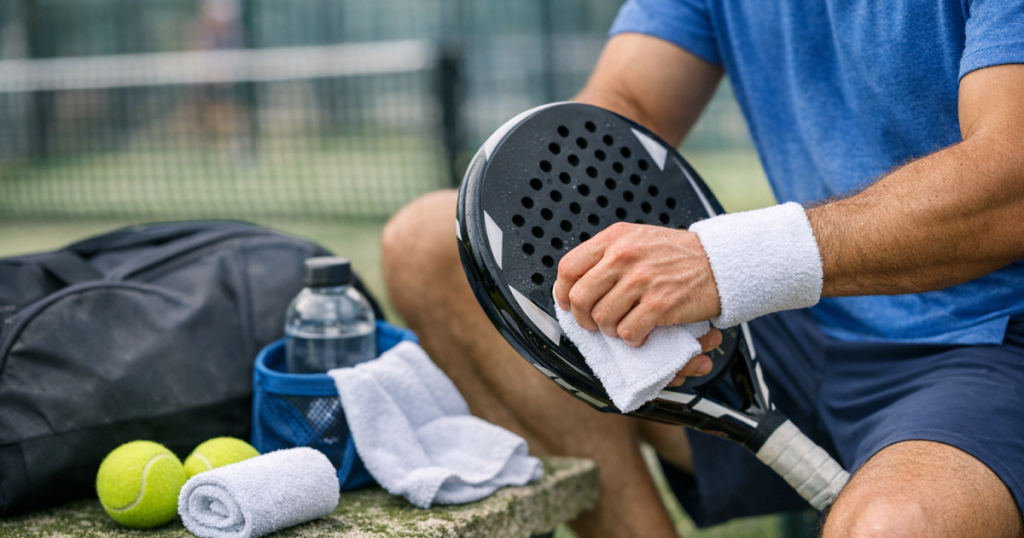
Put the wristband on your racket arm, just above the wrist crease rather than directly over the joint. As a rough guide, it should sit around 2–4 cm above where your hand bends. This position lets the band catch sweat running down the forearm while leaving the wrist free to move.
The fit should feel secure but not restrictive. If it slides down after a few rallies, it is too loose or too saturated. If it leaves deep marks, limits movement or makes your hand feel uncomfortable, it is too tight. A good wristband should disappear into the background once play starts.
Some players also wear one on the non-racket arm for wiping their face or forehead quickly between points. That can be useful, but the priority for grip control is the racket-side wristband.
Step 3: pair the wristband with the right grip routine
A wristband helps stop new moisture reaching your hand, but it cannot rescue an overgrip that is already worn out. If your grip feels shiny, hard, flattened or slick before you start playing, change the overgrip first. Wristbands and overgrips work best as a pair: one manages sweat before it reaches your hand, the other gives your fingers a reliable surface on the handle.
If you are still working out whether a slightly tackier or more absorbent grip suits you, our beginner-focused look at Bullpadel padel grips explains the sort of changes a simple grip upgrade can make. The main point is not to chase complicated gear; it is to keep the handle predictable from the first game to the last.
Before a session, run your hand around the grip. If it feels damp from your bag, dusty from an outdoor court or smooth from repeated use, sort that out before relying on a wristband. A clean wristband on a tired grip is only half a solution.
Step 4: use it actively during play
Do not treat the wristband as something you put on and forget. Use it as part of a calm between-point routine. After a long rally, briefly press the band against your palm or fingers, then reset your hold on the racket. This is quicker than walking back for a towel every time and helps you stay ready for the next point.
During club play, you can also rotate the band slightly when one area gets damp. If you brought a spare, swap it between sets or after a heavy drill block. In warm indoor venues, that small change can make the second half of a session feel much more controlled.
This routine is especially useful when you are playing with unfamiliar partners and do not want to fuss with your kit every few points. If that sounds familiar, the same calm, practical mindset applies to your first mixed-level padel match, where staying composed often matters more than trying to hit bigger shots.
Step 5: adjust for indoor, outdoor and weather conditions
Indoor courts can feel humid, particularly when several courts are in use and rallies are intense. Outdoor courts add different problems: wind, sun, colder starts, sudden drizzle and dust from the court surface. Your wristband routine should change with the conditions rather than staying fixed.
- Hot indoor session: bring at least one spare wristband and change it once it feels heavy or damp.
- Cool outdoor session: you may only need one band, but keep it dry in your bag before play starts.
- Humid evening match: use a wristband from the warm-up, not only after your hand is already wet.
- Light rain or damp court edges: dry your hands with a towel first; a wristband is not a replacement for basic moisture control.
- Long coaching drills: swap bands during water breaks so your grip does not slowly deteriorate.
For more detail on how conditions affect kit choices, our guide to indoor versus outdoor padel gear covers the wider changes beginners notice once they start playing regularly.
Common mistakes to avoid
Using the same wristband for every session
Wristbands lose absorbency when they are used repeatedly without proper washing. If the fabric feels stiff, flat or permanently damp, it will not do much. Treat wristbands like socks or base layers: wash them, dry them properly and rotate them.
Wearing it too low on the hand
If the band sits over the wrist joint or touches the base of your palm, it can interfere with movement and feel awkward on volleys. Move it slightly up the forearm so it catches sweat without changing your grip feel.
Waiting until your hand is already wet
A wristband is most useful as prevention. Put it on before the warm-up, especially if you know your hands sweat when you get nervous or when rallies become physical.
Blaming the wristband when the grip is worn
If the overgrip has lost texture, even a good wristband will not make the racket feel secure. Replace the grip when needed rather than over-tightening your hold.
A simple match-day routine
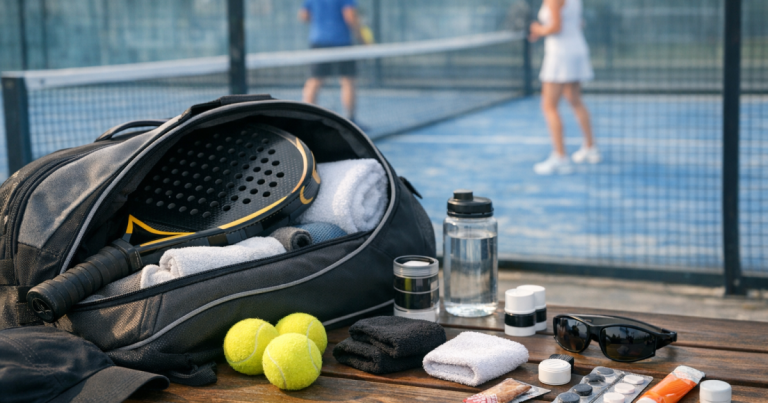
Pack two clean wristbands if you are playing a full match or a busy club session. Put the first one on before the warm-up so sweat does not build up early. Keep the spare in a dry pocket rather than loose beside a water bottle or damp towel.
During play, use three quick checks. First, does the handle feel secure when you relax your fingers? Second, is the wristband still absorbing, or does it feel heavy? Third, are you gripping harder because the racket feels slippery? If the answer to the third question is yes, dry your hand, rotate or change the wristband, and check the overgrip.
After the session, take the wristband out of your bag when you get home. Leaving damp fabric packed next to your racket, towel and clothing makes everything smell worse and can transfer moisture to items you want to keep dry.
FAQ
Should I wear a wristband on one arm or both?
Start with one on your racket arm. Add a second on your non-racket arm only if you like having a quick way to wipe sweat from your face or forehead between points.
Can a wristband replace an overgrip?
No. The wristband manages sweat before it reaches your hand, while the overgrip controls the feel of the racket handle. If the grip is worn, change it.
How many wristbands should I bring to a padel session?
For a short casual hit, one is usually enough. For a match, coaching session or warm indoor court, bring two so you can swap when the first one gets damp.
Are wide wristbands better for sweaty hands?
They can absorb more moisture, but they also feel bulkier. Try a medium-width band first, then move wider if it becomes saturated too quickly.
Should beginners use wristbands from their first session?
If your hands sweat easily, yes. It is a low-effort habit that can make the racket feel more secure while you focus on footwork, positioning and shot choice.
What to remember
Wristbands are not glamorous, but they solve a real beginner problem: moisture reaching the grip just when you need a relaxed, reliable hold. Wear one on your racket arm, position it slightly above the wrist, keep a spare for longer sessions and do not ignore the condition of your overgrip.
The best routine is simple enough to repeat without thinking. Dry hand, secure grip, relaxed hold, next point. That is all you need from a small accessory that earns its place in your padel bag.