A shared padel bag is convenient, but it can also turn into a jumble of rackets, balls, grips, bottles and spare clothing. The easiest way to protect your padel racket is to stop hard items rubbing against the face, keep moisture away from the handle and give the frame its own padded space. You do not need a huge tour bag to do this well; you just need a simple packing routine.
This matters most for beginners who are sharing kit on club nights, lessons or family sessions. Small chips and grip dampness are easy to miss after a match, but they can make your racket feel worse in the hand and look tired long before it needs replacing.
The simple rule: separate, cushion and keep dry
Inside a shared bag, your racket needs three things: separation from hard objects, a little cushioning from pressure, and protection from moisture. If you can manage those three, most common bag damage becomes much less likely.
- Separate: keep the racket away from keys, metal bottles, spare padel balls, zips, shoe soles and other racket frames.
- Cushion: use a sleeve, towel or clothing layer so the face and frame are not pressed directly against harder kit.
- Keep dry: avoid packing a racket against wet towels, sweaty tops or damp overgrips after a session.
- Check before closing: make sure nothing sharp or heavy is sitting on the face before the bag is zipped up.
That might sound obvious, but shared bags fail because everyone packs quickly. One player drops in a bottle, another adds a hoodie, then someone squeezes in shoes and the racket becomes the soft thing everything presses against.
Step 1: know which parts need protecting
A padel racket is not fragile in normal play, but different parts dislike different types of bag abuse. The frame edge takes knocks when another racket, bottle or court wall-brushed shoe is pushed against it. The face can pick up scuffs from gritty clothing, dirty towels or loose balls. The handle and grip suffer most from moisture and compression.
If you are not sure what each part does, it is worth reading this guide to padel racket anatomy. Once you understand the frame, face, holes and handle, the packing logic becomes much easier.
Most beginners worry about tiny surface marks, but a light cosmetic scuff is usually less serious than repeated pressure on the edge of the frame or leaving a damp grip sealed in a bag. The goal is not to keep the racket museum-perfect. It is to avoid unnecessary wear from careless packing.
Step 2: use a sleeve or soft barrier
The simplest protection is a racket sleeve. Many rackets are supplied with a basic cover, and that is often enough for shared-bag use. If you do not have one, a clean microfibre towel, spare T-shirt or lightweight hoodie can work as a temporary barrier.
Put the barrier around the face and frame, not just over the handle. The edge of the frame is the part most likely to catch on zips, clips, shoes and other rackets. If two rackets are sharing the same compartment, place a soft layer between them so the frames are not knocking together while you walk or drive.
Avoid wrapping the racket in a wet towel after play. It feels convenient, but it traps moisture around the grip and can make the bag smell quickly. If the towel is damp, put it in a separate section or a plastic-free wet kit pouch if you use one, then air everything out at home.
Step 3: pack the racket before the heavy items
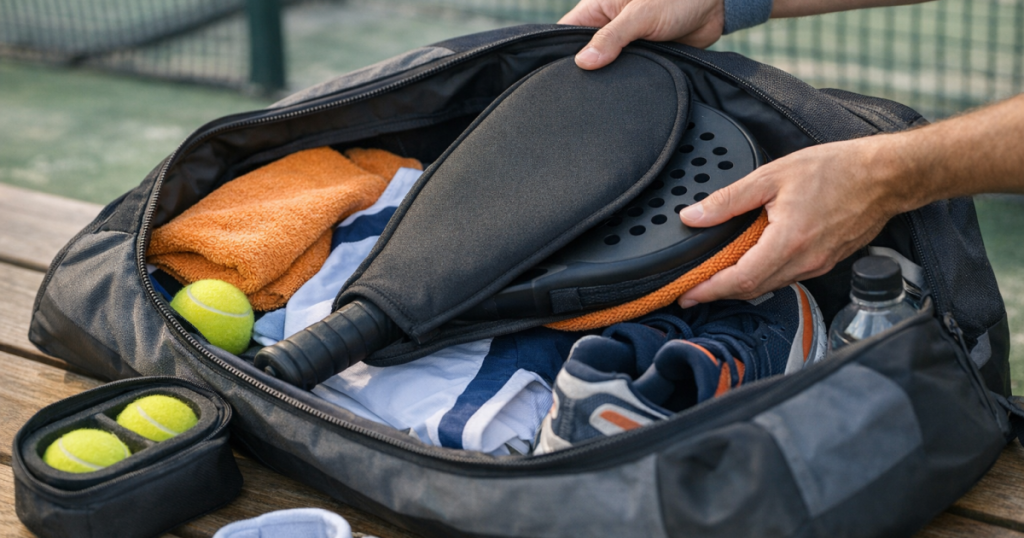
When several people are using one bag, the order matters. Put the racket in first, against the padded side or back panel if the bag has one. Then add softer items such as a clean top, hoodie or towel around it. Heavier items should go in last and should sit away from the face.
A good packing order looks like this:
- First: racket in a sleeve or wrapped in a soft layer.
- Second: clean clothing or a dry towel as cushioning.
- Third: tubes of balls, snacks and small accessories in a pocket or pouch.
- Last: shoes and bottles in their own compartment, or at the opposite end of the bag.
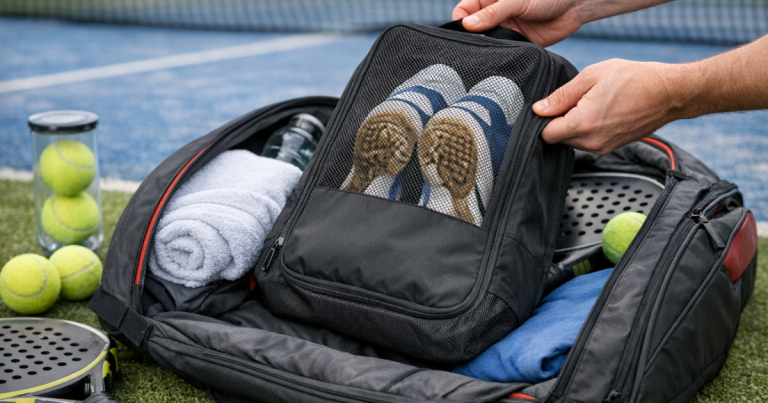
If your bag has no separate shoe section, put shoes sole-to-sole inside a shoe bag or carrier bag before they go near the racket. Grit from outdoor paths, car parks and wet court surrounds can scratch the racket face or transfer dirt onto the grip.
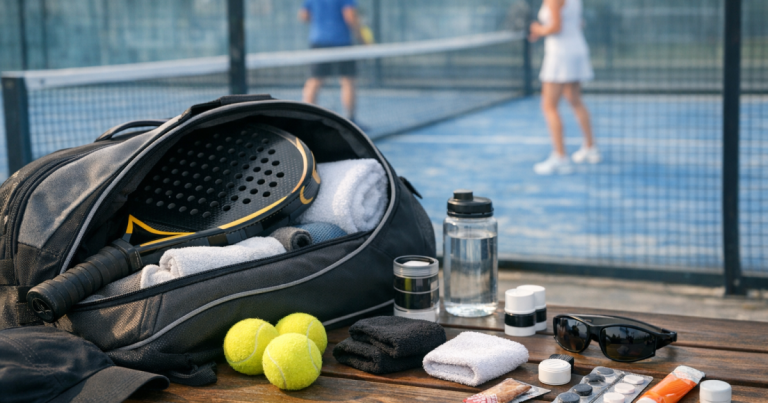
If you are trying to streamline what you carry, this simple match-day padel accessories kit gives a sensible baseline without turning your bag into a mobile locker.
Step 4: control the small hard objects
Small items cause a surprising amount of damage because they move around. Keys, padel ball tubes, loose coins, padel locks, metal water bottles and sunglasses cases can all press into a racket face or chip the frame edge if they are loose in the main compartment.
Make one pocket the shared hard-item pocket. Everyone using the bag should know that keys, wallets, watches, ball tubes and tape go there, not next to the racket. If the bag has no useful pocket, use a small zip pouch. It does not need to be padel-specific; it just needs to stop hard objects roaming freely.
Loose balls are less damaging than keys, but they can still create pressure points if several are trapped against the racket when the bag is full. Keep balls in a tube or mesh pouch where possible. It also makes it easier to notice when they have gone soft or flat between sessions.
Step 5: keep bottles and damp kit away from the grip
Water bottles are one of the biggest risks in shared bags because they combine weight and moisture. Even a bottle that does not leak can press into the racket face. A bottle that does leak can soak the grip, overgrip and handle area.
Use an outer bottle pocket if your bag has one. If it does not, stand the bottle upright at the opposite end of the bag from the racket handle and check the lid before leaving the court. For shared bags, avoid half-closing the bottle and hoping for the best; one loose lid can ruin more than one player’s kit.
Damp clothing needs the same discipline. After a sweaty indoor session or a wet walk from the car park, do not bury the racket under used tops or towels. Put damp items in a separate pouch, carrier or end compartment, then open the bag when you get home so the racket and grip can dry naturally.
Step 6: avoid overfilling the bag
A bag that closes easily is usually safer than one that needs forcing. When you pull hard on the zip, everything inside compresses. That pressure can push shoe soles, bottles or ball tubes into the racket face and frame.
Before closing a shared bag, do a quick pressure check:
- Can the zip close without forcing it?
- Is the racket flat rather than bent over a bulky item?
- Are shoes and bottles away from the face?
- Is there a soft layer between two rackets?
- Is the handle clear of damp kit?
If the answer is no, take something out or move it. The few seconds you spend rearranging the bag are easier than dealing with a chipped frame or grip that feels soggy at the next session.
Step 7: make shared-bag rules simple
If two or more people use the same bag, keep the rules short enough that everyone follows them. Long systems fail on busy club nights. A good shared-bag routine is easy to remember: rackets in sleeves, hard items in pockets, wet kit separate, bottles upright.
For families, this is especially useful. A parent might pack the rackets carefully, then a child adds a bottle, snack box or outdoor shoes on top. Giving each person one job helps: one person handles rackets, one handles balls, one handles bottles, and damp kit goes straight into its own pouch.
For coaching groups or casual club play, consider using one bag for rackets and another for shoes, drinks and spare layers. That is not always possible, but even a small drawstring bag for dirty or wet kit can reduce the risk of damage inside the main padel bag.
After the session: unpack before damage sets in
Racket protection does not stop when you leave the court. The worst habit is dropping a full bag by the front door and leaving it zipped up until the next match. Damp clothing, used overgrips and wet towels create a stale environment, especially after indoor evening sessions or rainy journeys home.
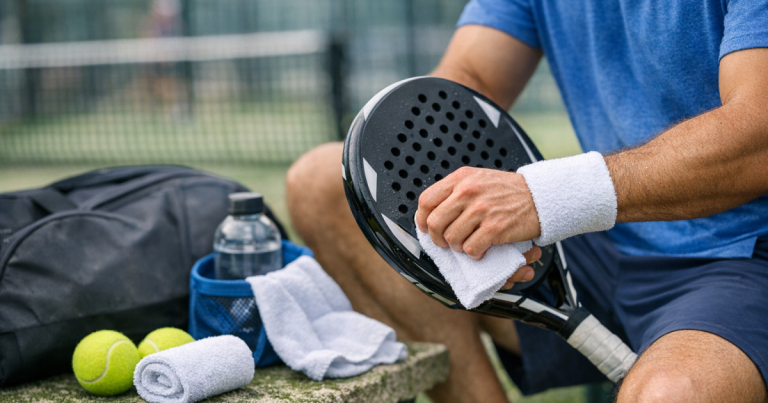
When you get home, take out the racket, open the sleeve and let the grip air. Wipe away obvious dirt with a dry or slightly damp soft cloth, then let it dry at room temperature. Do not place it on a radiator or leave it in a hot car. Sudden heat and prolonged temperature extremes are not good storage habits for sports kit.
Also check the bag itself. Crumbs, grit and loose padel ball fluff collect in corners and can rub against the racket over time. A quick shake-out every few sessions keeps the bag cleaner and makes it easier to spot forgotten items.
When a basic bag is no longer enough
You do not need an expensive bag to protect a beginner racket, but you may outgrow a basic backpack if you regularly carry two rackets, shoes, bottles, towels and spare clothing. The issue is not status; it is space and separation.
A better bag setup may make sense when:
- Two rackets are always sharing one main compartment.
- You often carry shoes in the same space as the racket.
- Your bottle has to sit inside the main section.
- The zip only closes when the bag is tightly packed.
- You play often enough that damp kit sits in the bag several times a week.
If you are deciding whether to upgrade your setup or keep using what you have, this beginner-focused guide on how much to spend on starter padel gear can help you keep the decision sensible. Protection is useful, but it should match how often you play and how much kit you actually carry.
Common questions
Can I put two padel rackets in the same sleeve?
It is better not to. Two rackets in one sleeve can rub frame-to-frame, especially while walking or driving. Use separate sleeves or place a towel or clothing layer between them.
Is a racket cover enough inside a shared bag?
Usually, yes, if the rest of the bag is packed sensibly. A cover helps with scratches, but it will not stop pressure damage if shoes, bottles or hard items are forced against the racket.
Should the handle go at the top or bottom of the bag?
Use the position that keeps the racket flat and away from moisture. In many backpacks, handle-up makes it easier to keep the grip away from damp towels and loose bottles.
Can padel balls damage a racket in a bag?
A few balls are unlikely to cause serious damage, but loose balls can create pressure points when the bag is tightly packed. Keeping them in a tube or pouch is tidier and safer.
How often should I clean out a shared padel bag?
For regular club play, a quick clean every few sessions is sensible. Remove grit, old wrappers, loose fluff and damp kit so the racket is not rubbing against dirt between matches.
Main lessons
A shared padel bag works perfectly well if the racket is treated as the item that needs its own space. Use a sleeve or soft layer, keep hard objects in pockets, separate wet kit and avoid forcing the zip closed. Those small habits prevent most avoidable scuffs, chips and damp-grip problems.
The best routine is the one you can repeat after a late lesson, a busy club night or a quick family game. Pack the racket first, protect it from pressure, unpack it when you get home, and your gear will stay in better condition for longer.