A padel shoe bag is one of those small kit habits that makes club nights much less messy. It keeps dusty soles away from your racket, towel, clothes and balls, while making it easier to unpack quickly when you get home. The key is not just owning one, but placing and using it sensibly inside your main bag.
The simple answer
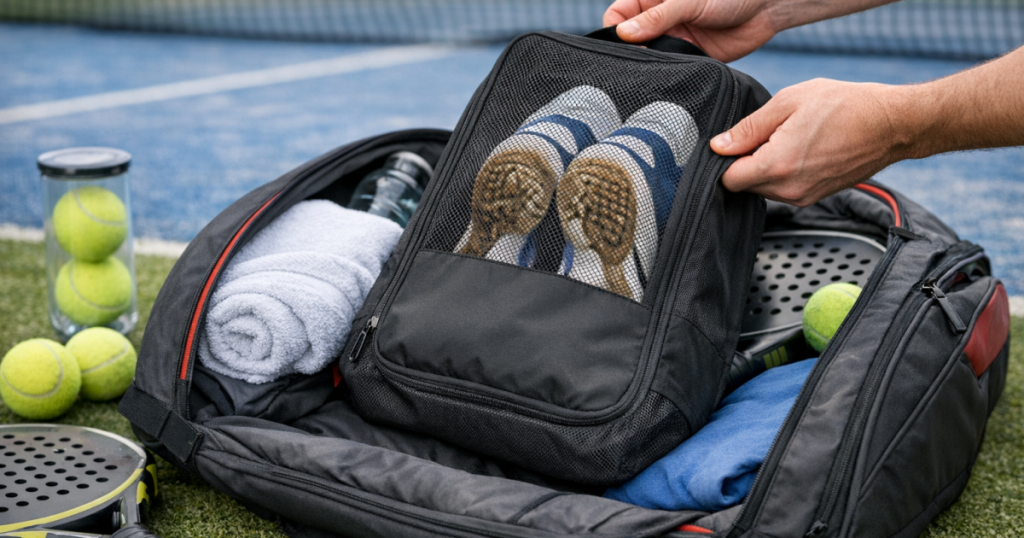
Put your shoes in a separate, breathable or easy-clean shoe bag before they go into your main padel bag. Position that shoe bag low down, ideally at one end or in a separate compartment, with the soles facing away from clean clothing and away from the racket face.
That basic setup helps with three common beginner problems: dusty court residue spreading through the bag, damp socks or shoes affecting other kit, and having to rummage around before a game. It also makes your post-match routine easier because you can lift one item out, air the shoes, and reset the bag for the next session.
Step 1: Let the shoes cool and dry briefly
After a session, avoid sealing sweaty shoes straight into any closed bag for the rest of the evening. If the club has a bench or changing area, give them a few minutes in the open while you pack your racket, balls and towel.
You do not need a long drying routine at the court. The aim is simply to stop the worst moisture from being trapped immediately. If the soles are covered in grit, tap them together gently outdoors or over an easy-clean floor before packing them.
This matters more in winter or after wet walks from the car park, when the outside of the shoe may be damp as well as the inside. If you are still choosing footwear for early club play, it is worth understanding why court-specific support matters; our Wilson Bela Tour padel shoes review explains the sort of stability points beginners should think about.
Step 2: Pack the shoes in a consistent position
Put both shoes into the shoe bag the same way each time. A good method is heel-to-toe, with the soles facing each other. This reduces the amount of dirty sole area touching the inside of the shoe bag and helps the pair sit flatter.
If your shoe bag is roomy, do not use the extra space as a general dumping area. Mixing shoes with spare overgrips, snacks, clean socks or wristbands defeats the point of separating dirty kit. Keep the shoe bag for shoes only, or at most for a small used sock bag if you already separate clean and worn clothing.
Before closing it, check that the laces are inside the bag rather than dangling out. Loose laces can catch on zips, racket handles or clothing when you pull the shoe bag from your main bag.
Step 3: Choose the best place inside your padel bag
The safest place for shoes is usually the lowest part of the bag, away from fragile or clean items. Padel bags vary a lot, so use the structure you already have rather than forcing a layout that does not fit.
- If your bag has a shoe compartment: use it. Put the shoes in the shoe bag first, then slide the shoe bag into the shoe compartment. This gives you two layers of separation.
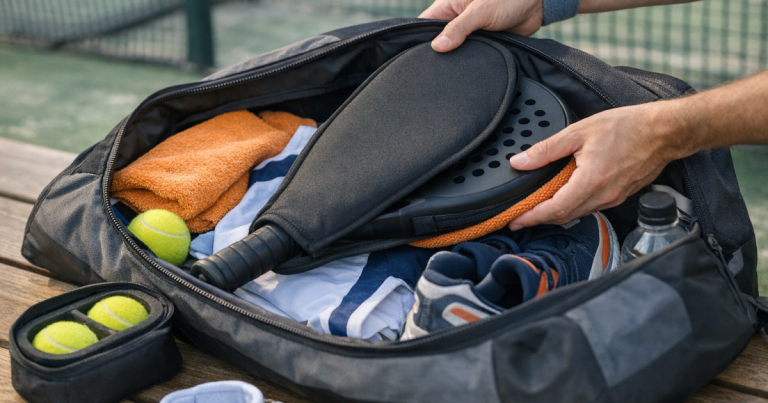
- If you use a racket backpack: place the shoe bag at the bottom, then put clothing, towel or lighter items above it. Keep the racket in its sleeve or dedicated section.
- If you use a holdall-style sports bag: push the shoe bag to one end and keep the racket on the opposite side, ideally protected by a cover.
- If your bag is already full: remove non-essential clutter before adding shoes. Squashing shoes against your racket is not ideal and makes everything harder to find.
The main rule is simple: dirty and heavy items go low or to one side; clean and delicate items stay protected.
Step 4: Keep racket, grip and clothing away from shoe dirt
Padel courts can leave fine dust on the sole pattern, and that dust has a habit of moving around your bag. It is annoying on clothing, but it is especially frustrating on towel, overgrips and the handle of your racket.
Try to keep your racket handle pointing away from the shoe bag. If your bag has a separate racket section, use it every time rather than sliding the racket into the main compartment after a rushed game. A dry, clean handle makes a noticeable difference when you start your next match, and if sweaty hands are a regular issue, this guide on using wristbands to keep your padel grip dry is a useful next step.
Clean clothing should be packed in a separate pouch, folded at the top of the bag, or kept in a side pocket. If you bring a fresh top for after the game, do not wedge it beside the shoe bag “just for the journey home”. That is how clean kit starts smelling like used shoes.
Step 5: Deal with damp sessions properly
A shoe bag helps with separation, but it is not a drying system. If your shoes are wet from rain, wet paths or a damp changing area, take them out as soon as you get home.
Open the shoe bag, remove the shoes, loosen the laces and let them air naturally at room temperature. Avoid leaving them sealed in your main padel bag overnight. That can make odour worse and may leave moisture sitting against other kit.
If your shoe bag has picked up moisture or dirt, turn it inside out if the design allows and let it air too. A quick wipe with a damp cloth is usually enough for light dirt. Follow the care label for washing, as materials and linings differ.
Step 6: Build a quick unpacking routine
The best bag habits are the ones you can repeat when you are tired after a late game. As soon as you get home, remove three things first: the shoe bag, used clothing and towel. Then check whether balls, grips or water bottles need to be taken out.
A simple routine might look like this:
- Take the shoe bag out and open it.
- Air the shoes away from direct heat.
- Put worn socks and clothing in the wash basket.
- Hang the towel to dry or wash it.
- Leave the main padel bag partly open for a while.
This takes a minute or two, but it prevents the stale “sports bag” smell that builds up when everything stays zipped shut between sessions.
Small mistakes that make a shoe bag less useful
Most problems come from treating the shoe bag as a magic fix rather than part of a routine. Avoid these common habits:
- Leaving shoes sealed for days: separation helps your other kit, but trapped moisture still needs air.
- Packing shoes beside loose balls: dusty balls can transfer dirt to your hands and grip before warm-up.
- Putting the shoe bag on top of the racket: shoes are heavier than they look, especially after a damp walk.
- Using it for clean and dirty kit together: keep clean socks, shirts and towels elsewhere.
- Ignoring the bag itself: the shoe bag also needs airing and occasional cleaning.
When your main bag may need a rethink
If you cannot fit shoes, racket, balls, towel and a water bottle without crushing everything together, your issue may be bag layout rather than shoe storage. Beginners often start with a general gym bag, which can work for a while, but regular club play usually exposes its limits.
You do not need to jump straight into the largest tour-style bag. The useful upgrade is enough separation: a racket section, a main kit area, and somewhere sensible for shoes or damp items. For a broader look at bag priorities, this piece on whether a racket or padel bag upgrade should come first helps put storage decisions in context.
Questions people ask
Can I put muddy padel shoes straight into a shoe bag?
Knock off loose mud or grit first. A shoe bag protects your main kit, but packing heavy dirt into it just means you will need to clean the shoe bag more often.
Should a padel shoe bag be breathable?
Breathability helps if the shoes are slightly damp after play. Fully sealed bags can contain dirt well, but they should be opened as soon as you get home.
Can I store my shoes in the shoe bag between matches?
For short periods, yes. For regular storage, leave the shoes somewhere airy instead of keeping them zipped inside your padel bag all week.
What else can go in the shoe bag?
Ideally, nothing except shoes. If you must add used socks, keep them in a separate small washable pouch so they do not sit loose inside the shoe bag.
Do I need a separate padel shoe bag if my main bag has a shoe compartment?
It is still useful. The compartment separates shoes from your main kit, while the shoe bag keeps the compartment cleaner and easier to manage.
Main lessons
A shoe bag works best when it supports a simple system: air shoes briefly, pack them consistently, place them low and away from clean kit, then unpack them when you get home. It is a small accessory, but for regular padel it keeps your bag cleaner, your racket area tidier and your next session easier to prepare for.