Turning up in running trainers can feel harmless until your foot slides on a sandy corner or rolls during a quick change of direction. A good padel shoes guide helps beginners understand the three things that matter most: the sole, the support around the foot, and how the shoe behaves on the court surface you actually play on.
Padel is full of short steps, split steps, lunges, pivots and recovery movements. You do not need the most expensive shoes as a new player, but you do need footwear that grips predictably, keeps your foot stable and does not damage the court.
At a glance
- Running shoes are not ideal for regular padel because they are built mainly for forward movement, not side-to-side court movement.
- Sole pattern matters because many UK padel courts use artificial turf with sand, and the wrong sole can feel either slippery or too grabby.
- Support is about control, not stiffness. Your heel should stay secure and your foot should not spill over the side when you push off.
- Court safety is practical: clean soles, avoid worn tread, respect club surface rules and be cautious on damp outdoor courts.
- Fit beats brand. A well-fitting mid-range padel or clay-court tennis shoe is usually more useful than a premium shoe that rubs or slips.
Why padel shoes are different from normal trainers
Running trainers are designed to roll you forwards. That is useful on a road or treadmill, but padel asks for something different. You are often moving sideways, stopping suddenly, stepping backwards from the net, or pushing diagonally to recover after a lob.
A court shoe normally has a flatter, wider base than a running trainer. That can make it feel less bouncy at first, but more planted when you are defending in the back corner or moving across the service box. The upper should also hold your foot better during lateral movement, so your toes and midfoot are not sliding around inside the shoe.
This is where beginner players sometimes misread comfort. A very soft running shoe can feel lovely when you first lace it up, but it may not feel secure once you start changing direction. For padel, comfort still matters, but it should come with enough structure to keep your foot in place.
Sole types: what to know before you step on court
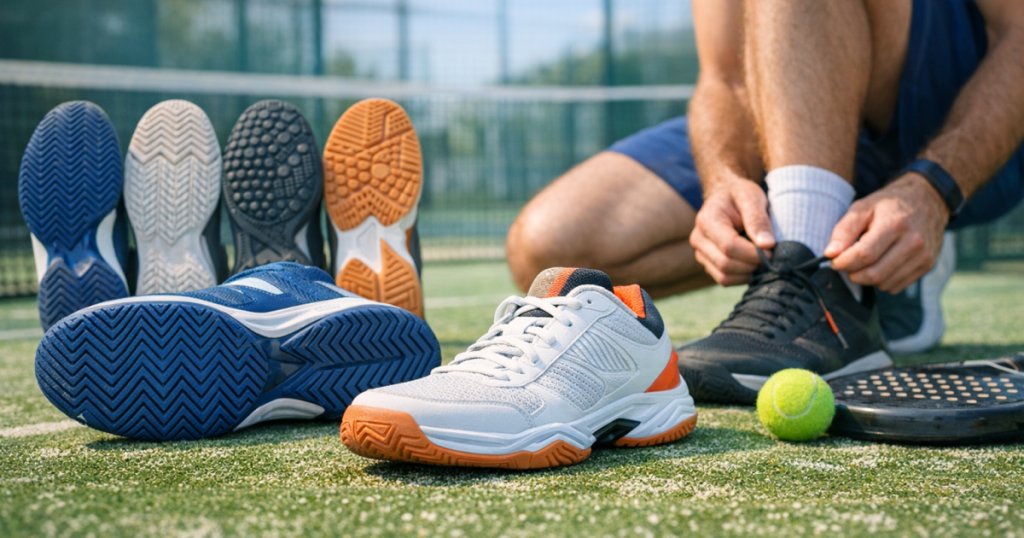
The sole is the part of a padel shoe that most directly affects grip. There is no single perfect outsole for every court, because surface conditions vary between clubs. Some courts have visible sand and a slightly loose feel underfoot. Others feel faster and cleaner, especially on newer indoor surfaces.
Herringbone soles
Herringbone soles use a zigzag tread pattern, similar to many clay-court tennis shoes. They are popular for sandy artificial turf because they can give controlled grip while still allowing small slides. That controlled movement is important: you want to stop safely, but you do not want your shoe to lock so hard into the surface that your ankle or knee takes all the force.
If your local court has plenty of sand, a full or strong herringbone pattern is often a sensible place to start. It can also help release sand from the grooves as you move, although any sole can clog if it is worn or dirty.
All-court and mixed soles
Some padel shoes use a mixed outsole, combining herringbone areas with other grip zones. These can feel versatile if you play on different court types, such as indoor club courts during the week and outdoor courts at weekends. The trade-off is that they may not feel as specialised as a full herringbone sole on very sandy courts.
All-court tennis shoes can work for some beginners, especially if they are non-marking and have good lateral support. However, check the tread and ask your club if you are unsure about the surface. Some soles that are fine on a hard tennis court may feel too sticky or too shallow for padel turf.
Worn soles are a safety issue
A padel shoe does not need to look destroyed to be past its best. If the tread has flattened, the heel is smooth, or one side is more worn than the other, grip becomes less predictable. That is when small slips tend to happen: not always dramatic falls, but awkward movements that make you play cautiously.
Support: what beginners should actually feel
Good support does not mean the shoe has to feel rigid. It means your foot stays where it should when you move. When trying on padel shoes, lace them properly and do a few gentle side steps. Your heel should not lift, your midfoot should feel held, and your toes should have room without sliding into the front.
Pay attention to these areas:
- Heel hold: the back of the shoe should grip your heel without rubbing. Heel slip can make quick recovery steps feel unstable.
- Midfoot security: the laces and upper should stop your foot moving sideways inside the shoe.
- Forefoot space: your toes need room to spread slightly, but not so much that your foot skids forward when braking.
- Side stability: the shoe should feel steady when you push off towards the glass or step out for a wide volley.
- Cushioning: enough to reduce harsh impact, but not so high and soft that the shoe feels wobbly.
If you want a real product example of the kind of support questions beginners should ask, our Wilson Bela Tour Padel Shoes review looks at whether a supportive padel shoe makes sense for newer players.
Court safety: grip is only part of it
Shoes help, but safe movement also depends on court condition and habits. UK players often deal with a mix of indoor courts, outdoor courts, damp walkways and changing weather. Even if the court itself is playable, moisture around the entrance or on the run-off area can make your soles slippery before you start a point.
Before a game, check whether your soles are clean and dry. Small stones, mud or wet leaves can affect grip and may also mark the surface. If you have walked across a car park or wet path, give your shoes a quick wipe before stepping onto court.
Be careful with outdoor courts after rain or heavy condensation. Padel involves fast changes of direction near glass, mesh and the service line, so a slightly slippery surface can become awkward quickly. If the court feels unsafe during the warm-up, slow down and speak to the organiser or club staff rather than trying to play through it.
Net play adds another layer. You often take small adjustment steps, split step as your opponent hits, then move sharply forwards or sideways. If you are still learning the rules and positioning, it is worth reading our explanation of volley rules and net play so your movement matches what is allowed in a point.
How to judge fit in a shop or at home
Try padel shoes with the socks you normally play in. A shoe that feels fine with thin everyday socks may feel tight with thicker sports socks, and a loose shoe can become irritating once your feet warm up during a match.
Use this simple check:
- Lace both shoes fully, not just one. Many people have one foot slightly larger than the other.
- Stand and bend your knees. Your toes should not jam into the front.
- Step side to side. Your foot should not slide over the edge of the sole.
- Do a small split step. The shoe should land flat and stable, not rock from side to side.
- Walk backwards a few steps. Your heel should stay controlled without rubbing.
If you use orthotic insoles or need extra arch space, check the shoe with your usual setup rather than assuming it will fit later. Some court shoes have removable insoles, but the overall volume of the shoe still matters.
Common beginner mistakes with padel footwear
The first mistake is using old gym trainers because they still look fine. Indoor gym shoes can have shallow tread and limited side support. They may be clean, but that does not automatically make them suitable for artificial turf.
The second mistake is choosing the grippiest-looking sole without thinking about the court. Too much grab can feel awkward if you need a little controlled slide, especially when defending from the corners. You want predictable traction, not a shoe that makes every stop feel abrupt.
The third mistake is ignoring storage. If your shoes stay damp in the bottom of your bag, they can smell, lose comfort and transfer dirt to your clothes or racket. A simple separate compartment or shoe bag keeps things cleaner. For a tidy setup, see our advice on keeping shoes separate inside your padel bag.
Examples of sensible beginner choices
For a first pair, most beginners should look for a padel shoe or clay-court tennis shoe with a stable base, non-marking sole and secure heel. You do not need to chase the lightest or stiffest model. Early on, the goal is to feel balanced enough to move properly, learn court positioning and build confidence.
A shoe such as the Asics Gel-Padel Pro 3 is an example of a named padel model beginners may come across when browsing. Rather than assuming any one model is right for you, check the fit, tread pattern and return conditions with the retailer before committing.
If you already own tennis shoes, look at the sole and stability before replacing them immediately. Clay-court tennis shoes can be suitable for many padel courts, while soft road-running shoes are usually the weaker choice for regular play. If you are only trying padel once, clean trainers may be acceptable depending on club rules; if you start playing weekly, proper court footwear becomes a more sensible upgrade.
When to replace your padel shoes
There is no exact replacement schedule because it depends on how often you play, your movement style, your weight, the court surface and how well you look after the shoes. Instead of counting months, look for practical warning signs.
- The tread is smooth in high-wear areas, especially under the forefoot or outside edge.
- You slip on movements that used to feel secure.
- The upper has stretched so your foot moves around inside the shoe.
- The heel lining has worn through and starts rubbing.
- The midsole feels flat or harsh compared with when the shoes were newer.
- The shoe leans to one side when placed on a flat surface.
Do not wait until the shoe fails completely. A worn shoe can affect your footwork, and poor footwork makes it harder to learn the game properly.
Things readers ask
Can I wear tennis shoes for padel?
Yes, some tennis shoes work well, especially clay-court models with a herringbone-style sole and good lateral support. Avoid assuming every tennis shoe is suitable; hard-court soles and very shallow tread may feel wrong on sandy turf.
Are running shoes unsafe for padel?
They are not automatically unsafe for a gentle first hit, but they are poorly suited to regular padel. Their shape and cushioning are usually designed for forward motion, not repeated sideways stops and pivots.
Should padel shoes feel tight?
They should feel secure, not tight. Your heel and midfoot should be held firmly, while your toes still have enough room to move without hitting the front of the shoe.
Can I use the same shoes indoors and outdoors?
Often, yes, provided the sole suits both surfaces and you keep it clean and dry. Be more cautious on outdoor courts in damp conditions, as grip can change quickly.
Do beginners really need padel-specific shoes?
If you play regularly, yes, proper court shoes are a sensible early upgrade. They make movement more predictable and help you build better habits from the start.
What to remember
The best beginner footwear is not about copying professional players or buying the most technical-looking shoe. It is about choosing a stable, comfortable court shoe with a sole that matches your local surface. Use this padel shoes guide as a checklist: suitable tread, secure heel, lateral support, clean soles and sensible caution when the court is damp or worn.
Once your shoes feel reliable, your movement becomes easier to trust. That means you can focus on timing, positioning and enjoying longer rallies instead of worrying about every step.