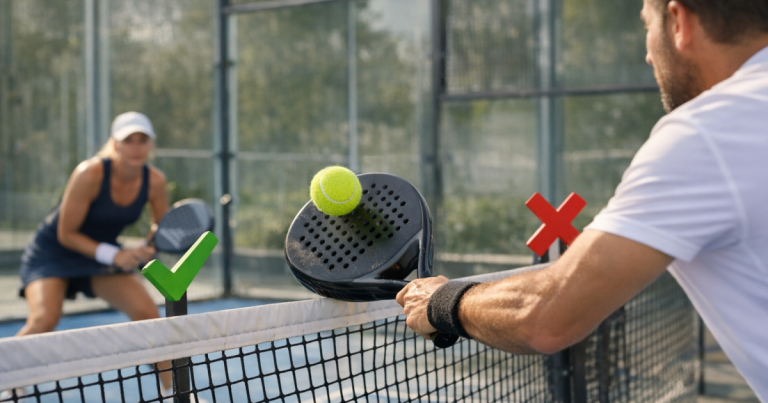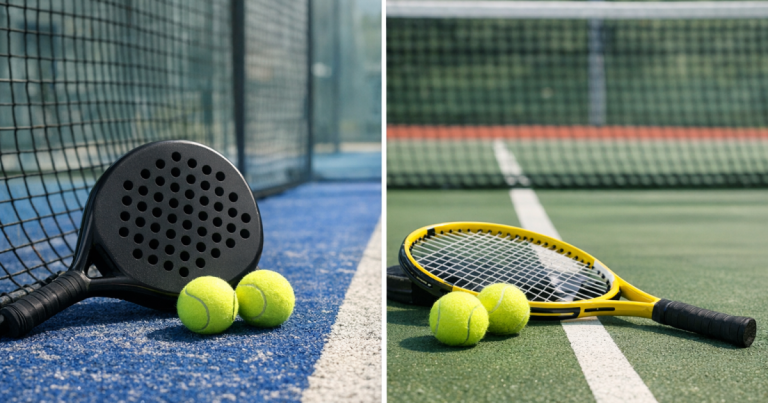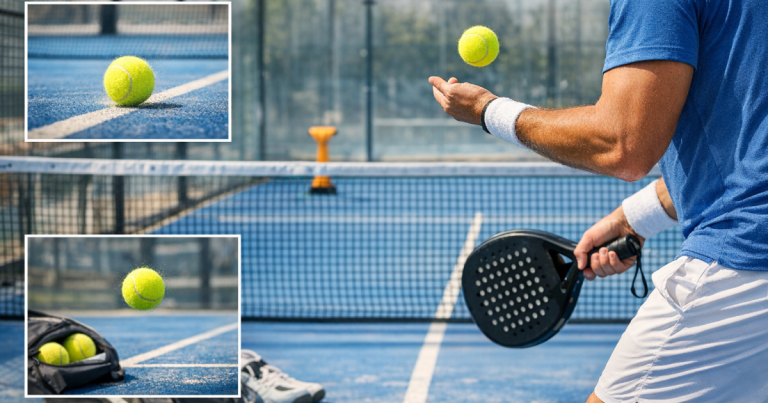
Fence rebounds are one of the first things that make padel feel confusing. The padel fence rules are not difficult once you separate two moments: whether the ball has bounced on the court first, and whether you are serving or playing a normal rally.
For beginners, the safest simple rule is this: during a rally, the ball is usually legal if it lands in the opponent’s court before touching the fence. If it hits the fence before landing in the opponent’s court, it is out. Serves are stricter, because a serve that lands in the correct box and then touches the metal fence is a fault.
What to know first
- Lines count as in. If the ball clips a legal court line, play continues.
- The glass or solid wall and the metal mesh are treated differently in some situations, especially on serve.
- In a rally, the first bounce decides most calls. Court first, then fence is usually legal. Fence first is not.
- A serve that lands in the correct service box and then hits the metal fence is a fault, even though a similar rebound in a rally could be playable.
- Out-of-court play depends on the court set-up and club rules, so agree it before starting a match.
The big distinction: glass, fence and floor
Padel courts use the surrounding structure as part of the game, but not every surface works the same way. The back and side glass panels are designed for rebounds. The metal mesh, often called the fence or wire, is also part of the court, but it creates unpredictable bounces and has special treatment on serves.
The floor is the key. A ball must normally land in the opponent’s side of the court before it can legally hit the opponent’s glass, wall or fence. If your shot goes straight into the opponent’s fence without touching the floor first, you lose the point.
This is the same idea that applies to the glass. If you hit a hard drive straight into the back glass on the other side without the ball bouncing first, it is out. If it lands inside the court and then rebounds into the glass or fence, the point continues unless another rule ends it.
What counts as in during a rally?
During open play, the fence can be part of a completely legal rally. Here are common beginner situations that are in:
- Your shot lands in the opponent’s court, then kicks sideways into the metal fence. That is legal, and your opponents must try to play it before a second bounce.
- A lob lands near the back corner, hits the glass, then catches the fence. If the first bounce was in, the rally continues.
- A ball lands on the side line or back line, then hits the fence or glass. Lines count as in, so the rebound is playable.
- Your opponent’s shot lands in your court, pops into the fence, and comes back awkwardly. You may still play it if it has not bounced twice.
The awkward part is judging the first bounce. From the far side, a ball that lands close to the side wall can look like it hit the fence first. In friendly club games, give your opponents the benefit of the doubt on calls they are better placed to see. It keeps the match moving and avoids arguments over impossible angles.
What counts as out?
Most fence-related mistakes happen when players forget that the opponent’s court surface must come first. These are out:
- Your shot hits the opponent’s metal fence before touching their court.
- Your shot hits the opponent’s glass or back wall before bouncing.
- You hit the ball into your own metal fence and it then goes over the net.
- The ball hits you, your partner, your clothing or your racket hand after a rebound.
- The ball bounces twice before you return it, even if the second bounce is near the fence and hard to see.
Using your own glass is different. You can play the ball off your own back or side glass to send it over the net, provided it does not touch the floor again first and then lands correctly on the opponent’s side. That is one of padel’s most useful defensive skills. Using your own metal fence in the same way is not treated as a normal legal wall rebound, so do not rely on it in club play.
The serve has stricter fence rules
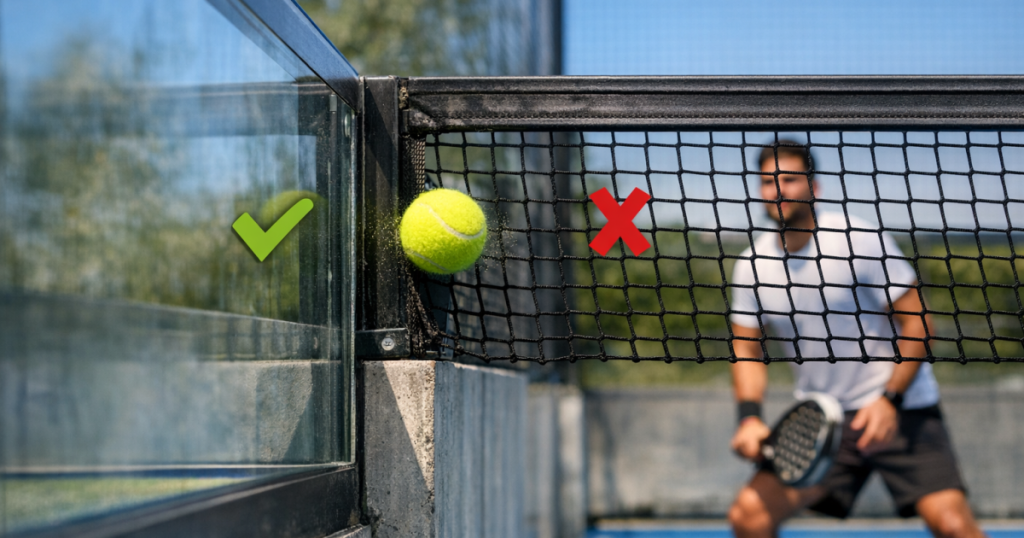
The serve is where many new players get caught out. A legal serve must land in the correct diagonal service box. If it lands in that box and then hits the glass, it can be good. If it lands in that box and then hits the metal fence, it is a fault.
That rule surprises beginners because, in a rally, court first and then fence is usually fine. On the serve, the fence is the exception. The game wants the serve to start the point fairly, not with a low, skidding, unpredictable wire rebound.
Here are the most useful serve examples:
- Serve lands in the correct service box and then hits the side glass: good, assuming the rest of the serve action was legal.
- Serve lands in the correct service box and then hits the metal fence: fault.
- Serve lands outside the service box and then hits glass or fence: fault.
- Serve clips the net, lands in the correct box and then would otherwise be good: usually a let, unless it then touches the metal fence.
- Serve lands on the service line or centre line: in, because lines count.
If you are still building confidence with the wider basics of match play, the first-month structure in how to start playing padel is a useful next step before worrying about advanced corner patterns.
Can you hit the ball through or over the fence?
You cannot hit through the fence. If the ball lodges in the mesh, passes through a gap, or behaves in a way that clearly is not a normal rebound, stop the point and replay it only if both pairs agree that the court caused the issue. On well-maintained club courts this is rare, but older outdoor courts can have small quirks.
Over the fence is more nuanced. In padel, a powerful smash can bounce in the opponent’s court and leave the court over the side or back. You may hear players talk about shots going “out by three” or “out by four”, referring to the approximate height of the wall or exit route. For beginners, the important point is simpler: the shot must bounce in first.
Whether the defending pair can run outside the court to return the ball depends on the venue. Official out-of-court play requires a suitable court layout, safe access and agreement that outside retrievals are in play. Many UK beginner and social club games do not use outside play, even where the doors are open, because it can be unsafe or disruptive on busy courts.
Before a match, agree one sentence: “Are we playing out-of-court balls or are they dead once they leave?” That avoids confusion when someone hits a big smash for the first time.
What if the ball hits the fence, then the glass?
Do not focus on the final surface. Focus on the first illegal or legal contact. If the ball has already bounced in the opponent’s court, it can rebound off the fence, glass, corner or a combination of surfaces and still be playable. If it hits the fence before landing in the opponent’s court, it is already out, even if it then drops onto the floor.
Corner rebounds can look messy because the ball may brush mesh and glass almost together. The player closest to the bounce normally has the clearest view. In social padel, if neither pair is sure, replaying the point is often the fairest solution, but avoid using replays as a habit for every close call.
Fence calls near the net
Net play adds another layer because volleys happen quickly. A volley is legal in padel, but your volley still needs to land in the opponent’s court before it hits their fence or glass. A sharp volley that goes straight into the side fence is out. A sharp volley that lands inside the sideline and then spins into the fence is in.
Players often confuse this with tennis, where there are no walls and the rally ends once the ball goes beyond the lines. In padel, the fence is only helpful after a valid bounce. For a clearer breakdown of volleys, net contact and what you can do close to the tape, see the guide to volleying in padel.
Practical ways to judge fence rebounds better
You do not need to memorise every rare official scenario to play better club padel. You need reliable habits for the situations that happen every set.
- Watch the first bounce, not the rebound. The ball’s path after the fence can distract you from the only contact that matters.
- Listen, but do not rely only on sound. Fence, glass and floor contacts can happen close together, especially in corners.
- Call your own side honestly. You and your partner usually have the best view of whether a ball landed in your court before hitting the fence.
- Agree house rules before competitive points. This matters most for out-of-court play and awkward court defects.
- Keep playing unless the call is clear. Stopping early because you assume the ball is out is one of the easiest ways to lose points you could have reached.
If you are practising between lessons, include simple corner feeds rather than only straight rallies. Gentle feeds into the back corner help you learn how floor, glass and fence contacts sound and behave. The advice in practising between padel lessons without bad habits can help you keep those drills useful rather than rushed.
Different views you may hear at clubs
Most disagreements are not about the rule itself; they are about the format. Some experienced players follow official competition habits. Some social groups simplify anything involving outside play. Some venues have courts where a local obstruction, door position or tight run-off area changes what they allow.
That does not mean the rules are random. It means you should separate official principles from club practicality. The official principle is that a ball landing in and then hitting the fence can be live in a rally, while a serve that hits the fence after landing is a fault. The practical layer is whether your group allows outside retrievals, replays unusual bounces or stops points when balls leave the enclosure.
For beginner games, clarity matters more than showing off obscure knowledge. Agree the main points before you start, then play quickly and fairly.
Helpful questions about padel fence rules
Is it in if the ball lands on the line and then hits the fence?
Yes. Lines are part of the court. If the first bounce touches the line and then the ball hits the fence, the rally continues.
Why is the fence allowed in rallies but not on serves?
The serve has extra restrictions to start the point fairly. In a rally, an in-court bounce followed by a fence rebound is normally playable. On serve, correct box then metal fence is a fault.
Can I use the fence on my side to return the ball?
Do not treat your own metal fence like your own glass. Playing off your own glass is a normal defensive shot; relying on the mesh before the ball crosses the net is not a safe legal assumption.
What should we do if nobody saw whether it hit floor or fence first?
In social play, replay the point if both pairs genuinely are unsure. If one pair had a clear view on their own side, their call should usually stand.
Are outside-the-court returns legal in beginner club games?
Only if the court set-up allows it and both pairs agree before the match. Many social games keep it simple and treat balls leaving the enclosure as finished.
Key takeaways
Most fence decisions become easy when you ask one question: did the ball land in the correct court area before touching the fence? If yes, it is usually legal in a rally. If no, it is out. The main exception is the serve, where a ball that lands in the correct box and then touches the metal fence is still a fault.
For early-stage players, the goal is not to win arguments over rare edge cases. It is to understand the common calls, agree any local court rules, and keep rallies flowing with confidence.