The serve is one of the easiest places for beginners to lose points without meaning to. Once you understand the padel serve rules, most service faults become simple to avoid: bounce the ball correctly, stand in the right place, hit it at the right height, and aim for the correct diagonal box.
Padel serving is not about smashing the ball. It is a controlled start to the point, designed to put the ball in play and give your side time to take position at the net. For newer club players, a legal, repeatable serve is far more useful than a fast one that risks faults.
In brief
- The ball must be bounced before you hit it; you cannot serve from the air.
- You serve diagonally into the opponent’s service box.
- The ball must be hit at or below waist height.
- You get two attempts: a first serve and, if needed, a second serve.
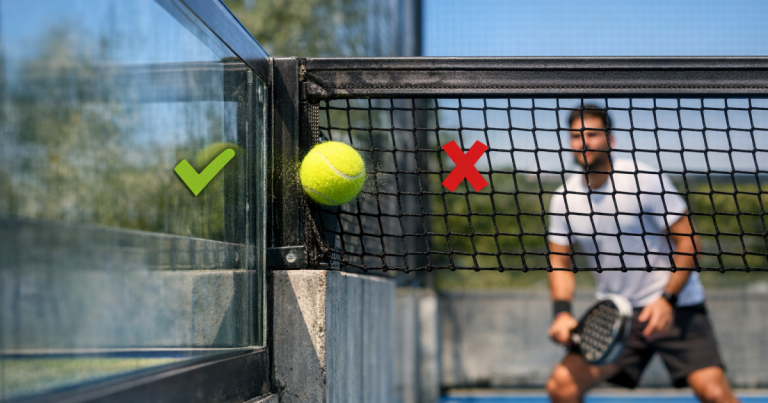
- If the serve lands correctly and then hits the glass, it is usually good; if it hits the metal fence after bouncing, it is a fault.
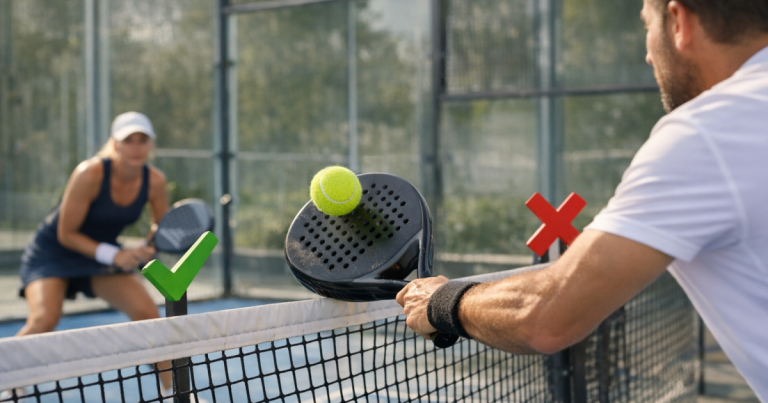
- A serve that clips the net and still lands legally is normally replayed as a let, provided it does not then become a fault.
Where you stand to serve
The server stands behind the service line on their own side of the court. For each point, you serve from either the right or left service area, behind the line and between the centre line and the side wall.
The first point of a game is served from the right-hand side. After that, the server alternates sides every point: right, left, right, left, and so on. The serve must travel diagonally, so a serve from your right-hand side goes into the receiver’s right-hand service box from their point of view.
Your feet matter. At the moment you hit the ball, you must not step on or over the service line. At least one foot should be in contact with the ground, and the serve should be made from a stable position rather than a jump or running action. Small balancing movements are normal, but walking through the serve is where beginners can drift into a fault.
The bounce rule
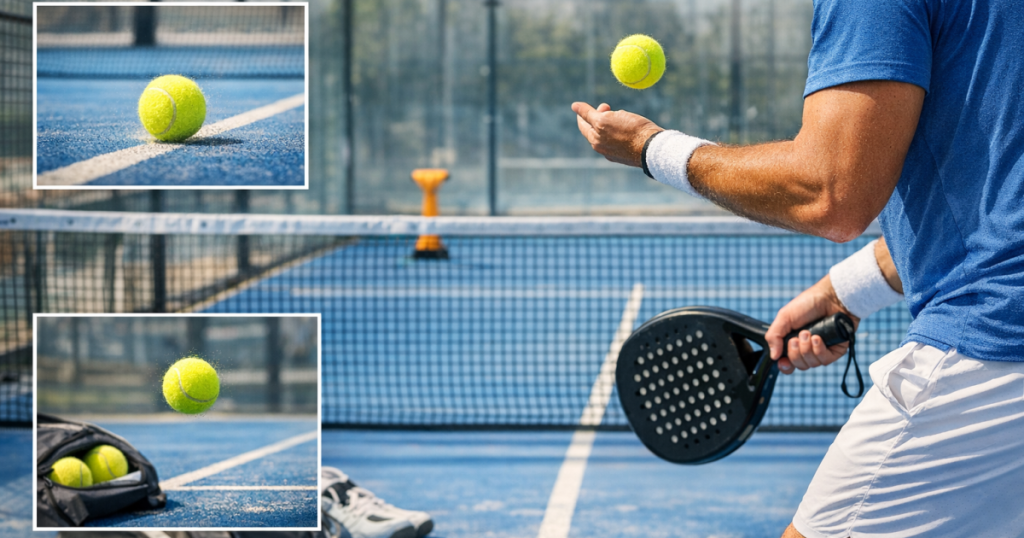
In padel, the serve starts with a bounce. You drop or let the ball fall so it bounces on the ground behind the service line, then hit it after that bounce. You cannot throw the ball up and strike it in the air like a tennis serve.
The bounce must happen on your side, behind the service line. A common beginner mistake is to stand correctly but drop the ball too far forwards, so the bounce lands on or in front of the line. If that happens, the serve is not legal even if the contact itself looks tidy.
A simple habit helps: set your feet first, hold the ball slightly in front of your body but still behind the line, then let it drop rather than tossing it. A low, calm bounce makes it easier to control the height of contact and aim into the service box.
Waist height: what it really means
The ball must be hit at or below waist height. This is one of the defining differences between padel and tennis. The serve is underarm in nature, and the contact point should be low enough that you are not gaining an overhead-style advantage.
For beginners, the most useful guide is this: if your racket is making contact around hip to waist level, you are in the right area. If the ball is being struck near the ribs, chest or shoulder, it is too high.
The waist-height rule is judged at the moment of contact. Letting the ball bounce high and then hitting it late can easily create a borderline serve. That is why a relaxed drop, rather than a forceful bounce, is easier to manage. If opponents or club players keep questioning your serve height, simplify the motion and contact the ball lower until there is no doubt.
Which box the serve must land in
The serve must land in the diagonally opposite service box. The service boxes are the rectangular areas on the receiver’s side marked by the service line, centre line and side boundaries.
If the ball lands outside that diagonal box, it is a fault. If it lands on the service box line, it is normally considered in, because lines form part of the court. The practical takeaway is to aim with margin rather than trying to paint the line. A serve that lands comfortably inside the box is better for beginners than a sharper serve that keeps missing by a few centimetres.
After the ball lands in the correct box, it may hit the glass wall and still be a good serve. However, if it lands in the box and then hits the metal fence before the receiver plays it, that is a fault. This distinction catches new players out because both the glass and fence are part of the court environment, but they are treated differently on the serve.
First serve, second serve and double faults
Like tennis, padel gives the server two attempts to start the point. If the first serve is a fault, you take a second serve from the same side. If the second serve is also a fault, the serving team loses the point.
Because you only have two serves, the second serve should usually be slower, safer and higher percentage. At beginner level, a gentle serve that starts the point is often enough. Many points are decided by positioning, wall use and shot choice after the serve, not by the serve itself.
If you are still learning how points are awarded beyond the serve, the wider scoring context is covered in when a point is won or lost in padel.
Common service faults beginners make
Most service faults are not mysterious. They usually come from rushing, copying tennis habits, or trying to serve too aggressively before the basic motion is reliable.
- No bounce: striking the ball straight from the hand is a fault.
- Wrong bounce position: bouncing the ball on or in front of the service line is a fault.
- Contact too high: hitting above waist height is not allowed.
- Foot fault: stepping on or over the service line before contact is a fault.
- Wrong box: serving into the wrong diagonal area, or outside the service box, is a fault.
- Fence after the bounce: if the serve lands in the correct box but then hits the metal fence, it is a fault.
- Second serve miss: missing both serves loses the point.
A good beginner checkpoint is to ask: did the ball bounce behind my line, did I hit it below my waist, and did it land in the diagonal box? If those three things are consistently true, your serve is probably becoming reliable enough for normal club play.
What happens if the serve hits the net?
If the serve clips the net and then lands in the correct diagonal service box, it is usually a let and the serve is replayed. It does not count as one of your two attempts, provided the serve would otherwise be legal.
However, the net does not rescue a bad serve. If the ball touches the net and then lands outside the service box, it is a fault. If it touches the net, lands in the box, and then hits the metal fence before the receiver plays it, that is also treated as a fault rather than a let.
At social level, players sometimes use slightly different wording, but the practical call is straightforward: net plus legal landing equals replay; net plus illegal result equals fault.
Serve order in doubles
Padel is normally played as doubles, so serve order matters. At the start of each game, one player on the serving team serves for the whole game. The next time that pair serves, their partner normally serves the next service game. Across a set, teams keep their serving order consistent once it has been established.
Receiving order also matters. The receiving pair decide who receives on the right and who receives on the left, and they usually keep those positions during the set. If you are new to organised matches, confirm positions before the first point of a set rather than trying to sort it out mid-game.
Player level affects how strictly people communicate these things. If you are unsure where you fit, understanding padel skill levels can help you choose sessions where the pace and rule knowledge feel appropriate.
Borderline calls and club etiquette
Serve calls can feel awkward when players are new, especially if the ball lands close to a line or the contact height looks high. The best approach is calm and simple: make the call clearly, explain it briefly if needed, and move on.
If the ball is on the line, it is in. If you genuinely cannot tell whether it was in or out, many friendly games replay the point, although competitive formats may expect a clearer call from the receiving side. For serve height, try not to turn every point into a debate. If a serve is obviously high, call it. If it is borderline, a friendly reminder between points is often enough in a beginner session.
Good manners make these situations easier. Say the score before serving, give opponents time to get ready, and avoid serving while the receiver is still turning round or picking up a ball. For more on joining unfamiliar games smoothly, read how to follow padel etiquette at a new club.
A simple legal serve routine
A repeatable routine is the quickest way to remove doubt from your serve. You do not need a complicated technique; you need a serve that is legal, calm and easy to repeat under light pressure.
- Stand behind the service line on the correct side.
- Check the score and say it clearly.
- Hold the ball comfortably in front of you, still behind the line.
- Let the ball drop and bounce, rather than throwing it upwards.
- Strike the ball at or below waist height.
- Aim safely into the diagonal service box with enough margin from the side fence.
- Move forwards after the serve so you and your partner are ready for the return.
For many beginners, the best serve is a controlled, medium-paced ball towards the receiver’s backhand side, if you can do that without sacrificing legality or consistency. Placement and recovery matter more than power.
Common questions
Can I serve overarm in padel?
No. A padel serve must be hit after a bounce and at or below waist height, so an overarm tennis-style serve is not legal.
Is the serve in if it lands on the line?
Yes, a serve that lands on the correct service box line is generally in. Lines are part of the court, so the receiving side should treat line balls as good.
Can the serve hit the glass wall?
Yes. If the serve first lands in the correct service box and then hits the glass, it is usually good. If it hits the metal fence after the bounce, it is a fault.
Do I get another serve if it clips the net?
You replay the serve if it touches the net and still lands legally without becoming a fault. If it lands out or hits the fence after the bounce, it is a fault.
Can I step into the court after serving?
Yes, but only after you have struck the ball legally. Do not step on or over the service line before contact.
Final thoughts
The serve in padel is meant to start the rally, not end it. Once you can bounce the ball behind the line, strike it below waist height and land it in the diagonal box, you have the foundations of a legal serve.
From there, focus on consistency, simple placement and getting into position after the serve. That will help you avoid cheap faults and feel more settled in real club games, which is far more valuable than chasing extra pace too early.