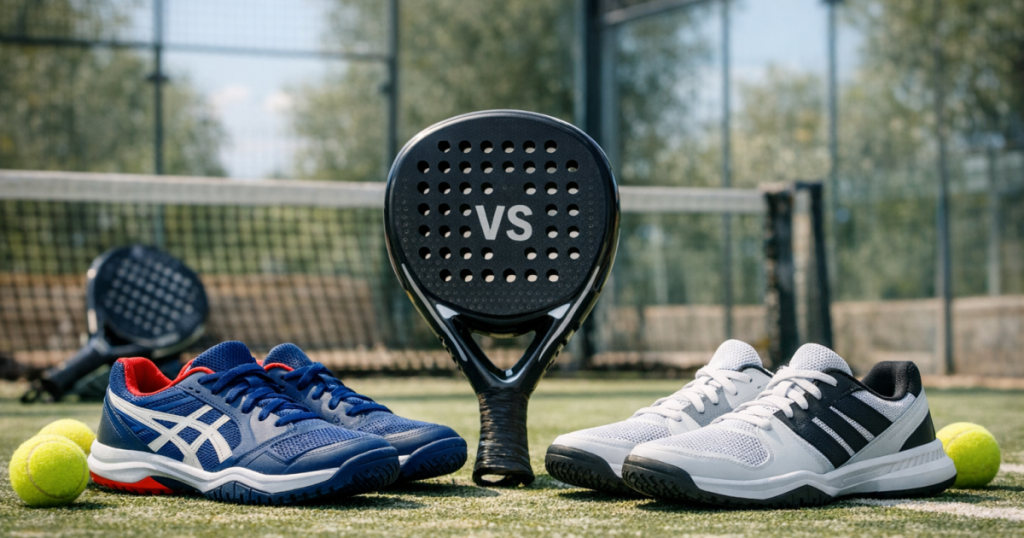
Choosing your first proper court shoes is mostly about avoiding the wrong trade-off: too much slipperiness, too little support, or a pair that feels fine walking around but awkward on artificial turf. Asics Gel-Padel Pro 3 vs Adidas CourtJam Bounce is a sensible comparison if you are deciding between a padel-specific option and a more general court shoe for early club sessions.
Both are recognisable names, both sit in the sensible starter-shoe conversation, and neither should be judged only by looks. The better choice depends on where you play, how much lateral movement you are doing, and whether padel is becoming your main sport or still one of several racket sports you play.
Main points
- Choose Asics if padel is your main focus. The Gel-Padel Pro 3 is the more naturally padel-oriented pick for beginners who want a straightforward club shoe.
- Choose Adidas if you want broader court use. The CourtJam Bounce line is commonly seen as a tennis/all-court style option, so it can make sense if you split time between racket sports.
- Check the outsole before buying. Product names and stocked versions can vary, so look closely at the tread pattern and whether it suits the surface at your club.
- Do not buy on cushioning alone. Padel asks for short, sideways steps, stops, pivots and recoveries. Stability and grip matter just as much as underfoot softness.
- Fit beats brand loyalty. A shoe that grips well but pinches or slides at the heel will not help once a rally gets messy.
If you are also considering a more premium padel-focused option, our Wilson Hurakn Pro review is a useful comparison point for players who are ready to step up from entry-level choices.
Side-by-side snapshot
Best padel-first choice
Asics Gel-Padel Pro 3 is the easier shoe to recommend if your priority is regular padel at a club. It is positioned as a padel shoe, so the decision is simpler: you are not trying to adapt a general court shoe to a sport with lots of compact lateral movement and quick recoveries around the glass.
Best mixed-court choice
Adidas CourtJam Bounce is the more flexible pick if you play padel sometimes but also want a shoe that can cover other court sessions. The important caveat is that you should verify the specific version you are buying, because the usefulness for padel depends heavily on the outsole and how it feels during sideways movement.
Most beginner-friendly decision
For a beginner who has booked a few sessions and wants to stop playing in running trainers, the Asics is the safer padel-specific route. For someone who is not yet sure whether padel will become a regular habit, the Adidas can be a sensible all-round court option if the grip pattern suits the club surface.
Where the Asics Gel-Padel Pro 3 makes sense
The main appeal of the Gel-Padel Pro 3 is that it keeps the decision focused. Beginners often overcomplicate padel shoes by comparing every tennis, squash and gym trainer they already own. A padel-specific shoe reduces that uncertainty because it is intended for the sport’s stop-start movement rather than straight-line running.
That matters because early padel is full of inefficient footwork. You will probably reach late for volleys, take too many steps into the corners, and plant harder than you meant to when recovering from the back glass. A shoe designed with padel in mind gives you a more appropriate starting point while your movement is still developing.
The Asics option is likely to suit players who are joining club sessions, beginner coaching or casual matches once or twice a week. It is not about buying the most aggressive shoe possible. It is about choosing something that feels stable enough for lateral movement without making your first proper padel shoe feel intimidating or overly specialised.
As with any shoe, do not assume every foot will love it. Check how it feels around the forefoot, whether your heel stays secure when you make a side step, and whether there is enough space for your toes during stops. Try it with the socks you normally wear for padel, not thin everyday socks that change the fit.
Where the Adidas CourtJam Bounce makes sense
The CourtJam Bounce is a better fit for the player who wants one court shoe rather than a padel-only choice. If you play a bit of tennis, join casual racket sessions, or are still testing whether padel will become a weekly habit, that wider-use appeal can be genuinely useful.
The trade-off is that a general court shoe needs more checking before you trust it for padel. Padel courts in GB clubs are usually artificial turf with sand, and the way a shoe grips on that surface can feel different from the way it grips on a hard tennis court. A shoe that feels secure in straight runs can still feel less convincing when you are sliding into a corner or adjusting for a low ball by the side glass.
When trying the Adidas, pay attention to side-to-side containment. Your foot should not spill over the edge of the shoe when you push laterally. Also check whether the outsole gives you a controlled level of grip rather than either sticking too abruptly or feeling too loose. Beginners need confidence in their shoes, but they also need to be able to rotate and recover without feeling locked to the court.
The Adidas choice can be sensible if you want value from one pair across several court activities. It becomes less convincing if you already know padel is your main sport and you are playing several times a month. At that point, a padel-specific design is usually the cleaner decision.
Grip and movement: the area that matters most
Padel footwork is not just about speed. Most beginner points are decided by short adjustments: a split step at the net, a small shuffle before a volley, a recovery step after the back wall, or a quick move out of the corner before the next ball arrives. Shoes that feel fine while walking to court can feel very different once you start making those movements under pressure.
For the Asics, the key advantage is category fit. You are starting from a padel shoe, so the expected use is closer to what you will actually do in club games. For the Adidas, the key question is version fit. If the outsole is suited to your club’s surface and the shoe feels secure laterally, it can work well. If the tread is aimed at another surface, it may not feel as natural for padel.
Do not obsess over one perfect tread pattern, because clubs and court conditions vary. Some indoor courts feel grippier; some outdoor courts change noticeably after rain, sand movement or heavy use. What you want is predictable traction. If you take a small recovery step and the shoe surprises you, either by slipping more than expected or catching too sharply, it is not the right match for your current level.
Comfort, fit and first-match confidence
Comfort in padel shoes is not the same as comfort in everyday trainers. A very soft shoe can feel lovely for five minutes, then less secure once rallies involve quick sideways stops. A very firm shoe can feel stable, but if it feels harsh during a 60 to 90 minute session, you may end up moving less freely.
The Gel-Padel Pro 3 is the more straightforward option for players who want a padel shoe without spending ages decoding categories. Try it on and focus on heel hold, forefoot comfort and whether your foot feels centred when you bend your knees. If it passes those checks, it is a strong beginner-friendly candidate.
The CourtJam Bounce may appeal if you prefer a court shoe with a familiar Adidas feel, but it needs the same movement test. Stand in a ready position, make a few small side steps, then mimic a recovery from the back corner. You are not testing performance like a pro; you are checking whether the shoe gives you confidence rather than distraction.
If you are preparing for your first proper club matches and want another beginner-focused reference point, the Head Sprint Team 4.0 review gives a useful view of what a first-match shoe should prioritise.
Which shoe suits which type of beginner?
Pick the Asics if padel is becoming your regular sport
Choose Asics Gel-Padel Pro 3 if you have moved beyond a one-off taster session and are now booking regular courts, joining coaching, or playing social matches. It is the more natural match for the sport and should give most early-stage players a clearer route away from unsuitable running trainers.
Pick the Adidas if you need one shoe for several court activities
Choose Adidas CourtJam Bounce if you want a court shoe that may cover padel alongside other sports. It is the more flexible choice, provided the outsole and fit work for the surface you actually play on. This is not the shoe to buy blindly; it is the shoe to check carefully and choose if it passes the movement test.
Avoid both if the fit is wrong
This sounds obvious, but it is where beginners waste money. If either shoe rubs, pinches, lifts at the heel or lets your foot slide inside the shoe, move on. Padel involves enough awkward movement already. Your shoes should reduce uncertainty, not add another thing to think about every time the ball comes off the glass.
Buying checks before you decide
- Check the exact product listing. Retail names, colourways and stocked versions can differ, so confirm you are looking at the shoe you intend to buy.
- Look closely at the outsole. Match the tread to your club surface rather than assuming every court shoe is suitable for every padel court.
- Test lateral movement. A short side step tells you more than walking in a straight line around the shop or at home.
- Wear padel socks when trying them. Thicker sports socks can change the fit enough to matter.
- Leave a sensible amount of toe room. Your toes should not hit the front when you stop quickly, but the shoe should not feel loose.
- Think about frequency. If you play once a month, a flexible court shoe may be enough. If you play weekly, a padel-specific shoe becomes easier to justify.
- Check return conditions before wearing them outside. Try movement tests indoors first so you are not stuck with a poor fit.
It is also worth thinking about the rest of your first-session kit. Shoes are only one part of feeling organised, and our first club session packing guide covers the simple items that stop beginners turning up underprepared.
Final thoughts: the simpler choice for most beginners
For most new padel players, the Asics is the easier recommendation. It is the more padel-focused option, which removes a lot of guesswork when you are still learning how the sport feels underfoot. If you are joining regular club sessions, booking beginner coaching or replacing running trainers, start there.
The Adidas is not the wrong choice; it is the more conditional choice. It makes sense if you want one pair for mixed court use and you are willing to check the outsole, fit and lateral security properly. If it feels stable on side steps and suits your club surface, it can be a practical option for casual padel alongside other racket sports.
The clean decision is this: choose Asics for padel-first confidence, choose Adidas for broader court flexibility, and choose neither if the fit is not right. A good beginner shoe should help you move, recover and enjoy the session without thinking about your feet every point.
Quick Buying Links
Asics Gel-Padel Pro 3
Asics Gel-Padel Pro 3 vs Adidas CourtJam Bounce is a sensible comparison if you are deciding between a padel-specific option and a more general court shoe for early club sessions.
Adidas CourtJam Bounce Padel Shoes
Worth considering if its strengths better match your needs.
Things readers ask
Can I use Adidas CourtJam Bounce shoes for padel?
Yes, they can be used for padel if the outsole suits your court surface and the shoe feels stable during lateral movement. Check the exact version before buying, because not every court outsole feels the same on artificial turf.
Is the Asics Gel-Padel Pro 3 only for beginners?
No. It can suit casual and improving players too, but it is especially appealing for beginners because it keeps the choice simple: a padel-focused shoe for regular club play.
Are running trainers OK for a first padel session?
They may be acceptable for a one-off taster if the club allows them, but they are not ideal for regular play. Running trainers are built for forward movement, while padel needs side steps, pivots and quick stops.
Which pair is better for outdoor courts in GB?
There is no single answer, because outdoor court condition varies with weather, sand level and wear. Prioritise predictable grip and a secure fit, and check the outsole against the surface used at your regular club.
Should I buy padel shoes before my first lesson?
If you are only trying padel once, you can often start with clean, suitable court trainers. If you have already booked several sessions, proper padel shoes are one of the first upgrades worth considering.