Your first club session should feel exciting, not like a panic rummage in the car park. Knowing how to pack a padel bag gives you one less thing to think about, so you can focus on checking in, warming up and enjoying your first few games.
The good news is that you do not need loads of kit. A small, sensible setup is enough for most beginner sessions, provided the essentials are easy to reach and your racket is protected.
The short version
For a first club session, take one racket, suitable padel shoes, a water bottle, a small towel, balls if the club does not provide them, a light layer, basic personal items and a change of top if you tend to get warm. Put the heaviest or least-used items at the bottom, keep your racket away from sharp objects, and leave valuables at home where possible.
If you are still deciding what type of bag makes sense, the main choice is not about looking serious. It is about whether your kit stays organised, dry and easy to carry. For a simple breakdown, see our guide to choosing a padel bag or backpack for club sessions.
Step 1: Check what the club provides before you pack
Before you fill your bag, quickly check the booking confirmation, club website or session notes. Some beginner sessions include rackets and balls, while others expect players to bring their own. Coaching sessions may provide equipment more often than social matches, but it is never worth guessing.
- Racket: bring your own if you have one, or confirm whether hire is available.
- Balls: some clubs provide them for coaching, but not always for open play or box leagues.
- Shoes: check whether the court surface requires non-marking soles or padel/tennis-style shoes.
- Access details: note the entrance, court number, parking instructions and whether you need a code to get in.
- Facilities: check for changing rooms, lockers, showers and water refill points.
If you are not ready to buy everything yet, that is completely normal. Renting or borrowing can help you work out what you actually use before spending money, and our guide on how to rent padel gear before buying your own explains what to ask at the club.
Step 2: Put your racket in first, but do it carefully
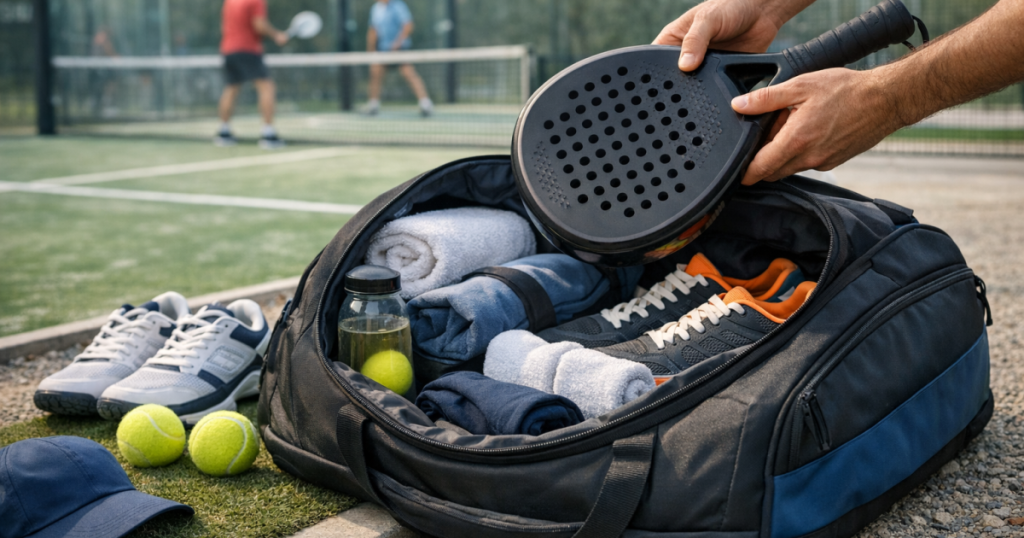
Your racket is the item most worth protecting. Place it in the main compartment or racket section before adding smaller items, so you are not forcing it in later. If your bag has a dedicated racket sleeve, use it. If not, put the racket flat against the back panel, with the face covered by a soft layer such as a towel or spare top.
Avoid packing keys, coins, metal water bottles or loose grips directly against the racket face. Those small knocks can mark the surface, and a cramped bag makes it more likely that the racket gets bent or pressed awkwardly. If you are using a standard backpack rather than a padel-specific bag, our tips on how to use a padel backpack without damaging your racket are worth reading before your first session.
Step 3: Pack shoes with the sole side contained
Padel courts can be dusty, sandy or damp depending on the venue and weather. Even if your shoes look clean when you leave home, they may not be something you want rubbing against your towel or spare clothes after the session.
If your bag has a shoe compartment, use it. If not, put shoes in a lightweight drawstring bag, carrier bag or washable shoe pouch. Pack them at the bottom or side of the bag, sole side away from your racket. If you are wearing your padel shoes to the club, still bring a simple bag for them afterwards, especially if you are travelling by car or public transport.
Step 4: Add water, towel and layers where you can reach them
Most first sessions involve short breaks between games or drills, so your water bottle and towel should be easy to grab. A 500–750 ml bottle is usually enough for a short session, but bring more if you know the club is warm, the session is long, or you are playing outdoors on a hot day.
A small sports towel is useful for your hands, face and racket grip. You do not need a full bath towel unless you plan to shower. In cooler weather, add a light hoodie, zip top or tracksuit layer that you can remove after warming up. For outdoor courts, a thin waterproof layer can be more useful than a bulky coat because it packs smaller and is easier to move in.
Step 5: Bring the small items that prevent annoying problems
The difference between an easy first session and a slightly awkward one is often a tiny forgotten item. Keep these in a small zipped pouch so they do not sink to the bottom of the bag.
- Hair ties or headband: useful if hair starts getting in your eyes during lobs and overheads.
- Plasters: handy for early blisters from new shoes or grip friction.
- Grip or overgrip: not essential for everyone, but useful if your racket handle feels slippery.
- Phone and booking confirmation: keep them accessible for check-in, gate codes or court changes.
- Bank card: useful for drinks, parking or a last-minute ball purchase if needed.
- Personal medication: bring anything you normally need for sport or exercise.
Do not overfill this pouch. If you pack it like a weekend wash bag, you will stop using it properly. The goal is to solve common club-session problems, not carry every possible spare.
Step 6: Keep balls separate from clothes and valuables
If you are taking balls, put them in a side pocket or a separate section. Used padel balls can pick up grit and moisture, so they are better kept away from clean clothes. If you are using a tube, make sure the lid is secure before throwing it into the bag.
For your first club session, one tube is normally enough unless the session organiser asks for more. If you are joining a coached group, you may not need balls at all. For social play, it is polite to have some available, but it is also common for players to share what they have.
A simple routine to pack a padel bag the night before
Last-minute packing is when people forget shoes, water or the racket itself. A calm five-minute routine the evening before works much better.
- Lay everything on the floor: racket, shoes, bottle, towel, layer, balls and small-item pouch.
- Check the session details: time, court, access instructions and whether kit is provided.
- Pack from least-used to most-used: shoes and spare clothing first, then racket, then water and phone-access items near the top.
- Do a final touch check: physically touch the racket, shoes and water bottle before zipping the bag.
- Put the bag by the door: or in the car if that is secure and the weather is not extreme.
This routine is deliberately simple. Your first few sessions are about building confidence, learning the court and getting used to club flow, not creating a professional tournament setup.
What not to take to your first session
Beginners often overpack because they are trying to be prepared. That is understandable, but a heavy bag makes the session feel more complicated than it needs to be.
- Too many rackets: one is enough unless you are testing borrowed kit.
- Large valuables: avoid laptops, jewellery and anything you would not want left courtside.
- Heavy toiletries: only bring shower items if you know you will use the facilities.
- Bulky coats: use layers instead where possible.
- Unopened accessories: do not bring lots of new grips, supports or extras unless you already know you need them.
Leaving space in the bag is useful. You may need to store a layer once you warm up, carry a borrowed item back to reception, or separate damp kit after the session.
After the session: repack before you leave
Give yourself two minutes courtside or in the changing area to reset the bag before heading home. Put damp clothing and towels together, keep used balls separate, and make sure your racket is not pressed against shoes or a bottle. If the court was wet or gritty, wipe the racket face and handle with a dry towel before packing it.
When you get home, take out damp kit rather than leaving it zipped up overnight. Let shoes air, empty the towel, and check whether you used everything you packed. If something has stayed untouched for three sessions in a row, it probably does not need to live in your padel bag.
Helpful questions
Do I need a proper padel bag for my first club session?
No. A normal sports bag or backpack is fine if it fits your racket without forcing it. A padel-specific bag becomes more useful once you are playing regularly and carrying shoes, balls and spare clothing.
Should I bring my own balls to a beginner coaching session?
Check with the coach or club first. Many coached sessions provide balls, but social play and informal court bookings are more likely to expect players to bring or share them.
Can I wear running shoes for padel?
For a first taster, some clubs may allow clean sports shoes, but padel or tennis-style court shoes give better support for side-to-side movement. Always follow the club’s footwear rules.
How much water should I take?
For a typical one-hour session, 500–750 ml is a sensible starting point. Take more for longer sessions, warm indoor venues or outdoor courts in hot weather.
Where should I put my phone and keys?
Use a zipped pocket rather than leaving them loose in the main compartment. Keep keys away from the racket face so they do not scratch it while you walk or cycle to the club.
In brief
Pack light, protect your racket, keep water and small essentials easy to reach, and separate clean kit from shoes or used balls. After one or two sessions, you will quickly learn what you actually use and what can stay at home. The best first-session bag is not the biggest one; it is the one that lets you arrive relaxed, play comfortably and leave without losing anything.