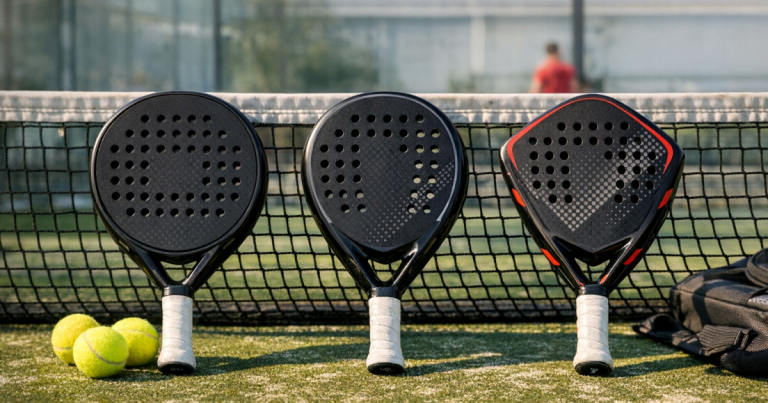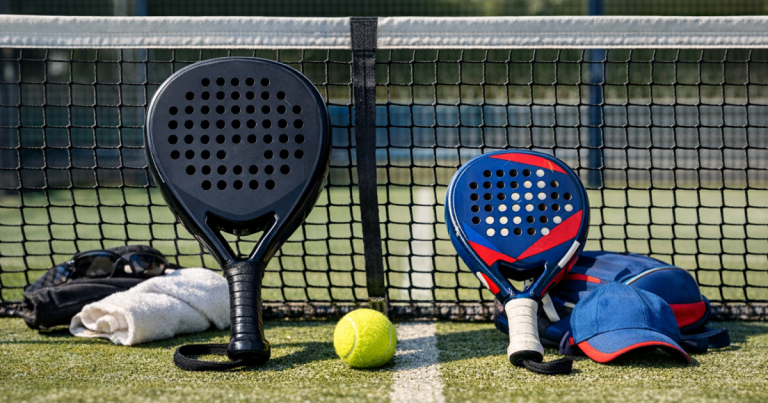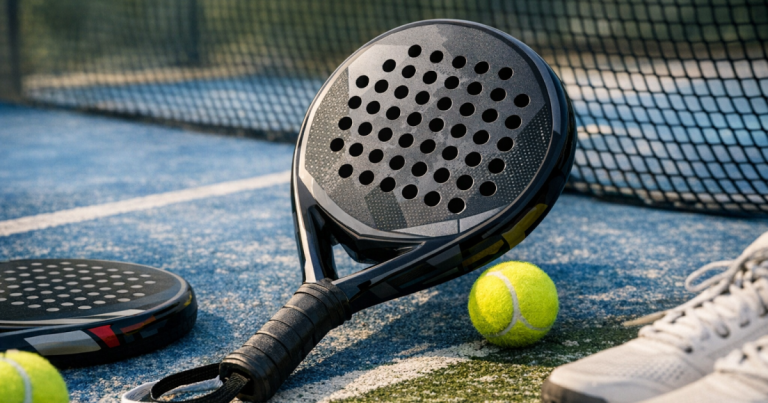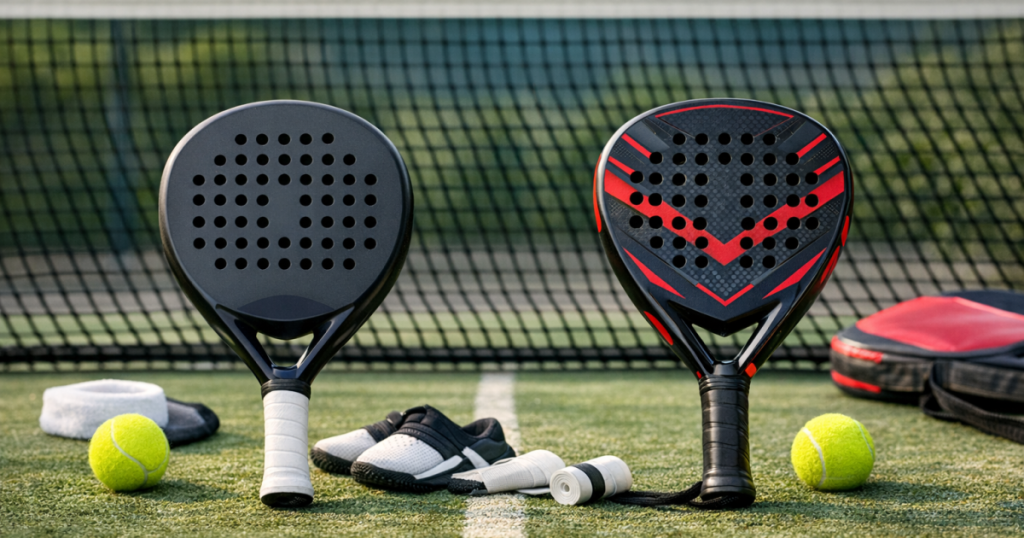
A new player usually notices racket choice after a few sessions: some shots fly long, volleys feel rushed, and smashes rarely look like the highlight clips. The control vs power padel rackets decision is really about what helps you play more repeatable points now, not what looks most exciting on paper.
For most beginners, a control-focused racket is the safer first upgrade. It tends to make defending, lobbing, blocking and learning clean contact easier. A power-focused racket can be brilliant in the right hands, but it normally asks more of your timing, footwork and technique.
The short version
- Choose control if you are new, still learning walls, often hit late, or want fewer unforced errors.
- Choose power if you already strike consistently, reach the net confidently, and can generate clean overheads without forcing the swing.
- Do not trust the label alone. Brands use control and power language differently, so check the shape, balance, feel and forgiveness.
- For early-stage club play, control usually wins more points because it helps you keep the ball in play under pressure.
What “control” actually means in a padel racket
A control racket is built to help you place the ball reliably. In beginner terms, that means fewer wild rebounds off the glass, easier blocks at the net, steadier returns, and more confidence when you are stretched wide.
Control is usually linked with a more forgiving sweet spot, easier handling and a balance that does not feel too head-heavy. Round rackets are commonly associated with this style, although shape is not the only factor. If you are still getting familiar with racket geometry, the separate guide to round, teardrop and diamond racket shapes is a useful next step.
Control does not mean weak. A good control racket can still hit firm volleys, deep lobs and effective bandejas. The difference is that it helps you apply pace without losing the basic direction of the shot.
What “power” means, and why it tempts beginners
Power rackets are designed to reward aggressive hitting. They often feel more explosive on overheads and attacking volleys when the ball is struck cleanly. That is why they appeal to players who want to finish points quickly or copy the heavier shots they see from advanced players.
The trade-off is that power is less useful when contact is messy. If you hit late, swing too hard from the back of the court, or meet the ball away from the sweet spot, the same racket that feels lively can also magnify mistakes. For a new player, that can turn simple rallies into a cycle of overhitting, apologising, and trying to hit even harder next time.
Power also depends heavily on technique. A strong smash is not just racket technology; it comes from positioning, timing, shoulder turn, contact height and knowing when the smash is actually the right shot. Until those pieces are in place, extra racket punch may not translate into better results.
Why control usually helps beginners progress faster
Beginner padel is often won by the pair that makes the fewer poor decisions. Keeping the ball low, playing a safe lob, blocking a fast volley and recovering position are all more important than one occasional spectacular winner.
A control-leaning racket supports that learning curve because it encourages cleaner habits. You can focus on preparing early, using compact swings and playing with margin. If you are in your first few weeks, pairing a forgiving racket with a simple training structure matters more than chasing maximum pace. The first month plan for new padel players gives a sensible way to build those foundations alongside your kit choices.
That does not mean every beginner must buy the softest, roundest racket available. If you are physically strong, come from tennis or squash, and already control the ball well, a balanced teardrop racket may feel more natural. The point is to avoid buying a demanding racket before you have enough consistency to benefit from it.
Signs you should lean towards control
- You often hit the back glass when trying to add pace.
- Your lobs are inconsistent or too flat under pressure.
- You struggle to block fast balls at the net.
- You are still unsure how the ball rebounds off the side and back glass.
- Your coach or playing partners keep telling you to slow the swing down.
- You want a racket that helps with confidence in regular club games, not just one shot in warm-up.
Signs a power racket might make sense
- You already play controlled rallies and want more threat on attacking balls.
- You consistently contact overheads in front of your body and at a good height.
- You can defend without panicking when the ball comes off the glass.
- You play often enough to adapt to a less forgiving feel.
- You understand that a powerful racket will not fix poor positioning or rushed shot selection.
The racket features that matter more than the marketing label
Control and power are useful ideas, but they are not regulated categories. One brand’s control racket may feel firmer than another brand’s power model. Before buying, pay attention to the practical details that affect how the racket behaves on court.
Shape
Round rackets usually favour forgiveness and easier handling. Teardrop rackets often sit in the middle ground. Diamond rackets are commonly linked with attacking play and a higher sweet spot. These are helpful patterns, not absolute rules.
Balance
A racket that feels head-heavy can create more weight through the ball, but it may also feel slower during quick exchanges. A lower or more neutral balance usually feels easier when blocking, reacting and learning compact strokes.
Feel
Some rackets feel softer on contact, which can help comfort and touch. Others feel firmer and more direct, which some experienced players prefer for attacking shots. Beginners should be careful with very demanding firm-feeling rackets if they are still developing clean technique.
Weight and handling
A racket should feel stable without making your arm late. If you can only swing it well during the first ten minutes, it is probably not helping you. Handling during fast volleys and defensive digs matters more than how impressive it feels for one smash.
Real-world examples without getting trapped by the label
Some rackets are regularly discussed in control conversations because they are designed around forgiveness and placement. The Nox ML10 Pro Cup, for example, is often used as a reference point for players who want a more manageable feel. Always check the current version’s shape, stated balance and weight range before assuming it matches an older model.
On the more attacking side, rackets such as the Bullpadel Hack 02 2022 Padel Racket are more likely to appear in power-focused conversations. That does not automatically make them wrong, but a new player should be honest about whether they can control the ball well enough to benefit from the extra aggression.
There are also middle-ground rackets, including many teardrop designs, that try to give a blend of stability, comfort and attacking help. If you are unsure, this balanced category can be tempting, but it still needs to feel easy in defensive situations. A short test hit, where available, is more useful than reading one word on a product page.
How to test the choice on court
If you can demo a racket, do not judge it only by warm-up smashes. Use the shots that actually decide beginner and improver matches.
- Return of serve: Can you keep the ball low and controlled without steering nervously?
- Defensive lob: Can you lift the ball deep when you are under pressure?
- Backhand volley: Does the racket stay stable when you block rather than swing?
- Wall recovery: Can you react late without the ball flying off unpredictably?
- Overhead control: Can you play a controlled bandeja-style shot, not just a full smash?
If the power racket feels exciting on one overhead but awkward on four defensive shots, it is probably not the right everyday choice yet. If the control racket makes your rallies longer and your decisions calmer, that is a strong sign it will help your development.
The common argument for buying power early
Some players argue that buying a powerful racket early gives you room to grow. There is some logic in not replacing kit too quickly, especially if you already have a strong racket-sport background. But “room to grow” only helps if the racket is not slowing your learning in the meantime.
A demanding racket can encourage bad habits: forcing winners, swinging too big, and trying to solve positioning problems with arm speed. If your current issue is consistency, extra power is rarely the cleanest fix. It may be better to build dependable technique first, then upgrade when you know which shots you genuinely want to enhance. If you are weighing up gear priorities more broadly, the piece on whether the racket upgrade should come before other kit gives useful context.
Things readers ask
Is a control racket only for defensive players?
No. Control helps attacking players too because accurate volleys, smart lobs and well-placed overheads create the chance to finish points. It is not just about playing safely.
Will a power racket make my smash better?
Only if your technique is already sound. If your timing, contact point or positioning is inconsistent, a power racket can make the miss bigger rather than the smash better.
Should I buy a round racket as my first padel racket?
Many beginners do well with a round racket because it is usually forgiving and easy to handle. Some players may prefer a balanced teardrop shape, but very demanding shapes are harder to learn with.
How long should I use a beginner-friendly racket?
Use it until you can rally consistently, defend from the glass, and understand what you want more of: manoeuvrability, firmness, power or touch. There is no need to rush the upgrade.
Can one racket offer both control and power?
Yes, but there is always a trade-off. A well-balanced racket can offer enough of both, but it will not be as forgiving as the easiest control model or as explosive as a true attacking racket.
What to remember
For early-stage players, control vs power padel rackets should be treated as a development decision, not an ego decision. The racket that helps you hit one harder smash is less valuable than the one that helps you return serve, survive fast volleys, use the glass and make better choices for a full match.
If you are still unsure, start with the racket that makes ordinary shots easier. In padel, ordinary shots repeated well become very hard to beat.