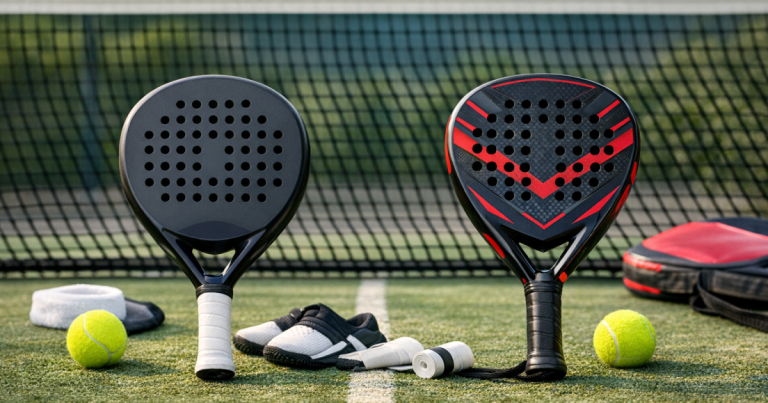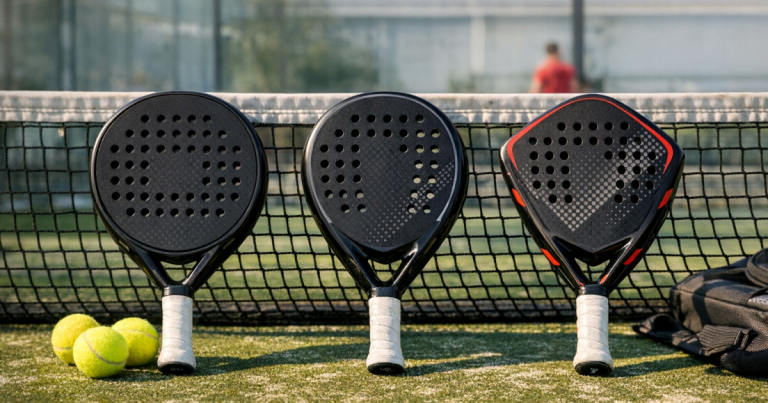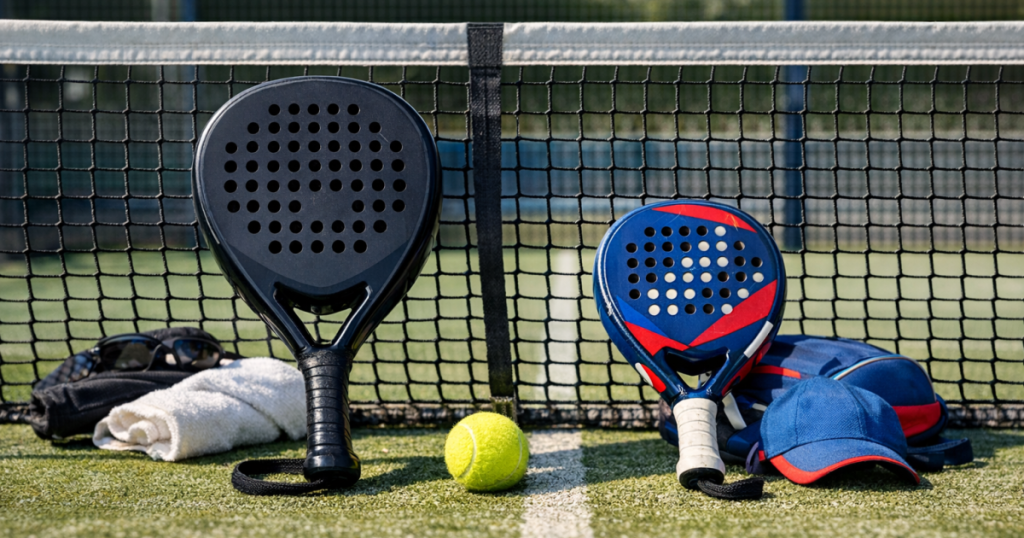
Choosing between adult vs junior padel rackets is not just about age. The right fit affects how easily a player can swing, control the ball, protect their technique and enjoy early sessions. A racket that is too heavy or awkward can make padel feel harder than it needs to be, while one that is too small may limit reach and power as the player grows.
For beginners, the aim is simple: pick a racket the player can move comfortably, hold securely and control through normal shots. That matters whether you are buying for a child, a teenager, a smaller adult, or a family trying to share one piece of kit.
The short answer
Most adult beginners should use a full-size adult padel racket, ideally one that feels manageable rather than heavy or head-weighted. Most younger children are better with a junior racket because it is usually lighter, shorter and easier to control. Teenagers sit in the middle: some still need a junior model, while others are ready for a lighter adult racket.
Age can be a useful starting point, but it should not be the final decision. Height, strength, hand size, coordination and playing frequency all matter. A confident 13-year-old who plays sport regularly may handle a light adult racket well, while a younger or smaller player may build better habits with a junior option for longer.
If you are new to racket terminology, it helps to understand the parts you are judging. The frame, face, hole pattern, balance and handle all affect feel, so this padel racket anatomy explainer is a useful companion before you make sense of labels in shops or club hire racks.
What actually changes between junior and adult rackets?
Adult and junior rackets look similar at a glance, but the playing experience can be very different. The biggest differences are usually size, weight, grip feel and swing speed.
Length and face size
Adult padel rackets are built for full-size play and must stay within the sport’s maximum racket dimensions. Junior rackets are commonly shorter and sometimes have a slightly smaller face. That shorter length can help a child prepare earlier and swing without the racket dragging behind them.
The trade-off is reach. A racket that is too short for a taller player can make volleys, lobs and defensive shots near the glass feel cramped. That is why a small adult should not automatically choose a junior racket. A lighter adult model is often a better answer than reducing length too much.
Weight and balance
Weight is often the deciding factor. Many adult rackets sit in a broad midweight range, while junior rackets are typically lighter. Exact weights vary by brand and model, so always check the product label rather than assuming every “junior” racket feels the same.
Balance matters as much as total weight. A head-heavy racket can feel harder to move than the number on the label suggests. For a child or early beginner, a neutral or slightly lower balance usually feels easier because the racket is quicker to lift for volleys and easier to reset after a swing.
Grip size and handle comfort
Junior rackets often have a handle that feels better in smaller hands. If the grip is too large, the player may squeeze too hard, lose touch on volleys, or struggle to change grip between shots. If the grip is too small for an adult, the racket can feel unstable, especially when blocking faster balls.
Overgrips can fine-tune handle thickness, but they do not solve every fit problem. Adding several layers to a junior racket will not turn it into an adult racket, and using a bulky adult handle may still be awkward for a younger child.
How to judge the right fit in real life
A racket that looks right on paper still needs to work in the player’s hand. If possible, test one at a club, borrow from a coach, or handle a few models before buying. Even a five-minute knock-up can reveal whether the racket is helping or getting in the way.
- Can the player hold the racket in front of them without the wrist dropping? If the tip falls quickly, the racket may be too heavy or too head-heavy.
- Can they prepare early for volleys? A suitable racket should be easy to lift and keep ready near the body.
- Can they swing smoothly without twisting their whole body to move the racket? Over-effort is a sign the racket may be too demanding.
- Can they control soft shots? Beginners need touch for blocks, lobs and simple returns, not just power.
- Does the handle feel secure? The player should not need to grip excessively tightly to keep the racket stable.
These checks are especially useful for families, because children can grow quickly and may move between sizes sooner than expected. If a junior racket looked perfect at the start of term but now seems to shorten every reach, it may be time to reassess.
Typical scenarios for beginners and families
A young child starting padel
For younger children, a junior racket usually makes the first sessions more enjoyable. The goal is clean contact, simple movement and confidence. A heavy adult racket can encourage late swings, wristy flicks and rushed preparation. None of that helps a new player learn the rhythm of padel.
At this stage, do not obsess over advanced materials or power claims. Comfort, manageable weight and a forgiving feel matter more than whether the racket is marketed as powerful or technical.
A teenager moving up
Teenagers are the hardest group to size because growth, strength and coordination vary so much. A smaller 12-year-old may still play better with a junior racket, while a taller 14-year-old may be ready for a lighter adult model. If the player is already taking coaching, ask the coach to watch them hit volleys, bandejas and basic returns with both types.
A good sign that a teenager is ready for an adult racket is that their timing stays consistent. If their swing becomes late, forced or overly short, the racket is probably too much. If they can prepare early and keep control during longer rallies, moving up may make sense.
A smaller adult wondering about junior rackets
Most adults, even shorter adults, should start with an adult racket rather than a junior one. The issue is not just height; it is court coverage, reach and how the racket behaves against adult-paced shots. A junior racket may feel easy to swing at first but can feel underpowered or cramped in normal games.
Instead, look for a lighter adult racket with a comfortable grip and forgiving shape. Round or control-focused adult rackets are commonly more beginner-friendly than very power-led shapes, though feel varies by model.
A parent and child sharing one racket
Sharing can work for a casual taster, but it is rarely ideal for regular play. If the racket fits the adult, it may be too long or heavy for the child. If it fits the child, the adult may lose reach and stability. For a first go, hire rackets from the venue if available; for weekly sessions, separate sizes usually make practice more productive.
If you are deciding whether to try padel before buying anything, a coached session can save guesswork. The difference between a short intro and ongoing coaching is explained here: padel taster sessions vs full lessons.
Mistakes that make racket fit harder
The most common mistake is buying for future growth too early. It is tempting to choose a full-size adult racket because a child will “grow into it”, but that can make the next few months frustrating. Good technique is easier to build with equipment that fits now.
Another mistake is focusing only on power. Padel rewards placement, patience and control, especially for beginners. A racket that helps the player block, lob, return and volley steadily will usually be more useful than one that promises big smashes but feels difficult to manoeuvre.
Finally, avoid judging by appearance alone. Junior rackets can look like smaller versions of adult rackets, and adult rackets can vary widely in feel. The label gives you clues, but the hand test and a few simple shots tell you more.
When to move from junior to adult
There is no single age when every junior player should move up. Instead, look for a pattern across a few sessions. The player may be ready for an adult racket when they can swing a light adult model without losing timing, keep the racket up during volleys, and reach comfortably without the racket feeling like it controls them.
It is also worth watching how tiredness changes their technique. A racket that feels fine for five minutes may become too much during a full court booking. If the player starts dropping the racket head, shortening every swing or avoiding volleys, the adult racket may be premature.
For club play in the UK, the simplest route is often to book a court where hire rackets are available and test a few options in a relaxed setting. If you are still getting used to the process, here is a step-by-step guide to booking your first padel court in the UK.
Common questions
Can an adult use a junior padel racket?
They can physically use one, but it is usually not the best fit for regular play. Most adults are better served by a lighter adult racket because it keeps full-size reach while still feeling manageable.
What age is a junior padel racket for?
It depends on the player rather than a fixed age. Junior rackets are generally aimed at children who need a lighter, shorter and easier-to-handle racket, but taller or stronger juniors may outgrow them earlier.
Should a beginner teenager start with junior or adult size?
Test both if possible. If the teenager can prepare early, swing smoothly and control volleys with a light adult racket, adult size may be fine. If timing breaks down, stay junior for now.
Is a heavier racket better once a child improves?
Not automatically. A slightly heavier racket may add stability for some players, but control and comfort still matter more than weight alone. Move up gradually rather than jumping to a demanding adult model.
Do junior rackets use different padel balls?
Standard padel balls are commonly used in club settings, but coaches may use softer training balls for younger children or specific drills. The racket choice should still be based on fit and control.
What to remember
The best racket is the one the player can control confidently now. Junior rackets help younger players build timing without fighting the equipment. Adult rackets give mature players the reach and stability needed for full-size rallies. Teenagers and smaller adults need the most careful judgement, because size labels alone do not tell the whole story.
When in doubt, prioritise easy preparation, secure grip, comfortable swing weight and steady contact. Those qualities make early padel more enjoyable, and they give beginners a better platform for regular club play.