Choosing between Dunlop Head padel balls can feel like a small decision, but it changes how your rallies play out. A livelier ball can make points feel faster and harder to control, while a steadier ball can give newer players more time to learn positioning, wall rebounds and shot selection.
For beginners playing regular club games in the UK, the best choice is not simply the quickest or most “premium” tube. It is the ball that keeps rallies playable, feels predictable across a session and offers sensible value when you are replacing balls often.
The big picture
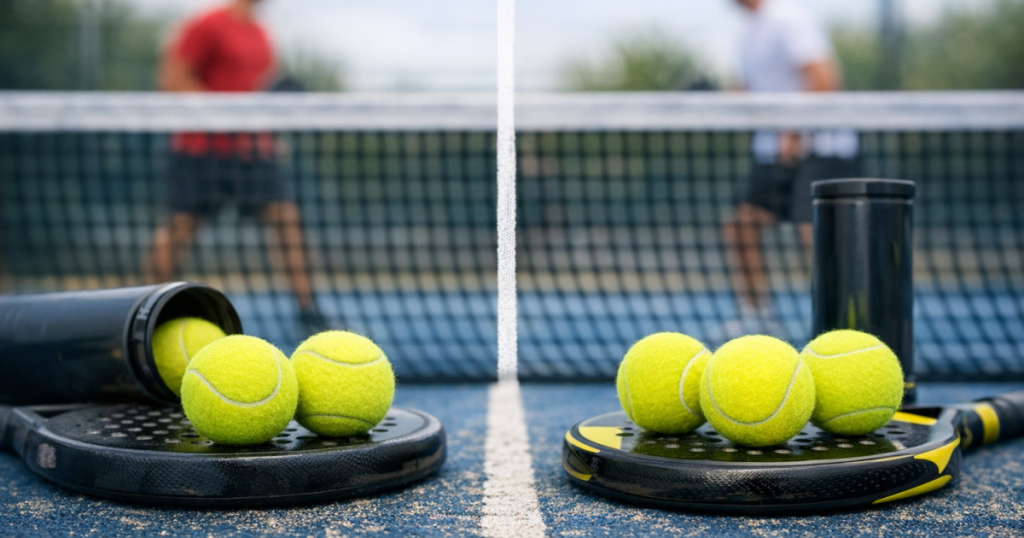
Dunlop Padel Pro Padel Balls and Head Padel Pro S Balls are both recognisable padel ball options from established racket-sport brands. They are aimed at players who want proper padel balls rather than using tennis balls, which behave differently and are not the right choice for standard padel play.
The broad distinction is this: Dunlop Padel Pro is the easier recommendation for many beginner-friendly club sessions because it tends to suit controlled rallies and mixed-ability games. Head Padel Pro S is the more aggressive choice if you want a livelier, quicker-feeling ball and your group is comfortable with faster points.
That does not mean one is universally “better”. Court surface, indoor or outdoor conditions, temperature, how hard your group hits and how fresh the tube is will all affect the way a padel ball performs. If you are still working out how much to invest in your first setup, it is worth pairing this decision with a broader look at how much beginners should spend on starter padel gear.
Quick choice: which ball should you try first?
- Choose Dunlop Padel Pro if you want a balanced club ball for beginner and improver matches, especially where keeping rallies going matters more than creating the fastest possible game.
- Choose Head Padel Pro S if your group likes a quicker, more attacking feel and you already have enough control to cope when the ball comes through faster.
- Buy whichever is fresher if you are comparing two tubes in a shop or online basket. A fresh pressurised tube usually matters more than tiny brand differences for casual club play.
- Standardise for group games if you play with the same four people regularly. Pick one model and stick with it for a few weeks so your touch, lobs and returns develop around a consistent bounce.
How they compare for beginner club padel
Feel and speed
Head Padel Pro S is the livelier option in this comparison. It is generally chosen by players who want the ball to come off the racket with more zip and reward firmer hitting. For confident players, that can make the game feel sharp and exciting. For newer players, it can also reduce reaction time and make defensive blocks, glass rebounds and controlled lobs harder to judge.
Dunlop Padel Pro feels like the more conservative choice for mixed-ability games. It is still a proper padel ball, but it is less likely to make a beginner session feel rushed. If your current matches include lots of short points because players are missing returns, overhitting volleys or struggling with the back glass, the steadier option is usually more useful.
Control and rally length
Control matters more than raw speed when you are learning padel. You need time to read the ball after it hits the glass, decide whether to volley or let it pass, and keep your pair in a good court position. A slightly more manageable ball can help beginners build that rhythm.
This is where Dunlop Padel Pro has an obvious beginner-friendly argument. It is a sensible pick for coaching sessions, social games and early box-league matches where players are still learning how to construct points. Head Padel Pro S can still be used by newer players, but it suits groups that already rally consistently and want the game to feel more dynamic.
Serving, returns and the first few shots
Padel points often turn on the serve, return and first volley. With a livelier ball, serves can feel more awkward to receive and returns can pop up if your racket face is too open. That can be fun once you are confident, but it can also create scrappy points for beginners.
If your priority is learning the basics cleanly, Dunlop Padel Pro is the safer starting point. If you are already comfortable with the rules, know when a ball is still in play after the glass and want a match ball that punishes loose shots a bit more, Head Padel Pro S becomes more appealing. For newer players still checking the fundamentals, our guide to when a point is won or lost in padel can help remove some of the uncertainty during faster rallies.
Side-by-side notes
- Best for a first regular club tube: Dunlop Padel Pro, because it is the more forgiving choice for developing consistency.
- Best for faster attacking games: Head Padel Pro S, because it is better suited to players who enjoy a livelier tempo.
- Best for mixed-ability fours: Dunlop Padel Pro, especially when one or two players are newer to the game.
- Best if your group already plays hard: Head Padel Pro S, provided everyone is happy with shorter reaction times.
- Best value decision: whichever gives you the better current £ cost per fresh tube, assuming both are genuine, sealed and suitable for padel.
Durability and consistency: what to check rather than assume
Padel balls are consumables. They lose their lively feel with use, and they can feel different depending on conditions. It is risky to judge either model from a single tired tube that has been sitting in a bag for weeks.
When comparing Dunlop Padel Pro and Head Padel Pro S, check three practical things. First, does the tube open with a clear pressure release? Second, does the felt still look even after a match or two? Third, does the bounce remain predictable enough for your group’s level?
For most beginner club players, durability is not just about which ball lasts longest in theory. It is about how many good sessions you get before the ball feels flat, fluffy or inconsistent. A cheaper tube is not automatically better value if it becomes frustrating quickly, and a more expensive tube is not automatically worth it if your group cannot control the extra pace.
Indoor, outdoor and UK playing conditions
UK padel players often move between indoor courts, covered courts and outdoor venues. Conditions can change how any ball feels. Cooler weather can make balls feel less lively, while damp outdoor conditions can make felt pick up moisture and slow down. On a dry indoor court, a faster ball can feel noticeably sharper.
That matters for this comparison. Head Padel Pro S may feel exciting indoors or in warm, dry conditions, but it can be a handful for beginners if rallies are already quick. Dunlop Padel Pro is more likely to suit a typical social session where the aim is to keep the game flowing rather than make every point feel tournament-paced.
If you play outdoors through the year, do not overbuy. A few fresh tubes are more useful than a large stash that sits around for months. Store sealed tubes at normal room temperature, keep opened balls dry, and rotate them out once they stop giving a reliable bounce.
What to carry on match day
Whichever tube you prefer, bring more than one usable ball to the court. A ball can be lost over fencing, pick up water outside the court, or simply feel too dead after a long session. For a beginner club night, one fresh tube and a couple of used practice balls is a sensible setup.
It also helps to agree before the warm-up whose balls you are using. Mixing old and new balls, or switching between models mid-match, makes the game feel inconsistent. If you are building a small bag for regular play, balls sit alongside grips, a towel, water and a few basic extras; this simple match-day padel accessories kit is a useful next step.
Pros and trade-offs
Dunlop Padel Pro: strengths and drawbacks
- Good for controlled rallies: A sensible fit for players still learning timing, court position and use of the glass.
- Friendly for mixed groups: Less likely to make newer players feel rushed compared with a livelier ball.
- Easy to recommend as a first regular tube: It suits the way many beginners actually play: social games, coaching drills and early club matches.
- May feel less exciting for hard hitters: Players who want a quicker, more attacking ball may prefer Head Padel Pro S.
- Still condition-dependent: Like any pressurised ball, freshness and storage matter.
Head Padel Pro S: strengths and drawbacks
- Livelier match feel: A good option for players who want the ball to move through the court more quickly.
- Rewards decisive play: Confident volleys, firm returns and attacking shots can feel more responsive.
- Useful progression ball: It can help improvers adapt to faster exchanges once basic control is in place.
- Less forgiving for beginners: Mistimed shots and late reactions are punished more quickly.
- Can shorten rallies: If your group is still inconsistent, the extra pace may reduce the quality of the session.
Buyer guidance before you add a tube to your basket
Start with your playing level, not the brand name. If you are new to padel and mainly play social matches, coaching games or beginner box leagues, the safer first buy is Dunlop Padel Pro. It gives you a better chance of longer rallies and cleaner learning reps.
If you already play weekly, control your lobs reasonably well and enjoy quicker exchanges at the net, Head Padel Pro S is worth trying. It is also a useful comparison tube if your current ball feels slow and your group wants a more energetic game.
Then check the practical buying details. Look at the current £ price per tube, the number of balls included, delivery cost, seller reputation and whether the product listing clearly states padel balls rather than tennis balls. If you are buying for a regular four, agree the choice together so one person is not always paying for the balls.
For club sessions with new people, etiquette matters too. Some groups rotate who brings balls; others expect the organiser to provide them. If you are joining a new venue or WhatsApp group, it is perfectly normal to ask what ball they use before turning up. The same mindset applies to court behaviour, warm-ups and joining games, which is covered in our guide to following padel etiquette at a new club.
Questions people ask
Are Head Padel Pro S balls too fast for beginners?
Not always, but they can feel quick if you are still learning returns, volleys and back-glass shots. Beginners who want longer rallies will usually be better starting with Dunlop Padel Pro.
Can I use tennis balls instead of padel balls?
No for normal padel play. Tennis balls do not behave like proper padel balls and can make the game feel wrong. Buy balls clearly labelled for padel.
How often should beginners replace padel balls?
Replace them when the bounce feels flat, the felt becomes inconsistent, or rallies start feeling dull for reasons unrelated to your shots. Casual groups often keep older balls for warm-ups and drills.
Should everyone in the group use the same ball model?
Yes, if possible. Using one model during a match keeps bounce and speed consistent, which is especially helpful when players are still developing touch and timing.
What stands out
For most beginners, Dunlop Padel Pro is the better first choice. It is the more forgiving option for club nights, coaching sessions and mixed-ability games where rally quality matters more than raw speed. It gives newer players a clearer platform for learning the game.
Head Padel Pro S is the one to choose when your group wants a faster, livelier match ball. It suits improving players who already control the basics and want rallies to feel sharper. If you are moving from beginner sessions into more competitive club play, trying a tube is a sensible way to test whether the extra pace helps or hinders you.
The practical recommendation is simple: start with Dunlop Padel Pro if you are unsure, then compare it with Head Padel Pro S once your rallies are consistent. Keep the fresher tube for matches, save older balls for drills, and let your group’s actual playing level decide the long-term favourite.
Quick Buying Links
Dunlop Padel Pro Padel Balls
The big picture Dunlop Padel Pro Padel Balls and Head Padel Pro S Balls are both recognisable padel ball options from established racket-sport brands.
Head Padel Pro S Balls
The big picture Dunlop Padel Pro Padel Balls and Head Padel Pro S Balls are both recognisable padel ball options from established racket-sport brands.