A rally can feel busy at first, especially once the ball starts using the glass. The simplest way to understand padel point rules is to ask whether the ball has bounced correctly, whether the next player can legally return it, and whether anyone has touched the net or hit out. Once those basics click, most close calls become much easier to judge during a club game.
Padel uses tennis-style scoring, but the walls make point endings feel different. A ball that looks gone in tennis may still be live in padel, while a ball that hits the side fence too early may be out straight away.
What to know first
- A point is normally won when the other team cannot return the ball before its second bounce.
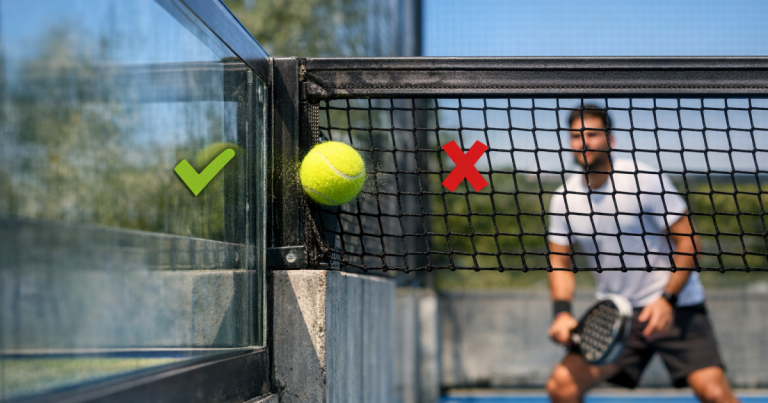
- The ball must land in the opponent’s court before it hits their glass or fence.
- You can use your own glass wall to help return the ball, as long as it then goes over the net legally.
- Touching the net, hitting the ball out, or being hit by the ball usually loses the point.
- On serve, two faults lose the point for the serving side.
If you are still getting comfortable with the court layout and the general flow of the game, it helps to start with the basics of how padel works for new players before drilling into the finer calls.
The normal way a point is won
The most common point-ending moment is simple: the ball bounces twice before the receiving team returns it. The first bounce must be on the opponent’s side of the court. After that first bounce, the ball can hit the back glass, side glass or fence and remain playable until it bounces a second time.
For example, if you hit a controlled shot that lands near the back corner, rebounds off the glass and your opponents cannot reach it before the second bounce, your team wins the point. The same applies if you play a softer shot that dies near the net and bounces twice before anyone can touch it.
A smash can also win the point, but beginners sometimes misunderstand why. You do not win just because you hit hard. You win if the ball bounces in the opponent’s court and they cannot make a legal return. If the ball bounces and goes out through the door or comes back over the net, it may still be playable in some situations, depending on the court layout and whether the opponent can reach it without breaking another rule.
When the ball is in and when it is out
The golden rule is that your shot must reach the opponent’s side and hit the court surface first. If it lands inside the lines, it is in. Lines count as in, just as they do in tennis.
After that first legal bounce, the ball may rebound off the glass or fence. That is one of the main reasons padel rallies can continue longer than new players expect. A ball that hits the back glass after bouncing is not automatically out. It is live until the second bounce, a fault, or another point-ending event.
The ball is out if it hits the opponent’s glass, fence, netting, ceiling, lights or another fixed object before bouncing in the court. So if you drive the ball straight into the back glass on the other side without it landing first, you lose the point. The same applies if your lob touches the roof structure at an indoor venue before coming down.
Club courts can have small local quirks, particularly around doors and overhead obstructions, so it is worth checking the club’s house rules when you play somewhere new. The core judgement remains the same: did the ball legally land in the opponent’s court before anything else happened?
How the walls change the point
The walls are not decoration. They are part of the game, but only in the right sequence.
You can use your own glass
If the ball comes towards you and you are late, you can let it pass, rebound off your back glass, and then hit it before it bounces again. You can also play a return that hits your own back glass first, as long as it then travels over the net and lands in the opponent’s court. This is a normal defensive shot, not a trick shot.
You cannot hit the opponent’s glass first
If your shot crosses the net and hits the far glass before touching the court, your team loses the point. New players often do this when trying to force a winner from the back of the court. It feels powerful, but it is out because the first contact on the opponent’s side was not the floor.
The side fence creates close calls
During a rally, a ball that bounces in and then hits the fence is usually still in play until it bounces again. On serve, the side fence matters differently: if the served ball lands in the correct service box and then hits the side fence before the second bounce, it is treated as a fault under standard padel rules. That difference catches many beginners out.
Ways you can lose a point without the ball bouncing twice
Not every point ends because someone misses the ball. You can lose the point immediately through a rule breach.
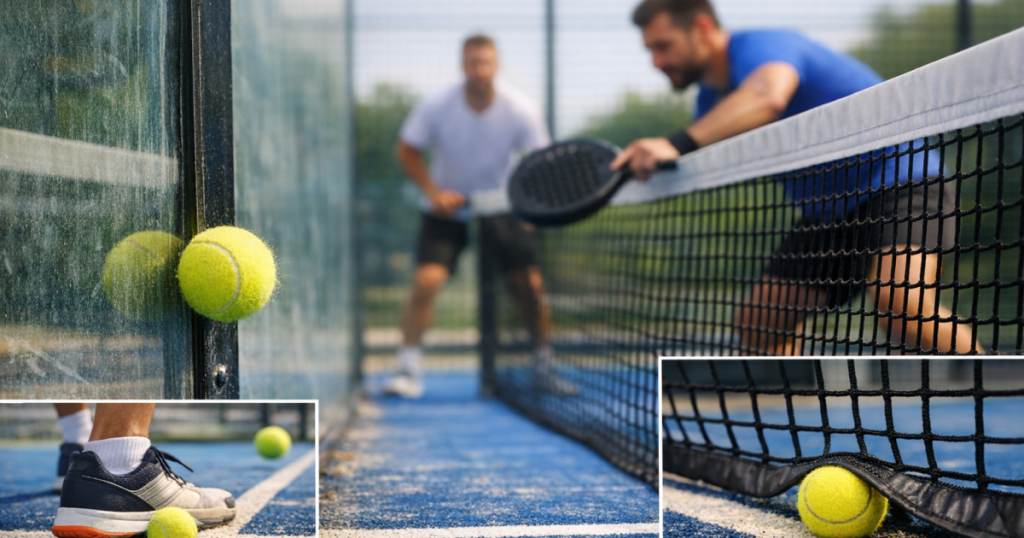
- Hitting into the net: If your shot does not cross the net and land legally, the point goes to the other team.
- Hitting out: If the ball lands outside the court or hits glass, fence or a fixed object before landing in, you lose the point.
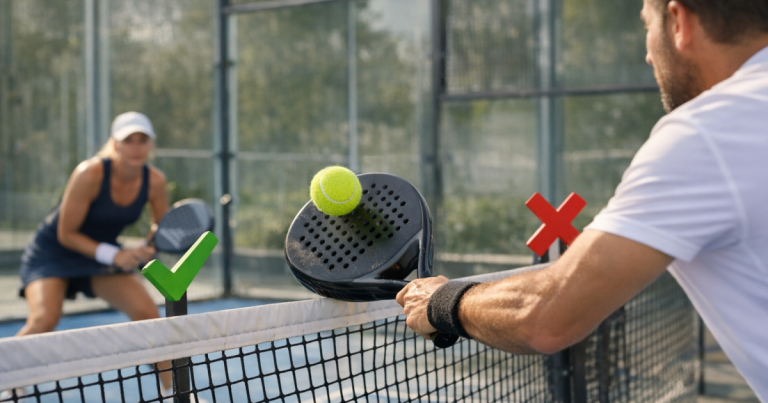
- Touching the net: If you, your racket or your clothing touches the net while the ball is live, your team loses the point.
- Being hit by the ball: If the ball touches a player or their clothing before that team makes a legal return, the opponent wins the point.
- Double hitting or carrying the ball: A normal clean strike is required. Scooping, carrying or striking the ball twice in one shot is not a legal return.
- Reaching illegally over the net: You cannot hit the ball before it has crossed to your side. There is an exception when the ball has already bounced on your side and spun or rebounded back over the net, but you still must not touch the net.
At beginner level, the two most common accidental faults are touching the net after rushing forward and hitting the opponent’s glass before the ball has bounced. Both are easy habits to fix once you know what to watch for.
Point endings during the serve
The serve has its own sequence, so it is worth separating service faults from rally faults. The server must stand behind the service line, bounce the ball, and strike it below waist height. The serve must travel diagonally into the correct service box.
If the serve lands outside the correct box, hits the net and fails to land correctly, or breaks the service action rules, it is a fault. A first fault does not lose the point. A second fault does.
If the serve clips the net and then lands in the correct service box without creating another fault, it is usually a let and is replayed. Players sometimes rush this call, so slow down and agree what happened before continuing.
After a valid serve and return, the rally becomes normal. From then on, the usual rules about bounces, walls, net touches and hitting out apply.
What happens at deuce and golden point
Many UK club sessions and box leagues use normal tennis-style scoring: 15, 30, 40 and game. At deuce, some matches continue with advantage scoring, while others use golden point. With golden point, one deciding point is played at deuce and the winner of that point wins the game.
The important thing is to agree the scoring format before the match starts. If your club uses deciding points, make sure everyone knows who chooses the receiving side and how the rotation works. For a deeper explanation, read the guide to golden point in padel.
The rally rules do not change during golden point. A point is still won or lost in the same ways: double bounce, illegal return, net touch, body contact, service fault or a ball landing out.
Common beginner disputes and how to handle them
Most disagreements come from speed rather than bad sportsmanship. Padel rallies can be quick, and four players may have different angles on the same bounce. A friendly reset usually keeps the match moving.
- Was it glass first or floor first? The player closest to the ball often has the best view, but if nobody is sure, replaying the point is a sensible club-level solution.
- Did it bounce twice? If the returner clearly gets to the ball after the second bounce, the point is over. If it is genuinely unclear, agree a replay rather than letting the argument spoil the game.
- Did someone touch the net? Players normally call this on themselves. It is good etiquette and keeps trust high.
- Was the serve legal? Watch the bounce, contact height and landing box. Beginners should focus on a repeatable legal action rather than trying to win cheap points with risky serves.
If line calls are causing regular problems in your games, simple accuracy work can help. Practising with targets gives players a better feel for safe margins near the glass, fence and service box; this piece on using padel training targets for accuracy drills explains when they are useful.
A simple decision checklist during rallies
When you are unsure who won the point, work through the events in order rather than jumping straight to the final outcome.
- Did the shot cross the net legally?
- Did it land in the opponent’s court before touching glass, fence or another object?
- Did the receiving team return it before the second bounce?
- Did any player touch the net while the ball was live?
- Did the ball touch a player, clothing or anything outside the court before a legal return?
- Was it a serve, and if so, was it a first fault, second fault or let?
This sequence is useful because it matches how the point actually unfolds. Once you know the first illegal event, you know who loses the point.
Things readers ask
Does the ball have to hit the floor before the glass?
Yes, on the opponent’s side it must hit the court surface before touching the glass or fence. If it hits the far glass first, the shot is out.
Can I let the ball hit my own back glass before I play it?
Yes. If the ball has bounced once on your side, you can let it rebound off your glass and then return it before the second bounce.
Who wins if the ball hits a player?
If the ball hits a player or their clothing before that team makes a legal return, the other team wins the point.
What if a serve clips the net?
If it clips the net and then lands legally in the correct service box without another fault, it is normally a let and is replayed. If it lands out, it is a fault.
Are padel point rules different in club leagues?
The rally rules are the same, but scoring formats can vary. Some club leagues use golden point at deuce, while others use advantage scoring.
Main lessons
A point in padel is won or lost by the first clear rule event: a second bounce, an illegal shot, a net touch, a body contact, a ball out of court or a service outcome. The walls make the game look complicated, but the order of events keeps the logic simple.
For beginner and early-stage club players, the biggest improvements come from recognising whether the ball landed before touching the wall, calling your own net touches, and staying calm on close double-bounce calls. Get those right and your games will feel fairer, smoother and much easier to score.