Walking into a new court with the wrong kit is annoying, but turning up with too much stuff can be just as awkward. The easiest way to pack for padel is to think in layers: court essentials, comfort items, and after-match basics. You do not need a huge bag or every accessory on day one; you just need enough to play safely, stay comfortable, and enjoy the session.
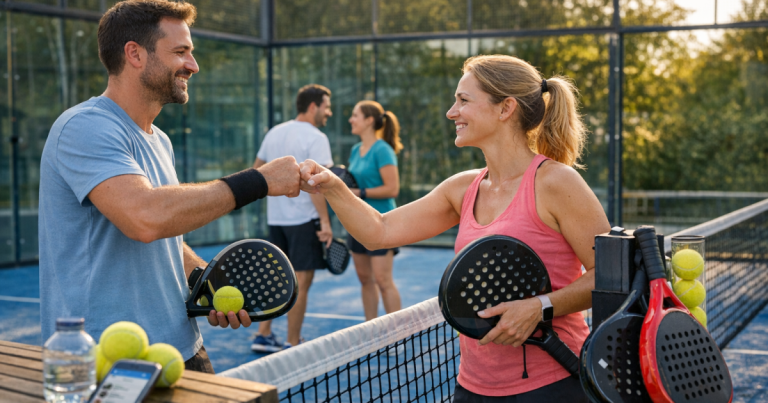
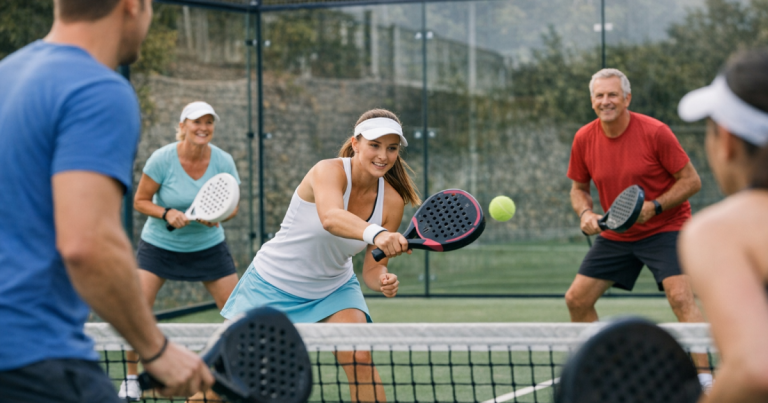
Most beginner sessions in the UK are relaxed, social and welcoming. The main aim is to arrive on time, move freely, avoid obvious kit problems, and have what you need if the venue is busy or the weather changes.
The simple packing list
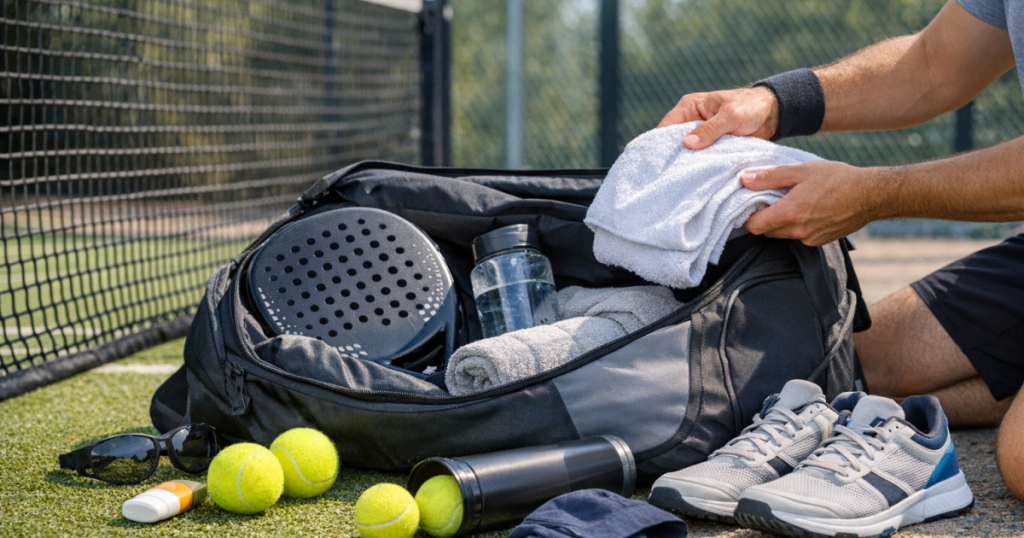
For a first session, keep your bag practical. A small sports holdall, rucksack or padel bag is fine as long as it is easy to carry and does not leave loose items rolling around the changing room or court entrance.
- Padel racket, if you already own one, or confirmation that you can hire or borrow one.
- Court-friendly shoes with good grip and lateral support.
- Comfortable sports clothing you can move in.
- Water bottle, ideally 750 ml to 1 litre for a standard session.
- Small towel or wristband for sweat.
- Spare top or light layer, especially for outdoor courts.
- Grip tape or overgrip if your racket handle feels slippery.
- A few padel balls if you are joining friends rather than a coached session.
- Phone, payment card, booking confirmation and any access details.
- Post-match layer, deodorant and a small snack if you are heading elsewhere afterwards.
Once you know how to pack for padel in a simple, repeatable way, it becomes much easier to say yes to social games after work or weekend beginner sessions without overthinking your kit.
Step 1: Check what the venue provides
Before you start filling your bag, check the booking information. Some beginner sessions include rackets and balls, while others expect players to bring their own. Coaching sessions are more likely to have spare equipment available, but open court bookings with friends may not.
Look for three details in particular: whether racket hire is available, whether balls are included, and whether the court is indoors or outdoors. If the venue has a reception desk, you may be able to sort problems on arrival. If it is an unmanned court or a club session run by players, it is safer to confirm beforehand.
Indoor and outdoor sessions can feel quite different for beginners, especially in colder months or windy conditions. If you are not sure which format will suit you, the guide to indoor versus outdoor padel is a useful next read before you book again.
Step 2: Choose shoes before you worry about anything else
Footwear matters more than a fancy racket for a first session. Padel involves short sprints, split steps, side-to-side movement and quick stops near the glass. Standard running shoes can feel unstable because they are built mainly for forward movement, not repeated lateral changes.
If you already have tennis or court shoes, they will usually be a sensible starting point. Dedicated padel shoes are useful as you play more often, but you do not need to buy premium footwear before trying the sport. What you do need is a clean, grippy sole that feels secure when you push sideways.
Avoid muddy trainers, fashion trainers with flat slippery soles, and old gym shoes where the tread has worn smooth. Many UK venues also ask players to keep court shoes clean, particularly on indoor surfaces, so do not wear the same pair you used on a wet walk through the car park.
Step 3: Dress for movement, not for photos
Your clothing should let you bend, lunge, twist and raise both arms comfortably. A breathable T-shirt, shorts, skort, leggings or lightweight tracksuit bottoms are all fine. You do not need specialist padel clothing for your first hit.
What matters is avoiding anything too restrictive or heavy. Jeans, thick cotton hoodies and stiff casual shorts can become uncomfortable quickly, especially once rallies get longer. If you tend to get warm, pack a spare top. If you are playing outdoors, add a light layer you can put on between games.
A sports tee such as the Adidas Club 3-Stripes Tee is the sort of simple, breathable layer many players use, but any comfortable sports top that lets you move freely can do the job. The important point is not the logo; it is whether you stay dry enough and mobile enough to enjoy the session.
Step 4: Decide whether you need a racket
If this is your very first time, borrowing or hiring a racket is completely normal. It gives you a chance to understand the sport before spending money. Beginner rackets are usually easier to manage when they have a round or teardrop shape, a forgiving face and a comfortable grip, but you do not need to memorise racket terminology before playing.
If you already own a racket, check the wrist strap, grip and general condition before leaving home. The wrist strap should be intact, and the grip should not feel glossy, cracked or loose. If the handle is slippery, an overgrip can make a big difference to control and confidence.
Try not to bring several rackets to a first session unless you are testing them with a coach. One suitable racket is enough. Extra choices often distract beginners from the more important things: footwork, positioning, communication and learning the bounce off the glass.
Step 5: Bring water and a small energy backup
Padel can be stop-start, but beginner sessions still involve plenty of movement. Bring a refillable bottle and aim for enough water to last the booking. A 750 ml bottle is usually fine for a short indoor session, while 1 litre is more comfortable for longer sessions, warm weather or back-to-back games.
A small snack is optional but useful if you are playing straight after work. A banana, cereal bar or simple sandwich can help if you have not eaten for hours. Avoid packing anything messy that needs cutlery or takes a long time to eat, as social padel often moves quickly between games.
If the venue has a café, vending machine or water station, that is helpful, but do not rely on it for your first visit. Arriving self-contained removes one more thing to think about.
Step 6: Pack sweat control and comfort items
A small towel is one of the most underrated beginner items. You can use it between games, after warm-up, or before driving home. Wristbands also help if sweat runs down your arm and affects your grip.
If you wear glasses, bring a case or cloth. If you use contact lenses, pack any small comfort items you would normally need for sport. Hair ties, plasters and a spare pair of socks are small additions that can save a session from becoming irritating.
Grip comfort matters too. If your racket handle feels too thin, damp or unstable, an overgrip is a cheap and simple fix. You do not need to rewrap your racket mid-match unless you know what you are doing, but having one in the bag is useful once you start playing regularly.
Step 7: Add balls only when the session needs them
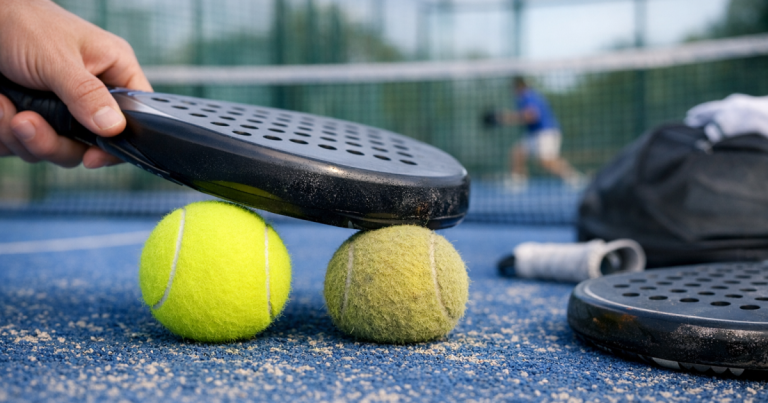
For coached beginner sessions, balls are usually provided. For a private court booking with friends, someone needs to bring a tube. Padel balls look similar to tennis balls but are designed for padel play, so it is better to use proper padel balls rather than whatever is lying in the garage.
A tube such as Head Padel Pro is a recognisable example of a padel ball you may see at clubs, although availability and exact versions can vary. Check that the balls still have decent pressure and are not flat, as dead balls make timing and rallies harder for beginners.
You do not need lots of balls for a social match. One fresh tube is usually enough for four players. More balls become useful for coaching drills, basket feeds and practice sessions, but they can clutter your bag if you are only playing a normal game.
Step 8: Prepare your phone, booking details and arrival plan
Padel venues can vary. Some have reception desks and clear signage; others use gates, codes or club hosts. Keep your booking confirmation easy to find, and check the start time, court number and arrival instructions before you travel.
Aim to arrive 10 to 15 minutes early. That gives you time to park, find the court, change shoes, fill your bottle and meet the other players without rushing. If you are joining a group organised by WhatsApp or a club noticeboard, send a short message if you are delayed so the others can adjust pairings or warm-up plans.
It is also worth checking whether the session is doubles, coaching or a mixed social format. If you want a simple rules refresher before your first game, the explanation of padel doubles serving order and receiver choice will make the court chatter much easier to follow.
Step 9: Leave space for after the session
Do not pack your bag so tightly that you cannot separate damp kit afterwards. A spare carrier bag or small laundry pouch is useful for sweaty tops and socks. If you are travelling by public transport, this matters even more because your bag may be sitting next to work clothes or everyday items.
Pack a dry layer for after play, particularly for outdoor evening sessions. Standing around in a damp T-shirt after a cold-weather game is uncomfortable and can make the journey home miserable. A light sweatshirt, fleece or jacket is usually enough.
Deodorant, face wipes and a small towel are handy if you are heading back to the office, meeting friends or using public transport. You do not need a full washbag unless the venue has showers and you plan to use them.
Step 10: Keep the bag light enough to carry easily
Beginners often overpack because they are worried about getting something wrong. A lighter bag is usually better. If you can carry it comfortably from the car park, bus stop or bike rack to the court, you are more likely to keep playing without the session feeling like a logistical chore.
A good test is simple: can you find your water, racket and shoes within ten seconds? If everything is buried under spare clothing, old balls and random accessories, edit the bag down. Your first few sessions are about learning the rhythm of the game, not managing a touring player’s kit setup.
If you are cycling to the venue, think carefully about balance, straps and loose items. A compact bag is easier and safer than carrying a bulky racket bag awkwardly over one shoulder.
Things beginners often forget
- Clean socks: Small detail, big comfort difference after a sweaty session.
- A warm layer: Useful for outdoor courts, waiting between games, or chatting afterwards.
- Hair ties or cap: Helpful when lights, wind or movement get distracting.
- Booking code: Easy to forget when you are rushing from work.
- Overgrip: Not essential, but useful if your hand slips on the handle.
- Small towel: Better than using your T-shirt between points.
- Payment card: Some venues charge separately for racket hire, balls, parking or refreshments.
What not to bring on day one
Leaving things out is part of good packing. You do not need multiple rackets, a full tube of spare grips, a large first-aid kit, heavy resistance bands, speaker, big valuables, or lots of clothing changes. Keep valuables minimal and check whether lockers are available if you are bringing work items.
Avoid loose jewellery, bulky watches and anything that could get in the way when you move quickly or swing. If you are unsure about an item, ask whether it helps you play, stay comfortable or get home easily. If it does none of those things, it can probably stay at home.
Food and drinks should also be court-friendly. Water is the safest choice. Sticky drinks, open coffee cups and crumbly snacks near the court are inconvenient and can be frowned upon by venues.
A quick pre-court routine
When you arrive, change into court shoes, put your racket and bottle near the bench, check your pockets are empty, and give yourself a few minutes to loosen up. A rushed start can make the first game feel tense, even when the group is friendly.
Spend a few minutes moving your ankles, hips, shoulders and wrists before you start hitting properly. Padel rewards sharp movement and quick reactions, so a gentle warm-up helps you feel more coordinated from the first rally. For a simple routine, use the guide on warming up before a social padel match.
Helpful questions
Do I need to buy a padel racket before my first session?
No. If the venue offers hire or the coach has spare rackets, borrow one first. Buy later when you know whether you prefer a lighter feel, a larger sweet spot or more power.
Can I wear running shoes for padel?
Running shoes are not ideal because padel involves quick sideways movement. Tennis or court shoes are usually a better starting point, and dedicated padel shoes can make sense once you play regularly.
How much water should I bring?
For most beginner sessions, 750 ml to 1 litre is sensible. Bring more for warm outdoor sessions, longer bookings or if you know the venue has limited refill options.
Should I bring my own balls?
Bring balls if you are booking a court privately with friends. For lessons or organised beginner sessions, check the booking details because balls are often provided.
What size bag do I need?
A small sports bag or rucksack is enough for your first few sessions. It should fit shoes, a bottle, a spare layer and a racket without being awkward to carry.
What to remember
Your first padel bag does not need to be perfect. Prioritise clean, grippy shoes, comfortable clothing, water, a racket plan and the small items that keep you relaxed during and after play. Once those basics are covered, you can enjoy the session rather than worrying about your kit.
After two or three games, you will quickly notice what you personally use and what stays untouched. Keep refining the bag around your routine, the venue and the type of sessions you enjoy. That is the easiest way to build a simple setup that supports regular club play without becoming expensive or overcomplicated.