Club night is much easier when your kit is organised before you leave home. The aim is to pack a padel bag that covers your match, a possible wait between games, and the slightly chaotic reality of shared courts and changing rooms.
You do not need to carry half a sports shop. A sensible club-night setup is about having the essentials ready, keeping clean and damp items separate, and making it easy to find what you need without emptying your bag onto a bench.
What to know first
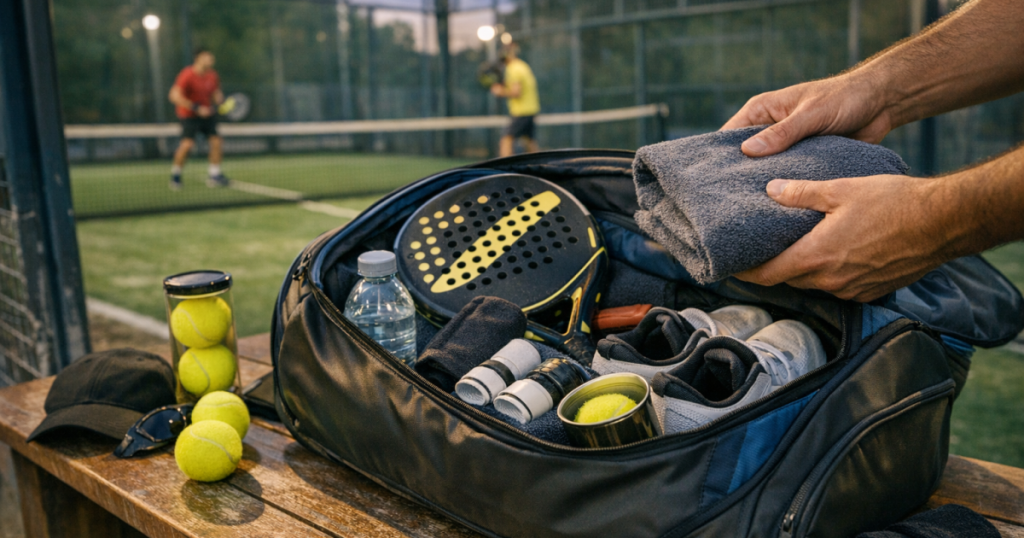
For a normal club night, your bag should cover five jobs: playing, changing, hydrating, dealing with small gear issues, and keeping used kit away from clean kit. If your bag does those things, it is packed well enough.
- Playing kit: racket, balls if needed, padel shoes and any grip spares.
- Comfort kit: water, towel, spare top and a warm layer for after play.
- Small fixes: overgrip, blister plaster, hair tie if needed, and a simple sweatband or wristband.
- Organisation: a wet kit bag, shoe compartment or separate carrier bag, and one pocket for valuables.
- After-match routine: dry your gear, remove rubbish, and repack the basics before the next session.
The exact contents depend on whether you are heading straight from work, driving to the club, using public transport, or going for food afterwards. The core idea stays the same: pack for the session you are actually playing, not for every possible situation.
Step 1: Start with the items you cannot play without
Put the essentials in first, because these are the things that can ruin the evening if forgotten. For most beginners and regular club players, that means one racket, proper padel shoes, a water bottle, and any balls your club expects players to bring.
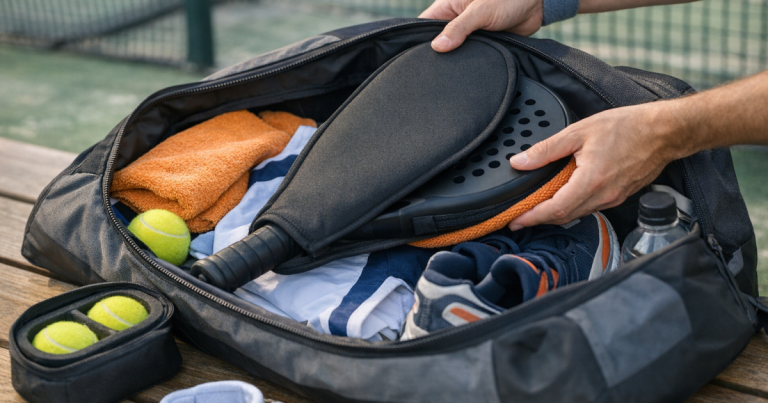
Your racket should sit in the main compartment or a padded racket sleeve if your bag has one. Avoid wedging it under shoes, bottles or hard objects. Padel rackets are tougher than they look in normal play, but they are not designed to be crushed in a crowded sports bag.
If your club supplies balls for organised sessions, you may not need to bring a tube. For casual matches, open play or private court bookings, it is worth checking the booking details before you leave. Turning up with no balls is a common beginner mistake, especially when a group assumes somebody else has packed them.
Water matters more than many new players expect. Club nights can involve short intense games, time waiting by the side, then another match soon after. A bottle around 750 ml to 1 litre is a sensible starting point for most sessions, with more if you know the venue gets warm or you are playing multiple matches.
Step 2: Pack shoes so they do not dirty everything else
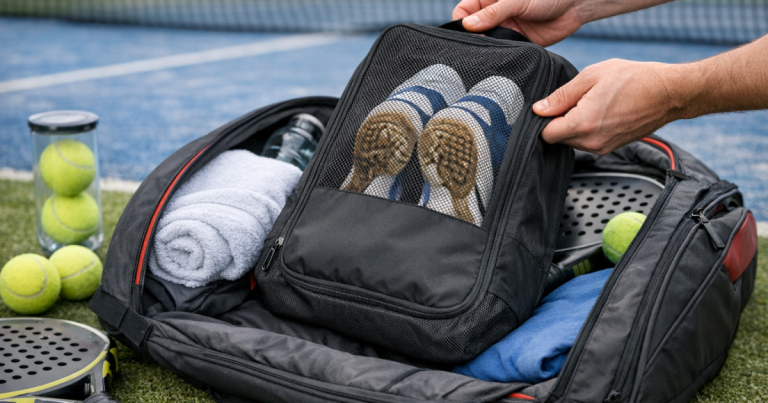
Padel shoes are usually the bulkiest item in the bag, so give them a clear place. If your bag has a shoe compartment, use it. If not, pack them in a separate drawstring bag or a clean carrier bag, especially after playing on sanded courts.
For club nights in the UK, indoor and covered courts can still leave sand or grit on the soles. That sand quickly finds its way into towels, clothing and racket covers if shoes are loose inside the main compartment.
Do not pack muddy outdoor trainers as a substitute for padel shoes. They can mark the court, feel unstable on artificial turf, and make movement harder when you are trying to learn stops, turns and recoveries. If you are still working out what makes a padel shoe different, read our guide to choosing padel shoes for sanded courts.
A simple habit helps: pack shoes sole-to-sole, then place them at the bottom or side of the bag. That keeps weight low and leaves cleaner space above for clothing and smaller accessories.
Step 3: Give your racket and grips a tidy home
Your racket should be easy to reach when you arrive. If you need to dig under wet kit or loose accessories, the bag is not working for you.
Before packing, check the grip rather than waiting until warm-up. If the overgrip feels slick, frayed or flattened, replace it at home or bring a spare. Club night is often social and quick-moving, so you may not want to spend ten minutes fixing your handle while everyone else is ready to start.
Keep one or two overgrips in a small pocket rather than loose in the main bag. A crushed, dusty or half-unwrapped overgrip is not much help. If you are unsure how overgrips affect comfort and control, our plain-English guide to padel racket grip, handle size and overgrips explains the basics without making it more complicated than it needs to be.
It is also worth checking the wrist strap before you leave. Make sure it is secure, not badly frayed, and not tangled around other items. You only need a quick visual check, but it is a useful one.
Step 4: Add clothing for before, during and after play
Club nights are rarely just one neat 60-minute match. You might warm up, sit out for a rotation, play again, then stand chatting near the court. Pack clothing for that rhythm.
- Spare top: useful if you sweat heavily or are heading somewhere after the session.
- Light warm layer: handy for waiting between matches, especially at cooler venues.
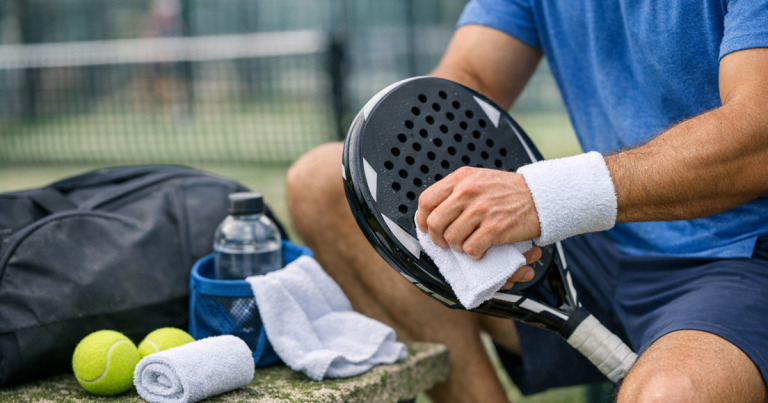
- Small towel: useful for hands, face and grip control during breaks.
- Fresh socks: a small item that makes a big difference if your feet get damp.
- Cap or hair tie: only if you use them, but easy to forget when rushing out.
Keep clean clothing in a dry section of the bag. If your bag does not have compartments, use packing cubes, a drawstring pouch or a simple reusable bag. The method does not need to be fancy; it just needs to stop clean kit and damp kit mixing together.
For players going straight from work, pack your padel clothes together as a complete set. That means top, shorts or skirt, socks, and any base layer. It is surprisingly easy to remember the racket and forget the socks.
Step 5: Build a small club-night essentials pocket
The best padel bag setup has one pocket for small items you always want in the same place. This prevents the classic pre-match search for keys, plasters or a grip while your court time is already running.
Useful small items include:
- one or two overgrips;
- blister plasters or sports tape for minor rubbing;
- lip balm, if you play in cold or dry conditions;
- hand sanitiser;
- a small snack for longer sessions;
- hair ties, if needed;
- a coin or locker token if your venue uses lockers;
- phone, keys and wallet in a zipped pocket.
Avoid turning this pocket into a junk drawer. If it contains old receipts, broken grips, empty wrappers and three half-used tape rolls, it stops being useful. Clear it out once a week or after a busy run of sessions.
Step 6: Pack for the format of the evening
Club night usually means doubles, quick rotations, mixed levels and a bit of waiting around. That affects what you should bring.
If you are playing timed rotations, you may not have long breaks to sort out kit. Keep your towel, bottle and spare grip near the top of the bag or in an outside pocket. If you are playing a full match with friends, you can be a little more relaxed because you control the pace between games.
For newer players, it is also helpful to know the playing format before you arrive. If partner changes, serve order or rotations still feel a bit fuzzy, refresh yourself with our guide to padel doubles rules for partners, serve order and rotation.
Think about travel too. If you are walking or taking public transport, a compact backpack-style padel bag may be easier than a large racket bag. If you are driving, you might keep a separate towel, spare top or backup water bottle in the car, but do not rely on that if you often get lifts or change plans.
Step 7: Keep wet, sandy and clean items apart
This is where a tidy bag makes club night feel much smoother. After play, shoes may be sandy, clothes may be damp, and your towel may not be something you want touching your racket grip.
Use a simple three-zone system:
- Clean zone: fresh clothing, spare socks and anything you will wear after play.
- Playing zone: racket, balls, towel and water bottle.
- Used zone: damp clothing, used towel and shoes after the session.
You do not need a specialist bag to do this. Separate pouches, a washable wet bag, a shoe bag or even a reusable carrier bag can do the job. What matters is consistency. If the same type of item always goes in the same place, packing becomes quicker and forgetting things becomes less likely.
Be careful with water bottles. Tighten the lid before packing, and avoid placing a bottle directly against your racket face if the bag is likely to be squeezed. A small leak can make grips, clothing and paperwork unpleasant very quickly.
Step 8: Do a two-minute check before you leave
A short check at the door saves a lot of frustration. Use the same order every time so it becomes automatic.
- Racket packed and wrist strap intact?
- Padel shoes packed or already on your feet?
- Water bottle filled?
- Clean socks and spare top included?
- Towel packed?
- Balls packed if the session needs them?
- Overgrip or small essentials pocket stocked?
- Phone, keys and wallet in a zipped pocket?
If you regularly forget one item, place it somewhere obvious. For example, put your water bottle inside your shoes by the door, or leave your clean socks inside the bag as soon as they come out of the wash. Good packing is mostly about removing the chance to forget simple things.
After the session: reset the bag properly
The most useful packing routine actually happens after club night. Empty the bag when you get home, remove damp clothing, air your shoes, and let your towel dry or go straight into the wash. Leaving everything zipped up until the next session is how bags start to smell and grips stay damp.
Wipe loose sand from shoes and shake out the shoe compartment if your bag has one. Take out empty ball tubes, snack wrappers and used tape. If your racket is damp from sweat or condensation, dry the handle and frame before storing it.
This does not need to become a deep-cleaning ritual every time. A few minutes is enough. For a fuller routine, especially if you play often, see our guide on caring for padel gear between matches.
Common questions
Do I need a dedicated padel bag for club night?
No. A normal sports backpack can work if it fits your racket safely and keeps shoes away from clean kit. A dedicated padel bag becomes more useful when you play regularly, carry shoes, spare clothing and accessories, or travel straight from work.
Should I bring my own balls to an organised club night?
Check the session details. Some clubs provide balls for organised play, while casual groups may expect players to bring a tube. If you are unsure, packing a tube avoids an awkward start and helps if the provided balls are worn.
What should stay in the bag all the time?
Overgrips, a small towel, blister plasters, a spare pair of socks and a simple wet kit bag are good permanent items. Do not leave damp clothes, food or a leaking bottle in the bag between sessions.
How heavy should my padel bag be?
It should be comfortable enough to carry from the car park, station or bus stop without feeling overloaded. If you are carrying items you never use, remove them. Beginners often do better with a lighter, more organised bag than a large one full of “just in case” kit.
Can I keep my racket in the bag between sessions?
Yes, as long as the bag is dry, not left in extreme heat or cold, and not crushed under heavy items. At home, store the bag somewhere clean and dry rather than leaving it in a damp car boot or next to wet kit.
What stands out
The best club-night bag is not the biggest one. It is the one that helps you arrive relaxed, find your kit quickly, play comfortably, and deal with the small things that commonly interrupt beginner and early club-level sessions.
Once you know how to pack a padel bag for your own routine, keep it simple: essentials first, shoes separated, clean kit protected, small spares in one pocket, and a quick reset when you get home. That habit makes every session feel a little less rushed and a lot more enjoyable.