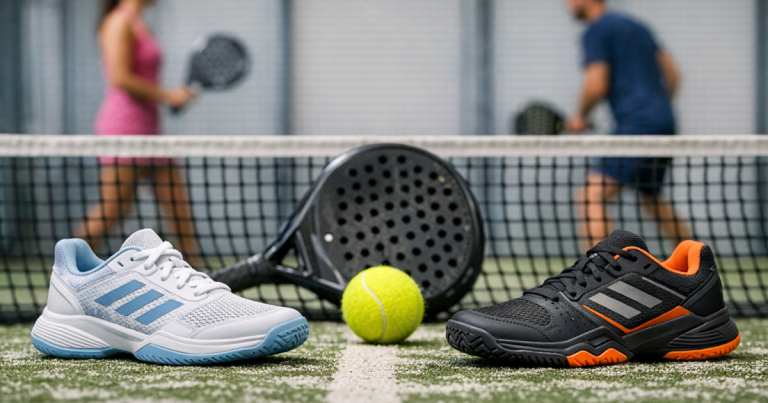
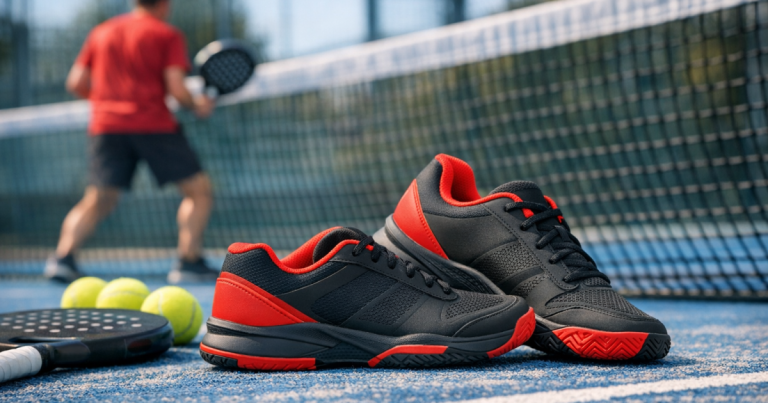
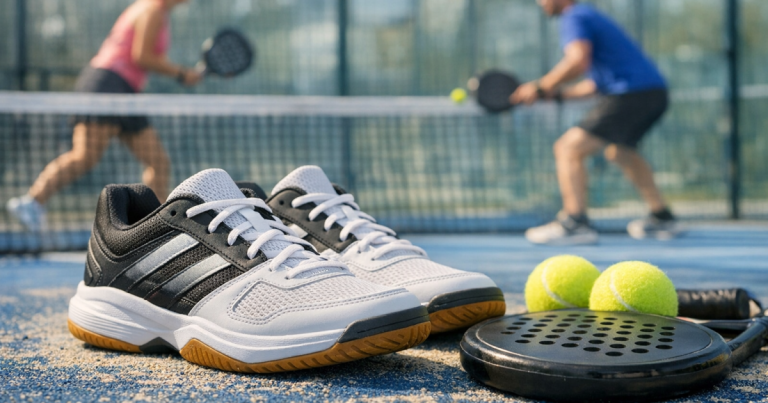
On sanded artificial-turf padel courts, the wrong shoes can make you feel either stuck to the floor or too loose when you turn. Good padel shoes for sanded courts give you enough grip to push off, enough release to rotate, and enough support for short, repeated side steps. For beginners, the aim is not to buy the most aggressive-looking sole; it is to choose footwear that helps you move confidently without overworking your knees, ankles or calves.
Many UK clubs use artificial turf with visible or lightly spread sand, so this choice comes up quickly once you move beyond casual hire kit. The right sole pattern matters, but fit, stability and comfort matter just as much.
The short version
- For sanded courts, prioritise a sole that grips on loose sand without locking your foot in place.
- Look for lateral support, because padel involves frequent side steps, split steps and quick recoveries.
- Avoid normal running shoes for regular play; they are usually built for forward movement rather than side-to-side court movement.
- Try shoes with the socks you actually wear for padel, and check comfort during small lunges and side steps, not just while standing still.
- If you are only playing once or twice, club hire or multi-court trainers may be enough, but regular club play usually justifies proper padel or court shoes.
Step 1: recognise what sand does under your feet
Sanded padel courts are not the same as a clean indoor sports hall floor. The sand helps manage the artificial turf, but it also changes how your shoes interact with the surface. Too little grip and you may slide when pushing off for a volley. Too much grip and your foot may feel planted when your body wants to rotate.
That balance is important for beginners because early padel movement is often a little late and reactive. You may be reaching for balls, stepping across yourself, or turning awkwardly after the ball comes off the glass. Shoes cannot fix technique, but they can make those movements feel more controlled while you learn. If you are still building the basic movement patterns, pair shoe choice with the fundamentals in the first things to learn in padel.
Step 2: choose a sole that suits loose sand
The outsole is the part of the shoe that contacts the court. For sanded courts, you want a tread pattern that can bite through a light layer of sand, but still let you make small adjustments. A very flat sole can feel vague on loose patches. A very aggressive sole can feel grabby, especially when you pivot.
Common court-shoe sole patterns include herringbone-style grooves, mixed-pattern soles and turf-style patterns. Herringbone-style soles are often popular on sandy or artificial-turf court surfaces because the grooves help with controlled grip and release. Mixed soles can also work well if they are designed for padel or tennis-style court movement. The key is not the name of the pattern alone; it is how stable and predictable it feels on your club’s surface.
When choosing padel shoes for sanded courts, avoid judging grip by walking around a shop floor or your hallway. A clean, hard floor tells you very little about how the shoe will behave on loose sand. If possible, ask your club, coach or regular players what type of sole tends to work on that specific surface.
Step 3: check side-to-side support before cushioning
Running shoes can feel comfortable because they are cushioned and light, but padel movement is different from road running. You move sideways, stop sharply, recover backwards, and make short diagonal steps. That means the shoe needs to hold your foot securely when your weight shifts from side to side.
Try this simple check when testing a shoe: lace it properly, stand with feet hip-width apart, then make a few slow side steps and gentle lunges. Your foot should not roll over the edge of the sole, and your heel should not lift noticeably. The upper should feel supportive around the midfoot without squeezing your toes.
Cushioning still matters, especially if you play on firmer courts or have longer sessions, but do not choose soft comfort at the expense of stability. A shoe that feels pillow-like when standing can feel unstable when you are pushed wide for a bandeja or changing direction after a return.
Step 4: get the fit right for padel movement
Padel shoes should feel secure, but not cramped. Your toes need enough room to spread slightly when stopping, yet the shoe should not feel loose through the heel or midfoot. If your foot slides forward on every stop, your toes will take the impact. If the shoe is too narrow, you may feel pressure along the sides during longer matches.
Use these fit checks before committing to a pair:
- Wear your usual padel socks, not thin dress socks or unusually thick walking socks.
- Check both feet, as one foot is often slightly larger than the other.
- Lace the shoes as you would for play, then test side steps, split steps and small forward stops.
- Make sure your heel feels held when you rise onto the balls of your feet.
- Leave enough toe room for comfort, but avoid a sloppy fit that lets the foot move inside the shoe.
If you use orthotic insoles or prefer a particular sports insole, take it with you when trying shoes. It can change the volume inside the shoe and affect heel hold.
Step 5: match the shoe to how often you play
A beginner playing one social session a month has different needs from someone joining weekly club nights. Occasional players may be able to use suitable court trainers for a while, provided they are clean, stable and accepted by the club. Once padel becomes regular, dedicated padel shoes or suitable tennis court shoes make more sense because they are built around repeated court movement.
For weekly play, durability becomes more important. Sanded turf can wear down tread over time, especially under the forefoot where you push off and pivot. Check the outsole periodically rather than waiting until the shoe feels unsafe. If the tread is smooth in key areas, grip may become less predictable.
It is also worth thinking about your whole kit routine. Shoes pick up sand, moisture and court debris, so let them dry naturally and avoid leaving them sealed in a bag after play. For simple habits that help your equipment last, see how to care for padel gear between matches.
Step 6: consider indoor, outdoor and club conditions
Not every sanded court feels identical. Some indoor courts have a more even, controlled layer of sand. Outdoor courts can feel different depending on weather, maintenance and how recently the surface has been brushed. A shoe that feels fine on one court may feel slightly loose or sticky on another.
For UK beginners, it is sensible to think about the venues you actually use. If most of your matches are at one club, choose for that surface first. If you move between venues, aim for a balanced court sole rather than an extreme grip pattern. You want predictable movement across typical club conditions, not a shoe that only feels right on one perfect court.
Also check club rules. Some venues ask for non-marking soles or suitable court footwear. Even when rules are relaxed, turning up in muddy outdoor trainers is poor court etiquette and can affect the playing surface.
Mistakes that make sanded courts harder
- Using worn-out trainers: Old soles can become smooth and unpredictable, especially on sandy patches.
- Choosing only by comfort: Soft cushioning feels good at first, but weak lateral support can make movement less stable.
- Ignoring the heel fit: A slipping heel can cause rubbing and reduce confidence when changing direction.
- Buying too much grip: A sole that grabs too hard can make pivots feel awkward and may encourage clumsy turning.
- Never cleaning the outsole: Built-up dust and grit can reduce contact with the court and change how the shoe feels.
When to replace your padel shoes
There is no single replacement schedule that fits every player, because wear depends on court surface, body weight, movement style and how often you play. Instead of counting months, look for signs. Replace or retire shoes from padel use when the outsole is noticeably smooth, the upper no longer holds your foot securely, the midsole feels uneven, or you start slipping in situations that previously felt controlled.
Do not wait until both shoes look destroyed. Many players wear one side more than the other because of their movement habits and dominant side. Check the forefoot edges, heel area and any pivot zones. If one shoe has collapsed or twisted shape, it can affect how balanced you feel on court.
Try before you commit where possible
If you are new to padel, it is normal not to know your preferred shoe feel straight away. Some players like a lower, more connected court feel. Others prefer more cushioning. The safest route is to start with stable, purpose-made court footwear, then refine your preferences as your movement improves.
If you are still deciding how much kit you need for your first few sessions, the same logic applies to shoes, rackets and bags: do not overbuy before you know your playing routine. The guide to renting vs buying padel gear for your first matches can help you decide when it is worth moving from borrowed basics to your own setup.
Common questions
Can I wear running shoes on sanded padel courts?
For a first casual hit, many beginners do. For regular play, running shoes are not ideal because they are usually designed for forward motion, not repeated lateral stops and turns.
Are tennis shoes suitable for padel?
Some tennis court shoes can work well, especially if the sole suits artificial turf or sandy court surfaces. Check the grip, lateral support and club footwear rules rather than assuming every tennis shoe is suitable.
Do I need different shoes for sanded and non-sanded courts?
Not always. If you play on mixed surfaces, choose a balanced court shoe that feels predictable. If you mainly play on heavily sanded turf, sole grip and release become more important.
Should padel shoes feel tight at first?
They should feel secure, not tight. Your heel and midfoot should be held, but your toes should not feel squeezed during side steps or short stops.
How do I stop sand making my shoes slippery?
Brush or tap loose sand from the outsole after play and let the shoes dry naturally. If the tread is worn smooth, cleaning will not restore proper grip.
In brief
Good footwear for sanded padel courts is about controlled movement, not maximum grip. Start with a sole pattern that handles loose sand, then check lateral support, heel hold, toe room and comfort during real padel movements. For occasional sessions, suitable clean court trainers may be enough; for regular club play, dedicated padel or appropriate court shoes are a sensible upgrade that can make every split step, turn and recovery feel more confident.