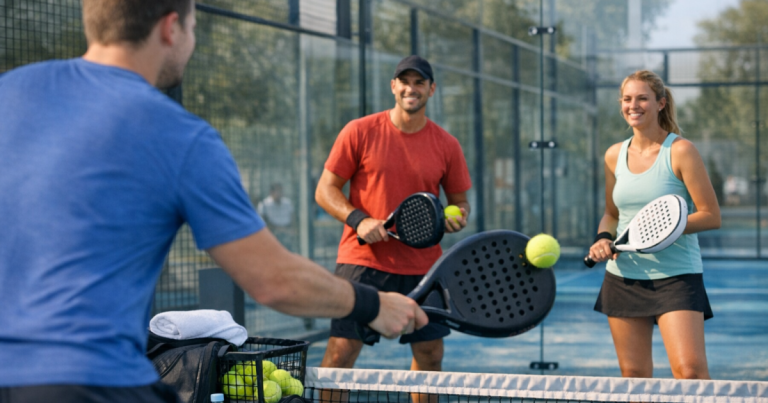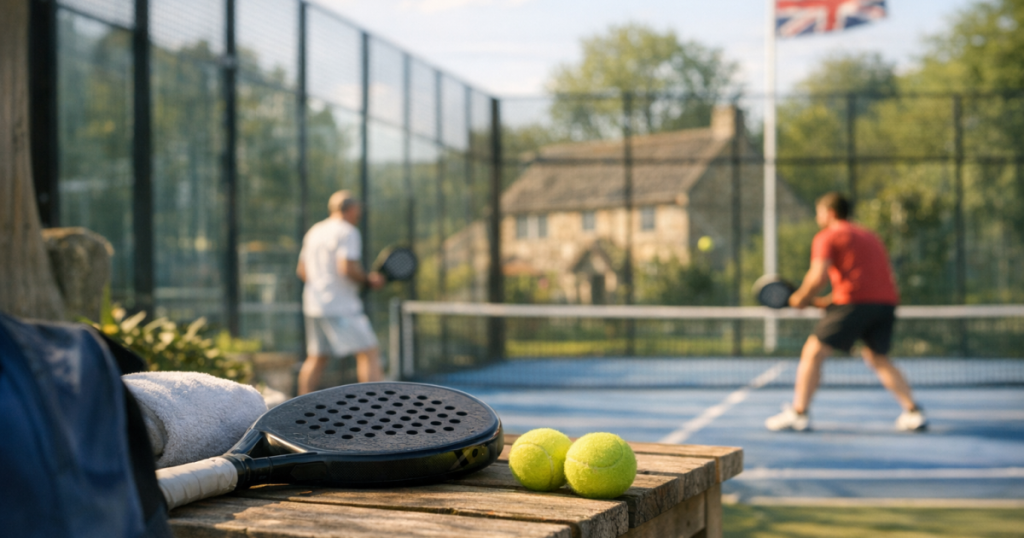
The easiest way to start playing padel in the UK is to book a beginner-friendly court session, borrow or hire a racket, and keep the first game simple. You do not need to arrive with perfect technique or a full kit bag; you just need enough confidence to understand the court, the scoring, and how to get into a rally.
Padel is welcoming because rallies tend to last longer than in many racket sports, the court is smaller than a tennis court, and doubles is the standard format. That makes it social, active, and forgiving for new players who are still working out movement, walls, and shot choice.
In brief
- Book a beginner session, social mix-in, or court with three patient friends rather than jumping straight into a competitive match.
- Wear supportive court shoes or clean trainers with good grip; avoid footwear that feels unstable when moving sideways.
- Hire or borrow a racket for your first few sessions before deciding what you actually like.
- Learn the serve, basic faults, wall rebounds, and simple scoring before you play your first full match.
- Focus on keeping the ball in play rather than hitting hard. Control matters more than power at beginner level.
Find your first court without overcomplicating it
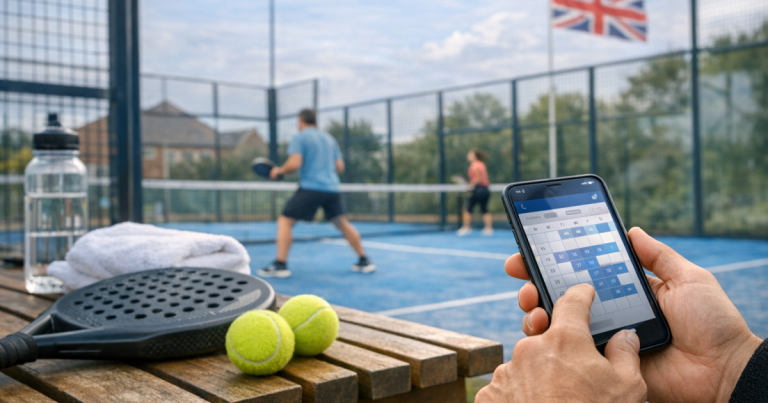
Padel courts are now found at a mix of tennis clubs, leisure centres, sports clubs, private padel venues, and some multi-sport facilities across the UK. Most bookings are handled through a club website or booking app, and many venues label sessions clearly as beginner coaching, intro sessions, social games, or open matches.
For a first session, the best option is usually one of three routes. A coached beginner class gives you a structured start and someone to explain positioning. A social beginner mix-in lets you meet other new players without needing to organise a full group. A private court booking with friends works well if everyone agrees to keep it relaxed and spend time practising serves before playing points.
If you are unsure which session to choose, look for wording such as “intro”, “beginner”, “improver”, “level 1”, or “new players welcome”. Avoid advanced matchplay sessions until you can serve consistently, understand glass rebounds, and keep a basic rally going. Most clubs would rather help you find the right level than have you feel out of place.
What to bring to your first padel session
You can keep your first outing very simple. Bring comfortable sports clothing, a water bottle, and footwear that supports quick changes of direction. Padel involves short sprints, side steps, braking, and turning, so shoes matter more than many beginners expect. If you already own tennis or court shoes, they will usually be more suitable than soft running shoes, which can feel unstable during lateral movement.
Most venues can hire or lend rackets, and that is a sensible way to begin. Beginner players often think they need a powerful racket, but early progress usually comes from control, timing, and footwork. A round or forgiving racket shape can feel easier to manage, but you do not need to make a buying decision before you know whether you will play regularly.
Bring a few balls only if the venue asks you to. Some sessions provide them, while private court bookings may require players to bring their own. Padel balls look similar to tennis balls but are not identical, so check what your club expects if you are arranging your own game.
Learn just enough rules before you step on court
You do not need to memorise every rule before your first match, but a few basics make the game much less confusing. Padel is normally played as doubles. The serve is underarm, taken after a bounce, and hit diagonally into the opposite service box. After the serve, the ball may hit the glass or walls as part of the rally, provided it has bounced correctly first.
The biggest beginner confusion is usually around when the ball can hit the wall. In simple terms, the ball must land in the opponent’s court before it hits their glass or fence. On your side, you can let the ball bounce, rebound off the back or side glass, and then play it back before it bounces again. That wall element is what makes padel feel different from tennis or squash.
For a clearer walkthrough, read the beginner explanation of serving, walls and faults in padel before your first proper match. It is especially useful if you want to avoid stopping every few points to ask what counts.
Understand the scoring before the game starts
Padel uses tennis-style scoring: 15, 30, 40, game, with sets and matches usually structured in a familiar way. Clubs may use different formats for social sessions, such as timed games, short sets, or rotating partners, but the basic scoring language is the same.
For a first session, agree the format before you begin. If everyone is new, you might play short games to 4, use sudden-death deuce, or spend half the booking practising serves and returns before scoring properly. This avoids the common problem of beginners worrying more about the score than learning how rallies work.
If tennis-style scoring feels unfamiliar, the step-by-step guide to how scoring works in padel will make your first match feel much easier to follow.
What your first game will probably feel like
Your first padel game may feel fast at the net and surprisingly tactical at the back. Many beginners start by rushing forward, swinging too hard, or trying to win points quickly. The better approach is to slow the game down and aim for playable shots. A controlled ball over the net is worth more than a dramatic winner that misses.
Start from a balanced ready position, with your racket up and your feet active. When the ball comes to you, turn your shoulders early and use a compact swing. Big backswing movements tend to cause late contact, especially when the ball rebounds off the glass. If the ball goes past you, do not panic; let it hit the back glass, watch the rebound, and then play it when it comes forward.
At beginner level, the most useful shot is often not the hardest one. A soft return, a lob over the net players, or a steady cross-court ball can keep the rally alive and give your partner time to recover. Padel rewards patience, positioning, and communication.
Simple habits that help beginners improve quickly
- Serve safely first: Aim for a legal, repeatable serve before trying to add pace or spin.
- Talk to your partner: Use simple calls such as “mine”, “yours”, “leave”, and “switch”.
- Use the lob: A high, controlled lob can move opponents away from the net and reset the point.
- Do not fear the glass: Practise letting the ball rebound instead of trying to volley everything before it reaches the wall.
- Recover after every shot: Padel is easier when both players move as a pair rather than standing in fixed spots.
- Watch the opponent’s racket: It gives you earlier clues than watching the ball only after it has been hit.
Joining games without feeling out of your depth
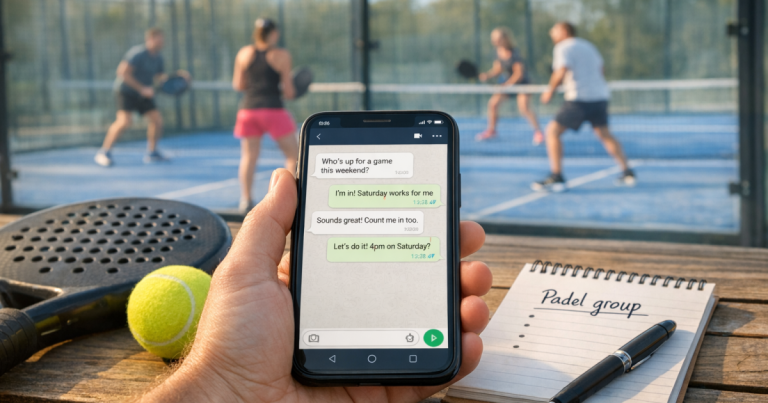
Once you have played once or twice, the next step is finding regular games at the right level. Many UK venues use informal player levels, WhatsApp groups, club ladders, or organised social sessions. Be honest about your standard. Saying you are new but keen to learn is much better than entering a group where the pace is too high.
A good beginner game has four players of roughly similar ability, a relaxed attitude to mistakes, and enough rallies to learn from. If one player is far stronger, they can still help by keeping the ball in play and feeding sensible shots rather than dominating every point.
Coaching is useful if you want to avoid building awkward habits. Even one beginner lesson can help with grip, serve technique, court position, and using the walls. If you prefer learning socially, keep playing beginner mix-ins and ask more experienced players for one small tip at a time.
When to think about buying your own kit
There is no rush to buy everything immediately. After a few sessions, you will have a clearer sense of whether you enjoy padel enough to play regularly. The first item worth prioritising is usually footwear, because comfort and stability affect every point. After that, a beginner-friendly racket can be useful if you dislike the feel of hire rackets or want consistency from week to week.
Balls are worth understanding too, especially if you are booking private courts. Fresh balls bounce more consistently, while older balls can make rallies feel slow and unpredictable. If you are curious about what a dependable club-style ball feels like, this padel ball review for club play explains the kind of performance details beginners should notice.
For clothing and accessories, keep it practical. Padel does not require specialist outfits, but breathable sportswear, a small towel, and a bottle of water make sessions more comfortable. A bag becomes useful once you own shoes, a racket, balls, and spare layers, but it is not essential on day one.
Common beginner mistakes to avoid
The first mistake is hitting too hard. Padel courts are enclosed, so power can work against you if the ball rebounds nicely for your opponents. Control the height, direction, and depth of your shots before adding pace.
The second mistake is standing in no-man’s land too often. In padel, you generally want to defend from the back or attack from the net. Lingering halfway can leave you vulnerable to balls at your feet. Move forward with your partner when you have a chance to take the net, and move back together when you are under pressure.
The third mistake is treating the walls as a problem rather than a tool. At first, the glass feels strange, but it gives you more time when used well. Practise reading the rebound and you will stop feeling rushed in defence.
The fourth mistake is playing only with the same group forever. Familiar games are fun, but mixing with slightly different players teaches you new speeds, shot patterns, and communication styles.
Key questions answered
Do I need tennis experience to play padel?
No. Tennis experience can help with hand-eye coordination and scoring, but it can also bring habits that need adjusting, such as big swings or trying to finish points too early. Complete beginners can pick up padel quickly with clear guidance and patient partners.
Can I turn up alone?
Often, yes. Look for organised beginner sessions, social mix-ins, coaching groups, or club events where players rotate. These are usually better than trying to find three other new players immediately.
How fit do I need to be?
You do not need elite fitness, but you should expect short bursts of movement, bending, turning, and quick reactions. Start with beginner sessions, take breaks when needed, and build up gradually as your confidence improves.
How long before I can play a proper match?
Many beginners can play a relaxed match in their first session once they understand the serve and scoring. Feeling comfortable with walls, positioning, and tactics takes longer, but that is part of the fun.
What to remember
Starting padel in the UK does not need to be complicated. Book a beginner-friendly session, borrow a racket, wear sensible shoes, and learn the basic rules before you arrive. Your first goal is not to play perfectly; it is to enjoy rallies, understand the rhythm of doubles, and leave wanting to book again.
As you play more, small improvements make a big difference: safer serves, calmer returns, better movement with your partner, and more confidence using the glass. Keep the early sessions relaxed, choose games at the right level, and padel can become a regular part of your week surprisingly quickly.