If you are wondering what to learn first in padel, start with the habits that help you enjoy a rally: a calm ready position, controlled contact, basic doubles movement and the few rules that stop points becoming confusing. You do not need a complete technical game before your first social match.
The quickest progress usually comes from learning the game in layers. Get the ball back, understand when the walls are in play, use gear that feels comfortable, then add tactics and power later. That approach suits most new UK club players because it gets you playing, learning and meeting people without making the sport feel more complicated than it is.
What to know first
- Learn control before power. A softer shot that lands in is worth more than a fast shot into the glass.
- Understand doubles positioning early, because most padel is played with four players.
- Know the serve, scoring and wall basics so you can join a social game without stopping every point.
- Start with comfortable, sensible gear rather than chasing advanced rackets or specialist accessories.
- Use coaching, friendly matches and low-pressure drills together. Each one teaches a different part of the game.
Start with the rally, not the highlight shot
Padel is full of exciting smashes, kick-outs and sharp volleys, but those are not the first skills most beginners need. The early goal is simple: keep a rally going long enough to read the ball, move with your partner and learn what a good decision feels like.
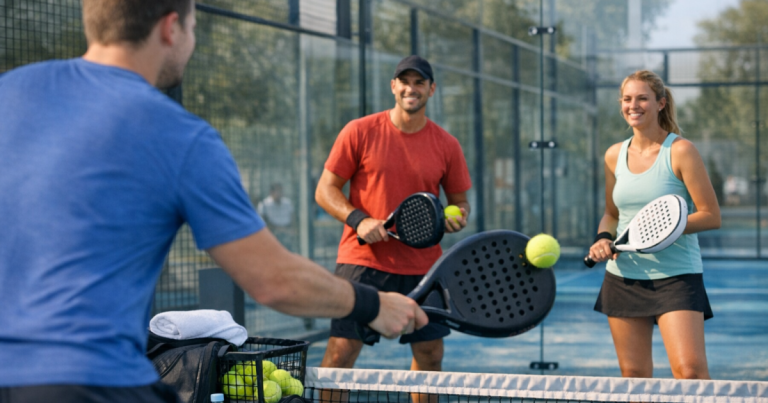
Begin with your ready position. Stand with your knees slightly bent, racket up in front of you and weight balanced enough to move either way. This sounds basic, but it solves a lot of beginner problems. Players who stand upright with the racket low are late to volleys, rushed on returns and more likely to swing too much.
Next, focus on a compact swing. Padel rewards short, controlled movements because the court is smaller than a tennis court and the ball often comes back quickly. A big backswing can make timing harder, especially near the net or when the ball rebounds off the glass.
If you have played tennis, squash or badminton, some skills will transfer, but padel has its own rhythm. The ball does not always need to be attacked. Sometimes the right shot is a safe ball through the middle, a controlled lob or a simple block back over the net. For a wider overview of the early learning curve, the first-timer’s roadmap to learning padel is a useful next step.
The first shots worth practising
You do not need a huge shot list at the beginning. A small set of reliable shots will help you enjoy matches sooner and give you a base for coaching sessions.
The serve
The serve in padel is underarm and starts with a bounce. The ball is hit diagonally into the opposite service box, and the emphasis is usually placement rather than speed. New players often overhit the serve because it feels like the start of an attack. In reality, a steady serve that lands deep and gives you time to move forward is more useful.
The return
A beginner return should be calm and repeatable. Aim cross-court or through the middle, and give yourself margin over the net. Trying to hit a winner from the return is rarely the percentage play, especially when the server and their partner are moving towards the net.
The volley
Much of padel is won and lost around the net. A beginner volley does not need a big punch. Keep the racket in front, use a short block and aim into open space or at your opponents’ feet. Good volleys make the next shot harder; they do not always have to finish the point.
The lob
The lob is one of the most useful beginner shots. It gives you time, pushes opponents away from the net and can reset a point when you are under pressure. Practise height and depth rather than trying to land every lob perfectly on the back line.
Playing off the glass
The glass is what makes padel feel unusual at first. Instead of panicking when the ball passes you, learn to let some balls rebound and play them after the wall. The key is to turn, track the ball and wait. Many beginners swing too early because they have not yet trusted the rebound.
Rules that matter in your first few matches
You do not need to memorise every official rule before playing, but you should know enough to keep the game moving. Padel uses tennis-style scoring, so games go 15, 30, 40 and game, with sets usually played to six games subject to the format your club is using.
Most beginner confusion comes from serving, rotation and the walls. In doubles, partners choose who serves first for their team, and the serve alternates between teams each game. Within a game, the server alternates sides after each point. If you are unsure how the order works over a full set, read the guide to serve order and rotation in doubles before your next match.
During rallies, the ball must land in the opponent’s court before it hits any wall or fence. After it bounces in, it can then hit the glass and still be playable. On your side, you can use your own back or side glass after the ball has bounced, but you cannot hit the ball directly into your own glass and then over the net as a normal return.
Another early rule to learn is when the ball is out. If your shot hits an opponent’s wall or fence before bouncing in their court, it is out. If it lands in first and then hits the glass, the point continues unless there is a specific service fault or local court issue involved. When playing socially, agree close calls quickly and replay points when nobody has a clear view. That keeps beginner matches friendly and avoids turning every rally into a debate.
How to move with a partner
Padel is not two singles games happening side by side. Your position affects your partner, and small movement habits make a big difference. The simplest rule is to move as a pair. If your partner moves forward, you usually move forward too. If they are forced back, you drop with them rather than leaving a large gap.
At the back of the court, defend with patience. Stay low, use the glass when needed and avoid trying to win the point from a difficult position. Your aim is often to earn a chance to lob and take the net back.
At the net, cover the middle together. Beginners often leave the centre open because both players protect their outside line. In padel, many safe attacking shots go through the middle because it creates confusion. Talk early and use simple calls such as mine, yours, leave and switch.
One useful habit is to recover after every shot. Do not admire a good ball or drift too close to the side glass. Hit, rebalance and get ready for the reply. Padel rewards players who are organised more than players who occasionally hit spectacular shots.
Gear: keep it simple at the start
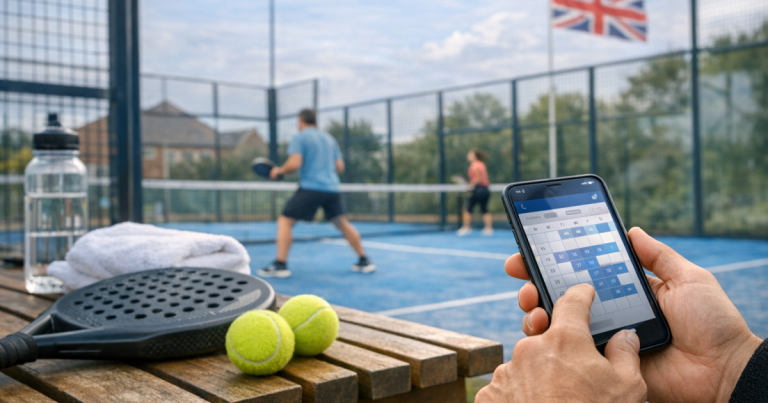
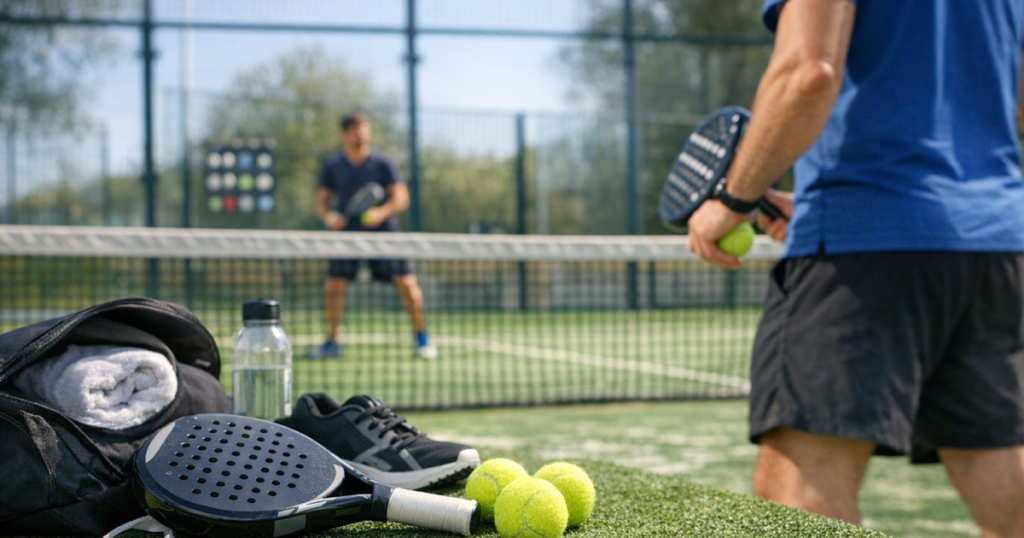
Your first setup should make the game easier, not more technical. Many clubs offer hire rackets, and that can be enough for your first session or two. Once you know you want to play more regularly, a beginner-friendly racket, suitable court shoes, comfortable clothing and a small bag are the main things to think about.
For rackets, the key beginner priorities are comfort, control and forgiveness. Rounder shapes and manageable weights are usually easier for new players than advanced, head-heavy power rackets. Foam feel, balance and shape all affect how easy a racket is to swing and how forgiving it feels when you miss the centre. If those terms are new, the explanation of shape, weight, balance and foam will help you understand the language before you spend money.
Shoes matter because padel involves short sprints, turns and side-to-side movement. General trainers can be fine for a taster session if the club allows them and they are clean, stable and non-marking, but regular players are usually better served by court shoes with appropriate grip. Running shoes can feel unstable during lateral movement because they are designed mainly for forward motion.
Clothing should let you move freely and stay comfortable in indoor or outdoor conditions. You do not need padel-specific clothing at the start. A breathable sports top, shorts or leggings, and layers for colder venues are enough. A bag is useful once you are carrying shoes, balls, water and a racket, but it is not essential for your first hit.
Coaching, social games and practice: what comes first?
The best route is often a mix. Coaching gives you feedback before bad habits settle. Social games teach positioning, scoring and decision-making. Solo or paired practice helps you repeat simple skills without the pressure of a match.
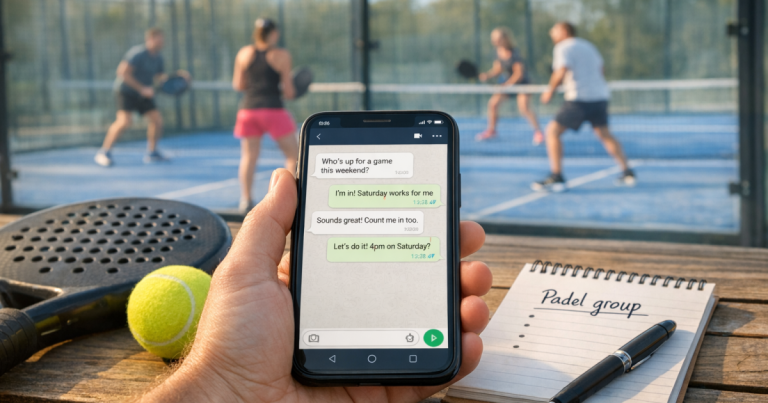
If you can, start with a beginner group session. It is less intense than a private lesson, gives you people at a similar level and usually covers the rules as you play. After that, join a social session labelled for beginners or improvers rather than jumping straight into a competitive league.
A simple first-month plan could look like this: one coaching session to learn serve, return and glass basics; one social match to understand flow and rotation; one short practice session to repeat volleys and lobs; then another social game to test what improved. That rhythm keeps learning practical.
Common beginner mistakes to avoid
- Trying to hit winners too early instead of building the point.
- Standing too close to the back glass and leaving no room for the rebound.
- Forgetting to move with your partner, which opens big gaps.
- Using a racket that feels too heavy or demanding because it looks more advanced.
- Arguing over rules in social games instead of agreeing a quick, fair outcome.
- Skipping the lob, even though it is one of the easiest ways to regain court position.
Things readers ask
Can I play padel before I know all the rules?
Yes. Learn the serve, scoring, basic wall rules and doubles rotation first. You can pick up the finer points as you play, especially in beginner social sessions.
Should I learn technique or tactics first?
Learn enough technique to control the ball, then add simple tactics straight away. In padel, where you stand and which shot you choose often matter as much as how hard you hit.
Do I need my own racket for the first session?
No. A hire or borrowed racket is usually fine for a taster. Buy your own only once you know you want to play regularly and have a feel for what weight and shape you enjoy.
Is padel harder if I have never played racket sports?
Not necessarily. New racket-sport players may need time with contact and timing, but they also avoid bringing habits from other sports that do not suit padel.
How soon should I join matches at a club?
Join beginner-friendly social matches once you can serve into court, keep a short rally going and understand the basic scoring. You do not need to be polished to start.
Final thoughts
The first stage of padel is about confidence, not perfection. Learn a calm ready position, a reliable serve and return, a simple volley, a useful lob and the basics of the glass. Add doubles movement and the main rules, then let experience do its job.
Gear should support that learning rather than distract from it. Choose comfort and control, wear shoes that suit the court, and keep the rest simple until you know your playing routine. With those foundations in place, your first few sessions will feel less like guesswork and more like the start of a sport you can genuinely grow into.