A damp racket sleeve, sweaty shirt, and used overgrip can make even a new bag turn sour quickly. The good news is that padel bag smelling problems are usually easy to prevent with a simple post-match routine, not endless washing or expensive deodorisers. Aim to remove moisture first, then deal with dirt and trapped fabric odour.
Beginner players often leave kit in the car, under a desk, or by the front door after a club session. That is understandable, but it is also exactly when smell builds: warm air, damp clothing, used towels, and closed compartments create the perfect little odour chamber.
The short version
- Empty the bag as soon as you get home, even if you only have two minutes.
- Keep sweaty clothing, wet towels, and shoes away from clean kit.
- Leave every main compartment open to dry fully between matches.
- Wipe the inside of the bag after wet or dusty sessions.
- Use breathable pouches or washable bags rather than sealing damp kit in plastic for days.
Step 1: Empty the obvious smell-makers first
Start with the items that hold the most moisture: tops, socks, towels, wristbands, and base layers. These should come out of the bag before anything else. Do not leave them zipped inside overnight after a match, even if the session was not especially sweaty.
If you play after work, keep a small laundry bag inside your padel bag. Put used clothing straight into it before leaving the club, then remove it as soon as you get home. A washable fabric laundry pouch is usually better than a sealed plastic carrier bag because it allows a little airflow and is easier to clean.
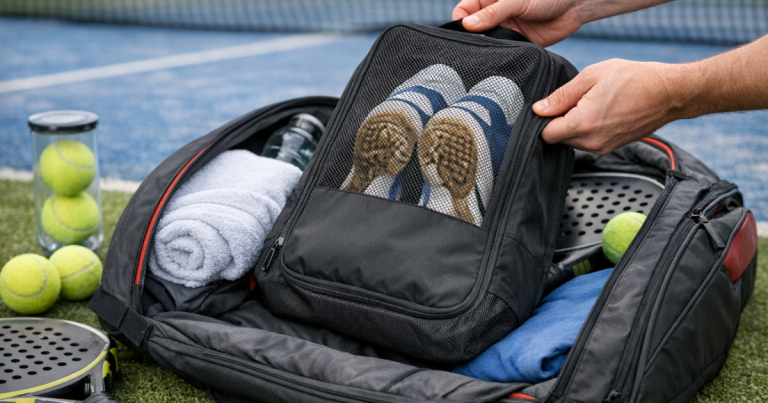
Shoes are the next culprit. Padel shoes pick up sweat, court dust, and rainwater from outdoor walkways. If your bag has a shoe compartment, use it, but still open that section after the match. If it does not, put shoes in a separate breathable shoe bag and avoid pressing them against clean clothing or a fresh towel.
Step 2: Let the bag breathe properly
Fresh air does more than most people realise. Once the damp kit is out, unzip every compartment and stand the bag somewhere dry and ventilated. A hallway, utility room, or spare room is fine. Avoid leaving it in a cold car boot, a damp shed, or pressed against a radiator.
Heat can damage some materials, affect adhesives, and make certain smells feel stronger before they fade. Gentle airflow is the goal. If the bag is very damp, place it open near a window or in a room with normal air movement. You do not need to blast it with hot air.
Check hidden pockets too. Small accessory compartments often hold wristbands, spare socks, snack wrappers, used grips, tissues, or half-damp towels. These areas smell because they are easy to forget. If your current bag has too many pockets to manage, or not enough separation for wet kit, our padel bags guide explains the storage layouts that are most practical for beginner players.
Step 3: Wipe the inside after messy sessions
You do not need to deep-clean the bag after every game. Most of the time, a quick airing is enough. After a wet, muddy, or particularly sweaty session, though, a wipe-down makes a big difference.
Use a clean damp cloth with a small amount of mild soap if needed. Wipe the base of the bag, shoe area, racket divider, and any fabric lining that has touched damp clothing. Then go over the same area with a cloth dampened with clean water so soap residue does not build up.
Leave the bag fully open until it is dry to the touch. This matters more than the wiping itself. If you clean the lining and zip it shut while still damp, you have simply trapped moisture again.
Be careful with strong sprays
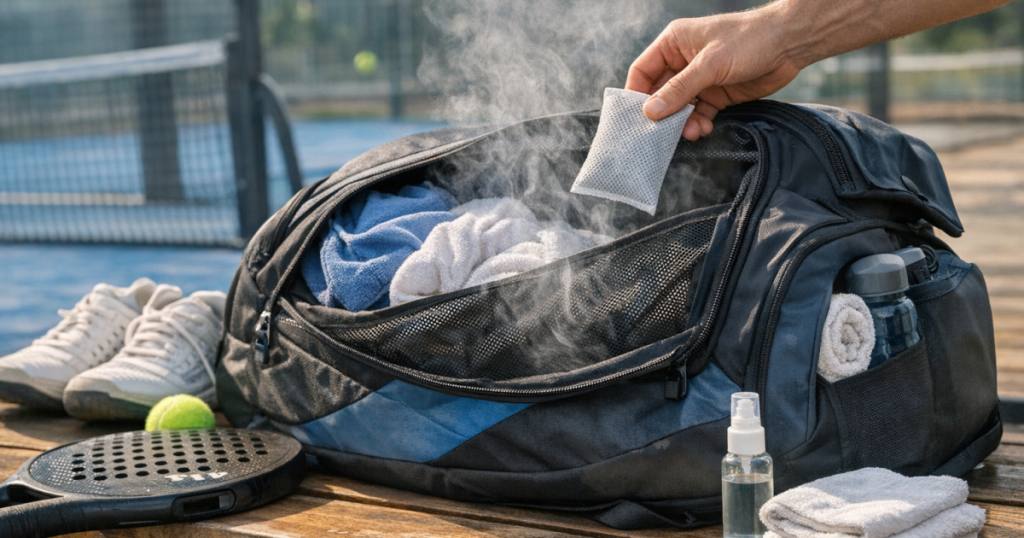
Heavy fragrance sprays can mask odour for a short time, but they do not remove the cause. They can also cling to clothing and make your bag smell like sweat mixed with perfume. If you use a fabric-safe sports deodorising spray, test it on a small hidden area first and use it lightly.
A better habit is to remove wet kit quickly, clean the contact points, and let everything dry. Deodorisers should be a finishing touch, not the main plan.
Step 4: Deal with towels and tops properly
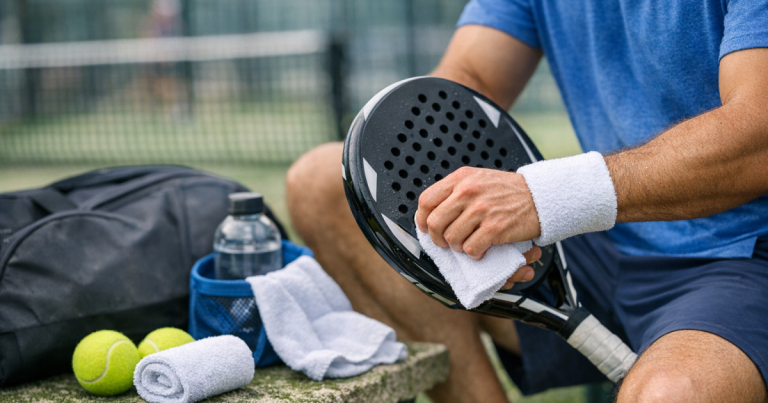
A towel is useful during padel, but it is one of the worst items to forget in a bag. It stays damp, folds tightly, and transfers smell to nearby kit. Use one towel for court use and another small towel if you shower at the club, then put both in the wash when you get home.
Tops are similar. Technical fabrics can hold odour even when they look clean, especially if they sit damp for hours. Turn them inside out before washing, follow the care label, and avoid overloading the machine. If a shirt still smells after washing, let it dry fully in fresh air before deciding whether it needs another wash.
For players still working out what clothing feels comfortable on court, a simple, breathable top is usually easier to manage than thick cotton that stays wet. The same principle comes up in our look at a court top that dries sensibly: comfort is not only about how it feels during the match, but also how easy it is to live with afterwards.
Step 5: Keep clean and dirty kit separate
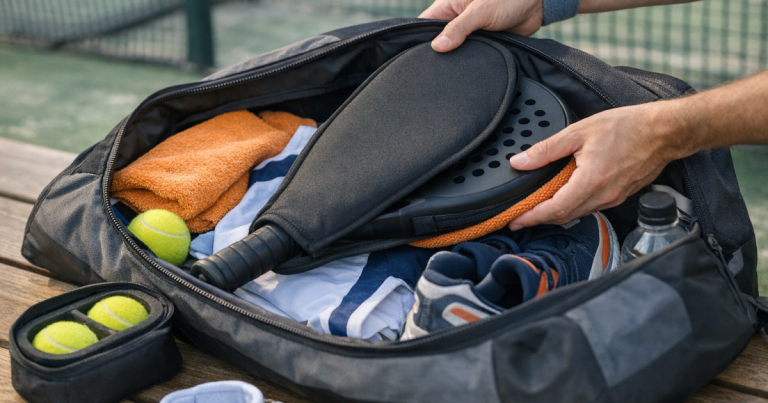
Your bag will stay fresher if every item has a job and a place. It does not need to be obsessively organised; it just needs enough separation that clean kit does not become contaminated by used kit.
- Clean clothing: keep it in a dry inner pocket or packing cube until you need it.
- Used clothing: put it straight into a washable laundry pouch after the match.
- Shoes: use a ventilated compartment or separate shoe bag.
- Racket: keep it away from wet towels and drinks bottles.
- Accessories: store grips, tape, and small items in a dry zipped pocket.
- Food wrappers: remove them immediately after the session.
One common beginner mistake is using the main compartment as a dump zone. It works for getting to the court quickly, but it makes the bag harder to dry and easier to forget items in. A simple routine is more effective than buying lots of extra organisers.
Step 6: Have a wet-weather routine
UK padel often means damp paths, wet jackets, and soggy towels even when the court itself is playable. Wet weather does not have to ruin the inside of your bag, but you do need to separate soaked items before they spread moisture.
Keep one lightweight waterproof or water-resistant pouch for emergency use. Put genuinely wet items in it only for the journey home, then empty it immediately. Do not treat it as long-term storage. Sealing damp kit for several days is one of the fastest ways to create stubborn odour.
If you often play outdoors or travel to club sessions in changeable weather, it is worth building a repeatable system. Our article on packing for wet weather matches covers what to keep separate and how to avoid arriving with everything already damp.
Step 7: Give the bag a weekly reset
Once a week, do a five-minute reset. Take everything out, shake loose dust into a bin or outdoors, check every pocket, and wipe any marks. Look for forgotten socks, snack wrappers, old grips, damp wristbands, and empty bottles.
Then let the bag sit open for a few hours. This is also a good moment to check whether you are carrying too much. Extra clothing, old balls, spare towels, and random accessories reduce airflow and make the bag harder to keep fresh.
If the lining has a persistent stale smell, sprinkle a small amount of bicarbonate of soda on a dry internal surface, leave it for a short period, then vacuum or shake it out thoroughly. Do this only when the bag is dry, and avoid getting powder into zips, seams, or racket compartments. Always check the bag’s care label first.
Smell sources beginners often miss
- Used overgrips: they can hold sweat and should not live loose in a side pocket.
- Water bottles: leaks leave damp patches at the base of the bag.
- Snack packaging: banana skins, protein bar wrappers, and crumbs create stale smells quickly.
- Car boots: leaving kit in a closed boot after evening padel traps moisture for hours.
- Wet jackets: even if they are not sweaty, they can dampen everything around them.
- Forgotten socks: small, easy to miss, and usually responsible for more odour than expected.
What not to do
Do not put the whole bag in the washing machine unless the care label clearly says it is suitable. Many padel bags have structured panels, thermal-style racket sections, padding, or coatings that may not cope well with machine washing.
Do not spray large amounts of fragrance into a closed bag. It can make the smell more confusing and does not solve dampness. Do not dry the bag directly on a radiator either. A warm room with airflow is safer and usually more effective.
Finally, do not ignore a smell that returns immediately after cleaning. That usually means one item inside the bag is the real source. Remove everything, smell-check towels and shoes separately, then clean the bag once the culprit is gone.
Things readers ask
How quickly should I unpack after padel?
As soon as practical. Even unpacking sweaty clothing and opening the main compartments within an hour or two will help. Overnight storage is when most odour problems start.
Can I use tumble dryer sheets in my padel bag?
You can use one as a light freshener, but it will not remove moisture or bacteria from sweaty kit. Treat it as a small extra, not the main solution.
Why does my bag smell even when my clothes are washed?
The source may be shoes, towels, old overgrips, or damp lining rather than fresh clothing. Empty every pocket and dry the bag fully before repacking.
Should I keep padel shoes inside the bag between matches?
Only if they are dry and the shoe compartment is left open to air. If the shoes are damp, remove them and let them dry separately before storing them again.
Is bicarbonate of soda safe for every bag?
Not always. Use it only on a dry bag, keep it away from zips and delicate linings, and check the care label first. A damp cloth and airflow are safer for regular care.
In brief
The reliable fix is simple: remove damp kit, separate shoes and dirty clothing, wipe the bag when needed, and let it breathe between sessions. When a padel bag smelling problem keeps coming back, the cause is nearly always trapped moisture or one forgotten item hiding in a pocket.
A fresher bag also makes match days easier. You can grab your kit, get to the club, and focus on playing rather than wondering what has been sitting zipped up since your last game.