Padel balls seem like a small detail until a rally feels strangely slow, the lob will not climb, or every bandeja drops shorter than expected. A good padel balls guide helps beginners understand why that happens, when the ball is the issue, and when it is just normal variation from the court, weather, or your own timing.
The short version: start with proper padel balls rather than tennis balls, keep them sealed until you need them, judge them by bounce and feel rather than age alone, and replace them when rallies stop behaving consistently.
What to know first
Padel balls are pressurised balls designed for padel’s enclosed court, glass rebounds, shorter swings, and doubles rallies. They look similar to tennis balls, but they are not always identical in feel. A ball that works well in tennis can feel too lively, too heavy, or simply wrong once you add walls, volleys, lobs, and quick net exchanges.
For beginners, the aim is not to find the most advanced or expensive tube. It is to use a ball that gives you a fair read on your shots. If the ball is too flat, you may think your technique is worse than it is. If it is too fast for your current control level, rallies can become rushed and scrappy.
Most club players buy balls in pressurised tubes, usually with three balls inside. Once opened, the balls gradually lose pressure whether you play with them or not. That is why a tube that felt fine last month may feel dull even if it has only had light use.
Speed: why some balls feel quicker than others
When players talk about a ball being “fast”, they usually mean it comes off the racket and glass with more zip. A faster-feeling ball can make points shorter, volleys sharper, and defensive lobs harder to control. A slower-feeling ball gives you more time, but can make it harder to finish points or play deep with confidence.
Ball speed is affected by several things:
- Pressure and freshness: a freshly opened tube normally feels livelier than one that has been open for a while.
- Ball model: some padel balls are marketed as faster, premium, tour-level, or longer-lasting. Treat those descriptions as a starting point, not a guarantee.
- Temperature: cold weather can make balls feel less lively, which UK players often notice in outdoor winter sessions.
- Court surface and sand: more sand or a slower court can make the same ball feel heavier and less responsive.
- Your level: newer players may experience a lively ball as “too fast” simply because there is less time to prepare.
If you are still learning the basics, a very lively ball is not automatically better. You want something predictable enough to practise serves, returns, lobs, and wall rebounds without feeling rushed.
Bounce: the easiest way to spot a tired ball
Bounce is the quickest sign that a ball is past its best. A healthy ball should rebound cleanly and give you enough height to play normal padel shots. A tired ball tends to land short, sit low, and make defensive play feel much harder than usual.
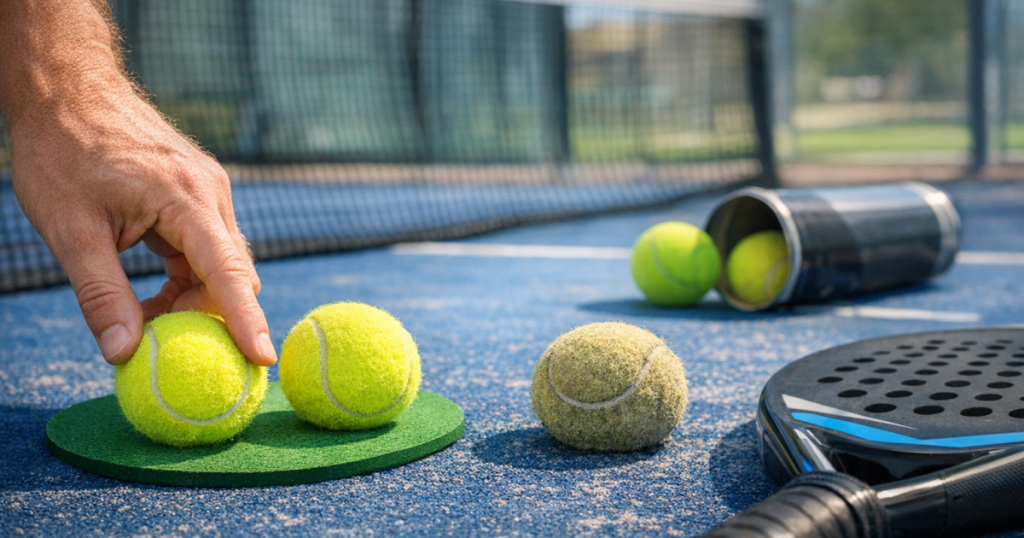
You do not need lab-style measurements for social or beginner club play. Use simple comparisons instead. Open a fresh tube and bounce one new ball next to an older one from the same height. If the older ball rebounds noticeably lower, feels soft on contact, or makes a duller sound, it is probably no longer ideal for a proper match.
Flat balls also change technique in sneaky ways. You may start forcing your swing, leaning back to lift the ball, or hitting harder than necessary just to get depth. That can build poor habits, especially if you are still getting comfortable with the glass.
If you are trying to understand why rallies feel different from one session to another, court conditions matter too. Booking a different venue, playing indoors instead of outdoors, or switching from a slow morning court to a warmer evening court can all affect how the ball behaves. If you are still finding local venues, the guide to booking a padel court at a UK club can help remove some of that guesswork.
How long should padel balls last?
There is no single replacement rule that works for every player. A tube used by four beginners for a relaxed hour may last longer than a tube used in a hard-hitting match with lots of smashes and wall rebounds. Storage, weather, surface, and playing intensity all matter.
As a practical beginner rule, judge balls in three stages:
- Fresh match use: the ball feels lively, consistent, and suitable for matches where everyone wants a fair game.
- Practice use: the ball has lost some bounce but is still useful for warm-ups, basic drills, serve practice, or casual hitting.
- Too dead: the ball sits low, feels soft, makes rallies unnatural, or forces players to overhit. At this point, retire it from serious play.
For club sessions, it is worth bringing a fresh tube if the match matters, if you are playing with new people, or if the existing balls already felt low at the end of your last game. For lessons, ask the coach what they prefer; many coaches provide balls because consistency across drills matters.
Examples of beginner-friendly ball choices
You do not need to overthink your first few tubes. Choose recognised padel balls, buy from a reputable UK retailer or club shop, and avoid old stock that has been sitting around unsealed or damaged. Two common examples you may see around clubs are Head Padel Pro and Bullpadel Premium Pro. Availability, packaging, and current product names can change, so check the listing or tube before buying.
The most useful comparison for a beginner is not “which ball is used by the most advanced players?” It is “does this ball give me a consistent bounce for the type of padel I am playing?” If your rallies are mainly cooperative, slower and steadier can be more enjoyable. If you are starting to play competitive club games, a fresher, livelier ball may make the session feel closer to normal match conditions.
If you want a closer look at two well-known beginner options, the comparison of Babolat and Dunlop padel balls goes into the practical differences without turning it into a complicated buying decision.
Simple checks before you start a match
A quick ball check takes less than a minute and can save a frustrating session. Before the first serve, look at the tube and the balls rather than assuming they are fine.
- Check the seal: a pressurised tube should be unopened before first use. If the seal is broken, treat the balls as already ageing.
- Feel the firmness: a ball that compresses too easily by hand is unlikely to play well.
- Compare the bounce: drop two balls from the same height. If one rebounds much lower, keep it for drills rather than the match.
- Look at the felt: heavy wear, dirt, dampness, or bald patches can affect control and consistency.
- Agree with the group: if one player has brought new balls, decide whether to open them before the match starts, not halfway through a close set.
Changing balls halfway through a match can alter the feel quickly. A fresh ball may fly deeper, bounce higher, and make overheads more attacking. If you are playing a friendly game, that is not a big issue. In a more competitive setting, agree the approach beforehand.
Storage habits that make a difference
Once opened, padel balls gradually lose pressure. You cannot stop that completely, but you can avoid making it worse. Keep opened balls dry, away from direct heat, and inside a closed tube or bag pocket rather than loose in the boot of a car.
Damp balls are especially awkward in the UK because outdoor sessions can involve drizzle, wet fencing, or a cold court surface. If balls get wet, they often feel heavier and less responsive. Let them dry naturally, but do not expect them to return to perfect match condition.
Some players use pressure-saving containers to extend useful life. They can be handy if you play often and care about reducing waste, but they are not essential for a beginner. If you only play occasionally, it may be simpler to open a fresh tube for proper matches and keep older balls for practice.
How ball condition affects scoring and match rhythm
Dead balls can make points longer, lower, and more defensive. Very lively balls can do the opposite, helping attacking shots carry through the court. Neither is “wrong” in casual play, but inconsistency can make scoring feel unfair if the ball changes noticeably during important games.
This matters more once you start playing proper sets. A golden point, tie-break, or close service game can feel very different if the ball suddenly stops bouncing. If you are still getting used to match structure, the explanation of padel scoring and golden point is a useful next step.
When to replace padel balls
Replace padel balls for match play when the bounce has clearly dropped, the ball feels soft, or rallies no longer resemble normal padel. Do not wait until every ball is completely lifeless. By then, players may already be changing their swings to compensate.
A sensible routine is to separate balls into two groups: match balls and practice balls. Keep the freshest balls for matches, box leagues, coaching-style drills, and sessions with players you do not know well. Use older balls for warm-ups, basket drills, solo wall practice where allowed, or serving repetition.
For casual beginner groups, it can work well to rotate who brings a tube each week. That keeps costs fair and avoids the familiar situation where everyone turns up expecting someone else to have playable balls.
Things readers ask
Can I use tennis balls for padel?
Use proper padel balls where possible. Tennis balls may look similar, but they can feel different on the racket, court, and glass, which makes practice less reliable.
Are faster padel balls better for beginners?
Not always. Faster balls can be fun, but they reduce reaction time. Beginners usually benefit more from a ball that feels consistent and controllable.
Should I open a new tube for every match?
For competitive matches, fresh balls are usually the fairest option. For relaxed social games, recently opened balls can be fine if the bounce is still consistent.
What should I do with old padel balls?
Keep them for warm-ups, serving practice, basic drills, or movement exercises. Once they are very flat, retire them rather than using them for normal rallies.
Why do balls feel different outdoors in Britain?
Cold, damp conditions can make balls feel heavier and less lively. Indoor courts usually give more consistent behaviour, but surface and temperature still matter.
Final thoughts
Good balls will not fix every mistake, but bad balls can make learning harder than it needs to be. For early-stage players, the priority is simple: use padel-specific balls, keep them fresh enough for fair rallies, store them sensibly, and replace them when the bounce stops helping you read the game.
The best padel balls guide is the one you can apply before your next club session. Bounce-test the balls, agree what you are using before the first serve, and keep older ones for practice rather than letting them drag down a match.