Padel is much easier to enjoy when the basic calls feel automatic. This padel rules explained guide keeps things beginner-friendly: how the scoring works, how to serve legally, when the walls are in play, and what counts as a fault during normal club games.
The good news is that padel is not full of obscure rules you need to memorise before stepping on court. Most points come down to four questions: did the ball bounce correctly, did it touch the right surface first, was the serve legal, and did anyone interfere with the net or court?
At a glance
- Padel uses tennis-style scoring: 15, 30, 40 and game.
- Most matches are played as sets, with local formats often adjusted for court booking times.
- The serve is underarm, diagonal, and must bounce in the correct service box.
- Walls are part of the game, but the ball normally has to bounce in the court before hitting the glass or fence on the opponent’s side.
- A fault happens when the ball bounces twice, hits the wrong surface first, is struck illegally, or a player touches the net during play.
How scoring works in padel
Padel scoring is very close to tennis scoring. A game moves from 0 to 15, then 30, then 40, then game. If both pairs reach 40, that is deuce. From there, your club or competition may use advantage scoring or a deciding point, often called a golden point.
In advantage scoring, one pair must win two points in a row from deuce: first to gain advantage, then to win the game. With golden point scoring, the next point after deuce wins the game. Clubs often use golden point rules during busy social sessions because it keeps matches moving and helps booking slots run on time.
Sets are usually won by the first pair to reach six games with a two-game lead. If the set reaches 6-6, a tie-break is commonly played. Some beginner sessions, box leagues and club nights use shorter formats, such as timed matches or match tie-breaks, so always check the format before you start.
If scoring is the part that trips you up most, it is worth reading this separate guide on how to keep score during a padel match. It breaks down games, sets, tie-breaks and club-night formats in more detail.
The serve: simple, but easy to get slightly wrong
Every point starts with an underarm serve. The server stands behind the service line and serves diagonally into the opposite service box. The ball must be bounced once before it is hit, and contact should be made at or below waist height. You get two attempts, just like in tennis.
The serve must land in the correct diagonal box. If it lands on the line, it is in. If it lands outside the box, hits the net and fails to land correctly, or is struck above waist height, it is a fault.
A serve that clips the net and still lands correctly is normally a let, provided it does not break a serve-specific rule afterwards. You replay that serve rather than losing the point. If a first serve is a let, you replay the first serve; if a second serve is a let, you replay the second serve.
What can the serve hit after it bounces?
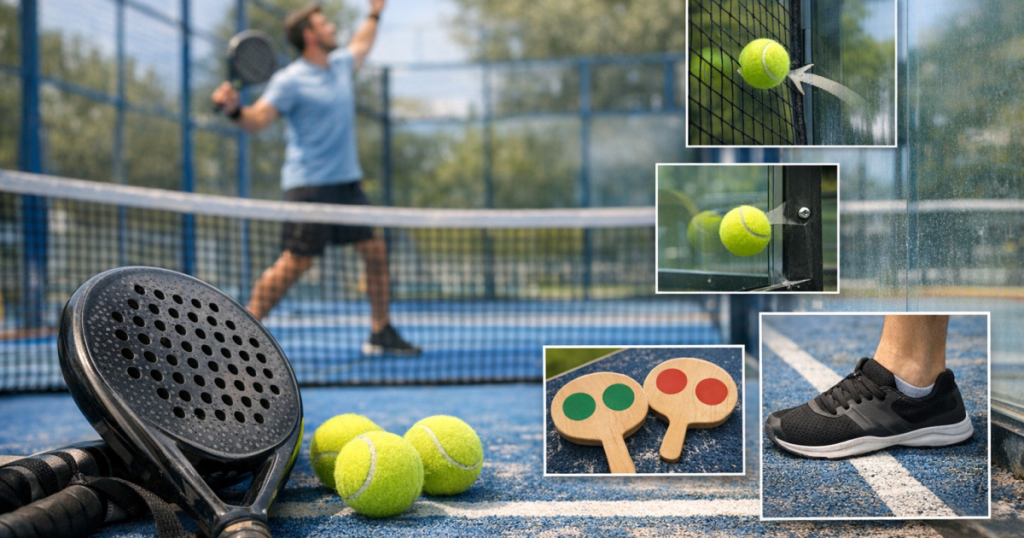
After a legal serve lands in the correct box, it can hit the glass and remain valid. The common beginner confusion is the side fence or mesh. In standard rules, if the serve lands in the correct box and then hits the metal fence before the second bounce, it is a fault. This is different from many rally situations, where the fence can be part of live play after the ball has bounced in court.
The receiver must let the serve bounce before returning it. You cannot volley the serve. Once the return is made, the point becomes a normal rally and volleys are allowed.
Walls: the rule that makes padel feel different
The glass walls are what make padel so fun once you understand them. In a rally, the ball can bounce in your court, hit the glass, and still be played. You can let it rebound off the back wall or side wall before hitting it, as long as it has not bounced twice on the floor.
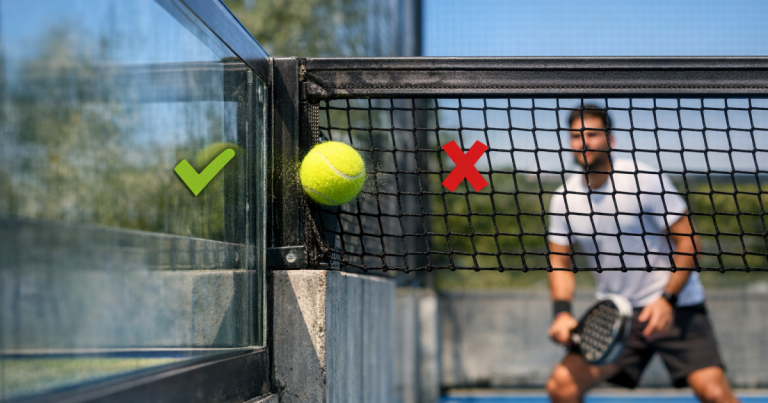
The key principle is first contact. If your opponent hits the ball and it bounces in your side of the court before touching the glass, it is in play. If they hit it directly into your glass or fence without the ball bouncing in your court first, it is out and you win the point.
You may also use your own glass to play the ball back. For example, if you are pushed deep into the back corner, you can hit the ball into your own back glass so it rebounds forward over the net. That is legal if the ball crosses to the opponent’s side correctly and does not break another rule.
Beginners often rush these shots. If the ball is travelling towards the back glass, you do not always need to swing straight away. Letting it bounce and rebound can give you more time, a better contact point, and a calmer shot back into court.
Fence and glass examples beginners actually meet
Because padel courts mix glass panels and metal fencing, not every rebound feels obvious at first. These examples cover the calls you are most likely to face in early matches.
- Opponent’s shot bounces in your court, then hits the back glass: the ball is live. You can play it before or after the rebound, as long as it has not bounced twice.
- Opponent’s shot hits your back glass before touching the floor: the ball is out. You win the point.
- Your shot hits your own glass and then goes over the net: this can be legal if it crosses correctly and lands or is played on the opponent’s side.
- Your shot hits the opponent’s glass before bouncing: that is out. The ball must land in the opponent’s court first.
- A serve lands in the correct box and then hits the glass: this is usually valid.
- A serve lands in the correct box and then hits the side fence: this is normally a fault.
For a deeper look at the mesh, exits, rebounds and awkward edge cases, see the guide to padel fence rules. It is especially useful once you start playing faster points where the ball kicks into the side structure.
Common faults during rallies
A fault is any action that loses the point because the ball was not played legally. Some are obvious, such as hitting the ball out of court. Others are easy to miss when everyone is new and the rally feels chaotic.
- Double bounce: if the ball bounces twice on your side before you hit it, you lose the point.
- Wrong first surface: if your shot hits the opponent’s wall or fence before landing in their court, it is out.
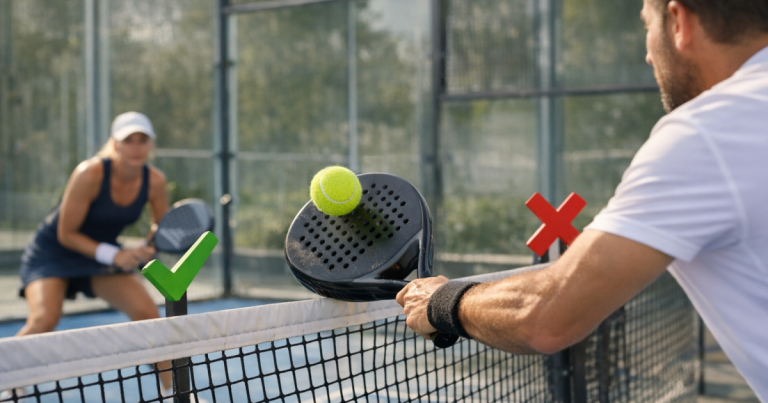
- Net touch: if you, your racket or your clothing touches the net while the ball is in play, you lose the point.
- Ball touches your body: if the ball hits you or your partner, rather than your racket, you lose the point.
- Double hit: you cannot deliberately hit the ball twice in one shot.
- Reaching over the net too early: you cannot strike the ball on the opponent’s side before it has crossed to you, though follow-through after a legal contact is different.
- Volleying the return of serve: the receiver must let the serve bounce once before returning it.
Line calls are simpler than many beginners expect: if the ball touches any part of the line, it is in. On fast points, give the benefit of the doubt where you genuinely cannot see the landing clearly. Friendly, fair calls keep social padel enjoyable.
Lets, interruptions and replayed points
A let means the point or serve is replayed. The most common let is a serve that touches the net but still lands correctly and does not then become a fault. You may also replay a point if there is a genuine outside interruption, such as a ball from another court entering your playing area.
Not every distraction is a let. If you misjudge a wall rebound, lose track of the score, or stop because you thought the ball was going out, that usually remains your mistake. The safest habit is to keep playing until the ball is clearly dead or a call has been made.
Beginner match etiquette around rules
Padel is a social sport, and most early-stage players are still learning the same details. When a call is unclear, stay calm, explain what you saw, and replay the point if the group agrees there is genuine uncertainty. Do not turn every close line call into a debate.
Before your first organised session, it helps to know the basic flow of play, where to stand, and what to bring. The guide on preparing for your first padel coaching session is a useful next step if you want court confidence before joining drills or club nights.
Different venues may also use slightly different social formats. Some will play golden point, some will rotate pairs every set, and some will use timed games. These do not change the core rules, but they do affect how the session feels.
Common questions
Can the ball hit the wall before I hit it?
Yes, if it has bounced on your side first. You can let the ball rebound off the glass and then play it, provided it has not bounced twice on the floor.
Is a serve in if it lands on the line?
Yes. Lines are in. A serve that touches the correct service box line is valid unless it then breaks another serve rule, such as hitting the side fence after the bounce.
Can I hit the ball straight into the opponent’s glass?
No. Your shot must land in the opponent’s court before it touches their glass or fence. If it hits the wall first, it is out.
Do beginners need to know every official competition rule?
No. Start with scoring, legal serving, wall rebounds and common faults. More detailed rules, such as out-of-court play, can wait until you are playing at venues where those situations happen.
What should we do if nobody is sure about a call?
In friendly games, agree quickly and replay the point if there is genuine doubt. In leagues or competitions, follow the organiser’s stated rules and scoring format.
Main lessons
The easiest way to understand padel is to follow the bounce. If the ball lands in the correct part of the court first, the walls and fence may come into play. If it hits the wrong surface before bouncing, it is usually out. Add tennis-style scoring, an underarm diagonal serve, and a few clear fault rules, and you can play a confident beginner match without stopping every other point.
As you play more often, the rules start to feel natural. You will read rebounds earlier, serve with fewer faults, and spend less time asking whether the ball was legal. That is when padel becomes less about remembering rules and more about building rallies, choosing sensible shots, and enjoying the game.