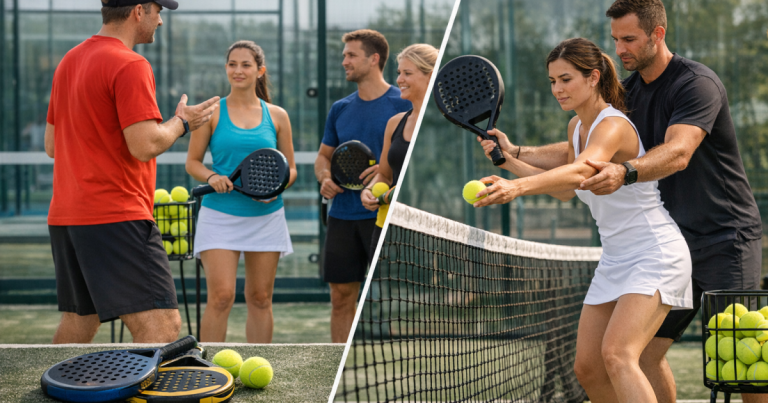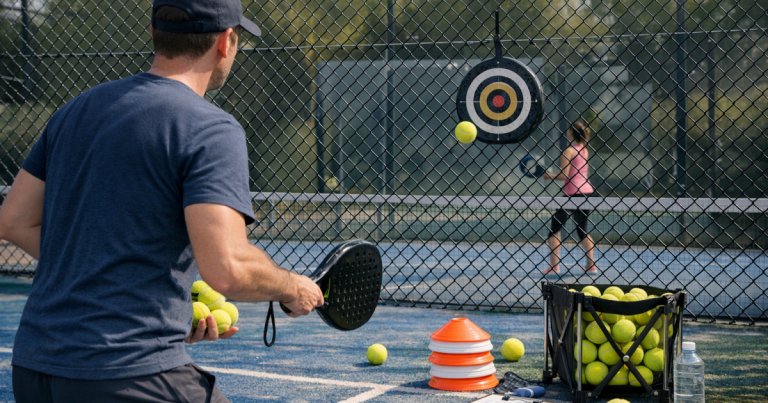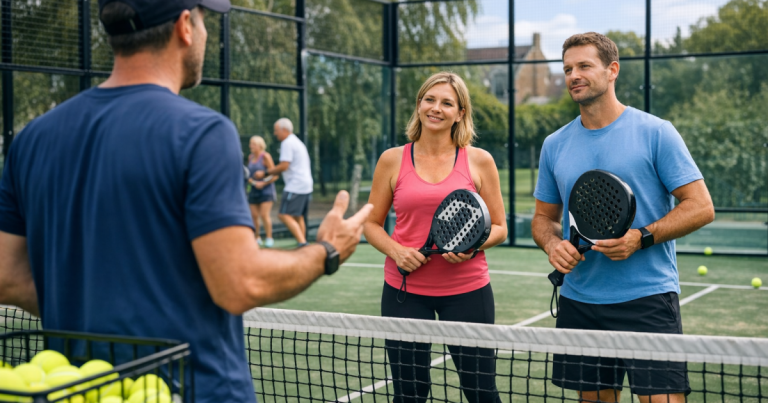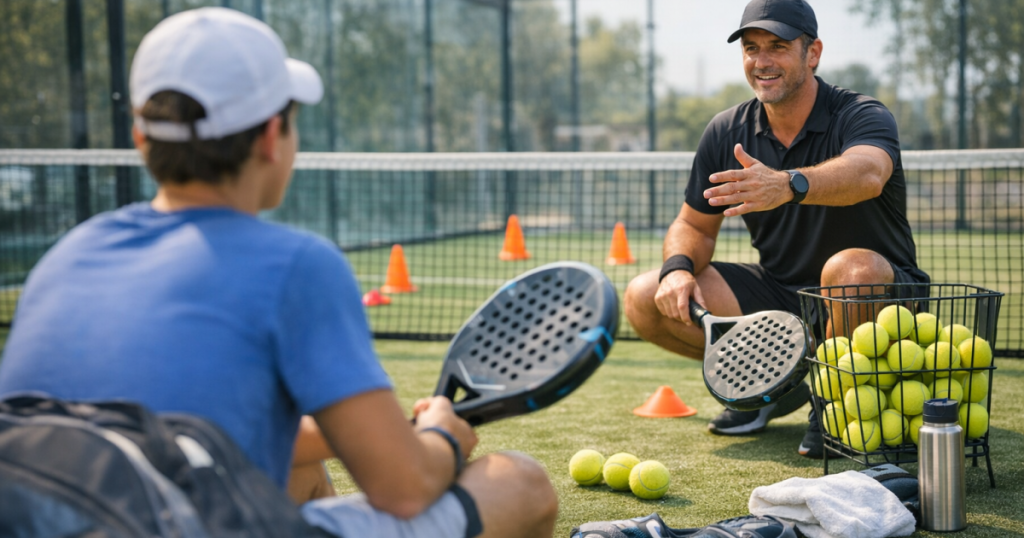
Walking into a first padel coaching session can feel a little uncertain: what should you bring, how much should you know, and will everyone else be better? The good news is that beginner coaching is designed for exactly that stage, so your job is simply to arrive comfortable, prepared and ready to try.
A bit of preparation helps you get more from the court time. It also lets your coach spend less time sorting basics and more time helping you understand movement, contact, positioning and simple decisions.
Existing injuries, ongoing pain or return-to-exercise decisions should be assessed by a qualified healthcare professional to ensure your participation is suitable and managed in line with UK health and safety guidance.
The short version
- Wear proper court shoes if you have them, or clean trainers with good grip if the club allows them.
- Bring water, a small towel, comfortable sports clothing and any confirmation details from the club.
- Do not worry about owning a racket before lesson one; many UK clubs offer hire or loan rackets for beginners.
- Think of one or two simple goals, such as learning the basic forehand, understanding the walls or feeling less lost in doubles.
- Arrive early enough to check in, find the court and start calmly.
A few days before: sort the basics
Start with the practical details. Confirm the session time, venue, court number if provided, and whether it is indoor or outdoor. Padel centres can be busy in the evenings, so knowing where to park, where reception is and how the club handles check-in removes a lot of last-minute stress.
Check what the booking includes. Some group beginner sessions provide rackets and balls, while others expect you to bring your own or hire at reception. If the club has sent joining instructions, read them properly rather than skimming them on the way there.
Kit does not need to be complicated. For a simple breakdown of the essentials, the padel starter kit checklist for first-time players is a useful reference before you pack your bag.
Decide what you want from the lesson
You do not need a polished goal, but it helps to give your coach a starting point. A good beginner aim is specific enough to guide the session, but not so rigid that it gets in the way of learning.
Useful goals might include:
- Learning how to hold the racket correctly.
- Understanding where to stand when your partner serves.
- Getting comfortable letting the ball come off the back glass.
- Improving contact so the ball goes over the net more reliably.
- Knowing the basic shape of a point rather than just reacting.
If you have played tennis, squash, badminton or pickleball, mention it briefly. Racket-sport experience can help, but it can also create habits that need adjusting. For example, a tennis player may swing too big, while a squash player may be comfortable with walls but need to adapt to the net and court positioning.
What to wear and pack
Wear sports clothing that lets you move, stretch and turn without fuss. Padel involves short steps, side movement, small jumps and quick changes of direction, so comfort matters more than looking the part. Layers are useful for cooler UK club evenings, especially if you are waiting between drills in a group session.
Footwear is the main kit area to take seriously. Dedicated padel or tennis-style court shoes give better lateral support than running shoes, which are designed mainly for forward motion. If you are not ready to buy shoes yet, ask the club what footwear is acceptable for its courts.
Pack:
- A full water bottle.
- A small towel.
- A spare top if you are heading home by public transport or going back to work.
- A hair tie, cap or sweatband if you normally use one for sport.
- Any medication or personal items you need during exercise.
- Your booking confirmation or membership details if the club uses them at reception.
For the racket, keep it simple. Borrowing or hiring is usually sensible for the first few goes because you will not yet know what shape, weight or balance feels right. If you are unsure, read club racket hire vs buying for your first padel sessions before spending money.
On the day: arrive ready, not rushed
Aim to arrive around 10 to 15 minutes early. That gives you time to check in, use the facilities, change shoes and find the court without sprinting through the club five minutes late. It also gives the coach a chance to learn your name and ask about your experience level before the session starts.
Do a gentle warm-up before you hit hard. That might mean light jogging around the court, shoulder circles, hip openers and a few easy side steps. Do not turn the warm-up into a workout; the point is to prepare your body for movement, not tire yourself out before the coach begins.
If you feel nervous, remember that most beginner sessions include people in the same position. Coaches are used to missed balls, awkward first swings and players forgetting which way the score goes. Your willingness to listen and try matters much more than early consistency.
During the session: make feedback easier to use
Good coaching is not about collecting ten different technical tips at once. Try to leave the court with one or two clear focus points. If your coach gives several instructions, ask which one should be your priority for the next few minutes.
Helpful phrases to use include:
- “What should I focus on first?”
- “Am I standing in the right place before the ball arrives?”
- “Should I be trying to hit softer or earlier?”
- “Can you show that movement one more time?”
Try not to apologise after every miss. It is natural to feel self-conscious, but constant apologies can break your rhythm and make drills feel heavier than they need to. A quick smile, reset and next ball is usually better.
Watch your coach’s demonstration carefully before you copy it. Notice the starting position, the length of the swing, where the ball is contacted and how the player recovers afterwards. In padel, the recovery position is often just as important as the shot itself.
After the lesson: turn it into progress
Take two minutes after the session to write down what you were told. Notes do not need to be detailed. A short reminder such as “smaller backswing on volleys” or “wait for the ball after the glass” is enough to stop the lesson disappearing from memory by the next day.
If the coach gave you a drill, ask how to practise it safely and simply. Beginner progress is usually built through repetition of small habits, not by trying to play faster, harder or more dramatically. One focused practice theme per week is plenty at the start.
If you want to keep improving between lessons, use a simple plan rather than copying random highlight clips. The guide on how to practise between padel lessons without bad habits explains how to reinforce the right things without overcomplicating your game.
Common questions
Do I need to know the rules before my first padel coaching session?
No. It helps to know that padel is usually played in doubles and that the walls are part of the game, but a beginner coach will explain the basics as you go. You do not need to memorise every rule beforehand.
Should I book a private lesson or a group session first?
A group session is often a friendly, affordable way to start and meet other beginners. A private lesson gives more individual feedback. If you are nervous, returning from injury or want faster technical attention, one-to-one coaching may feel more comfortable.
What if I have never played any racket sport?
That is completely fine. Many new players start from zero. Tell the coach at the beginning so they can explain grip, ready position, court movement and contact points without assuming prior knowledge.
How fit do I need to be?
You do not need elite fitness for a beginner lesson. Expect short bursts of movement, light drills and some stop-start instruction. If you are worried about stamina, pace yourself and tell the coach before the session begins.
Can I bring my own racket if I already have one?
Yes, but do not worry if you are unsure whether it is right for you. Ask the coach to check that it is suitable for beginner use and comfortable to handle during the session.
What to remember
The best preparation is simple: arrive early, wear suitable kit, bring water, and give your coach a clear picture of your starting point. You are not expected to be good before you begin. You are there to learn the basics in a way that makes future games more enjoyable.
Afterwards, resist the urge to fix everything at once. Choose one thing from the lesson, practise it calmly, and build from there. That is how a first coaching experience turns into genuine confidence on court.