Your first few games feel much easier when you know what to bring, what to book and which rules matter before you step through the gate. A padel starter checklist is not about buying a full bag of gear; it is about removing awkward surprises so you can relax, listen, rally and enjoy the session.
For most beginners, the goal is simple: book the right level, bring comfortable court kit, understand the basic flow of play, and arrive with enough time to get settled. You do not need to look like a tour player. You just need to be ready enough that the session starts smoothly.
The short version
If you are heading to padel for the first time, focus on four things: court booking, basic kit, simple rules and personal readiness. That covers nearly everything that can make or break an early session.
- Book the right format: choose a beginner session, intro lesson, social game or court hire that matches your level.
- Check what is included: confirm whether racket hire, balls and floodlights are part of the booking.
- Wear sensible sports kit: prioritise grip, movement and comfort over specialist clothing.
- Know the core rules: underarm serve, walls after the bounce, and scoring similar to tennis.
- Arrive early: give yourself time to find reception, collect equipment and warm up lightly.
Booking the right first session
The biggest beginner mistake is not usually kit-related. It is booking into the wrong standard of game. Padel looks friendly from the outside, but a fast intermediate match can feel overwhelming if you have not learnt the serve, wall rebounds or doubles positioning yet.
For a first visit, look for wording such as beginner session, intro to padel, coaching taster, improver group or social beginner mix-in. If you are booking a private court with friends, make sure all four players are at a similar level, or agree upfront that the session is for learning rather than winning.
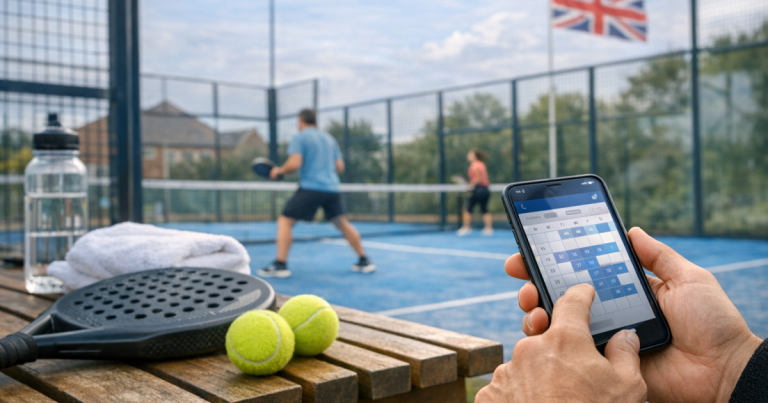
Before confirming, check these details:
- Racket hire: many clubs offer hire rackets, but do not assume it is automatic.
- Balls: some sessions include balls, while private court hire may expect players to bring their own.
- Format: confirm whether it is coaching, open play, match practice or casual court hire.
- Duration: note the start and finish time so you can pace yourself.
- Surface and setting: outdoor courts may be affected by wet weather or wind, while indoor courts can feel warmer.
- Parking and access: allow extra time if the venue is inside a larger leisure centre or sports club.
If you want a fuller picture of how the first visit tends to feel, including arrival, warm-up and club etiquette, read what to expect at your first padel session before you go.
Kit to bring without overcomplicating it
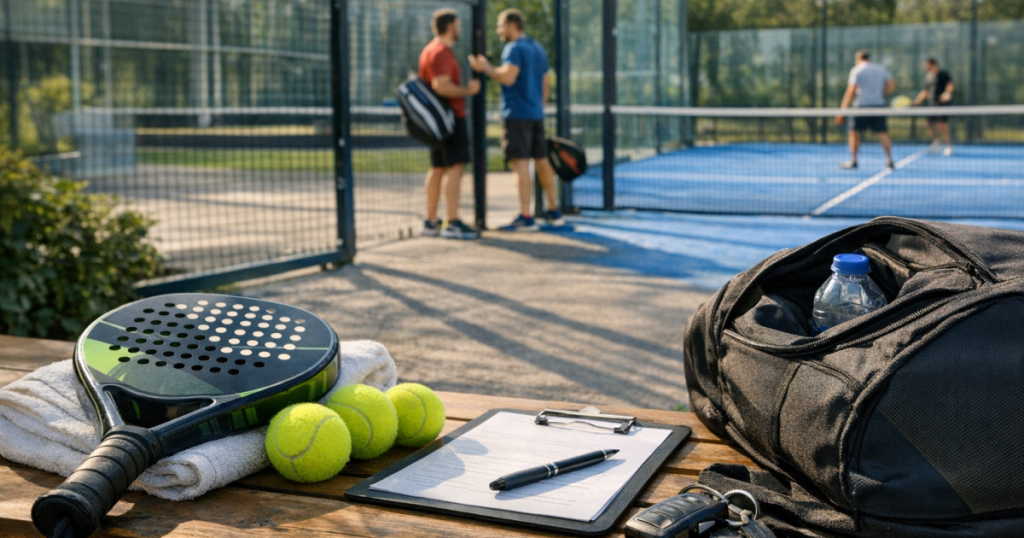
You can start padel with a very small kit list. The essentials are a racket, balls if required, suitable footwear, breathable clothing, water and a small towel. Everything else is optional until you know you are going to play regularly.
Racket
If the venue offers hire rackets, use one for your first session. It gives you a chance to learn what padel feels like before spending money. Beginner-friendly rackets tend to prioritise comfort, control and forgiveness rather than maximum power, but you do not need to solve that decision before your first game.
If you already own or borrow a racket, check the wrist strap is intact and use it during play. The strap is there to stop the racket flying out of your hand, and most venues expect players to wear it properly.
Balls
Padel uses padel balls, not standard tennis balls. They look similar, but they are not the same in play. If your booking requires you to bring balls, choose a recognised padel ball such as Head Padel Pro, or ask the club what they use for beginner sessions.
For a casual four-player booking, one tube is usually enough to get started, provided the balls are in playable condition. Avoid turning up with old, flat balls from the back of a cupboard; they make rallies harder to judge and can make learning feel more frustrating than it needs to be.
Shoes
Footwear matters more than most beginners expect. Padel involves short starts, stops, turns and side steps, so choose trainers with grip and lateral support rather than smooth fashion trainers. If you are playing on a sand-dressed artificial surface, check the venue’s footwear guidance. Some clubs are relaxed for first-timers, while others are stricter about court-appropriate soles.
You do not need premium padel shoes immediately, but you should avoid anything slippery, unstable or worn flat. If your feet are sliding inside the shoe, or the sole has very little grip left, choose a different pair.
Clothing
Wear clothing you can move in comfortably: sports shorts, leggings, a breathable top and layers if the court is cold between games. A simple athletic top such as Adidas Club 3-Stripes Tee is the right kind of idea, but the brand matters less than whether you can stretch, rotate and change direction freely.
For more detail on what works in typical club conditions, including layers and accessories, the padel clothing guide is a useful next step.
Small extras that help
- Water bottle: bring more than you think you need, especially for indoor courts or longer sessions.
- Small towel: useful for hands, face and racket grip between games.
- Spare overgrip: helpful if you are sharing a racket or your hand gets sweaty.
- Hair tie or cap: anything that keeps your vision clear during overheads and volleys.
- Light layer: handy for waiting between games or cooling down afterwards.
Rules worth knowing before you play
You do not need to memorise the full rulebook before your first session. You do need enough understanding to follow a rally, serve correctly and avoid stopping the point unnecessarily.
Serving basics
The serve is underarm. You bounce the ball, strike it below waist height, and send it diagonally into the opposite service box. The ball must land in the correct box before it can touch the glass. If it hits the side fence after bouncing in the service box, it is normally a fault on serve.
You get two serves, similar to tennis. Beginners often rush this part, but a steady, controlled serve is far more useful than trying to hit hard.
Rally basics
During a rally, the ball must bounce on your side before it can hit your back or side glass and still be played. You can also play the ball before it bounces, such as with a volley, as long as it has crossed the net. The ball cannot bounce twice on your side.
The walls are what make padel feel different. At first, let the ball come to you rather than charging at every rebound. A lot of beginner errors happen because players panic when the glass gets involved.
Lines and what counts
Lines matter most on the serve. In open play, the court boundaries and walls can feel confusing until you have seen a few rallies. If you are unsure whether a ball is in or out, keep the point friendly and ask rather than arguing. Beginner sessions work best when everyone treats line calls as part of learning.
For a clearer breakdown of serves, lines and common beginner confusions, use this guide to padel court lines and what counts in or out.
Readiness: the small things that make you easier to play with
Good readiness is not about being fit enough to cover every corner. It is about being organised, switched on and considerate. That makes the session better for you and for the three other players on court.
- Arrive 10 to 15 minutes early: late arrivals can shorten the session for everyone.
- Warm up gently: start with easy movement, shoulder circles and light hitting rather than full-power smashes.
- Use simple calls: say “mine”, “yours”, “leave” or “switch” clearly when needed.
- Keep spare balls safe: loose balls near feet can interrupt play and create avoidable trips.
- Respect the level: if it is a beginner session, aim for rallies and learning, not trying to dominate.
- Ask before giving advice: friendly help is welcome, but constant coaching can become tiring.
If you are nervous, remember that most players were confused by the glass, positioning and scoring at first. You are not expected to be polished. You are expected to listen, try, and keep the game flowing.
Beginner etiquette at a club session
Padel is social by design, and club sessions often mix people who have never met before. A few habits make you feel more at home quickly.
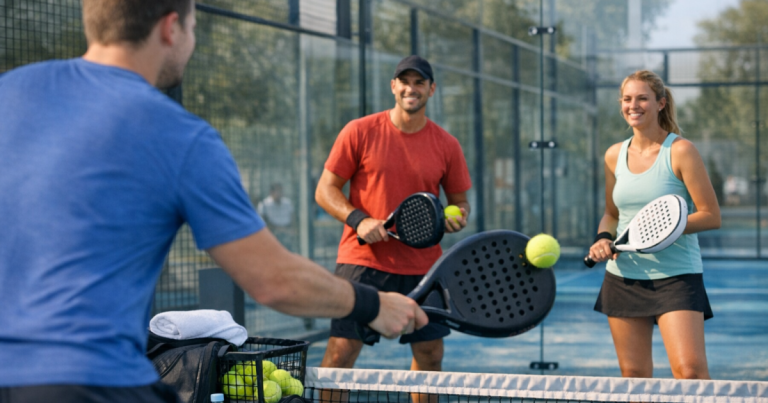
Introduce yourself before the first game and say honestly that you are new if that is the case. Most players will adjust the pace, explain the rotation, or help you understand where to stand. If the club uses a winner-stays-on or timed rotation format, ask how it works before the first changeover.
During play, avoid walking behind another court while a point is active, return stray balls safely, and keep chat away from players who are about to serve. Celebrate good rallies from both sides. At beginner level, the best sessions are the ones where all four players get touches and leave wanting to book again.
A simple pre-court check
Run through this before you leave home:
- Booking confirmed, including time, venue and session type.
- Racket sorted, either hired, borrowed or your own.
- Padel balls packed if the club does not provide them.
- Court-friendly trainers chosen.
- Comfortable sports clothing and a light layer packed.
- Water bottle filled.
- Towel, overgrip or wristband packed if you sweat heavily.
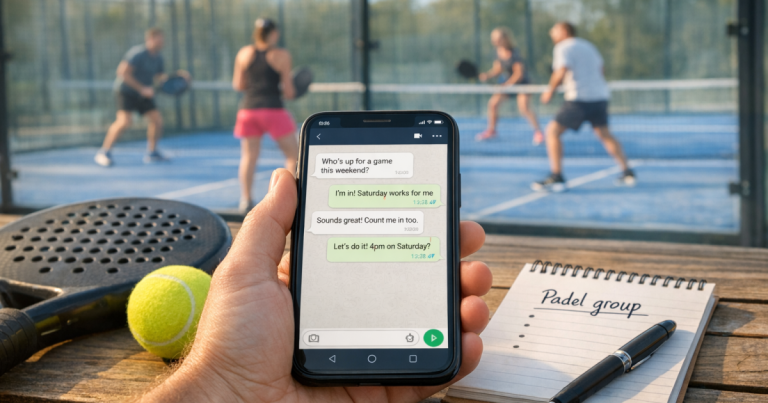
- Phone charged enough to show booking details or access codes.
- Basic serve and scoring rules understood.
- Enough travel time allowed for parking, reception and changing.
That is the practical core of a padel starter checklist: not perfection, just enough preparation to avoid the common first-session problems.
Helpful questions
Do I need to buy a padel racket before my first session?
No. If your venue offers hire rackets, use one first. Buy later once you know you enjoy the game and have a better feel for whether you prefer control, comfort or extra power.
Can I wear running shoes for padel?
You can often get through a first casual session in clean sports trainers, but running shoes are not ideal for repeated side-to-side movement. Check the club’s footwear rules and avoid smooth or unstable soles.
How many people do I need for a booking?
Padel is normally played as doubles, so four players is the standard number for a private court. Some clubs also run group coaching or social sessions where you can book as one person.
What rules should I learn first?
Start with the underarm serve, the diagonal service box, the two-bounce rule, and how the glass works after the ball bounces. Those four points will help you follow most beginner rallies.
What if I am the weakest player in the group?
Say you are new, focus on getting the ball back in play, and ask for simple pointers between games. Most friendly club players would rather have steady rallies than rushed winners.
What to remember
Your first padel session does not need to be complicated. Book the right level, confirm what the club provides, wear kit that lets you move, learn the basic rules and arrive with time to spare. Once those pieces are in place, you can focus on the fun part: getting the ball back, learning the walls and enjoying the rhythm of doubles padel.