Starting padel is much easier when you avoid buying everything before you know what you enjoy. For many new players, renting padel gear for the first few sessions is the sensible middle ground: you get on court quickly, learn what feels comfortable, and avoid spending too early on equipment that may not suit your game.
The best approach is not simply “hire everything” or “buy everything”. Some items are fine to borrow at first, while others are worth owning sooner because they affect fit, hygiene, grip and confidence.
Main points
- Hire or borrow a racket for your first few sessions if the club offers decent beginner-friendly options.
- Buy proper padel shoes earlier than most other kit, especially if you play indoors or on sanded artificial turf.
- Do not rush into an expensive racket until you understand weight, shape, balance and comfort.
- Basic clothing, grips and balls are low-pressure purchases, but they still need to suit regular play.
- A padel bag becomes more useful once you are carrying shoes, a racket, water, towel and spare layers to club sessions.
Why hiring first often works for beginners
Padel can feel gear-heavy when you first look at rackets, shoes, balls, bags and accessories. In reality, your first priority is simple: get enough court time to know whether you will play regularly.
Most beginners change their preferences quickly. A racket that feels exciting in the shop can feel awkward after a few matches. A heavier racket may seem powerful, but tiring. A teardrop shape may look like a good compromise, but a round racket may give you more forgiveness while you learn timing. Hiring gives you a low-commitment way to notice these differences without turning every early decision into a purchase.
It is also useful if you are trying padel through a club social, a work event, a coaching session or a casual booking with friends. If you have only played once or twice, borrowing a racket and focusing on movement, scoring and basic rallies is usually more valuable than buying a full setup immediately.
What is worth renting, borrowing or testing?
Rackets
The racket is the easiest item to hire first because it is expensive compared with smaller accessories and highly personal once you start improving. Beginner players usually benefit from a forgiving racket that is comfortable to swing and stable enough on off-centre contact.
If your club has a few hire rackets, try more than one over your first sessions. Notice whether you can control blocks at the net, defend lobs comfortably and hit without your arm feeling strained. Do not judge a racket only by the first five minutes of forehands; pay attention to volleys, returns and awkward defensive shots too.
Before buying, it helps to understand how racket shape and sweet spot affect forgiveness. The guide to choosing your first padel racket for club play is a useful next step once you know you will keep playing.
Club balls
Balls are easy to overlook, but they affect the pace of the game. Many clubs provide or sell balls for sessions, and coaches may supply them during lessons. For casual beginner games, using what the venue provides is usually fine.
Once you start arranging your own matches, it makes sense to bring a fresh tube so you are not relying on flat, tired balls at the bottom of someone else’s bag. A recognisable option such as Head Padel Pro is widely used, but you should still check what your club or group prefers, especially if you play in organised sessions.
Rackets you should not rush into
Some rackets are aimed more at experienced players who already generate consistent contact and want extra power or precision. A model such as the Bullpadel Hack 02 2022 Padel Racket may be interesting to test if you get the chance, but it should not be an automatic first purchase just because it looks serious. Beginners usually improve faster with equipment that rewards clean, repeatable technique rather than forcing them to swing harder.
What is better to buy sooner?
Padel shoes
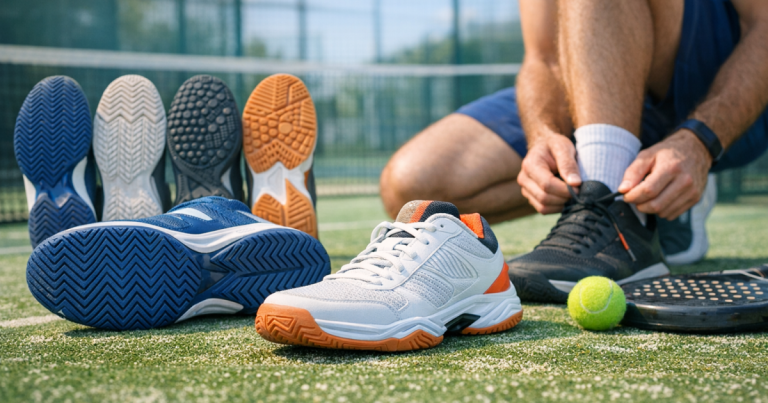
Shoes are the strongest case for buying early. Hire shoes are uncommon, and ordinary running trainers are not designed for the stop-start lateral movement of padel. You do not need the most advanced pair on the market, but you do need a stable court shoe with an outsole that suits the surface you actually play on.
Indoor UK courts can feel very different from outdoor courts, especially when the surface is dusty, worn or lightly sanded. If you slide more than expected, hesitate during direction changes or feel unstable when turning, footwear should move up your priority list. The advice on choosing padel shoes for slippery indoor courts explains the main surface and grip considerations clearly.
Fit matters more than branding. Your toes should not jam into the front when you stop suddenly, and your foot should not roll around inside the shoe when moving sideways. Try shoes with the socks you normally play in, and think about comfort across a full session rather than only how they feel for a quick walk.
Basic clothing
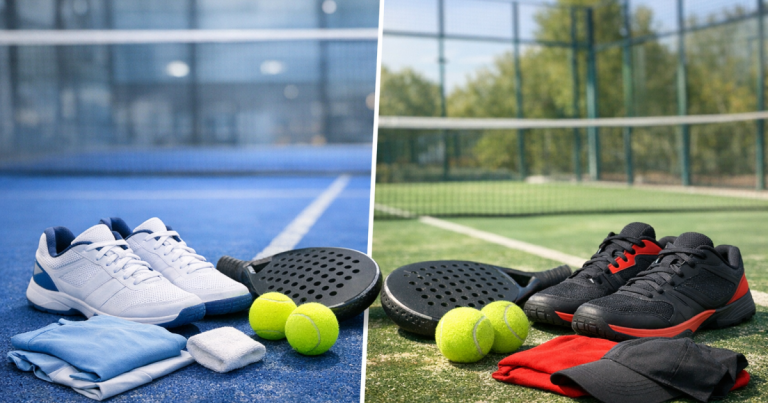
You can start in normal sports clothing, but once you play regularly, breathable kit that lets you stretch, lunge and rotate freely is worth having. Shorts, skorts, leggings and tops do not need to be padel-specific, but avoid anything restrictive or heavy when damp.
A simple sports top such as the Adidas Club 3-Stripes Tee is the kind of general court-friendly clothing that can work across padel, tennis or gym sessions. The main test is whether it stays comfortable through a full match, not whether it is marketed specifically for padel.
Grips and overgrips
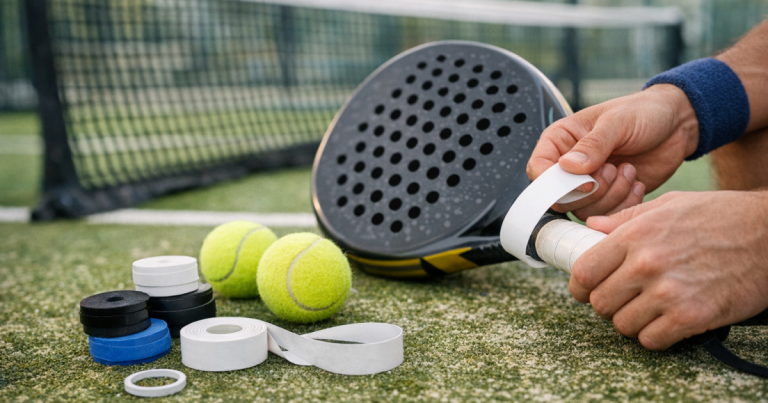
Even if you hire a racket, you may want your own overgrips once you play more often. They are inexpensive, hygienic and can make the handle feel more secure. If your hand slips, your grip feels too thin, or the racket twists on volleys, an overgrip can help.
Do not build up the handle too much at first. A grip that is too thick can make it harder to adjust the racket face quickly, which matters when you are learning blocks, volleys and defensive shots off the glass.
When buying a padel bag starts to make sense
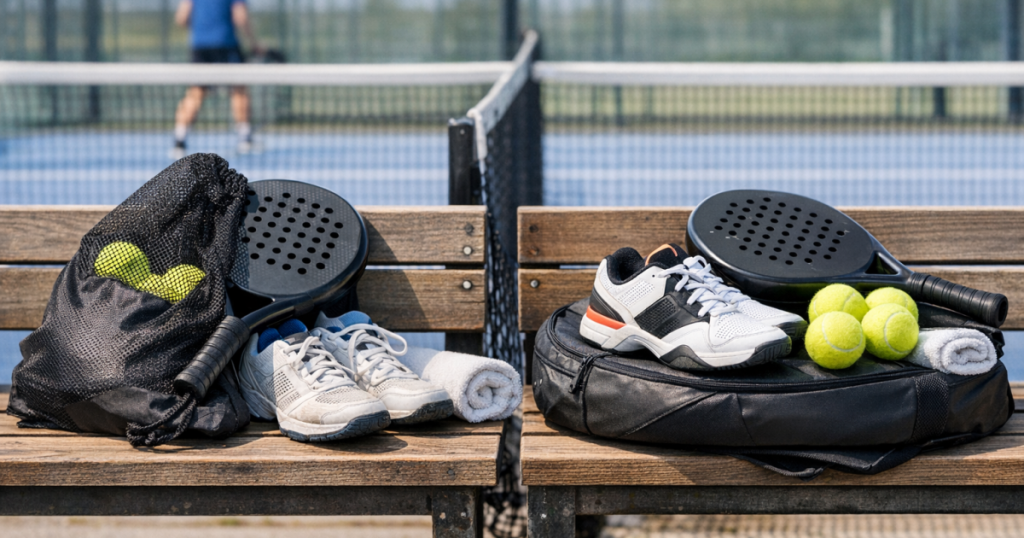
A bag is not essential for your first game. If you are carrying one borrowed racket and a bottle of water, any sports bag will do. It becomes useful when your routine becomes more organised: shoes in one section, clothing in another, racket protection, towel, water and perhaps a spare grip or balls.
For regular club nights, a compact padel bag or backpack is often enough. Larger bags make sense if you carry multiple rackets, change clothes after work, or travel to matches. The key is not to buy the biggest bag too soon; buy for your real routine, not an imagined tournament lifestyle.
Once you own a bag, look after it properly. Damp shoes, wet towels and loose ball fluff can make it smell quickly, so the guide to cleaning your padel bag without damaging it is worth bookmarking before your kit becomes a weekly habit.
A simple first-gear timeline
If you are unsure where to spend first, this order works well for many beginners:
- Session 1 to 3: Hire or borrow a racket, wear suitable sports clothing, and use proper court shoes if you already own them.
- After a few games: Buy padel shoes if you are playing on court regularly, particularly indoors or on surfaces where grip feels uncertain.
- After you know you enjoy it: Start testing rackets more seriously. Focus on comfort, control and forgiveness rather than power claims.
- When arranging your own matches: Keep a tube of balls, spare overgrips and a towel in your bag.
- When padel becomes part of your week: Buy a padel bag or backpack that fits your real club routine.
This timeline is flexible. Someone joining weekly coaching may buy shoes immediately and delay the racket. Someone playing occasional social games may hire a racket for longer. The right answer depends on how often you play, how confident you feel on court, and whether club hire equipment is actually decent.
The case for buying earlier
Buying sooner can make sense if you are already committed to regular club play. Owning your own racket gives you consistency from session to session, which can help you build timing. You are not adjusting to a different grip, weight or balance every time you turn up.
There is also a comfort factor. New players sometimes relax more when they know their kit is familiar and ready. You can set up your grip how you like it, pack your bag the same way each time, and avoid queueing for hire equipment before a busy social session.
The caution is that early enthusiasm can lead to overbuying. A premium racket, oversized bag and specialist clothing will not replace footwork, patience or basic shot selection. If your budget is limited, shoes and coaching time usually give a clearer beginner benefit than upgrading everything at once.
The case for hiring longer
Sticking with hire equipment for longer is perfectly reasonable if you are still experimenting. It is especially sensible if you play at different venues, attend taster sessions, or are not sure whether padel will become a regular hobby.
Hiring also helps you compare racket styles in real match situations. A racket can feel good during warm-up but less helpful when returning fast serves, defending low balls or reacting at the net. A few sessions with different rackets can teach you what you value most: easier control, a bigger sweet spot, lower weight or a slightly firmer feel.
The downside is inconsistency. If hire rackets are worn, cracked, poorly gripped or unavailable at peak times, they can hold you back. At that stage, buying a dependable beginner-friendly racket is less about luxury and more about removing friction from your weekly routine.
Helpful questions
How many sessions should I play before buying a racket?
Many beginners benefit from playing at least a few sessions before buying. That gives you time to notice whether you prefer a lighter, more forgiving racket or something with a firmer, more direct feel.
Should I buy shoes before a racket?
Often, yes. Shoes affect movement, grip and confidence on court. If you are playing regularly, good padel shoes are usually a smarter early purchase than rushing into a racket.
Is second-hand padel gear a good idea?
It can be, but inspect rackets carefully for cracks, soft spots, heavy wear and damaged grips. For shoes, second-hand is less appealing because fit, support and outsole wear are so personal.
Do I need a padel bag straight away?
No. A normal sports bag is fine at first. Buy a padel bag once you regularly carry shoes, balls, a towel, spare clothing and your own racket.
When does renting padel gear stop making sense?
It stops making sense when hire kit is costing you convenience, consistency or comfort. If you play most weeks, owning your core gear usually makes sessions smoother.
Main lessons
Rent first when you are still exploring. Buy first where fit and comfort matter most. For most beginners, that means hiring or borrowing a racket early on, buying suitable shoes once you play regularly, and delaying bigger purchases until your habits are clear.
The aim is not to build the perfect kit bag overnight. It is to remove the small frustrations that get in the way of enjoying padel: slipping on court, using worn grips, relying on flat balls, or carrying damp shoes loose in a bag. Build your setup around the way you actually play, and your gear will support your progress instead of distracting from it.