After a busy club session, it does not take long for damp shoes, used towels and sweaty grips to leave your padel bag smelling worse than the changing room. The fix is not complicated, but it does need a routine you can do quickly before heading home.
Most bag odour comes from moisture being trapped in a warm, zipped-up space. If you deal with wet kit first, clean the surfaces that touch sweat, and stop shoes mixing with everything else, your bag will stay fresher for much longer.
What to know first
- Open your bag as soon as you get home, even if you are tired.
- Remove wet towels, clothing, socks and wristbands straight away.
- Keep shoes separate from clean kit, food and spare clothing.
- Let your racket grip and overgrips dry before sealing them inside the bag.
- Wipe crumbs, dust and court grit out regularly so the bag does not hold stale smells.
A bigger bag can help if you are currently stuffing damp shoes, a towel and a racket into one tight compartment. It is not always about buying a larger model, though; it is about having enough space to separate wet and dry items. If your current bag feels constantly overloaded, this guide to choosing the right padel bag size for club play explains the practical differences.
Step 1: Empty the problem items before you travel home for too long
The quickest way to create a stale smell is to leave wet kit sealed in the bag for hours. If you are driving home, try not to put the bag straight into a warm, closed boot and forget about it until the next day. That is exactly the kind of damp, low-airflow environment where smells linger.
Before leaving the club, do a 30-second check. Put your towel, socks, shirt and any sweatbands into a separate washable pouch or carrier bag. If your shoes are muddy or damp, loosen the laces and keep them away from the main clothing area. You do not need to clean everything at the club; you just need to stop sweat spreading through the rest of the bag.
Step 2: Air the bag properly when you get home
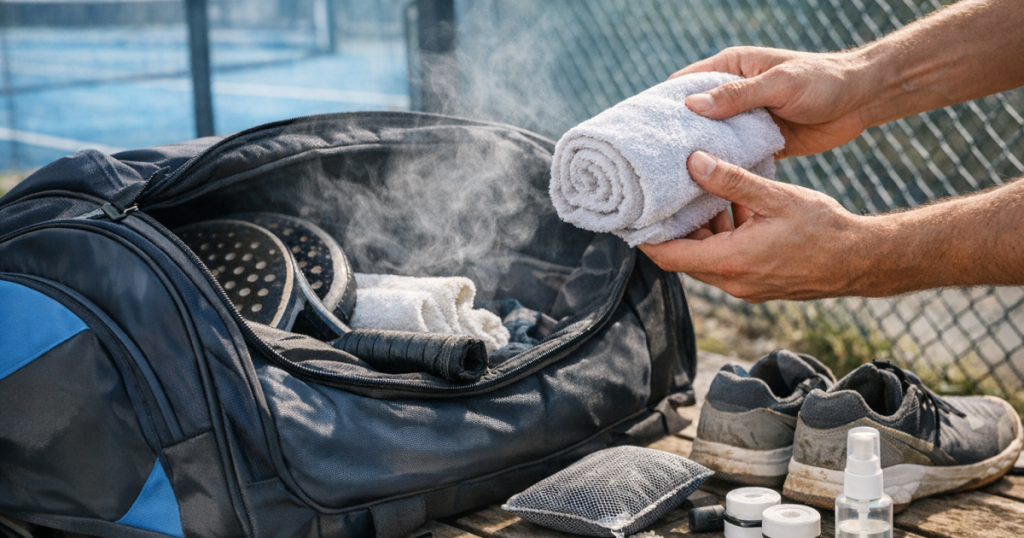
Once you are home, unzip every main compartment and pocket. Stand the bag upright or open it flat in a dry, ventilated room. Do not leave it sealed in a hallway cupboard while the inside is still damp.
In the UK, damp weather can make drying slower, especially if you play in the evening and come home to a cool house. A simple trick is to take out the removable items first, then leave the bag open near normal airflow. Avoid placing it directly on a hot radiator unless the care label says heat is safe, as high heat can damage some fabrics, padding, zips or printed panels.
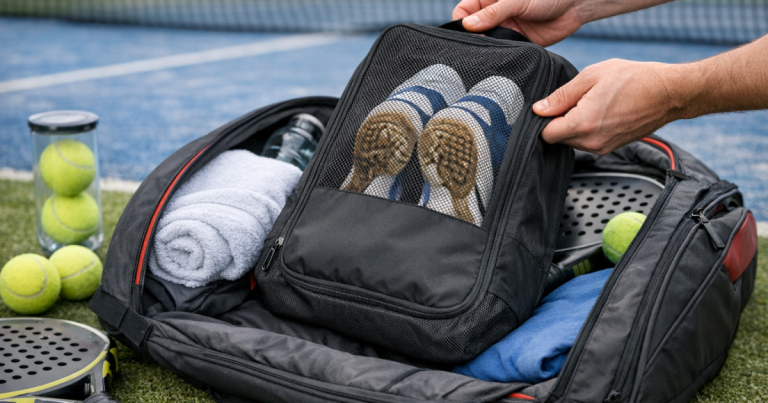
If the bag has a separate shoe tunnel, open that fully too. Shoe compartments are useful, but they can become the smelliest part of the bag because they hold sweat, court dust and limited airflow in one place.
Step 3: Separate shoes from the rest of your kit
Padel shoes often carry the strongest smell because your feet sweat, socks stay damp, and the soles pick up court debris. Even good shoes will smell if they are stored wet and closed up between sessions.
After each match, remove your shoes from the main bag space. If your bag has a shoe compartment, use it, but do not treat it as a permanent storage locker. At home, take the shoes out and let them dry with the tongues lifted. If you are still choosing footwear for regular club play, our Nike Court Lite padel shoes review covers comfort and grip considerations that beginners often notice during longer sessions.
For smell control, the key is not the brand of shoe. It is the routine around it. Rotate socks, dry shoes fully between sessions, and avoid putting damp shoes back into the bag just because they look clean from the outside.
Step 4: Deal with towels, clothes and socks immediately
Used towels and socks are usually the worst offenders. They absorb sweat, then transfer it to the lining of the bag if you pack them loose. Keep a small washable wet-kit pouch in your padel bag and use it every time, even after a short game.
When you get home, empty the pouch into the wash basket or washing machine. Do not leave it zipped inside the bag. If the pouch itself smells, wash it regularly too. A pouch is only helpful if it keeps damp kit contained during the journey home, not if it becomes a permanent sweaty storage bag.
If you play several times a week, consider having two small towels and rotating them. That way you are not forced to reuse a towel that is still slightly damp from the last session.
Step 5: Wipe the inside instead of masking the smell
Air fresheners can make a bag smell nicer for a while, but they do not remove sweat residue. If your bag already smells, start by emptying it fully. Shake out loose grit, fluff, ball tube lids and snack crumbs. Then wipe the inside with a damp cloth and a small amount of mild soap.
Focus on the base of the bag, the shoe section, side pockets and any area where wet kit has sat. Use a clean damp cloth afterwards to remove soap residue, then leave the bag completely open until dry. Do not zip it up while the lining is still wet, as that simply restarts the problem.
Check the care label before using sprays, laundry additives or disinfecting products. Some bag materials are more delicate than they look, and strong cleaners can mark fabric or affect coatings. If the bag has leather-effect details, printed logos or glued panels, gentle cleaning is safer than soaking.
Step 6: Keep grips and overgrips from adding to the problem
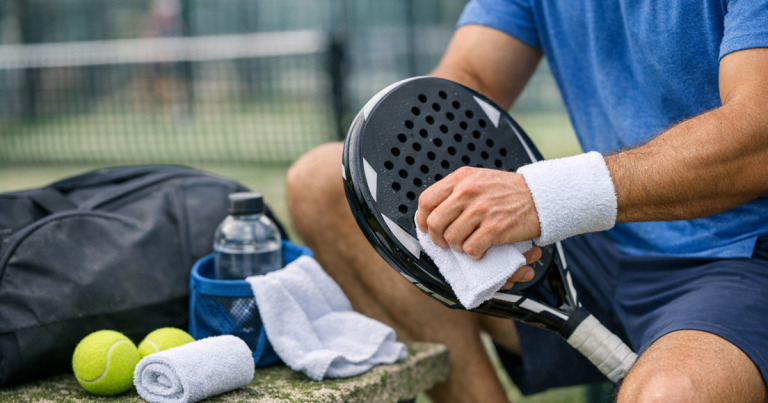
Beginners often focus on shoes and towels, but a damp racket handle can also make a bag smell. If your overgrip is wet after a match, avoid pushing the racket straight into a closed thermal pocket and leaving it there for days.
Let the handle air for a short while when you get home. If the overgrip feels slick, dirty or permanently damp, change it rather than trying to rescue it. A fresh grip can also make the racket feel more secure in your hand, which helps you relax your swing instead of squeezing too hard. If you have not done it before, follow this step-by-step guide to changing a padel overgrip without wrinkles.
Step 7: Use simple smell barriers, not clutter
A tidy bag is easier to keep fresh. The aim is to create a few sensible zones rather than fill every pocket with sprays, spare bags and forgotten extras.
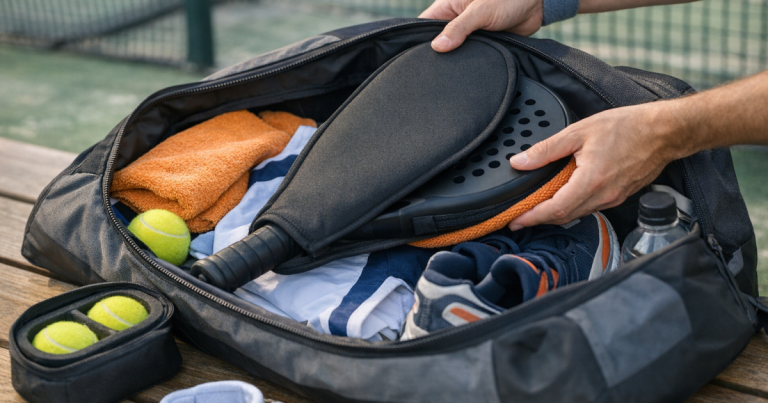
- Wet-kit pouch: for towels, socks, wristbands and shirts after play.
- Shoe bag or shoe compartment: for footwear during the journey home only.
- Small dry pouch: for clean socks, spare overgrips, keys and tape.
- Rubbish pocket: for used grip backing, snack wrappers and broken ball tube seals until you can bin them.
Avoid leaving food in the bag. Even small crumbs can make the inside smell stale, especially if they sit next to damp kit. The same goes for half-finished drinks bottles. Empty them, rinse them and let them dry outside the bag.
A quick post-match routine that actually sticks
The best routine is the one you can repeat when you are tired, cold or rushing home. Try this after every session:
- At the club, put sweaty clothing and towels into a washable pouch.
- Keep shoes away from your clean kit and loosen them for airflow.
- At home, remove all damp items before doing anything else.
- Open every zip and pocket so the bag can breathe.
- Wipe the inside once a week if you play regularly.
- Check overgrips, socks and towels before the next session so you are not packing old smells back in.
This takes less than five minutes, but it prevents most of the problem. It also makes packing for your next club session easier because you can see what is clean, what needs washing, and what is missing.
Common mistakes that make bag smells worse
Leaving the bag in the car
A car boot can stay damp, warm or poorly ventilated for long periods. It is fine for the journey home, but it is not a good storage place between matches. Bring the bag inside, empty it and let it air.
Using fragrance instead of cleaning
A scented spray may cover a smell briefly, but sweat residue still needs to be removed. Clean first, then use any deodorising product only if it is suitable for the bag material.
Storing shoes in the bag all week
Even if the shoes feel dry, storing them inside the bag full-time keeps odour close to your racket, clothing and towel. Let them live somewhere ventilated between sessions.
Forgetting the small pockets
Side pockets collect used tissues, grip tape, food wrappers and damp wristbands. Empty them weekly. Small pockets can hold a surprising amount of smell because they are often zipped shut and ignored.
Things readers ask
Can I put my padel bag in the washing machine?
Only do this if the care label clearly says it is machine washable. Many padel bags have padding, structured panels, coatings or zips that are better cleaned by hand with a damp cloth.
How often should I clean the inside of the bag?
If you play once a week, a light wipe every couple of weeks is usually enough. If you play several times a week or carry wet shoes, check the lining weekly.
Should I use bicarbonate of soda in a smelly padel bag?
It can help absorb smells, but use it carefully and keep it contained in a breathable pouch rather than scattering powder through the bag. Loose powder can get into seams, zips and pockets.
Why does my bag still smell after I remove my shoes?
The lining may already have absorbed sweat from towels, socks or damp clothing. Empty the bag fully, wipe the inside, dry it open, and change any old overgrips or towels that are adding to the smell.
Is a separate shoe compartment enough?
It helps during travel, but it is not a complete fix. Shoes still need to come out and dry between sessions, otherwise the compartment itself becomes the source of the smell.
Final thoughts
A fresh padel bag is mostly about moisture control. Remove wet kit quickly, air the bag properly, keep shoes separate, and clean the areas that touch sweat rather than trying to hide the smell.
For beginner and early-stage club players, this routine also makes match days smoother. Your towel is clean, your shoes are dry, your grip feels better, and your bag does not announce itself before you have even reached the court.