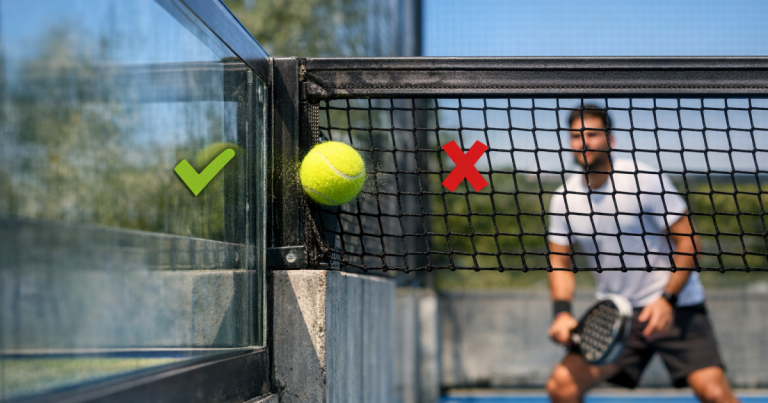
The ball hits the glass in padel all the time, and the tricky part for beginners is knowing whether the point continues or stops. The simple rule is that the ball usually has to bounce on the court before the glass becomes part of the rally. Once you understand that order, the walls start to feel less like chaos and more like another playable surface.
If you are still getting comfortable with serves, faults and lets, it is worth pairing this with our beginner padel rules guide, because the glass rules make much more sense when the basic rally sequence is clear.
At a glance
- If the ball lands in the court first and then hits the glass, the rally normally continues.
- If your shot hits the opponent’s glass before touching their court, your shot is out.
- If the ball bounces on your side, rebounds off your back or side glass, and has not bounced a second time, you can still play it.
- On serve, the ball may hit the glass after landing in the correct service box, but it must not hit the metal fence after the bounce.
- You can use your own glass to return the ball, but the ball must still cross the net and land legally on the other side.
The key idea: court first, glass second
Most beginner confusion comes from watching the ball fly towards the back wall and assuming the point is over. In padel, the glass is part of the court environment, but it is not a replacement for the floor. For a normal shot to be legal on your opponent’s side, it must land inside their court before it touches the back glass, side glass or fencing.
So if you hit a deep lob and it drops inside the baseline, then rebounds off the back glass, the ball is in play. Your opponents can wait for the rebound and hit it before it bounces again. If the same lob travels too long and smacks the back glass without touching the court first, it is out immediately.
This is why experienced players do not always panic when a ball goes past them. They may deliberately let it pass, watch it hit the back glass, and play the rebound. For newer players, that feels unnatural at first because tennis and squash instincts can pull in different directions.
When the glass keeps the rally alive
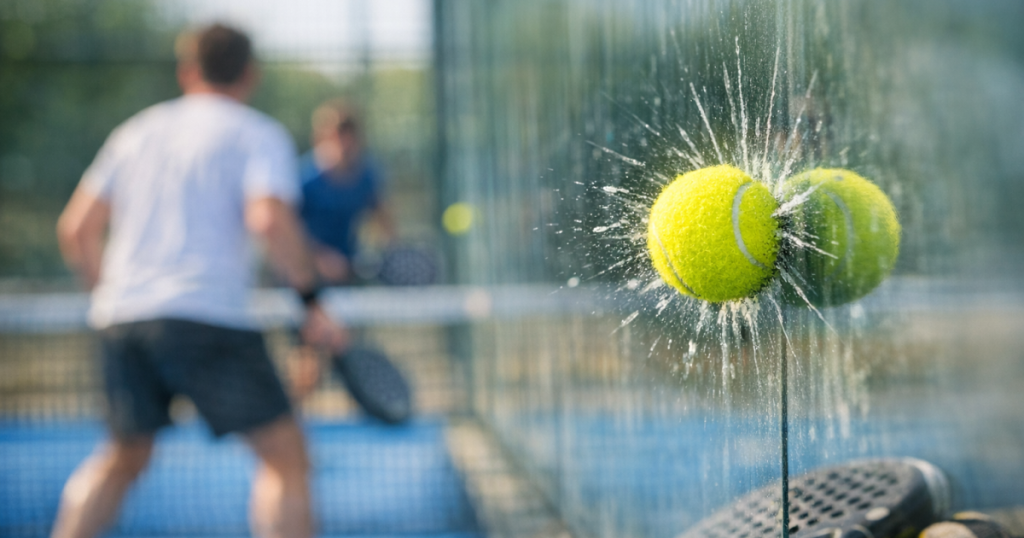
During a rally, the glass matters after a legal bounce. Imagine your opponent plays a low drive that lands near your baseline. It then hits your back glass and comes back towards you. You can play it as long as it has not bounced on the floor for a second time. The contact with the glass does not count as a bounce.
The same principle applies to the side glass. If the ball lands in your court, hits the side glass, and comes out into a playable position, the rally continues. You might take it after the side wall, after the back wall, or after both, depending on the angle and speed.
Beginners often rush to volley or half-volley balls that would be easier after the glass. A useful early habit is to call the ball early in your head: bounce, glass, hit. If the shot is deep and travelling quickly, letting it rebound can give you more time and a better contact point.
For a more court-position focused breakdown, our guide to using the glass walls in early matches explains how to stop backing away from every deep ball.
When hitting the glass is a fault
The most common fault is simple: you hit the opponent’s glass before the ball lands in their court. That includes the back glass, side glass and any surrounding structure that the ball reaches before a legal bounce. In that case, your opponents win the point.
There are a few common beginner scenarios:
- You hit a smash too flat, it clears the court surface and strikes the back glass directly. That is out.
- You try a fast cross-court shot and it hits the side glass before touching the floor. That is out.
- You lob too long and the ball lands beyond the baseline or hits the back wall first. That is out.
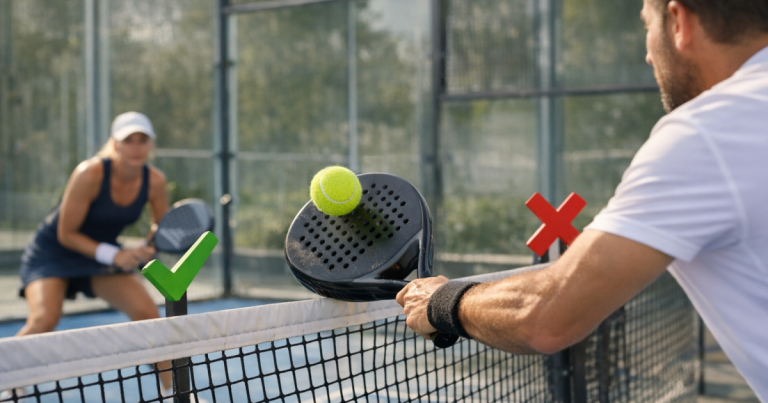
- You hit the ball into your own metal fence before it crosses the net. That is not a legal return.
One reason padel rewards control is that power alone can send the ball straight into the glass. A hard shot is only useful if it first lands where it is meant to land. For new players, a slower ball that drops inside the court is usually more valuable than a dramatic shot that crashes into the wall.
Can you hit the ball into your own glass?
Yes, and this is one of the fun parts of padel. You are allowed to use your own glass to help return the ball. For example, if a ball is awkwardly close to your body near the back wall, you can hit it into your own back glass so that it rebounds forward, crosses the net and lands in your opponent’s court.
This is different from hitting the opponent’s glass directly. Your own glass can be part of your shot before the ball crosses the net, but the ball still has to make it over and land legally. You cannot simply blast the ball into any surface and hope the point carries on.
As a beginner, this is not a shot you need to force straight away. It is useful as a rescue option, especially from the back corners, but the first goal is still clean contact and sensible height over the net. Once you start to read rebounds better, using your own glass becomes a natural defensive tool rather than a trick shot.
What changes on the serve?
The serve has its own glass detail. A valid serve must bounce in the correct diagonal service box. After that bounce, it may hit the glass and still be legal. In fact, many serves are aimed so they land in the box and move towards the side or back glass, making the return more awkward.
The important exception is the metal fence. If a serve lands in the correct box and then hits the wire mesh or metal fencing before the receiver plays it, it is a fault. That can surprise new players because, in normal rallies, the ball can often stay live after hitting the fencing following a legal bounce. Serving is stricter.
If a serve clips the net, lands in the correct service box and then remains otherwise valid, it is usually played as a let. If the same serve would be a fault because of what it hits after the bounce, the net touch does not turn it into a good serve.
Reading the rebound as a beginner
The rules tell you whether the point is alive, but your next challenge is judging where the ball will go. Glass rebounds are affected by speed, spin, angle and how close the ball lands to the wall. A ball that lands very deep may come off the back glass quickly. A slower ball with slice may stay lower and die near the back of the court.
Instead of trying to guess perfectly, use a simple checklist:
- Watch the bounce first, not the glass. The bounce tells you the ball is live and gives the first clue about height.
- Move with small adjustment steps. Big lunges make it harder to respond to a strange rebound.
- Keep your racket ready in front of your body. A late backswing is a common reason beginners miss easy rebounds.
- Let fast deep balls come off the glass when you have space. Taking them too early can jam your swing.
- Call clearly with your partner. Saying mine, yours or leave helps avoid both players chasing the same rebound.
On UK club courts, especially indoors, glass can feel quick when the ball is new and the rallies are fast. Outdoors, damp conditions can also change how lively the ball feels. The rule does not change, but your timing might need a little adjustment.
Why the glass changes padel tactics
Glass walls are not just a quirky rule detail. They shape the whole rhythm of padel. Because deep balls can rebound and remain playable, winners are harder to hit than many beginners expect. You often have to build the point with placement, patience and court position rather than aiming for one big shot.
This is also why lobs are so important. A well-placed lob that lands deep can push opponents back, but if it sits up too kindly after the glass, they may have time to reset. A poor lob that hits the back glass first is simply out. The margin is small, so height and depth matter more than force.
Defensively, the glass gives you a second chance. Instead of swinging wildly at every ball near the baseline, you can allow the wall to slow or redirect the ball. That extra moment helps you stay in the rally, recover your position, and make your opponents play another shot.
Common questions
What happens if the ball hits the glass in padel after the bounce?
If it has landed legally in the court first, the rally normally continues. The player can hit it after the rebound, provided it has not bounced on the floor for a second time.
Is it out if my shot hits the opponent’s back glass first?
Yes. If your shot reaches the opponent’s glass before touching their court, it is out and you lose the point.
Can the ball hit both the side glass and back glass?
Yes, if it bounced legally first. Some angled shots can hit the side glass, then the back glass, or the other way around. The ball is still playable until it bounces again on the floor.
Can I wait for the ball to come off the glass?
Yes. Waiting is often the right choice for deep balls. Just remember that the ball must be played before it makes a second floor bounce.
Does glass count the same as the metal fence?
Not always. In rallies, both can be involved after a legal bounce, but serves are different: a serve that bounces in the box and then hits the metal fence is a fault.
Key takeaways
The easiest way to judge glass situations is to ask what happened first. If the ball bounced legally on the court and then hit the glass, keep playing. If it hit the opponent’s glass before landing, the point is over.
As your confidence grows, the glass becomes less intimidating. It gives you time in defence, creates angles in attack, and makes padel feel very different from other racket sports. If you are moving from casual games into organised club play, finding club matches through Playtomic can give you more chances to practise these situations against different styles of opponent.