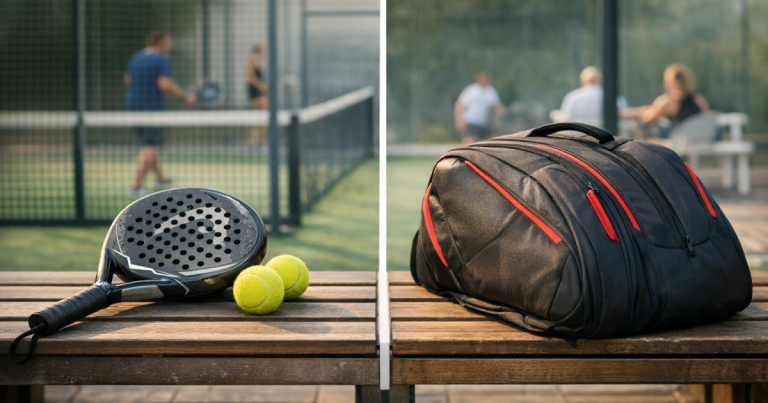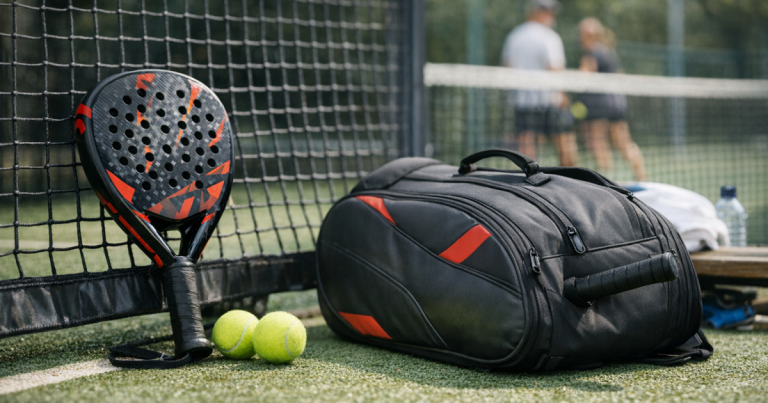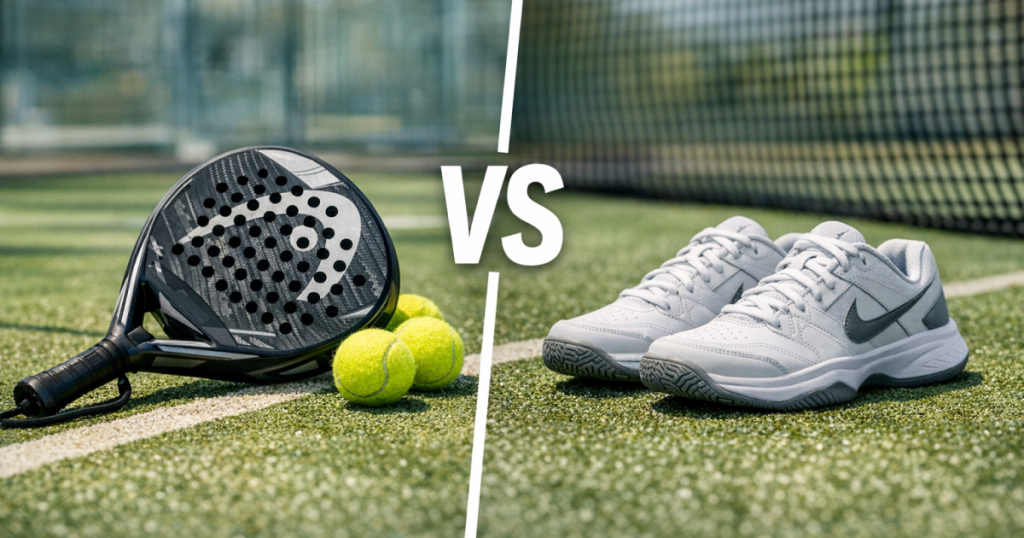
For a newer club player, Head Graphene 360+ Alpha Pro vs Nike Court Lite is not a normal like-for-like comparison: one changes what happens in your hand, the other changes how securely you move. The better upgrade depends less on brand appeal and more on the mistake you are trying to reduce. If you are late to the ball, sliding on artificial turf, or finishing matches with sore feet, shoes usually help sooner. If your movement is already stable and you want a more capable racket for volleys, bandejas and controlled power, the Head option becomes more interesting.
What to know first
The short answer: most beginners and early club players should prioritise suitable court shoes before moving into a demanding racket upgrade. Padel rewards balance, braking, recovery steps and getting set before contact. Shoes influence all of that on every point. A racket upgrade can be worthwhile, but it will not fix rushed footwork or poor positioning.
The Head Graphene 360+ Alpha Pro is the more performance-focused purchase. It is aimed at players who can already meet the ball cleanly often enough to benefit from extra stability and response. The Nike Court Lite is the more practical movement upgrade, provided the outsole version you buy suits the courts you play on. Before buying either, check the exact model version, fit, condition if second-hand, and whether the product is intended for padel, tennis or general court use.
Side-by-side snapshot
- Main job: the Head racket affects contact, control, power and feel; the Nike shoes affect grip, stopping, turning and comfort.
- Best early upgrade for many beginners: shoes, because movement problems appear on nearly every rally.
- Best upgrade for improving ball quality: the racket, but only if your timing and technique are already consistent enough.
- Biggest risk with the racket: choosing a model that feels too demanding and makes mishits more frustrating.
- Biggest risk with the shoes: buying a Court Lite version with an outsole that is not ideal for your local padel surface.
- Most sensible buying order: safe, grippy shoes first; racket later when you know your level, style and preferred feel.
Where the Head racket can genuinely help
The Head Graphene 360+ Alpha Pro makes most sense if you are no longer just trying to survive rallies. It is the type of racket a progressing player might consider when they want a firmer, more precise response than a very soft starter racket. That can help on volleys, controlled blocks, overhead preparation and attacking shots when you are in position.
For a beginner, though, the key question is not whether the racket is “good”. It clearly sits in a serious part of the padel market. The question is whether it is forgiving enough for where your game is now. If you regularly frame the ball, swing late, or struggle to control depth, a more advanced racket may expose those issues rather than hide them.
Look closely at three things before committing. First, check the weight range of the exact version being sold, because small differences can feel bigger over a full match. Second, check the balance and shape, as these influence how quick the racket feels at the net and how easy it is to manoeuvre under pressure. Third, if buying used, inspect the frame, face and edge protector carefully. Cosmetic marks are common, but cracks or soft spots are a different matter.
The Head option is at its best when your technique is ready for it. If your lobs keep dropping short or flying long, the racket may not be the real problem. You may get more from focused practice, such as these target drills for improving your padel lob, before spending money on a more ambitious frame.
Where the Nike shoes can make the bigger difference
Shoes are less exciting than a new racket, but they affect the part of padel that beginners often underestimate: arriving balanced. The first few months of club padel are full of small movement errors. Players overrun the ball, slip when changing direction, stand too upright, or reach with the arm because their feet have not done enough work.
A suitable pair of court shoes can help you brake more confidently, push off more cleanly and feel less hesitant moving into corners. That does not automatically make every Nike Court Lite version ideal for padel, though. Court Lite models are commonly associated with tennis and general court use, so the important check is whether the outsole pattern suits the artificial turf and sand level at your club. Some padel courts reward a herringbone-style grip, while others can feel different depending on maintenance, moisture and sand distribution.
Fit matters just as much as grip. Padel involves short sprints, sideways shuffles and repeated stops. If the shoe is too loose, your foot can slide inside it. If it is too narrow or stiff for your foot shape, comfort can disappear quickly in a busy club session. Try them with the socks you normally wear for padel, and pay attention to heel hold, toe room and side-to-side stability rather than judging only by how they feel standing still.
If you are comparing Nike with more padel-specific options, it is worth reading our Head Motion Pro padel shoes review to understand what a dedicated padel shoe is trying to solve. You do not always need the most specialised shoe on day one, but you do need something that works on the surface you actually play on.
Which one fixes the most common beginner problems?
If your matches are full of late contact, rushed swings and awkward recoveries, shoes are more likely to improve your overall experience. That is because many “racket problems” are really movement problems in disguise. A mishit volley may happen because the racket face was wrong, but it may also happen because you were still moving as you hit the ball.
Better footwear will not teach split steps or positioning by itself. However, it can give you enough grip and confidence to practise those skills properly. If your feet slide during recovery, you will naturally become cautious. That caution then affects how early you move, how low you get and how committed your next shot feels.
The racket becomes the smarter upgrade when your movement is already reasonable and the limitation is more about ball response. For example, you might find your current starter racket too unstable against faster volleys, too vague on controlled blocks, or too soft when you try to play with purpose. At that point, a stronger racket choice can support your progress.
For many early-stage players, the best performance upgrade is still not a purchase at all. A few sessions built around first step speed, recovery and split-step timing can change how every racket feels. If that sounds like your issue, start with these simple padel footwork drills before deciding that your current frame is holding you back.
Best choice by player type
Choose the Nike Court Lite if movement is your weak point
The Nike option makes sense if you are currently playing in running shoes, fashion trainers or worn-out court shoes. Running shoes are designed mainly for forward movement, while padel asks for lateral support and quick stops. Even a modest court-shoe upgrade can feel more useful than a racket change if your current footwear is not fit for the job.
This is also the better route if you play social club sessions, mix-ins or beginner matches where rallies are unpredictable. You will be turning, scrambling and recovering constantly. Comfort matters, but so does feeling planted enough to move without second-guessing every corner.
Choose the Head racket if your technique is ready
The Head racket is more tempting if you already play regularly, know your preferred grip size, and can control the ball under moderate pressure. It is better suited to someone who wants to progress from a basic starter frame into something more responsive, rather than someone still learning how to make clean contact.
It can also make sense if your current racket is damaged, too light for your preference, or no longer gives you confidence on volleys and overheads. Just be honest about whether the new racket will match your level. A demanding frame can feel brilliant on clean strikes and unforgiving on rushed ones.
Wait on both if your current gear is serviceable
If your shoes still grip well and your racket is comfortable, there is no need to upgrade just because other players have newer kit. Spend a few more club sessions noticing what actually costs you points. Are you slipping? Are you late? Are you missing the sweet spot? Are your feet sore? Are you losing control only when the pace rises?
Those answers will point you towards the more useful purchase. Beginners often buy the item they notice most, which is usually the racket. The item that quietly affects more points, however, is often footwear.
Trade-offs before you buy
- Budget priority: if you can only upgrade one item, shoes are usually the safer first spend for a new club player.
- Learning curve: shoes should feel useful immediately if the fit and grip are right; a new racket may take several sessions to judge fairly.
- Risk of overbuying: a performance racket can be too much too soon; a court shoe is less glamorous but often more practical.
- Surface compatibility: always match shoes to your club surface, not just to the brand name or colourway.
- Physical comfort: if you finish sessions with foot fatigue, rubbing or unstable landings, footwear deserves attention before racket feel.
- Resale and second-hand buying: rackets are commonly bought used, but condition matters; shoes should generally be chosen for fit, support and hygiene rather than bargain hunting alone.
The practical recommendation
If you are a first-time or early-stage padel player choosing between these two upgrades, buy suitable shoes first unless your current footwear is already genuinely appropriate for padel. Secure movement helps your timing, confidence and shot selection on every point. The Nike Court Lite can be a sensible option if it fits your foot and the outsole suits your club’s courts, but compare it carefully with padel-specific shoes before deciding.
Choose the Head Graphene 360+ Alpha Pro when you have enough consistency to benefit from a more serious racket. It is the more exciting upgrade, and for the right player it can support better volleys, attacking intent and controlled power. For many beginners, though, it should come after footwear, footwork and a clearer understanding of what racket feel you actually prefer.
Bottom line: if you are slipping, late or uncomfortable, prioritise shoes. If you are balanced, regular at club sessions and outgrowing a basic racket, the Head becomes the more logical next step.
Quick Buying Links
Head Graphene 360+ Alpha Pro Padel Racket
A strong contender depending on your priorities.
Nike Court Lite Padel Shoes
Worth considering if its strengths better match your needs.
FAQ
Is the Head Graphene 360+ Alpha Pro too advanced for beginners?
It can be too demanding for complete beginners who still mishit often or struggle with timing. It is more suitable for improving players who already make clean contact and want a more responsive racket.
Can I use Nike Court Lite shoes for padel?
You may be able to, but check the exact outsole and how it behaves on your club’s artificial turf. Padel-specific shoes are usually designed with lateral movement and court grip in mind.
Should I replace my racket or shoes first?
Replace shoes first if your current pair slips, lacks lateral support or leaves your feet sore. Replace the racket first only if your footwear is already suitable and your current racket is clearly limiting control or confidence.
Do better shoes improve padel technique?
They do not teach technique by themselves, but they can make it easier to move, stop and set your body correctly. That gives your technique a better chance to work under pressure.
What should I check when buying the Head racket second-hand?
Inspect the frame, faces and edges for cracks, deep damage or unusual soft spots. Also confirm the exact model version, weight range and grip condition before you buy.