Your first few months on court are much easier when your racket helps you keep the ball in play. Buying a starter padel racket is about finding something forgiving enough to learn with, durable enough for club play, and sensible enough that you will not feel annoyed if your preferences change. Spend less energy chasing advanced power and more on comfort, control, and whether the racket helps you get the ball back consistently.
The short version
- Choose a round or teardrop shape before looking at aggressive diamond-shaped rackets.
- Favour medium or medium-soft feel if you are still learning timing, volleys, lobs and glass rebounds.
- Keep the weight manageable; many adult rackets sit roughly in the mid-300 grams range, but the balance matters as much as the number.
- Avoid paying extra for features you cannot feel or use yet.
- Leave budget for shoes, balls, court fees and lessons, because those often improve your padel faster than a premium racket.
Step 1: Decide what the racket needs to do for you
A beginner racket should make ordinary shots easier. That means a larger sweet spot, predictable contact, and a feel that does not punish slightly late or off-centre hits. If you are still learning to defend the back glass, control the lob, or block volleys under pressure, consistency matters more than maximum smash power.
Start by being honest about your current game. If most points are lost through mistakes, a control-friendly racket is usually the better route. If you already play regular racket sports and strike the ball cleanly, you might be able to handle something a little firmer or more head-heavy, but it still should not feel like hard work.
This is also the point to think about the whole kit budget. A more expensive racket will not fix poor grip from worn trainers or slow movement into position. If you are unsure whether your next upgrade should be racket-related at all, this breakdown of whether a racket or shoe upgrade helps more is a useful reality check.
Step 2: Pick the shape before the brand
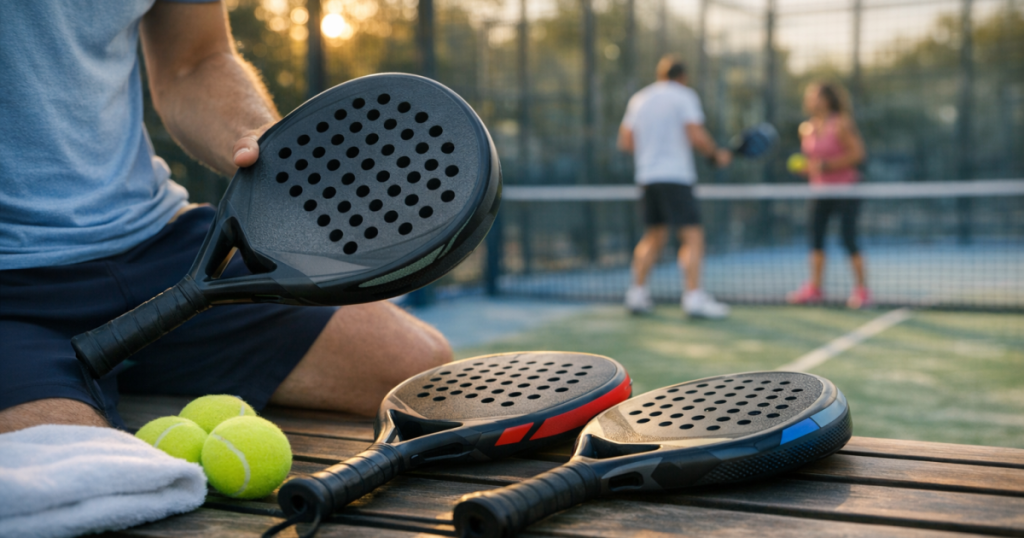
Padel rackets are usually described as round, teardrop or diamond shaped. Brands use different names and designs, but the basic idea is simple: shape influences where the sweet spot sits and how easy the racket feels to control.
Round rackets
Round rackets are usually the safest starting point. They tend to put the sweet spot closer to the centre of the face, which helps when your timing is not perfect. They are a good fit if you want help with blocks, controlled volleys, bandejas and defensive shots from the back of the court.
Teardrop rackets
Teardrop rackets sit between control and power. They can work well for a progressing beginner who already plays once or twice a week and wants something with room to grow. The trade-off is that they may feel less forgiving than a very easy round racket.
Diamond rackets
Diamond-shaped rackets are often more power-focused and can feel less forgiving. Some beginners buy them because they look serious, then struggle with timing, defence and wristy corrections. Unless you have a strong reason, it is usually better to wait until your technique is steadier.
Step 3: Keep weight and balance sensible
Do not judge weight by the printed number alone. Two rackets can weigh a similar amount but feel very different because of balance. A racket with more weight towards the head can feel powerful, but it may also feel slower in quick exchanges at the net. A more evenly balanced racket usually feels easier to manoeuvre during club games.
When you test or borrow a racket, pay attention to simple feelings rather than technical labels. Can you prepare early for volleys? Can you reset the racket after a block? Can you play a few lobs without feeling as though you are forcing the swing? If the racket starts to feel heavy after ten minutes, it is probably not the right first choice, even if it looks impressive.
Footwork affects this too. Many beginners blame the racket when they are actually arriving late to the ball. If you often feel rushed, spend time on simple padel footwork drills before assuming you need a more advanced frame.
Step 4: Choose a forgiving feel, not just a famous material
Racket descriptions often mention carbon fibre, fibreglass, EVA foam, hybrid faces and other construction terms. These details can matter, but they are not a shortcut to the right decision. A beginner does not need to chase the stiffest or most technical-sounding racket.
As a rule of thumb, a medium or medium-soft feel is usually more forgiving while you are building technique. Very stiff rackets can reward clean contact but may feel unforgiving when you catch the ball late or near the edge. Very soft rackets can be comfortable and easy to use, though some players may outgrow them as they start to hit harder.
The best check is practical: can you control the ball at half speed? If a racket only feels good when you swing hard, it is probably encouraging the wrong habits for beginner padel. You want a frame that lets you practise simple cross-court balls, controlled lobs and calm volleys without feeling like every shot needs a big action.
Step 5: Set a spending limit before you browse
Overspending usually happens when you browse first and justify later. Set a ceiling before you look at models. For many new club players, that might mean choosing a sensible entry-level or lower-mid-range racket rather than paying for a premium frame straight away. Exact prices vary by retailer, stock and promotions, so check current UK pricing rather than assuming an older recommendation still applies.
It is worth remembering what else competes for the same budget: court bookings, coaching sessions, a tube of balls, proper padel shoes, overgrips and transport to club sessions. One good lesson can make a modest racket feel much better because you will start contacting the ball in the right place more often.
If you are buying your first starter padel racket, a sensible question is not “What is the most racket I can afford?” but “What is enough racket for the next six months of learning?” That shift alone can save you from paying for features aimed at stronger players.
Step 6: Try to borrow, demo or handle one first
If your club, coach or playing partners can lend you a few rackets, take advantage of it. Even a short hit can tell you more than a long product description. Try a round racket and a teardrop racket if possible, then notice which one helps you relax and make cleaner contact.
Use the same simple test with each racket:
- Play ten slow forehands and ten slow backhands from the back of the court.
- Block a few volleys without swinging hard.
- Play controlled lobs and see whether the racket face feels easy to manage.
- Defend a few balls off the back glass if you have a partner who can feed consistently.
- Notice whether you feel rushed, strained or tempted to overhit.
If all of your test shots become flatter, faster and less controlled, the racket may be pushing you towards power before you are ready. A beginner-friendly frame should calm your game down, not make every rally feel like a hitting contest.
Step 7: Use real models as reference points, not automatic answers
Named rackets can be useful when you are learning the market, but do not treat any model as the universal answer. Availability, current specifications and pricing can change, so always verify the latest details before buying.
- Bullpadel Indiga CTRL is an example many beginners may come across when researching control-focused padel rackets.
- Babolat Contact is another recognisable entry-level style reference to compare for feel, shape and ease of use.
- Wilson Blade Team V2 is worth using as a comparison point if you are looking at accessible rackets from major racket-sport brands.
The point is not that these are the only models to consider. Use them to understand what a beginner-friendly racket looks like, then compare current alternatives by shape, balance, grip comfort and whether you can test one locally.
Step 8: Do not ignore grip comfort
A racket can be the right shape and still feel wrong if the grip does not suit your hand. Many new players grip too tightly because the handle feels thin, slippery or unfamiliar. That tension can make volleys and lobs less controlled.
Overgrips are a cheap and useful adjustment, so leave a little room in your budget for them. A fresh overgrip can improve feel and confidence without changing racket. If the handle feels too small, adding an overgrip may help. If it already feels bulky, adding more layers can make quick grip changes harder.
Also think about how you carry and look after the racket. Leaving it loose in a crowded sports bag can scuff it quickly. If you are starting to play regular club sessions, this guide to choosing the right padel bag size for club play can help you avoid buying more bag than you need.
Common overspending traps
- Buying the racket your strongest friend uses: Their timing, swing speed and playing style may be very different from yours.
- Paying for power too early: Power is only useful when you can control direction, height and depth first.
- Assuming heavier means better: A racket that feels slow can hurt your defence and net reactions.
- Choosing by appearance: A bold design tells you nothing about whether the sweet spot suits your level.
- Forgetting replacement costs: Overgrips, balls and court time are part of the real cost of playing regularly.
Things readers ask
How much should a beginner spend on a padel racket?
Spend enough to get a proper padel racket from a recognised range, but avoid stretching to a premium model before you know your playing style. Set your limit first, then compare current UK prices within that limit.
Is a round racket always best for beginners?
Not always, but it is the safest place to start. A round racket usually gives newer players more margin for off-centre contact. A teardrop shape can also work if you already have decent racket-sport timing.
Should I buy second-hand?
Second-hand can be sensible if you can inspect the racket properly. Check for cracks, soft spots, rattling sounds, worn grip condition and obvious impact damage. If you cannot check it in person, be cautious.
When should I upgrade from my first racket?
Upgrade when you can explain what is limiting you. For example, you may want a firmer feel, different balance or more precision. If you only feel tempted because newer rackets look better, wait.
Can a better racket improve my game quickly?
It can help if your current racket is unsuitable, damaged or too hard to control. For most beginners, though, regular play, basic coaching and better movement bring faster improvement than an expensive frame.
What to remember
The right first racket is the one that helps you play calmer, cleaner padel. Look for forgiveness, manageable weight, comfortable grip and a shape that supports control. Keep the budget sensible, test where you can, and avoid paying for advanced power before your technique is ready for it.
A starter padel racket should feel like a learning tool, not a status purchase. If it helps you return more balls, practise with confidence and enjoy regular club games, it is doing its job.