You do not need a full kit bag to try padel properly; learning how to rent padel gear can save you money while you work out what actually feels comfortable. The aim is not to find perfect equipment on day one, but to get safe, usable kit that lets you enjoy the court and make a calmer buying decision later.
At a glance
- Hiring first makes sense if you have played only once or twice, are not sure how often you will play, or want to test different racket shapes and weights.
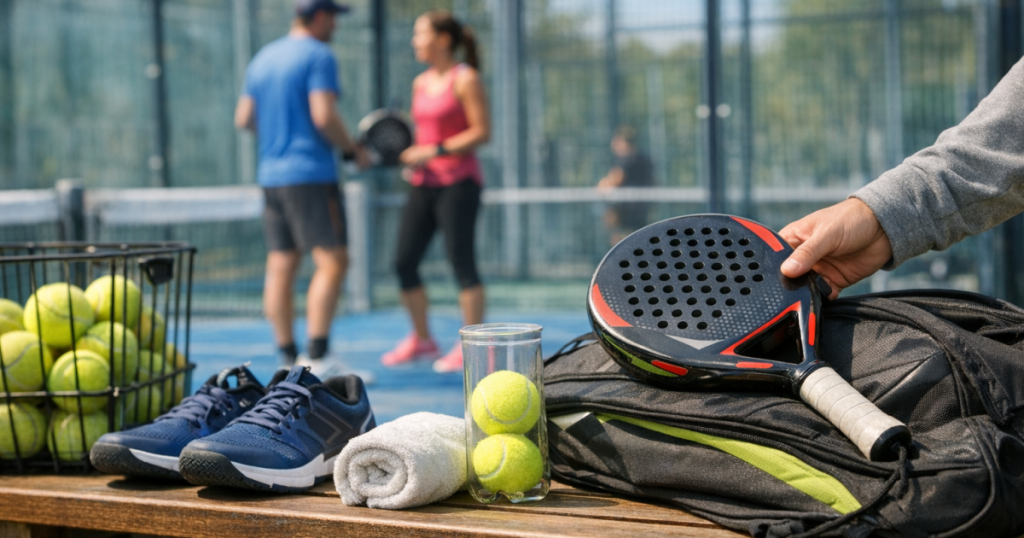
- Most beginners mainly need access to a racket, suitable court shoes and playable balls; bags, clothing and accessories can wait.
- Always check the club’s hire policy before booking, including deposit, ID, damage rules and whether gear is collected before or after court check-in.
- Use each session to notice what helps your control, comfort and confidence rather than chasing advanced features.
- Once you are playing regularly and can describe what you liked or disliked about hired kit, buying your own becomes much easier.
Step 1: Start with the easiest hire route
The simplest option is usually the club where you are playing. Many padel clubs, leisure centres and indoor venues have a small number of hire rackets available at reception or through their booking system, but you should confirm this before you travel. Do not assume every court booking includes equipment.
When you contact the venue, ask clear, practical questions:
- Can beginners hire a racket for a single session?
- Is hire booked in advance or arranged at reception?
- Is there a hire fee, refundable deposit or ID requirement?
- Are balls included, or do players need to bring their own?
- Are non-marking shoes required on court?
- What happens if hired equipment is damaged during normal play?
If you are booking a lesson rather than a casual court, ask the coach whether beginner equipment is available. This can be a good way to try padel with less guesswork because the coach can also help you notice whether a racket feels too heavy, too head-heavy or simply awkward because your technique is new. If you are still looking for a lesson, our review of LTA Find a Coach for booking padel lessons explains how to use it as a starting point.
Step 2: Know what is worth hiring and what is not
For a first few sessions, the only piece of padel-specific equipment you normally need to hire is the racket. Padel rackets are solid-faced and shorter than tennis rackets, so turning up with a tennis racket is not a useful substitute. A hired beginner-friendly racket is usually enough to learn basic contact, volleys, lobs and simple wall rebounds.
Shoes are different. Some venues may not hire shoes at all, and many players prefer not to rent footwear for comfort and hygiene reasons. If you already own clean court shoes with non-marking soles, ask the venue whether they are acceptable. Running trainers can feel unstable during sideways movement, so they are not ideal once you start playing more often.
Balls are usually inexpensive compared with rackets and shoes, but you still need to know the venue’s setup. Some beginner sessions include balls, some coaches provide them, and some social games expect each group to bring a tube. If you are joining a club game, check the organiser’s message rather than guessing.
Step 3: Inspect the racket before you play
A quick check before you walk onto court can prevent awkward conversations later. You are not trying to judge the racket like an expert; you are simply checking that it is safe, complete and comfortable enough to use.
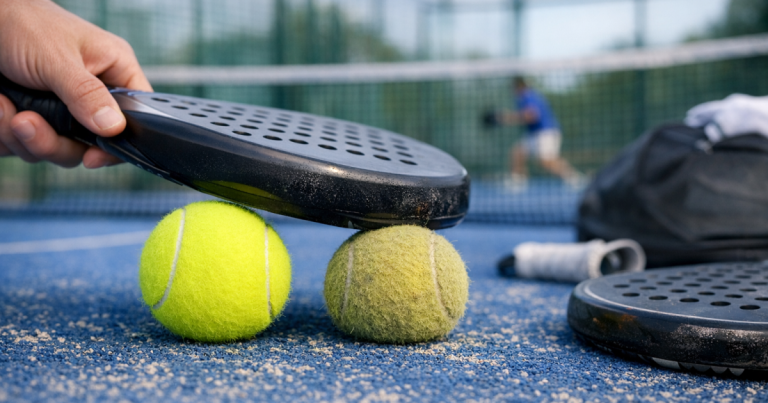
- Look at the face and edge for obvious cracks, loose pieces or heavy damage.
- Check the grip. It should not be so worn, slippery or torn that you struggle to hold it securely.
- Make sure the wrist strap is attached properly and use it during play.
- Hold the racket loosely and make a few slow swings. If it immediately feels tiring or hard to control, ask whether another option is available.
- Take a quick photo at reception if the racket already has visible damage and the club’s policy allows it. This gives everyone a clear record.
For most beginners, comfort matters more than power. A racket that helps you guide the ball back into court will teach you more than one that feels exciting for five minutes but leaves you late on every volley.
Step 4: Be realistic about shoes
Footwear is the part of gear hire where beginners should be most practical. Padel includes short sprints, turns, stops and sideways steps, so you want stable shoes with clean soles and enough grip for the surface. You do not need to buy specialist shoes before your first game, but you should avoid footwear that is muddy, worn smooth or unstable.
If a venue offers shoe hire, check the size carefully before the session starts. UK shoe sizing can still vary between brands, so walk, side-step and gently turn before accepting the pair. Bring a clean pair of sports socks, and do not be shy about asking for another size if your toes are cramped or your heel slips.
If you are wearing your own trainers, message the venue in advance. Some clubs are stricter than others about non-marking soles, and it is better to know before you arrive than to be turned away at court time.
Step 5: Check the ball situation before the match
Flat or unsuitable balls can make padel feel much harder than it should, especially when you are learning low returns and rebounds off the glass. You do not need to obsess over ball brands at the start, but you do need balls that bounce consistently and are acceptable for the session you are playing.
Ask whether the club provides balls for hire sessions or whether players bring a new or nearly new tube. If you are joining a social match, confirm the expectation in the group chat. Some regular players rotate who brings balls; beginner sessions may be more relaxed. For a simple breakdown of what to take, read our guide to which padel balls to bring to club games.
Step 6: Understand fees, deposits and return rules
Hiring equipment is usually straightforward, but the small print matters. Before paying, check whether the hire charge is per person, per racket or per court booking. Also ask whether any deposit is refunded immediately after return, held temporarily, or handled through the booking system. Confirm the £ amount before you agree so there are no surprises at reception.
It is also worth knowing exactly when the gear must be returned. Some venues want rackets back as soon as your court slot ends, while others give you a few minutes to clear the court, change shoes and return everything together. If you are playing late in the evening, check reception closing time.
Damage rules should be clear. Normal wear during sensible play is different from avoidable damage, such as throwing a racket, hitting the glass in frustration or leaving equipment outside in rain. Treat hire gear as if another beginner is waiting to use it after you.
Step 7: Use the first ten minutes properly
Once you have the hired kit, do not rush straight into a competitive game. Spend a few minutes warming up your body and getting used to the racket. Hit gentle volleys, controlled forehands, backhands and a few soft lobs before you start keeping score.
This short adjustment period tells you a lot. Notice whether the racket face feels easy to find, whether the grip slips, whether your shoes feel secure and whether the balls bounce predictably. If something feels wrong before the match starts, it is much easier to swap or fix it then. For a simple routine, use our guide on warming up safely before your first padel game.
Step 8: Make notes after each hire session
The biggest benefit of hiring is not just saving money; it is learning what you prefer before you own anything. After each session, write down two or three quick observations while they are fresh.
- Did the racket feel easy to control at the net?
- Were you late on overheads or defensive shots?
- Did your hand or forearm feel unusually tired?
- Did the grip feel too thick, too thin or slippery?
- Did your shoes feel secure when changing direction?
- Did the balls feel lively enough for rallies and glass shots?
These notes are more useful than vague memories. After three or four sessions, patterns usually appear. You may realise you value control over power, prefer a slightly softer-feeling racket, or need better footwear before you worry about anything else.
Common hire routes for beginners
Club reception hire
This is the most convenient route when you have already booked a court. It suits players who want a quick first try without arranging lessons. The downside is that choice may be limited, especially during busy evening and weekend slots.
Beginner coaching sessions
Lessons and beginner clinics can be the most confidence-building route because equipment, rules and basic technique are often handled together. Ask in advance what is included, as every coach and venue works differently.
Borrowing from a friend
Borrowing can be useful if your friend plays regularly and has a spare racket. Still check the condition, use the wrist strap and agree what happens if it gets damaged. Avoid borrowing an advanced racket just because it looks impressive; it may not be the easiest one to learn with.
Open days and taster events
Some clubs and leisure centres run taster sessions where beginner equipment is available for the session. These are useful because they reduce the pressure to organise everything yourself, but places can be limited, so confirm the details when booking.
When hiring stops making sense
There is no fixed number of sessions after which everyone should buy their own kit. A better sign is consistency. If you are playing most weeks, paying repeated hire fees, and starting to notice the same comfort issues, owning a racket and suitable shoes becomes more practical.
Buying too early can lead to expensive mistakes. Buying too late can also hold you back if the available hire rackets are inconsistent or your footwear is not right for quick movement. The sweet spot is when you have enough court experience to describe what you need in plain language: more control, a more comfortable grip, better stability, or simply reliable gear that feels the same every time.
Questions people ask
Can I play padel without buying a racket?
Yes, if your club, coach or event provides hire or loan rackets. Always confirm before booking, because equipment is not automatically included with every court slot.
Should I rent shoes as well as a racket?
Only if the venue offers suitable court shoes and they fit properly. Many beginners use their own clean non-marking court shoes at first, then buy padel shoes once they play regularly.
Are hired rackets good enough for beginners?
Usually, yes. A basic, well-maintained racket is enough for learning contact, positioning and simple rallies. Condition and comfort matter more than advanced design features.
What should I bring if the club provides equipment?
Bring sports clothing, water, clean socks and confirmation of your booking. Also check whether balls are included, because some sessions provide only rackets.
Is it better to hire or borrow from another player?
Both can work. Hiring gives clearer rules through the venue, while borrowing can be convenient. Either way, check the racket condition and choose comfort over power.
Why it matters
The best reason to rent padel gear is that it gives you court experience before you commit to owning equipment. You learn what feels comfortable, what the club expects, and which items genuinely affect your enjoyment.
Start simple: confirm hire availability, check the racket, sort your footwear, understand the ball situation and make quick notes after you play. By the time you buy your own kit, you will be choosing from experience rather than guessing from a product page.