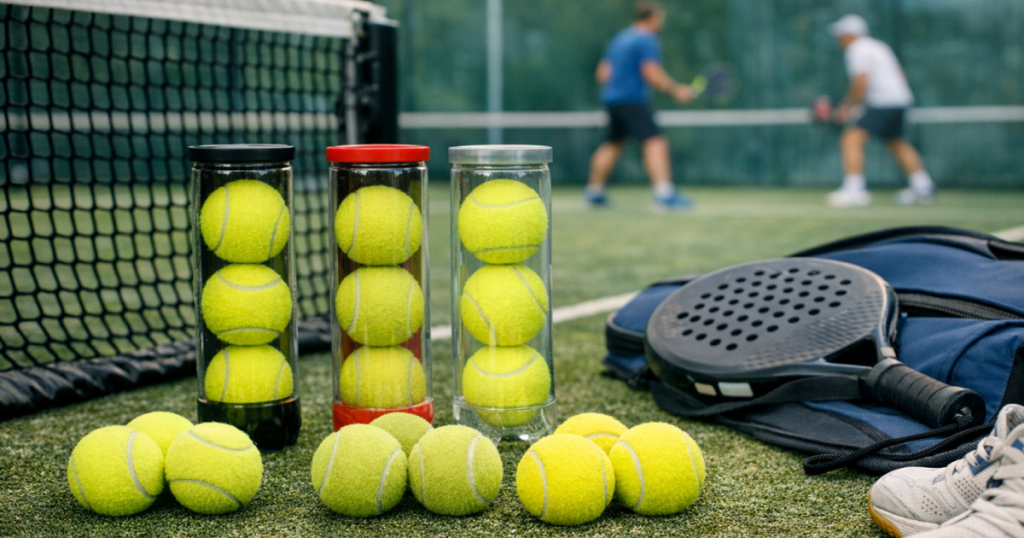
Club games feel much smoother when somebody has thought about the balls before the warm-up starts. For most beginner and early club sessions, the safest choice is a sealed tube of three padel balls for club games, plus a second tube of older practice balls in your bag. That gives you a fair match ball, a spare if one disappears over the glass, and a softer option for warm-up or casual drilling.
You do not need to overthink it, but you do need to avoid turning up with dead balls, tennis balls, or one lonely ball rolling around loose in a side pocket.
The short answer
Bring one unopened tube of three proper padel balls when you are playing a normal club match, box league, ladder game, or arranged four. If the session is very casual, a lightly used tube can be fine, but it should still bounce consistently and feel similar across all three balls.
A good match set should meet three simple tests:
- The balls are clearly made for padel, not tennis.
- All three balls are from the same tube or same model.
- They still have enough pressure to bounce cleanly and make rallies fair.
If you are booking courts with new people, it is also worth checking the session notes or asking in the group chat before you arrive. Some clubs provide balls for coaching or social events, but many friendly games rely on players bringing their own. If you are still getting used to the routine, the guide to booking a padel court in the UK explains the practical bits around club sessions, apps, and court arrangements.
Why the ball matters more than beginners expect
Padel is full of small timing decisions. A ball with good pressure comes off the glass predictably, gives you time to set your feet, and makes lobs, volleys, and bandejas easier to judge. A tired ball drops short, skids lower, and can make every rally feel scrappy.
That does not mean newer is always easier. Fresh balls can feel lively, particularly indoors or on quicker courts. For beginners, the aim is not to find the fastest ball possible. It is to use a fair, consistent set that lets all four players enjoy the match without the ball deciding the outcome.
There is also an etiquette point. If everyone has paid for court time and travelled to the club, starting with a soft, mixed set of old balls can feel careless. Bringing a sealed tube is a small thing that shows you are ready to play properly.
What to pack for different club situations
Casual social games
For a relaxed club four, bring one sealed tube and one used tube. Start with the used tube for the warm-up if it still feels decent, then agree whether to open the new tube for the match. If players are brand new, a slightly softer used set can make the first few minutes less frantic, but it should not be so flat that the bounce is unreliable.
Box leagues and competitive club matches
Use a sealed tube unless the rules say the club supplies balls. Competitive beginner games do not need drama around whether a ball is too old. Open the tube in front of the group, use all three balls from it, and keep them together during the match.
This also helps with serving rhythm. A lively but consistent ball makes it easier to judge the low, underarm serve and the first bounce. If you are still unsure about height, contact point, or where the serve must land, refresh the basics with how to serve legally in padel before your next match.
Coached sessions and drills
For coaching, ask whether balls are provided. Many coaching sessions use baskets of training balls, so you may not need your own match tube. Still, keeping a used tube in your bag is useful if you stay for a hit afterwards or want to practise a few serves with a partner.
Outdoor winter play
In colder UK conditions, balls can feel less lively and rallies may slow down. A sealed tube is usually the safest choice because older balls can feel particularly dead in cold weather. Give the balls a proper warm-up rally before judging them; they can feel different once play has started.
How to tell whether a ball is still good enough
You do not need laboratory precision. You just need a quick club-level check before the match starts.
- Compare the bounce: Drop two balls from the same height on the same surface. If one clearly bounces much lower, do not mix them for match play.
- Feel the pressure: A very soft ball will compress easily between your fingers. It may still work for gentle drilling, but not for a fair match.
- Look at the felt: Heavy wear, bald patches, or dirt build-up can affect how the ball travels and grips the court.
- Watch the glass rebound: During warm-up, notice whether the ball comes off the back glass predictably. Dead balls often drop awkwardly.
- Keep sets together: Do not mix one fresh ball with two older ones. Consistency across the three balls matters more than the logo on the tube.
If you regularly play with the same group, agree a simple routine: one player brings a new tube each week, or everyone takes turns. That avoids the familiar pre-match rummage where four people produce four different half-used balls.
Examples of balls you will commonly see
You will see several recognised padel ball models around UK clubs. The point is not that every beginner must use one exact product, but that proper padel balls from established brands are a safer bet than random old tennis balls or unlabelled practice balls.
- Head Padel Pro: a common club-level padel ball and a familiar sight at many venues.
- Bullpadel Premium Pro: another widely available padel-specific option used by recreational and club players.
- Wilson X3 Padel Balls: a recognisable padel ball tube you may come across in sports retailers and club bags.
Before relying on any tube for a club match, check that it is labelled for padel, that the tube is sealed if you want a fresh set, and that all three balls are from the same model. Packaging and ball ranges can change, so use the label and condition of the balls rather than assuming every tube from a brand will feel identical.
If you are deciding where your next small upgrade will help most, the comparison of padel balls versus a beginner clothing upgrade gives useful context on why fresh balls often improve the actual playing experience more than players expect.
Club etiquette when you bring the balls
Good ball etiquette is simple: be clear, be fair, and do not make it awkward. If you bring the tube, offer it rather than announcing that everyone must use your choice. A quick “I’ve got a fresh tube if we want to open one” is enough.
For arranged matches, it is normal for players to share responsibility over time. You might bring balls this week, someone else next week. For one-off games with strangers, the person who organised the match often checks who is bringing a tube, but it is still useful to have one in your bag.
- Ask before opening a new tube: Some groups prefer to save fresh balls for league matches and use good used balls for casual hits.
- Do not mix models mid-match: Changing ball type halfway through can alter the rhythm of rallies.
- Retrieve lost balls promptly: If one goes out of court or behind a divider, pause sensibly rather than playing on with only two.
- Retire balls honestly: Once they feel flat, move them to the practice pile instead of pretending they are still match-ready.
A simple match-day packing routine
The easiest habit is to keep your bag organised after every session. Put your best used tube in one pocket, your sealed tube in another, and remove balls that are clearly past it. If a ball is only suitable for solo wall hits or gentle serve practice, mark the tube so you do not accidentally use it in a match.
Before leaving for the club, check three things:
- You have one sealed tube of three padel balls.
- You have a spare used tube for warm-up or emergencies.
- You know whether the session organiser or club is supplying balls.
This small routine saves time at the court and makes you look organised without needing loads of kit. It is also kinder to your game: consistent balls make it easier to practise positioning, choose the right shot, and build confidence under pressure.
Things readers ask
Can I use tennis balls for padel club games?
No, not for a proper club game. Padel balls are designed for padel play, while tennis balls can feel too different in bounce and speed. Use balls clearly labelled for padel.
How many balls should I bring?
Bring at least one tube of three. A second used tube is useful for warm-up, drills, or if a ball is lost, but the main match should use a consistent set.
Should beginners always open a new tube?
For league games or arranged matches with players you do not know well, yes, a sealed tube avoids debate. For relaxed socials, good used balls can be fine if everyone agrees.
How long do padel balls last?
It depends on court surface, weather, hitting level, and storage. Judge them by bounce, pressure, and consistency rather than by a fixed number of matches.
Who pays for the balls in a friendly match?
There is no single rule. Many groups take turns bringing balls, while others split the cost informally. The main thing is to agree before it becomes awkward.
In brief
The best approach to padel balls for club games is simple: bring a sealed tube, keep a decent used tube as backup, and make sure all four players are happy with the set before the first point. For beginners, consistency matters more than chasing a particular brand or the fastest-feeling ball.
Turn up with proper padel balls, agree the match set early, and retire tired balls to practice use. It is one of the easiest ways to make club padel feel more organised, fair, and enjoyable.