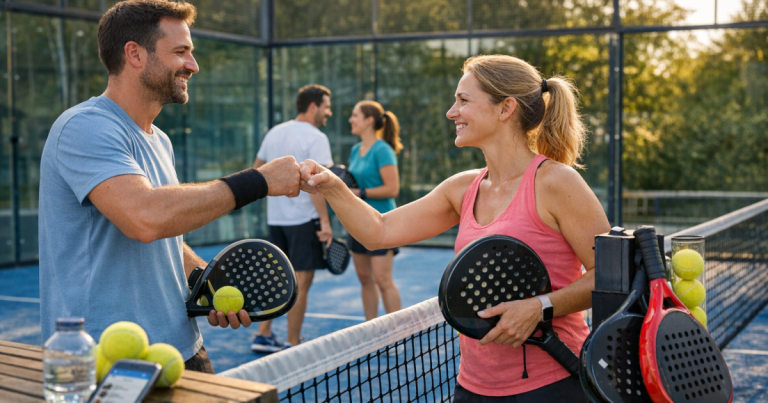
Your first game can feel rushed: new court, unfamiliar rebounds, and people waiting to start. A simple padel warm up helps you arrive looser, move better, and avoid going from cold to full-speed rallies in the first two minutes.
Keep it calm and progressive. You are not trying to tire yourself out before the match; you are preparing your joints, muscles, eyes and timing for the movements padel actually asks of beginners.
Pain during exercise, injury assessment, and return-to-play decisions after a strain or ongoing condition should be handled by a qualified healthcare or sports professional in line with UK health and safety requirements.
The short version
Before your first game, aim for a warm-up that moves from general to specific. Start with light movement, add dynamic mobility, practise padel footwork, then hit easy balls before serving or playing points.
- Allow 8 to 12 minutes if you can.
- Move gently first, then gradually increase speed.
- Use dynamic movements rather than long static stretches before play.
- Warm up your shoulders, hips, calves, ankles and wrists.
- Hit at half pace before trying harder volleys, smashes or fast returns.
If you only get a short court slot, even five focused minutes is better than walking straight into a match cold.
Step 1: Check your body before you start
Take 30 seconds before moving. Notice whether anything feels stiff, sore or unusually tight. Beginners sometimes ignore this because they are concentrating on rules and scoring, but your body gives useful information before the first rally.
Use a simple traffic-light check:
- Green: normal stiffness or mild sluggishness. Start gently and build up.
- Amber: tightness from travel, work or a previous session. Extend the easy movement phase and avoid sudden lunges early on.
- Red: sharp pain, swelling, dizziness, or pain that changes how you walk or swing. Do not try to “warm through” this during a club game.
Also check the court surface, especially if you are playing outdoors in Britain after rain or in cooler conditions. Look for damp patches, loose sand build-up, or areas where your shoes feel less secure. You do not need to inspect every corner, but it is sensible to notice the surface before sprinting.
Step 2: Start with easy movement
Begin with two to three minutes of low-intensity movement. The goal is to raise your temperature slightly and get your joints moving without breathlessness.
- Walk around the back of the court, then progress to a light jog.
- Shuffle sideways along the service line in both directions.
- Take small forward and backward steps, staying relaxed through the shoulders.
- Add gentle arm swings while you move.
Padel involves lots of short starts, stops and changes of direction, so avoid warming up only by jogging in straight lines. Keep your steps short and controlled. If you are new to artificial turf, this is also when you learn how your shoes grip before the rallies become competitive.
Step 3: Loosen the joints you will use most
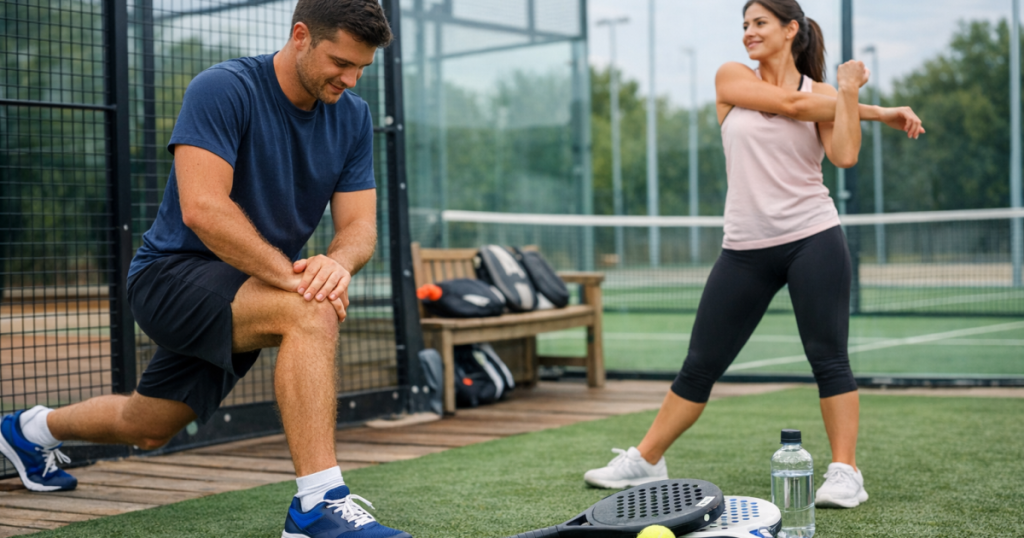
Once you feel a little warmer, add dynamic mobility. Dynamic means moving in and out of a range rather than holding one long stretch. Save long static stretching for after the session or a separate flexibility routine.
Lower body
- Ankles: make small circles, then rise gently onto your toes for 8 to 10 controlled reps.
- Calves: do short, soft bounces on the balls of your feet without locking your knees.
- Hips: step to the side and back, keeping the movement comfortable rather than deep.
- Hamstrings: use gentle leg swings forwards and backwards, holding the glass or fence for balance if needed.
Upper body
- Shoulders: make slow arm circles forwards and backwards.
- Wrists: rotate both wrists, then open and close your hands a few times.
- Upper back: turn your torso left and right as if tracking a ball coming off the glass.
- Forearms: do light racket swings with no ball, staying loose through the grip.
Do not chase maximum range. A safe beginner warm-up should feel smooth, not aggressive. If a movement feels sharp or pinchy, reduce the range or skip it.
Step 4: Add padel-specific footwork
Now make the warm-up look more like padel. This is where many first-time players benefit most, because the sport is less about long running and more about being balanced for the next shot.
Try this simple court movement sequence:
- Stand near the service line in a ready position: knees soft, feet roughly shoulder-width apart, racket in front.
- Take three small side steps to the right, pause, then three to the left.
- Move forwards two steps as if approaching the net, then backwards two steps while keeping your chest facing the court.
- Add a small split-step before changing direction.
- Repeat for 60 to 90 seconds at a relaxed pace.
The split-step is just a small, light hop or bounce that helps you react as your opponent hits. It should not be dramatic. If you want to practise it away from match pressure, these split-step drills for better court positioning are a useful next step once you have played a few games.
Step 5: Hit softly before you hit hard
When you first pick up the racket, resist the urge to test your biggest shot. Start with short, controlled hits. Your first aim is timing: seeing the ball, meeting it cleanly, and recovering your position.
A good hitting build-up is:
- Mini rallies: stand closer than usual and tap the ball gently over the net.
- Groundstrokes: move back towards the service line and hit at around half pace.
- Volleys: start with soft blocks rather than punchy winners.
- Glass rebounds: let a few slow balls come off the back glass so you get used to waiting.
- Overheads: practise controlled contact before attempting anything powerful.
Beginners often swing harder because they feel late. A calmer warm-up helps you realise that padel rewards balance and timing more than force. If you can keep the ball in play at easy pace, your first match will feel far less chaotic.
Step 6: Practise one or two serves
Before the game starts, take a few relaxed serves from each side if court time allows. Keep them low effort. You are checking rhythm, bounce height, and contact point, not trying to win the warm-up.
For a first game, rehearse the basics: stand behind the service line, bounce the ball, strike below waist height, and serve diagonally into the correct box. If you are unsure about the rules, read this beginner-friendly guide to serving legally in padel without faulting before your session.
After serving, add one simple recovery habit: step in, return to a ready position, and prepare for the next shot. This makes the warm-up more realistic without making it intense.
A simple 10-minute beginner routine
Use this if you like having a clear order to follow. Adjust the timings if your club session is busy or the court is only available right on start time.
- Minute 1: walk, light jog and gentle arm swings.
- Minute 2: side steps, forward steps and backward steps.
- Minute 3: ankle circles, calf raises and soft knee bends.
- Minute 4: hip openers, torso turns, shoulder circles and wrist rotations.
- Minute 5: ready position, side shuffles and small split-steps.
- Minutes 6 to 7: short controlled rallies close to the net.
- Minutes 8 to 9: easy groundstrokes, volleys and a few glass rebounds.
- Minute 10: two or three calm serves from each side.
If you arrive late, compress the routine rather than skipping straight to full-speed hitting. Do one minute of movement, one minute of mobility, one minute of footwork, and two minutes of easy rallies.
Common warm-up mistakes before a first game
- Standing still and chatting until the first point: it is sociable, but your body is still cold.
- Only stretching your hamstrings: padel also asks a lot of your ankles, hips, shoulders, wrists and upper back.
- Smashing early: overheads need timing and shoulder preparation. Build towards them gradually.
- Warming up like tennis: padel has more glass, compact movement and quick net exchanges, so include short reactions and recovery steps.
- Ignoring the return: low serves can catch beginners out, so practise staying low and taking a small step into the ball. These return drills for handling low serves can help once you know the basic contact point.
Things readers ask
How long should a padel warm up take?
For a first game, 8 to 12 minutes is a sensible target. If court time is limited, use five focused minutes: easy movement, dynamic mobility, footwork, then soft hitting.
Should I stretch before playing padel?
Use dynamic movements before play, such as arm circles, side steps and gentle leg swings. Long held stretches are usually better after the session, when you are cooling down.
What if I feel nervous before my first game?
Keep the routine simple and repeatable. Moving gently, hitting a few easy balls and practising one legal serve can settle your breathing and give you something practical to focus on.
Do I need to be fit to warm up properly?
No. A beginner warm-up should match your current level. The aim is to prepare, not perform. Move at a pace where you can still talk comfortably.
Can I warm up off court?
Yes. If the court is not free yet, do your light movement and mobility beside the court where there is safe space. Save hitting, serves and glass practice for when you are on court.
What to remember
A safe first-game warm-up is simple: move gently, loosen the main joints, practise padel footwork, then hit softly before raising the pace. You should finish feeling alert and ready, not tired.
The biggest beginner win is consistency. Use the same short routine before each club game and you will start to recognise what your body needs, how the court feels, and how much time you need before the first point.