Turning up for a match with a small padel accessories kit saves you from the little problems that can spoil a good session: a slippery grip, no spare balls, wet hands, an empty bottle or a bag that takes five minutes to rummage through. You do not need to carry half a sports shop. For most beginner and early club matches, the aim is simple: pack the few items that keep you comfortable, ready and organised without making your bag heavy.
The sweet spot is a compact kit that lives inside your padel bag and gets topped up after each session. If you are still working out what belongs in your main bag, start with the basics in how to pack a padel bag for your first club session, then use this guide to refine the small extras you actually use on match day.
What to know first
A good match kit is not about owning every accessory. It is about removing avoidable distractions. If your grip starts peeling, your hands get sweaty, or your water runs out, your concentration drops. Padel is already quick enough without also fighting your gear between points.
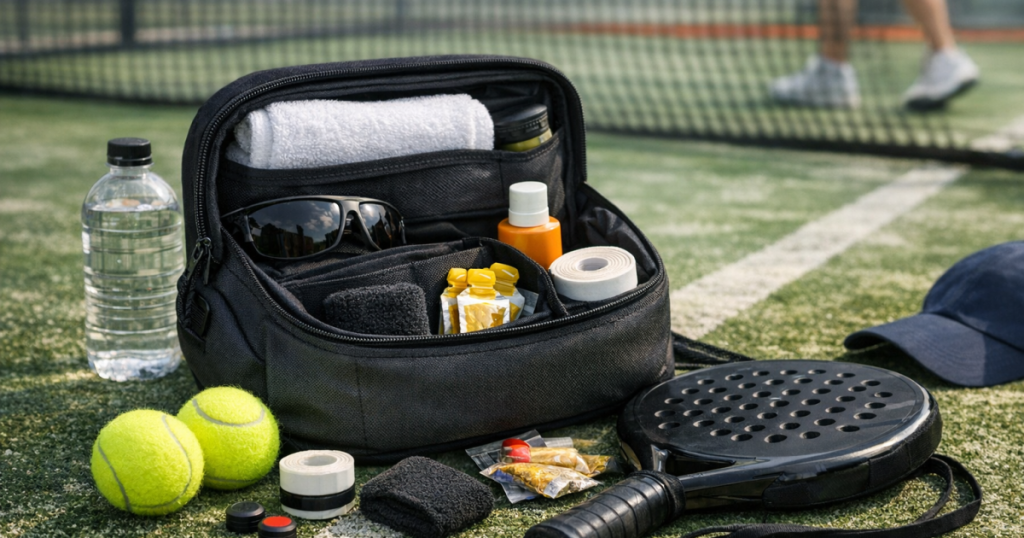
For most new players, your kit should fit into one small pouch, side pocket or drawstring organiser. Think of it as your match support pocket rather than your whole bag. Your racket, shoes and clothing sit outside this kit; the accessories inside are there to help you manage the session once you arrive at the club.
Your first padel accessories kit should cover five jobs: grip, hydration, comfort, ball management and simple organisation. If an item does not help with one of those jobs, it probably does not need to come to every match.
Step 1: Choose a small organiser before adding items
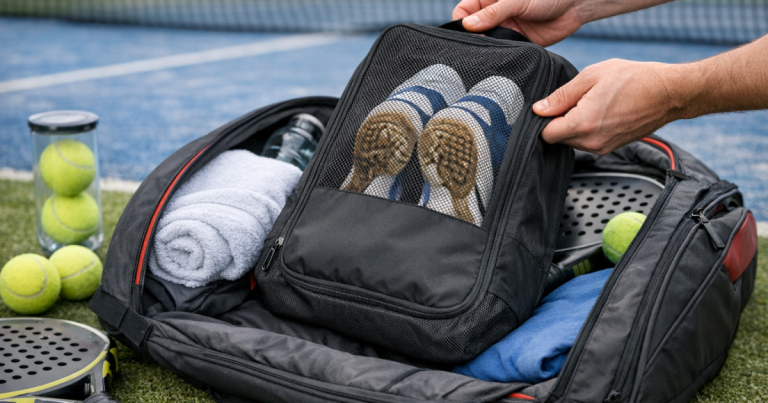
Start with the container, not the contents. A compact pouch, packing cube, drawstring bag or zipped side pocket stops small accessories disappearing into the bottom of your padel bag. It also makes it easier to move the same kit between bags if you play at different clubs.
A good organiser should be easy to open courtside, wipeable if possible, and small enough that you are not tempted to keep adding “just in case” extras. A clear pouch can be useful because you can see what is missing quickly. A fabric pouch is quieter and often easier to squeeze into a tight bag. Either is fine as long as it keeps your essentials together.
Try this simple layout:
- Main pouch: overgrip, plasters, small towel and spare hair tie or wristband if you use them.
- Ball space: one tube or loose match balls kept away from wet clothing.
- Hydration space: bottle stored upright and separate from electronics, keys and dry grips.
- Small valuables pocket: keys, club card and any court booking notes you need.
The aim is to find things by feel, not to unpack your whole bag during a changeover.
Step 2: Add one spare overgrip
If you only add one true padel accessory, make it an overgrip. Padel involves quick changes of direction, short volleys and repeated contact under pressure. Once the handle starts feeling slick, you tend to squeeze harder. That can make your touch worse and leave your arm feeling more tense than it needs to.
Carry one fresh overgrip in its wrapper so it stays clean and dry. You do not have to change it every session, but having one spare means a worn grip is no longer a reason to play badly. Many players use options such as Wilson Pro Overgrip, but the important point is not the brand; it is whether the grip feels secure in your hand and suits how much you sweat.
For beginners, avoid overcomplicating grip thickness at first. If the handle feels too thin, one overgrip may help. If it feels bulky or awkward, adding more layers can make the racket harder to control. Keep it simple and adjust only when you have noticed a real problem over several sessions.
Step 3: Pack balls sensibly
Club matches can be relaxed, but you still need balls that bounce consistently enough for a fair game. If everyone assumes someone else is bringing them, warm-up starts with a search through bags and old tubes. Carrying one usable tube avoids that.
Padel balls are not the same as tennis balls in how they are intended for the sport, so use proper padel balls where possible. A common example is Head Padel Pro, although many clubs and players use other recognised padel ball options. The key check is condition: if the balls feel flat, look badly worn or barely rebound, they will make rallies harder to judge.
Keep balls dry and away from wet towels or damp clothing. If you have opened a tube, close it properly after play and store it in the same pocket each time. For casual matches, you do not need a fresh tube every session, but you should notice when the bounce has dropped enough to affect play.
Step 4: Include comfort items you will actually use
Small comfort items make a big difference, especially in indoor centres, humid evenings or busy club sessions where you may play several sets. The trick is to pack items that solve common problems without turning your kit into a first-aid cupboard.
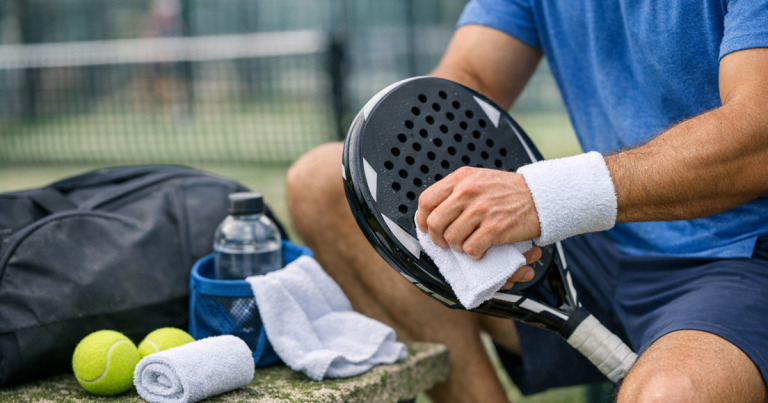
- Small towel: useful for hands, face and racket handle between games. A compact gym towel is enough.
- Blister plasters: handy if new shoes or longer sessions start rubbing. Compeed Blister Plasters are a familiar example, but any suitable blister plaster you trust is fine.
- Wristband or sweatband: helpful if sweat reaches your hand and affects grip.
- Spare hair tie or headband: tiny, easy to forget and annoying when missing.
- Light layer: not always part of the pouch, but worth having in your main bag for cooler UK evenings after play.
Do not pack items you have never needed just because they look organised. After a few matches, your own habits will tell you what deserves a permanent place.
Step 5: Sort hydration and quick fuel
Hydration is not glamorous, but it is one of the easiest things to get wrong. A one-litre bottle is a sensible starting point for most club sessions, especially if you are playing indoors or for more than an hour. If you know you drink more, bring more rather than relying on the venue.
Keep your bottle upright and outside the pouch containing dry grips or plasters. Even a small leak can ruin an overgrip before you have used it. If your bag has a side bottle holder, use it. If not, place the bottle in a separate compartment or wrap it in a small towel.
For food, keep it modest. A banana, cereal bar or small snack can be useful for longer sessions, but you do not need a full meal courtside. Pick something you can eat quickly and that will not melt, crumble everywhere or leave sticky hands before your next service game.
Step 6: Keep match admin in one place
Accessories are not only physical playing items. A smooth match also depends on small admin details: your booking confirmation, club access card, payment card, locker coin if your venue needs one, and a note of court time. Keep these in one reliable pocket so you are not checking every zip at reception.
If you regularly play at clubs that use booking systems, get into the habit of checking court time, cancellation rules and arrival instructions before leaving home. For players who book through digital systems, the ClubSpark Booker app review for padel club bookings explains what beginners may find useful when organising sessions.
One small practical tip: avoid putting keys loose in the same compartment as balls or grips. Keys can tear wrappers, scratch items and make everything harder to find. A tiny key clip or zipped inner pocket is enough.
Step 7: Use a pre-match check that takes under a minute
A kit only works if you check it before the session. You do not need a full inventory every time. Use a quick routine as you leave home or when you pack the night before.
- Racket packed and in good condition.
- Padel shoes packed if you are not wearing them to the club.
- One spare overgrip still clean and dry.
- Usable balls packed.
- Water bottle filled.
- Small towel packed.
- Blister plaster or basic comfort item topped up.
- Booking details, keys and payment card in the same pocket.
This check is intentionally plain. It covers the things that most often cause avoidable stress. If you are playing straight after work, keep a copy of the list in your bag for the first few weeks until it becomes automatic.
Examples of small kits for different match situations
One-hour social match
For a short indoor social match, keep it lean: racket, shoes, one tube of usable balls, spare overgrip, small towel and water. Add plasters if your shoes are new or you have had rubbing before. You should be able to fit the accessories into one small pouch with no problem.
Evening league match
For a slightly more serious club match, add a spare top, a light layer for afterwards and a snack. You may be waiting between games or warming up in cooler conditions, so comfort after play matters as well as during play. Keep the actual courtside pouch the same, but use the rest of your bag for clothing.
Beginner coaching match play
If the session includes drills and points, bring the same core items plus a small notebook only if you genuinely use one. Some players like jotting down one focus for the next session, such as “slower lob preparation” or “call earlier at the net”. If decision-making is the thing you are trying to improve, the drills in partner call-out drills for sharper padel decisions are a useful next step away from your bag and onto the court.
What not to carry every time
Beginners often overpack because they are trying to be prepared. The problem is that a heavy, cluttered bag makes match day less organised, not more. Leave out items that are bulky, rarely used or better kept at home.
- Multiple spare outfits: one spare top is usually enough for a normal club match.
- Several tubes of balls: useful for group drilling, not necessary for most matches.
- Full-size toiletries: use travel sizes only if you shower at the club.
- Too many grips: one spare is enough unless you are playing a long event.
- Old dead balls: they take up space and make practice less realistic.
- Accessories you never touch: remove them after two or three unused sessions.
The best small kit is one you trust because everything in it has a purpose.
After-match reset
The easiest time to maintain your kit is straight after playing. Empty damp items, open the bag when you get home, and replace anything you used. This prevents the familiar problem of discovering an empty bottle, missing plaster or worn grip five minutes before your next court booking.
Use this simple reset:
- Take out wet towels and clothing as soon as you can.
- Let shoes and bag compartments air properly.
- Check whether the overgrip needs replacing.
- Remove dead balls from the match pocket.
- Restock plasters, snack or spare hair tie if used.
- Wipe away loose sand, fluff or dirt from the bottom of the bag.
If your bag has started to smell or has collected dirt from indoor and outdoor courts, follow the safer cleaning steps in how to clean a padel bag without ruining it rather than soaking it or using harsh products.
Common match-day questions
How small should the kit be?
Small enough to fit in one pouch or dedicated pocket. If you need two hands to dig through it, it has become too complicated. The point is quick access before warm-up and during changeovers.
Should I bring spare balls to every match?
Yes, if you play regular club matches. You may not use them every time, but having one reliable tube avoids delays and means you are not stuck with flat balls. Rotate them out when the bounce becomes poor.
Do I need different accessories for indoor and outdoor padel?
The core kit stays the same. Outdoors, you may want a cap, extra layer or more water depending on conditions. Indoors, sweat management can matter more, so a towel, wristband and dry overgrip become especially useful.
Where should I keep valuables?
Use a zipped inner pocket and keep it consistent. Do not leave valuables loose courtside if your venue provides a safer storage option. The aim is to avoid distraction during play and panic after the match.
Final thoughts
A small match kit should make padel feel easier, not more complicated. Start with the essentials: overgrip, balls, towel, water, comfort items and basic admin. Keep everything in one place, check it before you leave, and reset it after each match.
As you play more, your kit will become personal. Some players always need a wristband; others care more about a spare top or a snack. Keep the items that solve real problems and remove the ones that only add clutter. That is how you build a padel accessories kit that quietly supports your matches without taking over your bag.