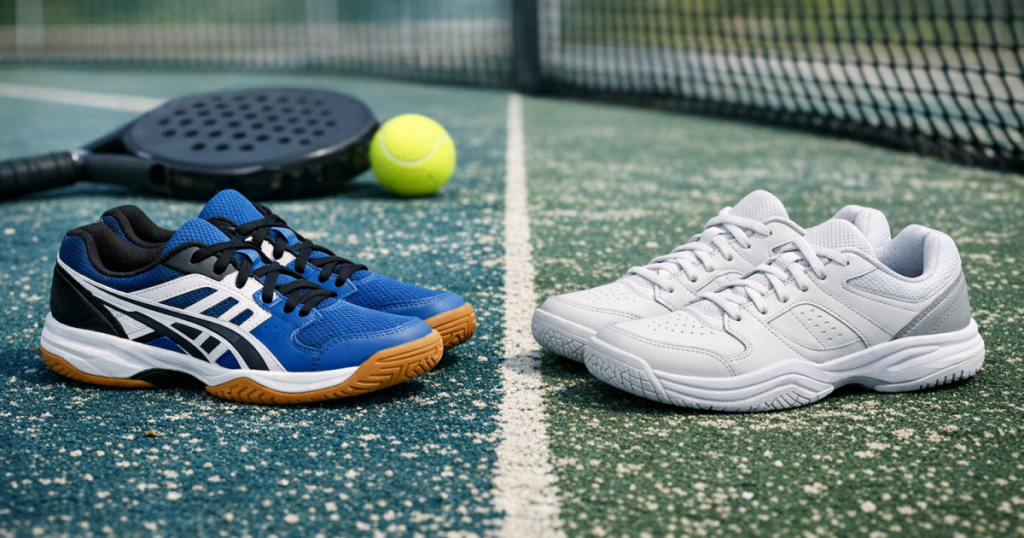
Choosing your first proper padel shoes is awkward because both pairs look court-ready, but they are not aimed at exactly the same player. Asics Gel-Padel Pro 3 vs Nike Court Lite is really a choice between a padel-specific option with beginner-friendly stability and a broader court-shoe option that may appeal if you also play tennis or want a familiar fit. The best pick depends less on branding and more on grip pattern, lateral support, comfort and how often you expect to play club sessions.
At a glance
The Asics Gel-Padel Pro 3 is the more straightforward choice for most new padel players because it is positioned as a padel shoe and is built around the type of short sprints, stopping, turning and sideways movement that beginners quickly discover on court. It is the safer default if you are buying mainly for padel and want fewer doubts about suitability.
The Nike Court Lite is better treated as a court-shoe option rather than an automatic padel pick. Some players like the line because it feels familiar from tennis-style movement, but you should check the exact outsole and retailer description before using it for padel. Not every Court Lite listing is presented as padel-specific, and outsole suitability matters a lot on sand-dressed artificial turf courts common at UK clubs.
- Choose Asics if: padel is your main sport, you are starting club sessions, and you want a shoe that makes sense for beginner movement patterns.
- Consider Nike if: you already know the Court Lite fit, play other racket sports too, and can confirm the outsole suits your local padel court.
- Do not choose purely on looks: a clean court trainer can still feel wrong once you start defending corners and turning from the glass.
- Check before you buy: UK sizing, returns, the outsole image, and whether your club expects padel or clay-style court shoes.
The main difference: padel-specific design versus general court use
Padel asks more of shoes than many beginners expect. You rarely run long distances, but you do make repeated side-steps, split-steps, pivots and emergency stops. A shoe that feels fine walking around the clubhouse can feel vague when you are moving sideways to block a volley or trying to recover after a lob.
That is why this comparison starts with intended use. The Asics option is easier to judge because the Gel-Padel Pro 3 sits in a padel-focused line. The Nike Court Lite, depending on the exact version and retailer listing, is more commonly understood as a tennis or general court shoe. That does not automatically make it unusable for padel, but it does mean the buyer has more to verify.
If you are unsure whether you even need specialist footwear yet, it is worth reading our separate guide on whether padel shoes are required for club sessions. For this head-to-head, the key point is simple: once you are playing regularly, outsole grip and lateral support become practical needs rather than nice extras.
Grip and outsole: the part beginners should inspect first
Grip is the biggest buying factor here. UK padel courts are commonly artificial turf with sand infill, although court feel varies by venue, age and maintenance. Too little grip can make you slide when you do not intend to. Too much grip can make turning feel sticky, which may be uncomfortable when you are learning to rotate into shots.
The Asics Gel-Padel Pro 3 is the clearer option if you want a shoe intended for padel-style traction. When comparing product listings, look closely at the outsole photos rather than relying only on the title. You want a tread pattern that looks suited to dusty, sanded or artificial turf court conditions rather than a smooth indoor sole.
With the Nike Court Lite, outsole checking matters even more. If the version you are considering is sold mainly as a tennis shoe, inspect whether the tread looks appropriate for your padel venue. A Court Lite model with a durable hard-court tennis outsole may not feel the same as a padel or clay-style outsole on a sanded padel surface. Some beginners overlook this because the shoe still says “Court”, but “court” is not the same as “padel court”.
- For predictable padel grip: the Asics is the lower-risk choice.
- For mixed tennis and padel use: the Nike may make sense only if the outsole matches the surfaces you actually use.
- For very new players: avoid shoes with a worn, flat or heavily polished sole, even if the upper looks fine.
Stability when moving sideways
Beginners often focus on cushioning, but sideways stability is just as important. Padel movement is compact and reactive. You shuffle to cover volleys, push sideways to defend corners, and change direction quickly after the ball rebounds from the glass. A shoe that rolls too easily at the side can make you feel hesitant.
The Asics Gel-Padel Pro 3 has the advantage of being easier to recommend for padel-specific lateral movement. You still need the right size and fit, but the shoe’s purpose is better aligned with what you will do in a normal club game.
The Nike Court Lite can still feel stable for some players, especially those used to tennis shoes. The question is whether it gives you the right combination of side support and court feel for padel. If you try it on, do not just walk forwards. Gently side-step, stop, and check whether your foot feels held in place. If your foot slides inside the shoe, you may be fighting the shoe during matches rather than trusting it.
Players who are already comparing Asics options may also find our Asics Gel-Padel Pro 3 vs Adidas CourtJam Bounce comparison useful, because it puts the Asics into another beginner-friendly head-to-head rather than judging it in isolation.
Comfort, cushioning and fit
Comfort is personal, so it is the area where broad claims are least helpful. Two players can wear the same size and have completely different reactions based on foot width, arch shape, socks and how tightly they lace their shoes. Treat online sizing comments as clues, not guarantees.
The Asics Gel-Padel Pro 3 is likely to appeal if you want a padel shoe that feels supportive without moving into the more expensive performance-shoe category. It should be on your shortlist if you play once or twice a week and want something more appropriate than running shoes or casual trainers.
The Nike Court Lite may appeal if you already like Nike court shoes or want a familiar shape. The risk is not that it is a bad shoe; it is that a comfortable general court shoe can still be the less suitable padel shoe if the sole or side support does not match the game. Comfort in the shop should be tested against padel movement, not just standing fit.
- Try them with padel socks: thicker socks can change the fit more than expected.
- Check heel hold: your heel should not lift noticeably when you push off.
- Leave toe room: repeated stops can push your toes forward, so cramped sizing becomes obvious during play.
- Use returns wisely: if buying online in the UK, check the retailer’s return condition rules before testing indoors.
Durability and value for beginner club play
Neither shoe should be judged only by how long it might last. Durability depends on court surface, playing frequency, footwork, bodyweight, dragging habits and how often you rotate footwear. A beginner who plays one relaxed session a week will wear shoes differently from someone taking lessons and joining social matches twice weekly.
Value is more useful than “cheap versus expensive”. A slightly more appropriate shoe can be better value than a discounted shoe that does not suit the surface. The Asics has a value advantage because its padel positioning reduces the chance of buying the wrong type of court shoe. The Nike may still be good value if you can use it across tennis and occasional padel, but only if it performs safely on your padel court.
When comparing UK prices, look at the full picture: current sale price, available sizes, delivery cost, return window and whether you are buying from a retailer that clearly shows outsole photos. A vague listing with one side-on image is less helpful than a listing that lets you properly inspect the sole.
Side-by-side buying notes
- Primary use: Asics is the more padel-focused choice; Nike is better treated as a general court option unless the specific listing confirms padel suitability.
- Beginner confidence: Asics gives new players a clearer match between shoe and sport, which matters when footwork still feels unfamiliar.
- Grip checks: both need outsole inspection, but Nike needs more caution because Court Lite versions are often associated with tennis use.
- Fit preference: Nike may suit players who already know and like Nike court footwear; Asics may suit players starting from a padel-first buying decision.
- Mixed-sport use: Nike can be more tempting if you split time between tennis and padel, while Asics makes more sense if padel is now your regular club activity.
- Upgrade path: if you start playing more competitive matches, you may later want a shoe with a more performance-led feel, but beginners do not need to overbuy immediately.
Pros and trade-offs
Asics Gel-Padel Pro 3
- Pros: padel-focused positioning, sensible beginner suitability, clearer surface relevance, and a practical choice for regular club sessions.
- Trade-offs: still needs careful sizing, may not suit every foot shape, and is not automatically the right pick if you mainly play tennis with occasional padel.
Nike Court Lite
- Pros: familiar court-shoe appeal, potentially useful for players who also play tennis, and worth considering if the fit works well for your foot.
- Trade-offs: outsole suitability is less straightforward, padel-specific credentials may depend on the exact listing, and beginners need to be careful not to buy on brand familiarity alone.
Who should buy which pair?
Buy the Asics Gel-Padel Pro 3 if you are building a simple beginner padel kit and want your shoe choice to be one less thing to worry about. It is the more natural match for club sessions, beginner coaching, social matches and the first stage of regular play. It also makes sense if you are moving away from running shoes, gym trainers or worn-out tennis shoes and want a clearer padel upgrade.
Consider the Nike Court Lite if you already play tennis, know the fit works for you, and can confirm the outsole is appropriate for your local padel surface. It is also an option for players who are still testing whether padel will become a regular habit, although you should not compromise on grip just to keep one shoe for everything.
If both options feel too entry-level after a few months of regular play, look at a more dedicated step-up shoe and compare the trade-offs carefully. Our Wilson Hurakn Pro padel shoes review is useful if you want to understand what a more padel-focused upgrade can offer without assuming every beginner needs it from day one.
Main lessons
For most beginners, the sensible recommendation is the Asics Gel-Padel Pro 3. It is the easier shoe to justify because its purpose lines up with padel movement, UK club play and the needs of early-stage players who want grip, support and comfort without overcomplicating the decision.
The Nike Court Lite is not a poor choice by default, but it is a conditional one. Buy it only after checking the exact outsole, fit and surface suitability. If you want one pair for tennis and occasional padel, it may be worth considering. If you are buying mainly for padel, the Asics is the cleaner pick.
The practical decision is this: choose the shoe that matches your court, movement and playing frequency, not the one that simply looks most like a sports trainer. For a first dedicated padel shoe, the Asics gives beginners fewer unknowns.
Quick Buying Links
Asics Gel-Padel Pro 3
Asics Gel-Padel Pro 3 vs Nike Court Lite is really a choice between a padel-specific option with beginner-friendly stability and a broader court-shoe option that may appeal if you also play tennis or want a familiar fit.
Nike Court Lite Padel Shoes
Worth considering if its strengths better match your needs.
Helpful questions
Can I use Nike Court Lite shoes on a padel court?
Possibly, but only if the exact outsole suits your club’s padel surface. Check the sole pattern, retailer description and club guidance before using them regularly.
Are Asics Gel-Padel Pro 3 shoes enough for weekly beginner sessions?
For many beginners, yes. If the fit is right and the sole suits your court, they are a sensible padel-focused option for regular social play and lessons.
Should I buy padel shoes before my first lesson?
If you are trying one session, clean court shoes may be accepted by some venues. If you plan to keep playing, buying suitable padel shoes early is usually a better move than relying on running trainers.
What should I check first when buying online?
Look at outsole photos, UK size availability, return rules and whether the listing clearly describes the shoe’s intended court surface. Do not rely only on colour or discount.
Which pair is better if I play both tennis and padel?
The Nike may be more appealing for mixed use, but the Asics is still the better padel-first option. If padel is becoming your main sport, prioritise padel suitability.