Turning up for your first club session should feel exciting, not like a kit inspection. The honest answer to whether padel shoes required depends on the venue, the court surface, and how strict the club is about non-marking footwear.
Most beginners can get through an early taster session in suitable clean court trainers, but regular club play is much easier, safer, and more comfortable in shoes made for padel or tennis-style lateral movement.
The short answer for beginners
No, specialist padel footwear is not automatically compulsory at every UK club session. Some venues simply ask for clean, non-marking sports shoes. Others are stricter, particularly where the courts are busy, newly installed, or shared with other racket sports.
The important distinction is between “allowed” and “sensible”. A pair of running trainers may be allowed at a casual beginner session, but they are not ideal for the quick sideways steps, stops, pivots, and small recovery movements that happen in padel. If you plan to play more than once or twice, proper court shoes quickly become one of the more useful upgrades.
Before your first visit, check the club’s booking page, confirmation email, or reception guidance. If you are still unsure, ask the venue what footwear they accept. The answer is usually straightforward: clean soles, good grip, and no shoes that mark or damage the court.
What clubs usually care about
Clubs are not trying to make beginners feel awkward. Footwear rules normally exist for three reasons: player safety, court protection, and keeping sessions running smoothly.
Clean soles
Outdoor courts can pick up grit, mud, leaves, and moisture around the entrance. Dirty soles reduce grip and can transfer debris onto the playing area. Even if your shoes are technically suitable, arrive with them clean rather than walking in from a muddy car park.
Non-marking outsoles
Many venues ask for non-marking shoes because black scuffs and rubber marks are difficult to remove. This is common across indoor racket sports and some padel centres. If you are using general sports trainers, check whether they are labelled non-marking. If you cannot tell, do not assume they are fine.
Side-to-side support
Padel is full of short sideways movements. Running shoes are mainly built for forward motion, so they can feel unstable when you lunge, recover, and turn. Court shoes usually offer a flatter base and better lateral support, which helps when you are moving in and out of the corners or reacting at the net.
Grip that suits artificial turf
Many padel courts use artificial turf with sand infill. Shoes with an appropriate court sole can help you grip without feeling stuck. Too little grip feels slippery; too much grip can make turns feel clumsy. Beginners do not need to obsess over sole patterns, but they should avoid smooth lifestyle trainers and heavily worn soles.
Can you wear normal trainers to a club session?
For a first beginner lesson, social taster, or low-intensity session, normal trainers may be accepted if they are clean, supportive, and non-marking. That does not mean every pair of trainers is a good idea.
Gym trainers can sometimes work for a gentle first session, but they vary a lot. Some have flexible uppers that do not hold the foot securely when you move sideways. Fashion trainers are usually a poor choice because they lack grip and support. Running shoes can feel comfortable at first, but the higher, softer sole can make quick changes of direction less stable.
If you are packing for your first visit, it is worth checking your whole kit rather than only your footwear. A clean towel, water bottle, racket, spare grip, and suitable clothing will make the session feel easier. For a simple first-session checklist, see how to pack a padel bag for your first club session.
When proper padel or court shoes become worth it
The moment you start playing regularly, footwear matters more. Regular does not have to mean league matches or advanced club nights. If you are booking weekly games, joining coached sessions, or moving from “I am trying padel” to “I play padel”, shoes designed for court movement are a sensible step.
You will notice the benefit most in four common beginner situations:
- Recovering after a shot: padel rewards getting back into position quickly, not admiring the ball after you hit it.
- Moving into the corners: beginners often arrive late to the back glass, then twist or push off awkwardly.
- Reacting at the net: small split-steps and sideways shuffles are easier with a stable base.
- Playing longer sessions: as fatigue builds, supportive footwear helps you stay balanced and controlled.
At this point, asking whether padel shoes required becomes less about club rules and more about comfort, movement confidence, and reducing avoidable slips. You do not need the most expensive pair in the shop. You need shoes that fit properly, suit the court surface, and feel stable when you move sideways.
What to check before turning up
A quick footwear check can prevent awkward conversations at reception and help you feel more confident on court.
1. Read the venue’s footwear policy
Look at the booking confirmation, club website, or app notes. Some clubs state “non-marking court shoes only”, while others say “suitable sports footwear”. Treat the stricter wording seriously. If the venue says court shoes only, do not arrive in running trainers and hope it will be fine.
2. Check the soles before you leave
Turn the shoes over. Are the soles clean? Are there stones lodged in the grooves? Are they worn smooth in the heel or forefoot? A shoe can look fine from above but be poor on court underneath.
3. Avoid brand-new untested shoes for a long match
New shoes can feel stiff, and some need a short settling-in period. If you have bought court shoes, wear them briefly at home or during a light hit before relying on them for a full club night. Do not play through rubbing or hot spots just because the shoes are new.
4. Think about the session type
A coached beginner group is usually slower and more controlled than a competitive box league match. A social mix-in can vary depending on who turns up. If the session involves match play, quick rotations, or a higher level than you are used to, lean towards proper court footwear.
5. Keep outdoor shoes separate where possible
If you can, travel in one pair and change into your court shoes at the venue. This keeps the soles cleaner and helps protect the court. It also looks considerate, which is a small but useful part of club etiquette.
Padel shoes, tennis shoes, or squash shoes?
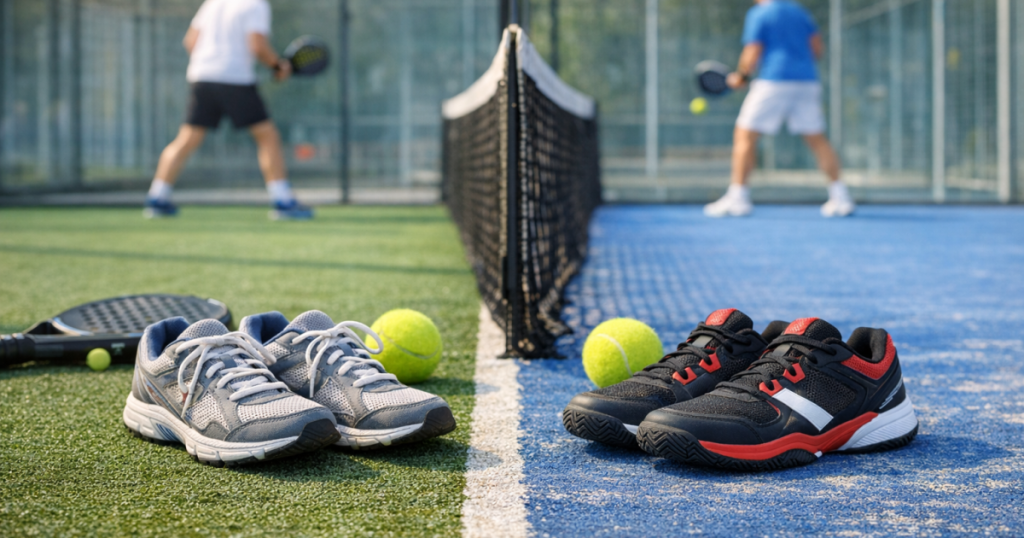
Beginners often ask whether tennis shoes are close enough. In many cases, tennis or all-court shoes are a reasonable starting point, especially if they are designed for lateral movement and accepted by the venue. Padel-specific shoes may use sole designs intended for artificial turf and sand, but the best choice still depends on fit, comfort, court surface, and club rules.
Squash or indoor court shoes can be suitable for some indoor sports surfaces, but they are not always ideal for outdoor padel courts. They may also wear quickly or provide the wrong grip depending on the court. Football boots, trail shoes, hiking shoes, and studded footwear should be avoided for club padel sessions unless a venue specifically tells you otherwise, which would be unusual.
If you are weighing up beginner-friendly footwear, our comparison of Asics Gel-Padel Pro 3 vs Adidas CourtJam Bounce padel shoes explains the kind of trade-offs new players should think about without jumping straight to premium models.
Club etiquette around footwear
Footwear is not only about your own comfort. It affects the people you are sharing the court with. Good etiquette starts before the first point.
- Do not bring mud onto court: wipe or change shoes before stepping onto the playing surface.
- Respect staff decisions: if a club says your shoes are not suitable, treat it as a court-care issue, not a personal criticism.
- Avoid risky footwear: smooth soles, loose trainers, or shoes with poor heel hold can make rallies less safe and less enjoyable.
- Bring a backup if you are unsure: if you own a pair of clean court trainers, pack them as a safer option.
- Do not wait until the match starts: sort footwear before warm-up so the session begins on time.
In mixed beginner groups, someone will often be attending their first or second session. Being organised with your own kit helps keep the atmosphere relaxed and welcoming for everyone.
Simple decision guide
If you are still unsure what to wear, use this straightforward guide.
- First taster session: clean, non-marking sports trainers may be fine, but check the club’s wording before you travel.
- Weekly beginner coaching: court shoes are strongly recommended because you will be repeating movement drills and learning proper footwork.
- Social club matches: wear padel or tennis-style court shoes if you have them, especially if the standard varies across players.
- Competitive matches or leagues: use proper court footwear. At this point, stability and grip are part of being prepared.
- Wet or gritty outdoor conditions: clean soles carefully and avoid worn trainers that have lost tread.
This is also where a small kit habit helps. Keeping a towel, spare socks, overgrip, and simple court essentials in your bag means you are not relying on luck every time you book a session. For ideas, read setting up a small accessories kit for padel matches.
Common mistakes to avoid
The most common beginner mistake is assuming comfort equals suitability. A soft running trainer might feel great walking into the club, then feel unstable once you start changing direction. Another mistake is using old trainers that have lost their shape. Worn soles and collapsed uppers can reduce control even if the shoe once worked well.
Also avoid choosing shoes purely because another player wears them. Feet, movement style, court surface, and fit all matter. A shoe that works brilliantly for a fast, advanced player may feel too stiff or aggressive for someone just learning positioning and recovery steps.
Finally, do not treat footwear as a substitute for sensible movement. Shoes help, but they do not fix late footwork, overreaching, or rushing into the glass. Warm up properly, move in small steps, and slow the game down when you are learning.
Straight answers
Will a club refuse me if I do not have padel shoes?
Some might, but many beginner-friendly venues will allow clean, non-marking sports trainers for an introductory session. Always check the venue’s policy before travelling, because clubs can set their own rules for court protection and player safety.
Are tennis shoes acceptable for padel?
Often, yes. Tennis-style court shoes can be a good option for beginners because they are built for sideways movement. Whether they are accepted depends on the club and the court surface, so check the footwear notes if the venue is strict.
Are running shoes dangerous for padel?
Not automatically, but they are not ideal. Running shoes are generally designed for forward movement, while padel involves lateral steps, pivots, and short stops. For regular play, court shoes are a better choice.
Do beginners need expensive shoes?
No. Beginners need suitable, comfortable, stable shoes, not the most premium pair available. Fit, grip, and club acceptance matter more than price or professional-player branding.
In brief
Specialist footwear is not always compulsory for a first club session, but suitable shoes are part of being prepared. If you are only trying padel once, clean non-marking trainers may be enough if the club allows them. If you are playing regularly, padel or tennis-style court shoes are a sensible upgrade.
The best approach is simple: check the club’s rules, arrive with clean soles, avoid running or fashion trainers for regular play, and choose footwear that supports sideways movement. That keeps you safer, protects the court, and helps you feel more at home in club sessions.