Serving is one of the first moments in a padel point where small details can cause confusion. The padel serve rules are straightforward once you separate them into four checks: where you stand, how the ball bounces, how high you hit it, and where it lands.
For beginners, the aim is not to serve like a professional straight away. It is to start the point legally, avoid easy faults, and feel confident when someone calls a let, a double fault, or a foot fault during a club game.
In brief
- The serve must be hit underarm after the ball bounces once behind the service line.
- You stand behind the service line and serve diagonally into the opposite service box.
- Contact with the ball must be at or below waist height.
- You get two attempts, just like in tennis.
- A serve that hits the net and then lands correctly is usually a let and is replayed.
- If the ball lands in the correct box and then hits the side or back glass, it is generally good; if it hits the fence after bouncing, it is a fault.
If you are getting ready for your first organised game, it is also worth reading the padel rules cheat sheet for your first club match, which covers the wider flow of a match beyond the serve.
Where you stand to serve
The server stands behind the service line, inside the serving box on their own side of the court. For the first point of a game, you serve from the right-hand side of your court into the opponent’s diagonally opposite service box. For the next point, you move to the left-hand side and serve diagonally the other way. You keep alternating sides after each point.
Your feet matter. At the moment you hit the ball, you should not step on or over the service line, and you should not cross the imaginary centre line that divides the two service boxes. One or both feet can move as part of your service motion, but you need to stay in the correct serving area until contact.
A common beginner fault is starting in the right place, dropping the ball, then drifting forwards and striking it from on top of the line. At club level this is rarely dramatic, but it is still a fault if called correctly. Practise serving from half a step farther back than feels necessary. That small margin helps you avoid accidental foot faults without changing your technique.
The bounce before contact
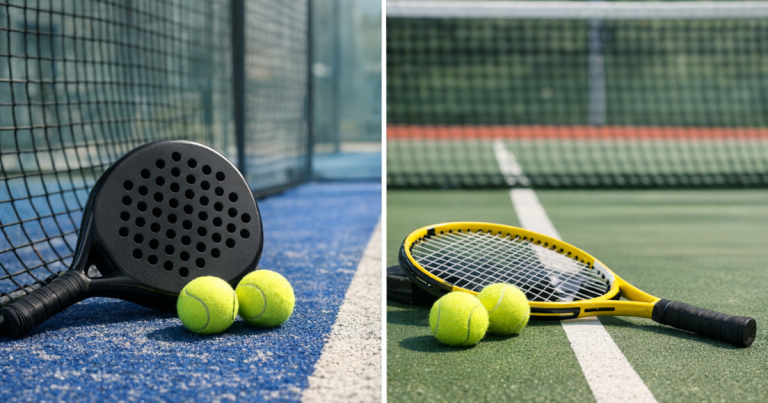
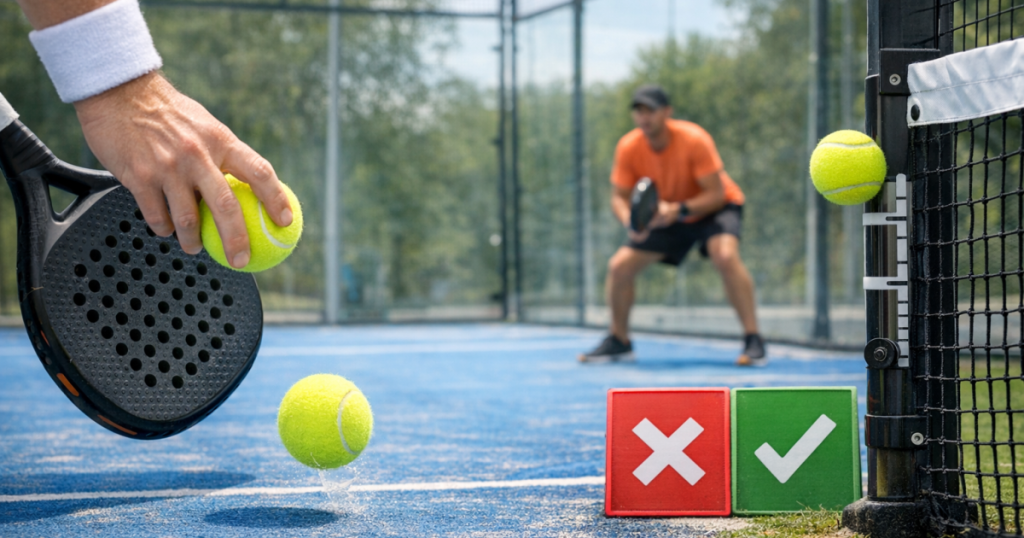
In padel, you do not serve the ball out of the hand. You must let it bounce once on your own side behind the service line before hitting it. This is one of the biggest differences for players arriving from tennis, where the serve is struck out of the air.
The bounce should happen within your serving area, not in front of the service line. After the bounce, you hit the ball underarm. You cannot throw the ball upwards and attack it overhead, and you cannot hit it before it has bounced.
Most beginners find that a simple drop works better than a big, theatrical bounce. Hold the ball around waist or chest height, release it calmly, let it rise just enough after the bounce, and swing through smoothly. If your drop is inconsistent, your contact height and direction will be inconsistent too.
How high can you hit the serve?
The ball must be struck at or below waist height. In practical terms, think of your natural waist rather than your hips or chest. The serve is meant to be an underarm start to the point, not a disguised smash.
This rule causes debate because waist height can look slightly different from player to player. The safest beginner habit is to contact the ball clearly below the waist rather than right on the limit. You will lose very little power, but you will avoid arguments and develop a cleaner, more reliable motion.
Another useful cue is to keep your racket head moving forward and slightly upward through the ball, rather than chopping down from a high position. You are trying to place the ball deep and low, not blast it past the receiver. A controlled legal serve usually wins more beginner points than a hard serve that clips the net, hits the fence, or gets called too high.
Where the serve has to land
The serve must travel diagonally across the net and land inside the opposite service box. The lines count as in, so a serve landing on the correct service box line is good unless another fault occurs afterwards.
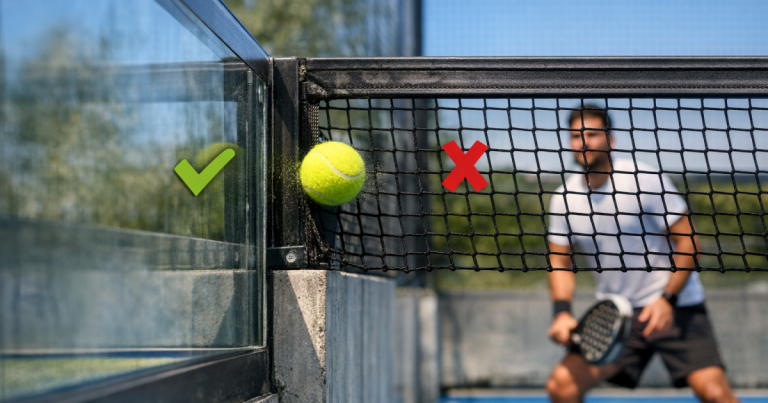
After the ball lands in the correct box, it can hit the back glass or side glass and remain in play. That is normal padel. However, if the served ball lands correctly and then hits the metal fence before the receiver touches it, the serve is a fault. This is a key detail because side-spin serves can sometimes jump towards the fence after bouncing.
From the receiver’s perspective, the ball must bounce before being returned. The receiver cannot volley the serve. If the serve is good, bounces in the box, and comes off the glass, the receiver can play it after the bounce or after it rebounds from the glass, as long as it has only bounced once on the floor.
First serve, second serve, and double faults
You get two chances to make a legal serve. If your first attempt is a fault, you take a second serve from the same side. If the second attempt is also a fault, it is a double fault and the receiving pair wins the point.
Beginners often give away points by treating the second serve like a rescue swing: tense, rushed, and too careful. A better approach is to have a normal first serve and a reliable second serve that uses the same motion but with more margin over the net and less ambition towards the side glass.
At early club level, simply landing a high percentage of serves deep into the correct box is enough to start points on equal terms. As your level improves, you can add variation, but consistency comes first. If you are unsure which games are suitable for your current standard, the guide to padel player levels and finding the right games can help you avoid sessions that are either too easy or too fast.
What counts as a service fault?
A serve is a fault when one of the legal requirements is missed. The most common faults are simple and easy to correct once you know what to watch for.
- No bounce: hitting the ball straight from the hand instead of letting it bounce once.
- Wrong contact height: striking the ball above waist height.
- Foot fault: stepping on or over the service line, or crossing the centre line before contact.
- Wrong box: serving into the wrong diagonal box or missing the service box entirely.
- Net fault: hitting the net and failing to land in the correct service box.
- Fence after the bounce: landing in the correct box but then hitting the metal fence before the receiver plays it.
- Too many bounces: letting the ball bounce more than once before striking it.
Most service disputes are not about the written rule itself, but about what players saw: was the contact above the waist, did the ball clip the line, or did it hit glass before fence? In friendly matches, a calm replay is often the quickest solution if no one had a clear view.
When is a serve a let?
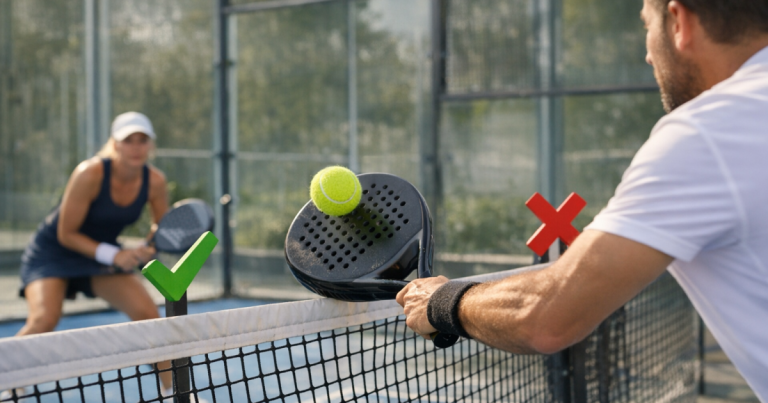
A let is a serve that does not count and is replayed. The most familiar example is when the serve touches the net, then lands in the correct service box, and remains otherwise legal. If that happens on a first serve, you replay the first serve. If it happens on a second serve, you replay the second serve.
If the ball hits the net and then lands outside the correct service box, it is not a let; it is a fault. If it touches the net, lands correctly, and then hits the fence before the receiver plays it, it is also a fault rather than a playable serve.
In some club sessions, players use slightly relaxed interpretations for social flow, especially with complete beginners. That is fine if everyone agrees before playing, but in a match setting you should use the standard rules so both pairs know what to expect.
Serving habits that make the rules easier
Good technique does not need to be complicated. These habits help you stay legal and reduce awkward calls:
- Start a little behind the service line so you have room to move naturally.
- Use the same ball drop each time rather than bouncing it from different heights.
- Contact the ball clearly below your waist while you are learning.
- Aim for a deep, comfortable target before trying heavy spin or sharp angles.
- Pause before serving and check that the receiver is ready.
- Use your second serve as a calmer version of your first, not a completely different shot.
Once the rules feel automatic, the serve becomes less about avoiding faults and more about setting up the point. A deeper serve can push the receiver back; a slower serve into the body can make the return awkward; a serve towards the glass can create a less predictable rebound. Those are useful layers, but they only help if the basic serve is legal and repeatable.
Questions people ask
Can you serve overarm in padel?
No. The serve must be underarm, with the ball hit at or below waist height after it has bounced once on your side behind the service line.
Does the serve have to bounce before the receiver hits it?
Yes. The receiver cannot volley the serve. The ball must bounce in the correct service box before the receiver plays it.
Is the line in on a padel serve?
Yes. If the serve lands on the correct service box line, it counts as in, provided the rest of the serve is legal.
What happens if the serve hits the net and goes in?
If it touches the net, lands in the correct service box, and does not become a fault afterwards, it is a let and the serve is replayed.
Can the serve hit the glass?
Yes. If the serve lands in the correct service box first, it can then hit the back or side glass. If it hits the fence after bouncing, it is a fault.
Final thoughts
The best way to remember the padel serve rules is to run through a simple sequence: correct side, behind the line, one bounce, waist height or lower, diagonal box. If those five checks are right, most of the confusion disappears.
For new players, a legal, consistent serve is more valuable than a risky one. It gets the point started cleanly, keeps the match moving, and helps you feel like you belong in regular club play. If your serve keeps breaking down or you want someone to check your technique in person, reading about how to find padel coaching that matches your level is a sensible next step.