
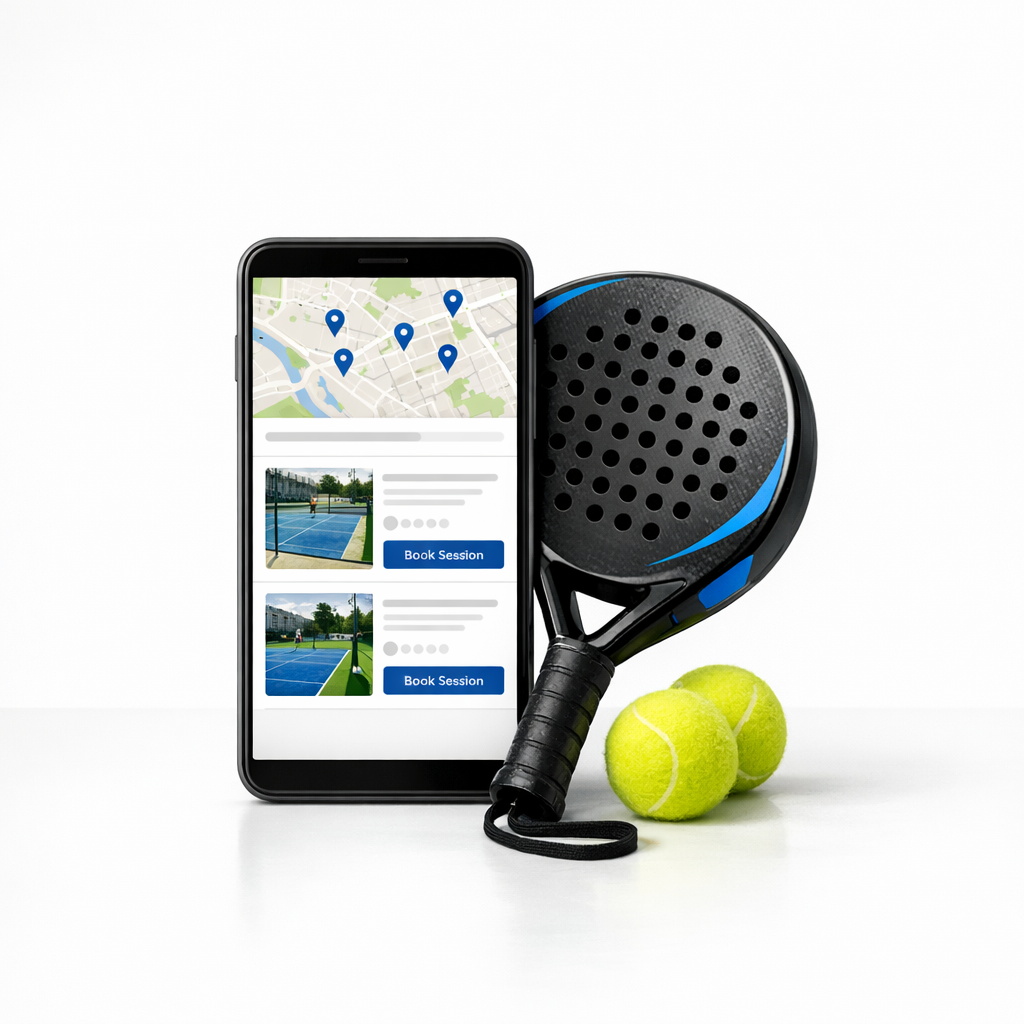
Finding a court is often the first real hurdle after you decide to try padel. The LTA Padel Court Finder Review question is simple: does this official search tool actually help new players get from curiosity to a proper club session, or does it leave too much digging to do afterwards?
The short answer is that it is a useful starting point, especially if you are trying to see what exists near home or work. It is less useful as a complete booking companion, because venue details, session formats, prices and availability can vary by club. Treat it as the map, not the whole journey.
What to know first
The LTA’s court finder is most helpful when you are at the “where can I play?” stage. For beginners, that matters. A club might be only a short drive away, but if it mostly runs member-only bookings, advanced match play or limited evening slots, it may not be the easiest place to start.
For club sessions, the best workflow is to use the finder to create a shortlist, then check each club’s own website, booking page or social feed before you commit. Look for beginner coaching, social mix-ins, introductory sessions, pay-and-play access and clear instructions about racket hire or arrival times.
Product overview
The LTA Padel Court Finder is an online tool connected to the Lawn Tennis Association’s wider tennis and padel activity. Its job is to help players locate places to play, rather than to teach rules, assess coaching quality or guarantee a beginner-friendly session.
That distinction is important. A new player may expect a court finder to answer everything: Can I book tonight? Do I need a partner? Is the session social or competitive? Are rackets available? In practice, a finder is usually only the first layer. It points you towards venues, then the club’s own information decides whether it is a good fit.
For early-stage players, the strongest use case is planning. If you are building a weekly habit, you can search around your home, workplace or regular commute and work out which clubs are realistic for evening or weekend play. If you are unsure what to bring once you have booked, the first-session padel gear checklist is a sensible next step.
Key specs
- Reviewed service: LTA Padel Court Finder.
- Type: online court and venue discovery tool.
- Main purpose: helping players locate padel courts and clubs in the UK.
- Best use: shortlisting nearby venues before checking club-level booking information.
- Booking details: venue processes can differ, so confirm live availability, prices, access rules and session type with the club before travelling.
- Beginner support: not guaranteed by the finder itself; check whether the venue offers coaching, social sessions, intro nights or racket hire.
- Cost information: any court fees or session prices are set by venues, so verify current prices directly with the club.
Pros and cons
Pros
- Good first stop: it gives beginners a structured way to see where padel courts may be available instead of relying on word of mouth.
- Useful for planning around real life: searching near home, work or a regular route makes it easier to find sessions you can actually attend consistently.
- Helpful for comparing areas: if you are deciding between a weekday club and a weekend club, the finder helps you build a local shortlist quickly.
- Supports regular club play: once you know which venues exist, you can start checking coaching, match play and social formats.
Cons
- It is not a full club review: it will not tell you the atmosphere, beginner friendliness or whether a social session is well organised.
- Availability still needs checking: court listings do not replace live booking systems or the club’s own schedule.
- Session labels can vary: one club’s “social” can feel very relaxed, while another’s may be more match-focused.
- New players may still need to contact the venue: questions about partners, racket hire, footwear and group level are often best answered by the club directly.
Performance in real use
For a beginner trying to book a first or second club session, the court finder performs best as a discovery tool. It reduces the uncertainty of not knowing where courts are, and it is particularly handy if you live in an area where padel is growing but clubs are spread out.
The main practical win is narrowing the search. Instead of typing broad phrases into a search engine and sorting through tennis clubs, leisure centres and old listings, you can begin with a padel-specific route. From there, the better decision is not simply “nearest court wins”. It is “which nearby venue gives me the easiest path into regular play?”
That means checking the details that matter for club life. Does the venue offer beginner coaching? Are there social sessions where you can join without bringing three other players? Is there a WhatsApp group, box league or club night? Are off-peak sessions more realistic for your schedule? These are the details that turn a one-off court booking into a habit.
Where the finder is weaker is in confidence-building detail. A brand-new player may not know whether a club’s session is suitable, what standard is expected, or whether court etiquette differs from tennis. If you are nervous about that side of things, it is worth reading the guide to padel rules UK clubs actually follow before you turn up.
Another real-use point is timing. Many beginner-friendly sessions happen after work or at weekends, when courts can be busy. The finder can tell you where to look, but it cannot remove the need to book early, join waiting lists where offered, or ask the club when new-player sessions are quietest.
Who it’s best for / who should skip it
The LTA Padel Court Finder is best for new and early-stage players who need a reliable starting point for finding nearby courts. It is especially useful if you have moved area, started playing through friends and now want your own regular club, or need somewhere close enough to make weekday padel realistic.
It also suits players who are trying to compare practical access rather than chase the most polished venue. A slightly less glamorous club with clear beginner sessions, easy parking or good public transport links may be far more useful than a smart venue that only has awkward times available.
You may be less impressed if you want detailed club reviews, live session ratings, coaching assessments or a one-click answer to “where should I play tonight?” Those decisions still require checking club pages, booking systems and local player groups. The tool is not a substitute for asking a club how its sessions work.
Alternatives
The most obvious alternative is searching through individual club websites and booking platforms directly. This can be more accurate for live availability, but it is slower if you do not yet know which clubs are nearby.
Another strong route is local club communities. Once you have found one or two venues, social groups and club noticeboards can help you understand which sessions are welcoming, which levels attend, and when regulars need extra players. If you are struggling to turn court availability into actual matches, the guide on finding a padel partner at your local club is directly useful.
For coaching-led beginners, a dedicated coaching provider or club-run beginners’ course may be a better first move than simply booking a court. The finder can still help you identify venues, but the deciding factor should be whether the session gives you structure, feedback and people to play with afterwards.
Helpful questions
Can I book a padel court directly through the LTA tool?
Booking routes can vary by venue. Use the finder to locate clubs, then confirm the current booking process on the club’s own page or booking system.
Will it show whether a session is suitable for beginners?
Not always in enough detail. Check the club’s timetable for words like beginner, improver, intro, coaching or social, and contact the venue if the level is unclear.
Should I choose the closest court?
Not automatically. The closest court is useful, but beginner-friendly sessions, realistic times and a welcoming club setup matter more for long-term progress.
Do I need a partner before using a court finder?
No. You can use it to find clubs first, then look for social sessions, coaching groups or club nights where players are matched with others.
Verdict + score
The LTA Padel Court Finder is a helpful, credible first step for UK beginners trying to move from interest to actual club play. Its value is in discovery and planning, not in replacing club-level checks. Use it as your first stop, then verify the session type, availability, prices and beginner support before you book. For players who treat it as a shortlist builder rather than a complete recommendation engine, it is genuinely useful. I’d score it 8.1/10.
LTA Padel Court Finder
Trusted resourcesHelpful external reso