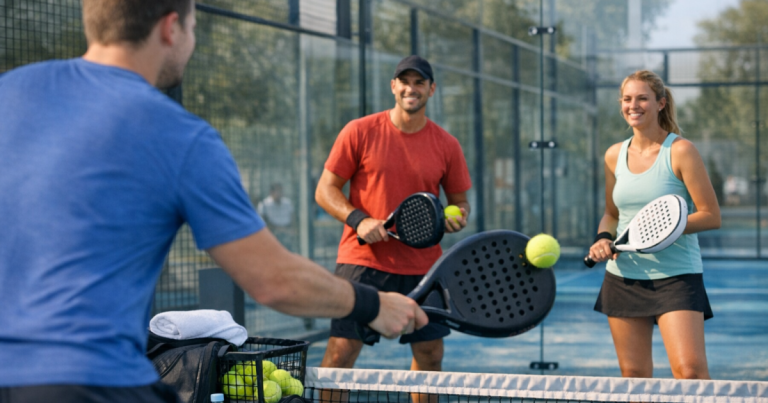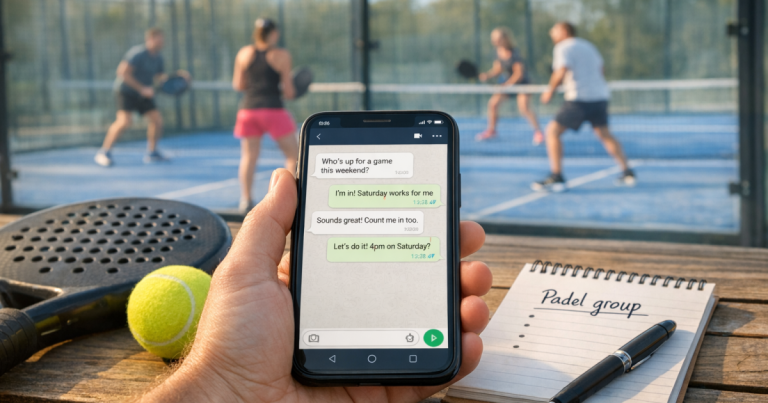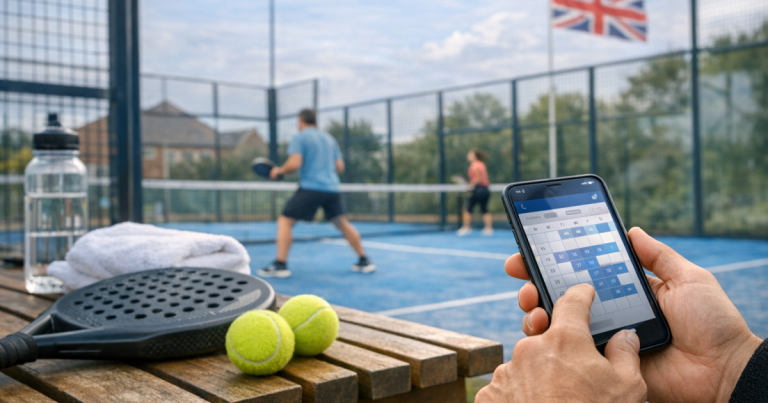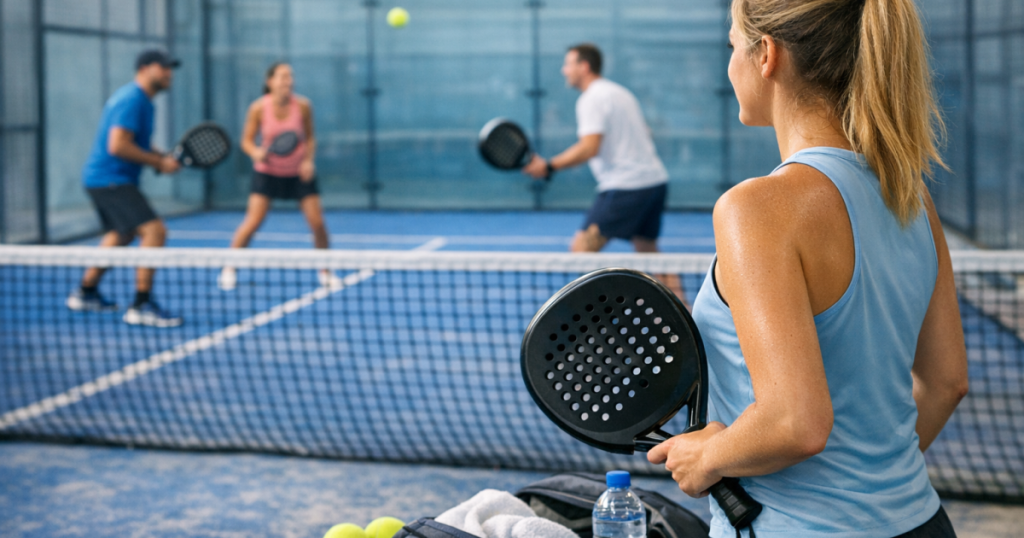
Your first padel session will probably feel more relaxed than you expect: a short warm-up, a few simple explanations, then plenty of rallies. You do not need to arrive with perfect technique or a bag full of kit; the main aim is to get comfortable with the court, the glass, and the rhythm of doubles play.
The short version
- Most beginner sessions are built around doubles, so you will usually share the court with three other players.
- The organiser or coach will normally explain the basic format before you start playing points.
- Expect mistakes. Everyone clips the glass, misreads bounces, and loses track of positioning early on.
- You can often borrow or hire a racket at beginner sessions, but check with the venue before you travel.
- Wear comfortable sports clothing and trainers with clean, grippy soles. Padel-specific shoes can come later if you keep playing.
- You will enjoy it more if you focus on keeping the ball in play rather than trying to hit winners.
Before you arrive
Check the booking details carefully: start time, session length, whether rackets are provided, and whether balls are included. Many UK clubs run beginner socials, intro coaching sessions, or open mix-ins, and each one can feel slightly different. A coached intro is usually more structured, while a social session may involve faster rotation between partners.
If you have never stepped onto a court before, it is worth reading a simple overview of how people get started so the format feels less mysterious. The complete newcomer guide to starting padel is a useful next step if you want the bigger picture before you book.
Aim to arrive 10 to 15 minutes early. That gives you time to find reception, change shoes if needed, fill a water bottle, and let the coach know you are new. Turning up slightly early also removes the awkward rush of walking onto court while everyone else is already warming up.
What your first padel session usually involves
Checking in and meeting the group
At many clubs, you will check in at reception or with the coach near the courts. If it is a beginner session, do not worry about announcing that you are inexperienced; that is exactly why the session exists. Coaches and organisers are used to grouping people by confidence level and keeping the pace friendly.
You may be paired with someone you do not know. That is normal in padel. The sport is social by design, and beginner sessions often mix players so everyone gets used to communicating with different partners.
A simple warm-up
The first few minutes are usually light: gentle hits from the service line, mini-rallies, or movement around the court. This is not a fitness test. It is mainly there to loosen up, get a feel for the racket, and see how the ball behaves after it hits the floor and glass.
Try not to judge your ability from the first five minutes. Padel has a different timing from tennis, squash, or badminton. The racket face, smaller court, and walls can make even sporty beginners feel clumsy at first.
Basic shots and court habits
A coach may introduce the serve, forehand, backhand, volley, and a simple lob. You are unlikely to cover everything in depth. The priority is usually to help you rally safely, understand where to stand, and avoid crowding your partner.
One of the biggest early lessons is that you do not need to hit the ball hard. At beginner level, the players who keep the ball deep, play with control, and recover their position often cause more problems than the players trying to smash every chance.
Short games or point play
Once everyone can rally a little, the session normally moves into short games or guided points. The coach may pause play to explain positioning, serving order, or why a ball was in or out. If you lose track, ask. It is much better to clarify quickly than spend the next ten minutes guessing.
Scoring can feel strange at first because padel borrows the tennis-style points system but adds its own court and wall rules. If you want a calmer explanation before or after your session, read the guide to padel rules and scoring for new club players.
The bits that feel odd at first
The glass is part of the game
The back and side glass can be used after the ball bounces on your side. This is the part that surprises many new players. Your first instinct may be to rush forwards and take every ball early, but sometimes the smarter choice is to let it hit the glass, wait, and play it after the rebound.
Do not expect to master this immediately. Even reading whether the ball will rebound high, low, fast, or hardly at all takes practice. For a first session, simply noticing the glass and giving yourself space is progress.
You share responsibility with a partner
Padel is almost always played as doubles, so communication matters from the start. You do not need advanced calls. Simple words like “mine”, “yours”, “leave”, and “switch” are enough to prevent confusion.
Beginners often both chase the same ball or both leave it. That is not embarrassing; it is part of learning the court. A useful habit is to recover side by side after each shot rather than standing in a line, one behind the other.
The net feels tempting
Because the court is smaller than a tennis court, the net can feel close and inviting. Winning the net is important in padel, but rushing there at the wrong time can leave space behind you. A coach may encourage you to move forwards after a good lob or deep shot, not after every ball.
If you are unsure, aim for balance: recover, watch your partner, and avoid sprinting into positions you cannot hold. Controlled movement beats frantic movement.
What to bring
For a first session, keep it simple. Bring water, a small towel, comfortable sports clothing, and trainers with clean soles. If the venue has indoor courts, check whether they ask for non-marking footwear. If you are playing outside, bring layers because UK weather can change quickly, even over a one-hour booking.
You do not need to buy everything before trying the sport. Many clubs have rackets available for hire or loan, and borrowing one helps you learn what feels comfortable before spending money. If you do decide to get your own setup later, the sensible order is racket, shoes, balls, and then bag or accessories. The beginner-focused padel gear buying order explains what matters early and what can wait.
Avoid bringing too much. A small backpack is usually enough for a starter session. You are there to play, not to manage kit between every drill.
How to feel comfortable on court
- Tell the organiser it is your first time. They can explain the format and place you in the right group.
- Start with control. A slow ball that lands in is more useful than a hard ball into the glass.
- Watch the bounce before moving. Beginners often rush and arrive too close to the ball.
- Use simple communication. Short calls help more than long explanations during a point.
- Reset after mistakes. Padel gives you lots of points and rallies, so one error disappears quickly.
- Ask one question at a time. Too much advice at once can make your movement stiff.
The best mindset is curiosity. You are not trying to prove you are good at padel in one hour. You are learning how the court works, how doubles positioning feels, and whether the game is something you want to play again.
Common questions
Do I need coaching for my first session?
No, but it helps. A coached beginner session gives you structure, quick corrections, and a safer pace for learning the serve, glass, and basic positioning. A social game can still work if the other players know you are new.
Will I hold everyone back if I am a complete beginner?
At a genuine beginner session, no. Everyone expects mixed ability and plenty of mistakes. The main thing is to listen, keep rallies friendly, and be honest about your experience level.
How fit do I need to be?
You do not need elite fitness. Padel involves short bursts, changes of direction, and repeated movement, but beginner sessions usually allow time to reset between drills and points. Take water breaks when offered.
Can I play if I have never played tennis?
Yes. Tennis experience can help with hand-eye coordination, but it can also bring habits that do not suit padel. Many complete newcomers pick up the basics quickly because the court is smaller and rallies start at a manageable pace.
What should I do after the session?
If you enjoyed it, book another beginner session within a week or two while the feel of the court is still fresh. Playing regularly matters more than buying extra kit or trying to learn every tactic at once.
Key takeaways
Your first time on a padel court should feel welcoming, active, and a little messy. Expect simple coaching, shared courts, partner communication, and a few confusing bounces off the glass. That is all normal.
Arrive early, bring the basics, ask questions, and focus on keeping the ball in play. If you leave understanding the serve, the court layout, and where to stand most of the time, the session has done its job.