Buying padel gear for beginners is easiest when you treat it as a sequence, not a single big shop. Start with what helps you get on court safely and comfortably, then add the items that make regular club nights smoother.
The common mistake is spending most of the budget on a flashy racket before knowing how often you will play, what feels comfortable, or whether your local club uses indoor, outdoor or sandier courts. A better order is shoes first, then a sensible racket, then the extras that solve real problems.
What to know first
You do not need a full kit before your first session. Many UK clubs and coaches have loan rackets, and beginner socials are usually relaxed about clothing as long as it is suitable for sport. Your first aim is simple: turn up, move well, understand the basics, and avoid buying items that are either too advanced or unnecessary.
A sensible order looks like this:
- First session: comfortable sports clothing, water bottle, and a borrowed racket if available.
- First few sessions: proper court shoes, because movement and grip matter immediately.
- Once playing regularly: a forgiving beginner-friendly racket that suits your control and comfort.
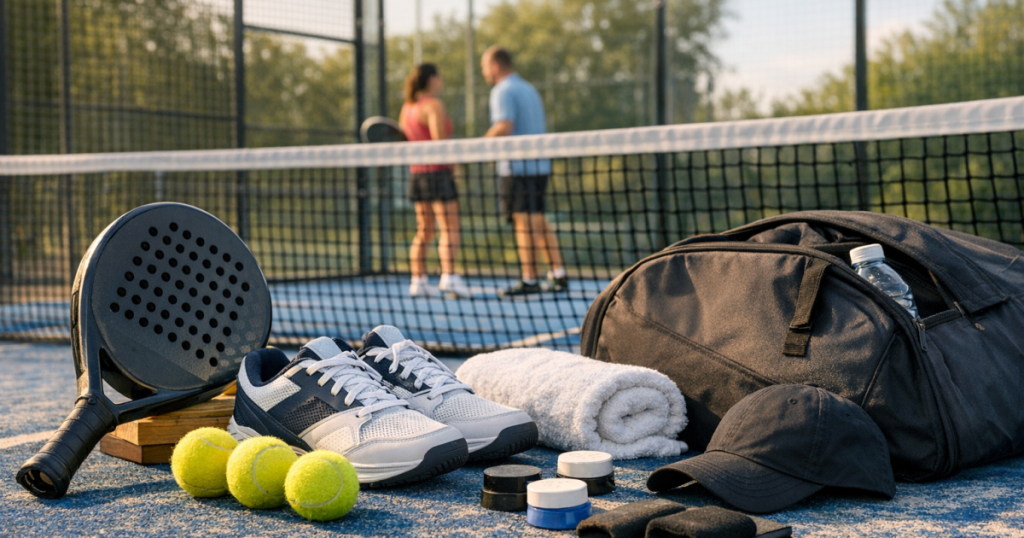
- After that: balls, overgrips, towel, wristbands and a small bag if you are attending club nights often.
- Later: larger racket bag, spare racket, premium accessories or weather-specific clothing.
Stage 1: keep the first session simple
For a taster session, do not overthink it. Wear breathable sports clothing that lets you lunge, twist and reach overhead. Avoid anything that restricts shoulder movement or catches when you turn. A normal gym top and shorts, leggings or a skort are fine for most first sessions.
If you are booking coaching as a newcomer, ask whether a racket is included before you buy one. This is one of the easiest ways to avoid a rushed purchase. A first lesson or club night will quickly show whether you prefer a lighter-feeling racket, need more control, or simply want something comfortable while you learn the walls.
Balls are usually supplied in coached sessions, but casual groups often expect someone to bring a tube. A recognised padel ball such as Head Padel Pro is a normal club-night option, but you do not need to obsess over ball choice at the start. Just check that you are buying padel balls rather than tennis balls, and remember that balls lose pressure with use.
Stage 2: buy shoes before the racket
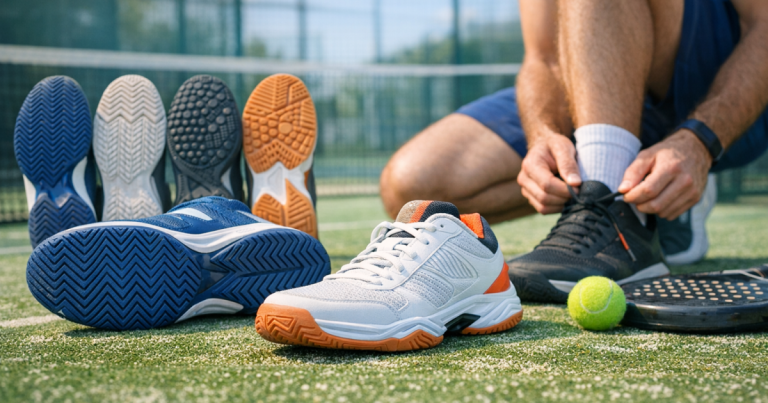
It feels less exciting than buying a racket, but shoes should usually be your first proper purchase. Padel involves short bursts, side steps, quick stops and turns near the glass. Running shoes are made for forward movement and can feel unstable when you push sideways. They may also lack the right grip pattern for artificial turf courts.
Look for padel or suitable tennis shoes with lateral support, a grippy outsole, and a fit that holds your heel without crushing your toes. Court surfaces vary, so check what your local venue uses. Some players prefer a herringbone-style outsole on sandier artificial turf, while other courts may reward a different grip pattern. For a fuller explanation, read the padel shoes guide for grip, support and court surface.
A dedicated option such as Asics Gel-Padel Pro 3 is the kind of shoe new players may come across when looking at padel-specific footwear, but fit matters more than the logo. Try shoes with the socks you will actually wear, check that your foot does not slide during side steps, and avoid buying purely because a shoe looks light or fast.
Stage 3: choose a forgiving racket once you are playing regularly
Your first racket should make learning easier, not punish every late contact. Most beginners are better served by a round or control-leaning teardrop shape than an aggressive diamond shape. A racket that feels manageable helps with blocking, lobs, volleys and returns, which are more important in early club play than raw smash power.
Before buying, check the shape, balance, weight range, grip comfort and how demanding the racket feels. Do not assume the most advanced or most powerful model is the best investment. Power-focused rackets can be fun later, but they may be less forgiving while you are still learning timing and positioning. If the terminology is confusing, the clearest next step is to understand round, teardrop and diamond padel rackets.
If possible, borrow or demo rackets from a coach, club mate or shop before buying. Ten minutes of hitting can tell you more than a long list of marketing terms. Pay attention to whether you can defend comfortably, find the sweet spot often enough, and keep the ball in play when tired.
Stage 4: add clothing and small accessories when they solve a real problem
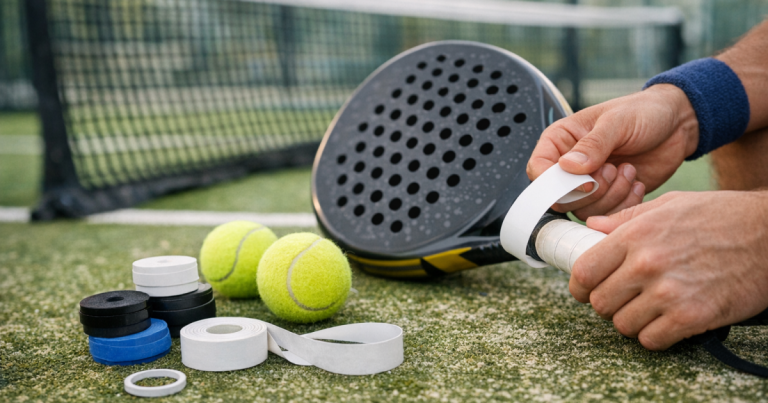
Once you know you enjoy the game, small accessories start to make sense. They are not glamorous, but they can make club nights more comfortable. Overgrips help when the handle feels slippery or too thin. A towel is useful for indoor courts and busy sessions. Sweatbands can stop moisture running onto your hands during longer games.
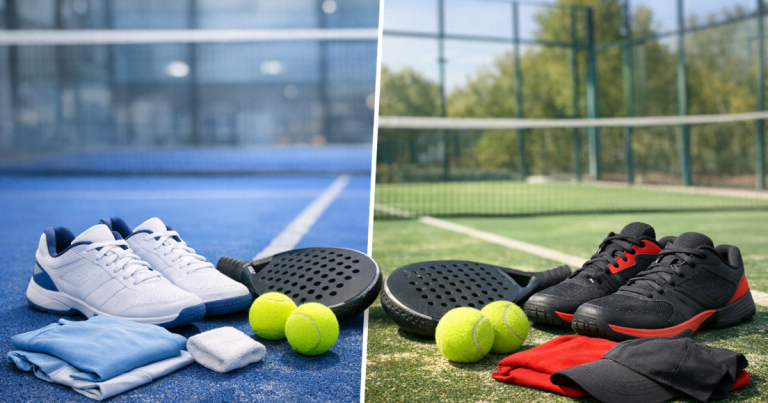
For clothing, prioritise movement, comfort and repeat use. A simple technical top such as Adidas Club 3-Stripes Tee is the kind of sports tee many players use, but any breathable top that lets you rotate freely can work. If you are playing outdoors in Britain, add a light layer for waiting between games, especially at evening sessions.
Socks are worth taking seriously too. Thin everyday socks can bunch, rub or feel damp quickly. Sports socks with enough cushioning for court movement are a small upgrade that can make back-to-back games more comfortable.
Stage 5: only buy a bag when carrying everything becomes annoying
A bag is not essential on day one. If you only take shoes, water and a borrowed racket, a normal backpack may be enough. Once you own a racket, balls, towel, spare top and accessories, a padel backpack or racket bag becomes more useful.
The decision depends on how you travel. If you walk, cycle or take the train to the club, a compact backpack is often easier. If you drive and carry multiple rackets, shoes and clothing, a larger racket bag can be more convenient. The trade-offs are covered in more detail here: how to choose between a padel backpack and racket bag.
Check practical details rather than buying the biggest bag straight away. Think about whether the racket handle sticks out, whether there is space for shoes, and whether wet clothing will sit against clean kit. For most beginners, simple organisation beats oversized storage.
What can wait
Plenty of padel purchases are useful later but unnecessary early on. A spare racket is handy for league players, not essential for someone still building a weekly habit. A large tour-style bag may be overkill if you only carry one racket. Premium accessories can be enjoyable, but they will not fix footwork, decision-making or contact point.
These items can usually wait:
- Second racket, unless you already play several times a week.
- Large tournament-style bag, unless you carry lots of kit.
- Specialist clothing for every weather condition before you know your routine.
- Multiple overgrip types before you know your preferred feel.
- Expensive advanced rackets designed around power rather than forgiveness.
A sensible buying order for different beginners
If you are trying padel for the first time
Wear normal sports kit, borrow a racket, and bring water. Do not buy a racket before you have hit a few balls and learned how the walls change the game.
If you have joined a weekly beginner night
Buy shoes first, then a forgiving racket. Add balls if your group rotates who brings them. Add a towel, overgrips and a simple bag once you are carrying more than you can manage comfortably.
If you are playing outdoors
Prioritise shoes that suit the surface and layers that handle changeable weather. Outdoor club nights can feel very different between a warm-up, a match and time spent waiting for the next game.
If you travel by public transport
Keep the setup compact. A backpack, one racket, a tube of balls, water and a spare top are usually easier than a bulky racket bag on a train or bus.
Questions people ask
Should a beginner buy a racket before lessons?
Not usually. Borrow one for the first lesson if the coach or club provides it. Buy once you know you want to keep playing and have a better sense of what feels comfortable.
Are padel shoes really necessary?
They are one of the most useful early purchases. Proper court shoes help with lateral movement and grip, while running shoes can feel unstable during quick changes of direction.
How many padel balls should I bring to a club night?
One fresh tube is normally enough for a casual group if balls are not supplied. If several courts are playing or the session is long, check with the organiser beforehand.
Is a round racket always best for beginners?
Not always, but it is often the safest starting point because it tends to favour control and forgiveness. Some beginners may also like a gentle teardrop shape if it still feels easy to handle.
When should I upgrade my first racket?
Upgrade when you can explain what your current racket is limiting. If you only want more power but still struggle with control, timing and positioning, more practice may help more than a new racket.
Final thoughts
The best approach to padel gear for beginners is to buy in the order your game actually develops. Shoes help immediately. A forgiving racket makes sense once you are playing regularly. Balls, overgrips, clothing and a bag become useful as your routine settles.
You do not need to look like a tour player to enjoy your first few club nights. Spend slowly, test where you can, and let each purchase solve a real problem on court.